
In onlangse jare, insulated aluminum roof panels have emerged as a premier solution, offering a compelling blend of durability, ligte gewig, and exceptional thermal performance.
Choosing the right roofing material is a critical decision for any building project, impacting not only aesthetics but also long-term performance, energy efficiency, and occupant comfort.
This guide provides an in-depth exploration of insulated aluminum roofing panels, analyzing their benefits, types, toepassings, and considerations to help you make an informed decision.
1. Understanding Insulated Aluminum Roof Panels: What Are They?
At their core, insulated aluminum roof panels, often referred to as Sandwich Panels or Insulated Metal Panels (IMPs), are composite building components.
They typically consist of three primary layers:
- Two outer metal facings: For roofing applications, these are usually made from high-quality aluminum sheets. The aluminum provides weather resistance, strukturele ondersteuning, and an aesthetic finish.
- An insulating core: Sandwiched between the aluminum facings is a core material with high thermal resistance (R-value). Common core materials include Polyisocyanurate (PIR), Polyurethane (PUR), Expanded Polystyrene (EPS), or Mineral Wool.
Manufacturers produce these layers under factory-controlled conditions, bonding them together to create a single, robust, and highly efficient roofing panel.
This composite structure is the key to their superior performance.

2. The Multifaceted Benefits of Insulated Aluminum Roof Panels
Insulated aluminum roof panels offer a host of advantages over traditional roofing systems, making them an attractive option for a wide range of building types.
Superior Thermal Performance and Energy Efficiency
This is arguably the most significant benefit. The continuous insulating core in insulated aluminum roof panels minimizes thermal bridging (heat loss or gain through structural members), wat lei tot:
- Reduced Heating and Cooling Costs: By significantly improving the building envelope’s insulation, these panels drastically cut down on the energy required to maintain comfortable indoor temperatures.
- Consistent R-Values: Factory-engineered panels provide reliable and consistent thermal performance across the entire roof surface.
- Enhanced Occupant Comfort: Stable indoor temperatures contribute to a more comfortable environment for building occupants.
Exceptional Durability and Longevity
Aluminum itself is a highly durable material, and when used in insulated aluminum roof panels, its benefits are amplified:
- Korrosieweerstand: Aluminum naturally forms a protective oxide layer, making it highly resistant to rust and corrosion, even in coastal or industrial environments. This extends the roof’s lifespan significantly.
- Weerweerstand: These panels are engineered to withstand harsh weather conditions, including high winds, heavy rain, sneeu, and hail.
- Lae onderhoud: Due to their durability and resistance to degradation, insulated aluminum roof panels typically require minimal maintenance over their service life.
Lightweight Construction
Compared to traditional roofing materials like concrete or clay tiles, insulated aluminum roofing panels are remarkably lightweight. This characteristic offers several advantages:
- Reduced Structural Load: Lighter panels mean less stress on the building’s supporting structure (trusses, beams, foundations). This can lead to cost savings in structural design and materials, especially for new constructions or retrofits on older buildings.
- Easier and Faster Installation: The lightweight nature makes handling and installation quicker and less labor-intensive, potentially reducing project timelines and labor costs

Design Versatility and Aesthetic Appeal
Modern insulated aluminum roof panels are not just functional; they also offer considerable design flexibility:
- Variety of Profiles: Available in various profiles, from flat to ribbed or corrugated, to suit different architectural styles.
- Color and Finish Options: Aluminum facings can be pre-painted in a wide array of colors using durable coatings (bv., PVDF, SMP) that resist fading and chalking. Finishes can range from smooth to embossed.
- Skoon, Modern Look: They often provide a sleek, contemporary aesthetic favored in commercial, industriële, and even modern residential designs.
Speed of Installation and Cost-Effectiveness
The prefabricated, all-in-one nature of insulated aluminum roof panels contributes to:
- Faster Construction Cycles: Panels arrive on-site ready to install, significantly reducing on-site labor and construction time compared to multi-component roofing systems.
- Reduced Labor Costs: Quicker installation translates directly into lower labor expenses.
- Long-Term Value: While the initial material cost might sometimes be higher than some basic roofing options, the energy savings, low maintenance, and longevity often result in a lower life-cycle cost.
Sustainability and Environmental Benefits
Insulated aluminum roof panels contribute positively to sustainable building practices:
- Energy Conservation: Their primary benefit of reducing energy consumption directly lowers a building’s carbon footprint.
- Herwinbaarheid: Aluminium is hoogs herwinbaar, and many panels contain recycled content. At the end oftheir service life, the aluminum can be recycled again.
- Reduced Construction Waste: As prefabricated units, there’s less on-site cutting and waste compared to built-up roofing systems.
3. Types of Insulating Cores in Aluminum Roof Panels
The choice of insulating core material significantly influences the panel’s thermal performance, fire resistance, en koste.
| Core Material | Key Characteristics | Typical R-value per inch (ongeveer.) | Fire Performance |
|---|---|---|---|
| Polyisocyanurate (PIR) | Excellent thermal efficiency, good fire resistance (often Class 1), good structural strength, moisture resistant. | 6.0 – 7.5 | Good to Excellent (often FM Approved) |
| Polyurethane (PUR) | Very good thermal efficiency, good structural strength, moisture resistant. Generally good fire performance. | 5.5 – 7.0 | Goed |
| Expanded Polystyrene (EPS) | Koste-effektief, good thermal insulator, liggewig, moisture resistant. Fire performance can vary. | 3.6 – 4.2 | Reg tot Goed (often requires fire retardants) |
| Mineral Wool (MW) | Excellent fire resistance (non-combustible), good acoustic insulation, good thermal performance, moisture permeable. | 3.0 – 4.3 | Uitstekend (inherently non-combustible) |
- Polyisocyanurate (PIR) en Polyurethane (PUR) are closed-cell foam cores offering the highest R-values per inch, making them popular for achieving superior energy efficiency with thinner panels. PIR generally has slightly better fire performance than PUR.
- Expanded Polystyrene (EPS) is a more budget-friendly foam option, still providing effective insulation.
- Mineral Wool cores are chosen primarily for applications requiring exceptional fire resistance and acoustic performance, though their thermal resistance per inch is typically lower than foam cores.
The selection of the core material should align with the specific project requirements for thermal efficiency, fire safety codes, and budget.
4. Key Applications of Insulated Aluminum Roof Panels
The versatility and performance benefits of insulated aluminum roof panels make them suitable for a diverse range of building types:
Kommersiële geboue
- Warehouses and Distribution Centers: Large roof areas benefit significantly from the energy efficiency and speed of installation.
- Retail Stores and Shopping Malls: Aesthetic appeal combined with thermal performance is crucial.
- Office Buildings: Modern aesthetics and occupant comfort are key drivers.
- Manufacturing Facilities: Durability and low maintenance are important in industrial environments.
Industrial Buildings
- Factories and Production Plants: Resistance to harsh environments and potential for fire-rated cores.
- Cold Storage Facilities and Food Processing Plants: Superior insulation is paramount for maintaining controlled temperatures. The hygienic, easy-to-clean surface of aluminum is also beneficial.
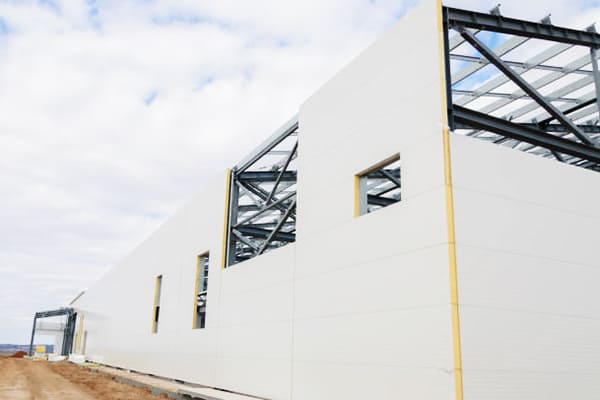
Agricultural Buildings
- Livestock Housing and Poultry Farms: Controlled environments and durability are essential.
- Storage Sheds for Equipment and Produce: Protection from elements and thermal stability.
Institutional Buildings
- Schools and Universities: Energy savings and long-term durability contribute to lower operating costs.
- Hospitals and Healthcare Facilities: Hygienic surfaces and controlled indoor environments.
Recreational Facilities
- Sports Arenas and Indoor Stadiums: Large spans and aesthetic considerations.
- Community Centers: Energy efficiency and durability.
Residential Applications (Increasingly)
While historically more common in commercial/industrial sectors, insulated aluminum roof panels are gaining traction in modern residential architecture, especially for:
- Contemporary home designs valuing sleek lines and energy efficiency.
- Accessory Dwelling Units (ADUs) and prefabricated homes where speed of construction is beneficial.
5. Design and Installation Considerations for Insulated Aluminum Roof Panels
Proper design and installation are critical to maximizing the performance and longevity of insulated aluminum roof panels.
Panel Profile and Thickness
- The choice of panel profile (bv., standing seam, ribbed) can affect water drainage, structural capacity, en estetika.
- Panel thickness (driven by core thickness) is determined by the required R-value and structural load considerations.
Joint Design and Sealing
- The integrity of the panel-to-panel joints is crucial for preventing air and water leakage. Manufacturers offer various interlocking joint designs (bv., tongue-and-groove, concealed fastener systems).
- Proper use of sealants and gaskets at joints, penetrations, and perimeters is essential for weather-tightness.
Fastening Systems
- Insulated aluminum roof panels typically use concealed or through-fastened systems. Concealed fastener systems offer a cleaner aesthetic and reduce potential leakage points.
- Fastener type, lengte, and spacing must be engineered according to wind load calculations and manufacturer specifications.
Flashing and Trim Details
- Properly designed and installed flashings at eaves, ridges, valleys, and penetrations (bv., vents, skylights) are vital for preventing water intrusion.
- Coordinated trim pieces provide a finished look and seal edges.
Supporting Structure
- The supporting structure (purlins or deck) must be designed to accommodate the panel spans and loads. Terwyl insulated aluminum roof panels are lightweight, wind uplift forces can be significant.
- Ensure the structure is true and level for proper panel alignment.
Handling and Storage
- Panels should be handled carefully to avoid damaging the facings or core.
- Store panels off the ground, covered, and slightly inclined to allow water drainage until installation.
Professional Installation
Engaging experienced and certified installers familiar with insulated aluminum roofing panels is highly recommended to ensure a high-quality, weather-tight, and durable roofing system.
6. Comparing Insulated Aluminum Roof Panels with Other Roofing Options
To better understand their value, it’s helpful to compare insulated aluminum roof panels with some traditional roofing materials.
| Kenmerk | Insulated Aluminum Roof Panels | Traditional Built-Up Roof (BUR) / Modified Bitumen | Single-Ply Membranes (TPO, EPDM) | Metal Shingles/Standing Seam (Uninsulated) |
|---|---|---|---|---|
| Isolasie | Integrated, high R-value, deurlopend | Separate insulation board required | Separate insulation board required | Requires separate insulation layer |
| Gewig | Liggewig | Swaar | Liggewig | Lightweight to Moderate |
| Installation Speed | Fast (all-in-one) | Slower (multi-layer) | Matig | Moderate to Slower (if adding insulation) |
| Duursaamheid | Uitstekend (aluminium) | Good to Very Good | Goed | Uitstekend (metal) |
| Korrosieweerstand | Uitstekend | Varies with surfacing | Goed | Varies with metal type & deklaag |
| Onderhoud | Laag | Matig | Laag tot matig | Laag |
| Estetika | Modern, veelsydig | Industrial/Commercial | Industrial/Commercial | Versatile, traditional to modern |
| Life-Cycle Cost | Often favorable due to energy savings & low maintenance | Can be higher due to maintenance & re-roofing | Matig | Can be favorable |
This comparison highlights that while uninsulated metal roofing offers durability, insulated aluminum roof panels provide the crucial added benefit of integrated, high-performance insulation in a single component, leading to faster installation and superior energy efficiency.
7. Cost Factors for Insulated Aluminum Roof Panels
The cost of insulated aluminum roof panels can vary based on several factors:
- Type and Thickness of Insulating Core: Higher R-value cores (like PIR) and thicker panels generally cost more. Mineral wool cores for fire resistance can also impact price.
- Aluminum Gauge and Finish: Thicker aluminum facings and premium paint finishes (bv., PVDF) will increase the cost.
- Panel Profile and Complexity: Custom profiles or more complex designs may be pricier.
- Project Size and Location: Larger projects may benefit from economies of scale. Transportation costs to the site also play a role.
- Labor Costs for Installation: While installation is generally faster, regional labor rates vary.
- Warranty Offered: Longer and more comprehensive warranties might be associated with premium panel systems.
It is crucial to obtain detailed quotes from reputable suppliers and installers that consider all project-specific requirements to get an accurate cost estimate. Remember to factor in long-term energy savings and reduced maintenance when evaluating the overall value.
8. The Future of Insulated Aluminum Roof Panels
The demand for insulated aluminum roof panels is poised for continued growth due to several converging trends:
- Stricter Energy Codes: As building codes increasingly mandate higher levels of energy efficiency, these panels offer a straightforward solution.
- Focus on Sustainability: The emphasis on green building practices, energy conservation, and recyclable materials aligns well with the attributes of these panels.
- Advancements in Material Science: Ongoing research into more efficient insulating cores, more durable coatings, and innovative panel designs will further enhance their performance.
- Increased Awareness: As more architects, builders, and building owners recognize their benefits, adoption rates will likely rise across all sectors.
- Integration with Solar Technology: The smooth, durable surfaces of insulated aluminum roof panels are well-suited for the integration of photovoltaic (PV) stelsels, creating energy-generating roofs.
9. Afsluiting: A Smart Investment in Your Building’s Future
Insulated aluminum roof panels represent a significant advancement in roofing technology, offering a powerful combination of superior thermal insulation, exceptional durability, lightweight construction, en estetiese veelsydigheid.
Their ability to reduce energy consumption, lower operational costs, and contribute to sustainable building practices makes them an intelligent investment for a wide array of new construction and retrofit projects.
By carefully considering the specific needs of your project, selecting the appropriate panel type and core material, and ensuring professional installation, you can harness the full potential of insulated aluminum roof panels to create a high-performing, energy-efficient, and long-lasting building envelope.
This ultimately leads to enhanced occupant comfort, reduced environmental impact, and excellent long-term value – a true win-win for any building owner.