


Buy 1000 Series Aluminum Foil: Grades, Tempers and Buyer’s Guide

Buy 1000 Series Aluminum Foil: Grades, Tempers and Buyer’s Guide
Bekendstelling
“1000 series aluminum foil for sale” means commercially pure aluminum foil—the family of grades from 1050 en 1060 deur 1100, 1235 en 1350 that sits behind lithium-ion batteries, shielded cables, electrolytic capacitors, buigsame laminate, transformer windings and air-conditioner fins.
Whenever electrical or thermal conductivity, weerstand teen korrosie, reflectivity or easy forming matters more than raw strength, a 1xxx foil is usually the correct and most economical choice.
Om dit goed te koop beteken om vier besluite vas te stel wat prys en prestasie verander: die presiese graad, die humeur (sagte O versus harde H18), die maat en breedte, en die oppervlakafwerking.
Bestel sagte O-foelie vir 'n batterystroomkollektor wat H18 benodig, of algemeen 1050 waar 'n gewaarborgde-geleiding 1350 gespesifiseer word, sal 'n produksielyn stop.
Hierdie gids verduidelik die grade, humeure en eindgebruike—met gefokusde afdelings oor battery, kabel- en kapasitorfoelie—en hoe om fabrieksdirek te spesifiseer en te bestel.

Wat is 1000 Series Aluminum Foil?
The 1xxx series is commercially pure aluminum (ten minste 99.0% Al), with iron and silicon as the main controlled impurities and only trace copper, mangaan en magnesium.
These alloys are non-heat-treatable, so they gain strength through cold rolling and are softened by annealing. Foil ranges from about 5 mikrons (0.005 mm) to roughly 0.2 mm for fin stock.
- Uitstekende elektriese geleidingsvermoë, around 61–63% IACS annealed—the highest of the common foil families, ideal for battery collectors, cable shields and capacitor electrodes.
- Hoë termiese geleidingsvermoë (about 220–235 W/(m·K)) vir hitte-wisselaar vinne.
- Sterk korrosiebestandheid van die natuurlike selfgenesende oksiedfilm.
- Baie rekbaar en maklik om te rol, vou, toevou, dieptrek en lamineer in die O humeur.
- Helder oppervlak wat ongeveer 80–85% van stralingshitte weerkaats vir reflektiewe isolasie.
- Laer meganiese sterkte as 3xxx/8xxx-legerings—die belangrikste beperking om rondom te ontwerp.
Kortom, die 1000 reeks handel krag vir geleidingsvermoë, reinheid, weerstand teen korrosie en vormbaarheid. Dit is ook ten volle herwinbaar, en af te meet na die dunste foelie wat nog steeds direk werk, sny metaalgewig per battery, per meter kabel en per pakket.
Hierdie eienskappe volg direk uit die chemie. Omdat legeringselemente en onsuiwerhede bewegende elektrone verstrooi, die suiwerste grade dra stroom die doeltreffendste - die rede waarom geleier- en kapasitorkopers spesifiseer 1060/1070/1350 eerder as die goedkoopste graad.
Korrosiebestandheid kom van die dun, tightly adherent aluminum-oxide film that forms instantly on exposure to air and self-repairs after minor damage, so pure foil weathers well without paint in mild environments.
The trade-off is that, without strengthening alloy phases, pure aluminum is soft; strength is then recovered by cold rolling to an H temper, which is why the same grade can be supplied buttery-soft (O) for wrapping or hard (H18) for a battery web.
Grades, Composition and Temper
The grades differ mainly in purity. In the four-digit system, the last two digits show minimum aluminum above 99.00%—1050 is 99.50%, 1060 is 99.60% en 1070 is 99.70%.
Higher purity means better conductivity but slightly lower strength and often a higher price; 1100 en 1235 allow a little more iron and silicon for better rolling and strength at purity that is ample for packaging and converter uses.
| Graad | Min. Al | Karakter / main use |
| 1050 | 99.50% | Economical general converter, naamborde, insulation cladding, heat panels |
| 1060 | 99.60% | Battery cathode foil, transformer windings, oortjies, fin stock |
| 1070 | 99.70% | High-end battery/digital cells, capacitor and electronic foil |
| 1100 | 99.00% | Balanced workability: food/kitchen foil, vinne, kookware, naamborde |
| 1145 / 1200 | 99.0–99.45% | Buigsame verpakking, converter foil, hitteruilers |
| 1235 | 99.35% | Workhorse converter grade: battery, kabel, capacitor, laminering |
| 1350 | 99.50% | Electrical-conductor (EC) gelykmaak, minimum about 61% IACS |
Temper is as important as grade. The digit after H shows the hardness degree (2 quarter-hard, 4 halfharde, 6 three-quarter-hard, 8 volhard).
Battery current-collector foil is supplied H18 so a 10–20 micron web has the strength (about 150–200 MPa) to survive coating and high-speed slitting;
cable-shield and capacitor-cathode foil is supplied soft O so it wraps, winds and conforms; fin stock commonly uses H22/H24/H26.
| Gemoed | Toestand | Typical foil use |
| O | Volledig uitgegloei, sag | Cable shield, capacitor cathode, laminering, toedraai |
| H22/H24/H26 | Kwartaal- to three-quarter-hard | Air-conditioner fin stock, tapes, vorming |
| H14/H16 | Half to three-quarter-hard | General converter foil and formed parts |
| H18 | Volhard, strongest at thin gauge | Lithium-ion cathode current collector |
Choosing the Right Grade
A simple decision sequence covers most orders.
If the foil carries current in a battery, capacitor or transformer, start with 1060/1070, of 1350 where a cable standard writes a guaranteed IACS value.
If it shields a cable or forms a flexible-lamination barrier, use 1235-O. Vir kos, kitchen, fin stock or formed products needing a balance of softness and modest strength, gebruik 1100.
If price and general formability dominate and conductivity is not critical, 1050 of 1200 is the economical option.
Typical specifications make this concrete: an LFP battery plant orders 1235-H18 at 13 mikrons, 600 mm wide, with wetting tension above 32 digte/cm; a cable plant orders 1235-O at 9–15 microns pre-laminated to PET and slit to tape width;
a capacitor maker uses 1070 for anodes and 1235-O for cathodes at 5–10 microns; an HVAC fin press uses hydrophilic-coated 1100 teen 0.10 mm in H22. Each is a “1000 series foil,” yet alloy, temper and gauge differ completely—a one-size-fits-all quotation is a warning sign.
Battery aluminiumfoelie (Cathode Current Collector)
The most demanding 1xxx application is the lithium-ion battery. The cathode active material (LFP, NMC and similar) is coated onto thin aluminum foil that collects and carries current to the tab; the anode uses copper, not aluminum.
The foil must combine conductivity, strength and an ultra-clean high-surface-energy finish so the coating adheres uniformly.
| Graad | Tipiese meter | Gemoed | Common cell type |
| 1235 | 12–15 μm | H18 | Power batteries, natrium-ioon selle |
| 1060 | 15–20 μm | H18 | Energieberging en algemene kragbatterye |
| 1070 | 10–12 μm | H18 | Hoë-end digitale en premium selle |
| 1050 / 1100 | 12–20 μm | H18 | Standaard, koste-sensitiewe katode versamelaar |
Produksiefoelie strek oor 9–25 mikron en breedtes van ongeveer 200–1600 mm op 76.2 mm (3 in) of 152.4 mm (6 in) kerne, met diktetoleransie rondom ±3–5%.
Verder as chemie, dit word beheer vir benatting spanning (dikwels ≥31–32 dyn/cm) so die flodder bedek sonder om te ontnooi, 'n sterk kubus ({001}) korreltekstuur vir eenvormige weerstand, en 'n oppervlak vry van olie, strepe, speldegate en randbrame.
Koolstofbedekte foelie voeg 'n geleidende onderlaag by wat interne weerstand vir hoë-tempo en LFP selle verlaag. Let daarop dat sagte-pak sak-sel aluminium-plastiek film 'n ander deel is - sag 8079/8021/1235 by 0,015–0,06 mm, gekies vir dieptrek eerder as geleidingsvermoë.
Die mark gaan steeds af namate energiedigtheidteikens styg, met hoofstroom katode foelie wat van 14–16 mikron na 12–13 beweeg en premium digitale selle naby 10, wat ultra-skoon metaal en stewige rol vereis om die harde web speldegatvry te hou.
Op die lyn, batteryfoelie word nagegaan vir maatprofiel, Trek sterkte, benatting spanning, oppervlakweerstand en 'n braamvrye spleetrand; 'n web wat enige van hierdie misluk, kan deklaagdefekte veroorsaak, plooie of interne kortbroek.
Koolstofbedekte foelie word gespesifiseer deur laaggewig en oppervlakweerstand, en opkomende polimeer-kern saamgestelde versamelaars is nie 'n drop-in plaasvervanger vir soliede 1xxx foelie, dus gebruik konvensionele selle steeds vaste stof 1060/1235/1070 H18.

Kabelskerm en kapasitorfoelie
Communication and power cables wrap a thin aluminum foil–plastic laminate around the conductors to block EMI/RFI interference, separate cable groups and provide grounding.
The standard grade is 1235 in soft O temper at 6–40 microns, laminated as single-sided AL/PET, double-sided AL/PET/AL or AL/PE.
A 9-micron 1235 foil in a laminated tape can deliver well over 60 dB shielding at 1 GHz; where a standard requires a guaranteed conductivity value for the conductor, the EC grade 1350 is specified instead.
Aluminum electrolytic capacitors use an etched and formed anode foil and a cathode foil separated by paper in electrolyte. High-voltage anodes need the highest purity (1070 and above), because the foil is electrochemically etched to enlarge its surface and anodized to grow the oxide dielectric;
any coarse impurity causes uneven etching and leakage. Middel- and low-voltage cathodes and film-capacitor electrodes widely use 1235 of 1070 in O temper from about 5 mikrons, supplied with tight Fe-Si particle control and an exceptionally clean, olievrye oppervlak.
Cable tape is specified by the lamination partner (AL/PET, AL/PET/AL or AL/PE), foil gauge, enkellopend- or double-sided construction and the exact slit strip width, since it is a converter product built to the cable maker’s dimensions.
Capacitor foil is the most purity-sensitive of all: the anode is etched to multiply its effective surface and then anodized to form the dielectric, so coarse intermetallic particles or residual rolling oil produce weak oxide spots and higher leakage;
it is therefore ordered with explicit cleanliness, thickness and pinhole limits on clean cores ready for etching and winding.
Other Applications and Alloy Comparison
- HVAC fin stock – 1100/1200 (en 8011) at 0.08–0.2 mm as plain, blue/gold hydrophilic or anti-corrosion fin in H22/H24/H26.
- Transformer foil windings and busbar connections – soft high-purity 1060/1070.
- Flexible packaging and lamination – 1235/1145 at 6–9 microns as the barrier layer.
- Reflektiewe isolasie, duct wrap, naamborde, naamborde, bottle caps and general converter products.
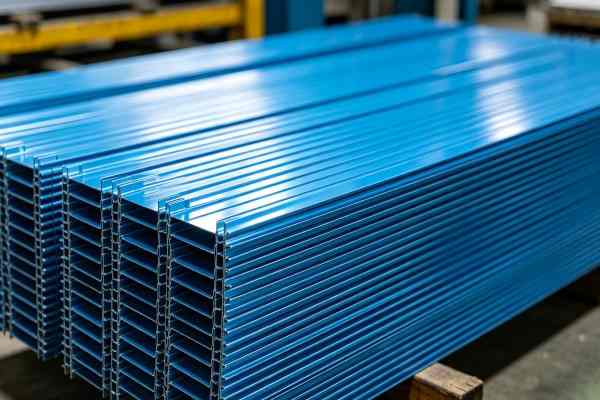
Figuur 5. Hydrophilic-coated 1100/1200 fin stock for HVAC heat exchangers.
Image alt text: Stacked blue hydrophilic coated aluminum foil fins for air conditioner heat exchangers in an HVAC fin stock factory
| Family | Sterkte | Geleidingsvermoë | Typical role |
| 1xxx (suiwer) | Laer | Hoogste (61–63% IACS) | Battery, kabel, capacitor, vinne, transformators |
| 3003 / 3004 | Hoog (Mn) | Matig | Houers, skinkborde, deep-drawn parts |
| 8011 | Medium-hoog | Matig | Household/food foil, deksel, vinne |
| 8079 / 8021 | Hoog | Matig | Ultra-thin high-barrier, farmasie, pouch film |
Choose 1xxx when conductivity, thermal transfer, reinheid, reflectivity or maximum formability leads; 3003/3004 when a formed part needs real strength;
8011 for household and food foil; en 8079/8021 when the lowest pinhole count in an ultra-thin barrier is decisive.
Wanneer 1100, 1145 of 1235 is used for food contact, kitchen foil or lidding, order it with food-grade compliance documented for the market (FDA 21 CFR in the US, Eu 1935/2004 in Europe, Gb 4806 in China);
note that most converters still prefer 8011-O for bare retail kitchen rolls because it gives fewer pinholes and a sturdier feel, while 1xxx foil is more often the barrier layer inside a laminate.
Specifications to Define
| Parameter | Typical range / opsies |
| Allooi / humeur | 1050/1060/1070/1100/1235/1350 in O, H14, H18, H22/H24/H26 |
| Dikte | 5–40 μm converter/electronics; 80–200 μm fin stock |
| Breedte / core | 100–1600 mm slit to your line; kerne 76.2 mm (3 in) / 152.4 mm (6 in) |
| Oppervlakte | One-/two-side bright, mat, reliëf, hydrophilic coated, treated for wettability |
| Special values | IACS %, benatting spanning (digte/cm), speldegattelling, grain texture (battery) |
| Typical MOQ | Oor 3 ton per spesifikasie; trial orders negotiable |
For material planning at a pure-aluminum density of about 2.70 g/cm³,
weight per square meter is thickness in microns × 2.70: 12¼m foil is about 32.4 g/m² (≈30,900 m²/ton), 15¼m about 40.5 g/m² (≈24,700 m²/ton) and 20¼m about 54.0 g/m² (≈18,500 m²/ton), slightly less after trim, cores and packaging.
Give the mill your line width, core, maximum coil OD and the slit-strip layout so the parent width minimizes trim scrap.
Gehaltebeheer, Pricing and Ordering
Battery and capacitor foil needs the cleanest melt and tightest rolling; key checks are gauge profile (micrometers plus on-line X-ray/optical), conductivity by eddy-current meter (% IACS)
tensile and elongation, wetting tension with dyne liquids, pinholes on a back-lit table or optical scanner, and chemistry by spectrometer on the mill test certificate.
Ask for the MTC, gauge/width report, conductivity or wetting values, a pinhole report and production-gauge samples; ISO 9001 meulens ondersteun SGS/BV/TUV-inspeksie, and battery buyers commonly audit the line and approve a signed golden sample.
Price is the aluminum base (linked to ingot/LME) plus a conversion fee; higher purity, H18 battery temper, tight gauge and wetting requirements, narrow slitting, coating and small quantities all raise it.
Compare offers per ton and per thousand square meters on identical alloy, humeur, peil, width and Incoterm. Distinguish a real foil mill from a trader—only a mill can hold gauge, wetting and pinhole values consistently and issue its own certificates.
Standard terms are about 30% deposito met balans teen die vragbrief, or L/C for large orders, FOB/CFR/CIF, with moisture-proof packing on fumigation-free pallets.
To order, state alloy and temper, dikte en verdraagsaamheid, breedte, roll OD/length and core, surface or coating, lamination partner for cable tape, hoeveelheid, destination port and Incoterm, and the test values you need.
Always run production-gauge samples on your coater, etcher, slitter or wrapping line before approving bulk.
Distinguish a genuine foil mill from a trader, especially for battery and capacitor material: only a mill with thin-gauge rolling, controlled melt cleanliness and slitting capability can hold gauge, wetting tension and pinhole values consistently and issue its own certificates.
Ask for production-line photos or a video audit, the gauges and widths actually produced in-house, samples from the target gauge and references in your market.
Never approve foil from a photo and price alone—run production-gauge samples on your coater, etcher, slitter or wrapping line at normal speed, measure thickness across the width, test conductivity or wetting tension yourself, and inspect against light for pinholes.
A signed pre-production sample then becomes the standard for inspecting the bulk shipment.
Gereelde Vrae
V: Wat is 1000 reeks aluminiumfoelie?
A: Commercially pure aluminum foil (ten minste 99.0% Al) in grades such as 1050, 1060, 1070, 1100, 1235 en 1350, valued for conductivity, thermal transfer, weerstand teen korrosie en vormbaarheid.
V: Which grade is used for lithium batteries?
A: The cathode current collector uses 1060/1070/1235/1050/1100 in H18 at 9–25 microns (1235 at 12–15µm, 1060 at 15–20µm, 1070 at 10–12µm). The anode uses copper.
V: Wat is 1235 foil used for?
A: It is the workhorse converter grade for battery cathode foil, cable-shielding tape, electrolytic capacitor cathode foil and flexible lamination, in O or H18 from about 5–40 microns.
V: Wat is 1350 tinfoelie?
A: An electrical-conductor (EC) grade with guaranteed minimum conductivity around 61% IACS, used where cable or conductor standards specify a conductivity value.
V: Should battery foil be O or H18?
A: H18 hard temper, for the strength to survive coating and high-speed slitting; soft O is reserved for cable wrap, capacitor cathodes and forming. Pouch film is a different soft 8079/8021 produk.
V: 1000 series vs 8011 – which should I buy?
A: 1xxx for batteries, elektronika, kabel, kapasitors, fins and transformers; 8011 for household and food foil, lidding and fins where pinhole resistance and a little more strength matter.
V: Verskaf jy monsters, certificates and OEM service?
A: Yes—production-gauge samples, MTC, conductivity/wetting and pinhole reports, ISO 9001 and third-party inspection, plus custom slitting, coating and private-label packaging.
V: What thickness, breedte, MOQ and lead time apply?
A: Converter and electronics foil runs about 5–40 microns and fin stock 80–200 microns, in widths of roughly 100–1600 mm on 76 mm of 152 mm cores. MOQ is commonly about 3 tons per specification with trial orders negotiable; lead time depends on quantity and customization.
V: How much foil is in a ton, and how should I compare prices?
A: At about 2.70 g/cm³, weight per m² is thickness in microns × 2.70, so 12¼m foil covers roughly 30,900 m² per ton. Compare suppliers per ton and per thousand square meters on the same alloy, humeur, peil, breedte, format and Incoterm rather than on headline price alone.
Afsluiting
Buying 1000 series aluminum foil well is a matter of matching purity and temper to the job:
1060/1070 in H18 for battery cathode collectors and in O for transformers and capacitor components, 1235-O for cable shield, capacitor cathodes and lamination, 1350 for guaranteed IACS conductor duty, en 1100/1050/1200 for fins, food foil, insulation and general converter products.
Specify alloy, humeur, peil, breedte, surface and the electrical or wetting values your process depends on, then buy on measured data, approved samples and export-grade packing rather than the lowest headline price.