



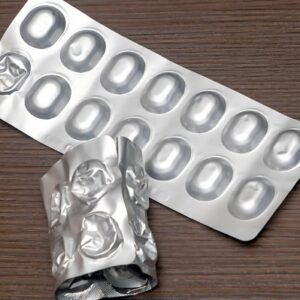
8079 O Iwe 0.020mm Pharmaceutical Laminated Foil

8079 O Iwe 0.020mm Pharmaceutical Laminated Foil
I. Nchịkọta ngwaahịa
1. Kedu ihe bụ Pharmaceutical Laminated Aluminum Foil?
Pharmaceutical laminated aluminum foil bụ ihe nkwakọ ngwaahịa nwere njedebe dị elu nke emebere maka ụlọ ọrụ ọgwụ.. Ọ na-eji aluminom alloy dị ọcha dị ka isi ihe ma jiri ihe nkiri polymer kpuchie ya site na usoro pụrụ iche.
Ọ na-eje ozi dị ka otu n'ime ihe ndị bụ isi maka nkwakọ ọgwụ nke isi na nke abụọ. N'adịghị ka ihe nkwakọ ngwaahịa ndị ahịa n'ozuzu, foil laminated nke ọgwụ na-agbaso ụkpụrụ ụlọ ọrụ siri ike, na-elekwasị anya na akụkụ atọ isi: nchekwa nchekwa ọgwụ, nkwụsi ike nrụpụta ọrụ, na ịdị ọcha.
Pharmaceuticals nwere nnukwu ihe achọrọ maka ihe mgbochi nke ihe nkwakọ ngwaahịa. Nkwakọ ngwaahịa ahụ ga-ewepụrịrị ikuku oxygen dị n'èzí nke ọma, vepo mmiri, ụzarị ultraviolet, isi, na adịghị ọcha na-agbanwe agbanwe iji gbochie mmịpụta mmiri, oxidation, mmebi, na ọnwụ nke nrụpụta ọrụ.
N'otu oge, ihe nkwakọ ngwaahịa ọgwụ ga-abụ nke na-adịghị egbu egbu, enweghị mmetọ, ịka nká na-eguzogide, na dakọtara na akpaghị aka mmepụta ahịrị. Na ihe mgbochi dị elu na njirimara nchekwa ya enweghị ike dochie ya, Ngwakọta aluminom mejupụtara abụrụla ihe nkwakọ ngwaahịa bụ isi maka ọgwụ ndị bụ isi dị ka mbadamba., capsules, pirensu, na bayoloji, na-eje ozi dị ka ihe mgbochi dị egwu iji hụ na ịdị mma ọgwụ na-agbatị ndụ.

2. Okwu mmalite 8079 O Iwe ọkụ Aluminom Foil
8079 aluminom alloy bụ a adịchaghị alloy eji kpọmkwem na ọgwụ ubi nkwakọ ngwaahịa. N'adịghị ka nkịtị aluminum alloys, ihe a na-egosi ọdịnaya adịghị ọcha dị oke ala, elu ihe uniformity, na nnukwu ime ụlọ, ịtọ ntọala maka ịdị mma nkwakọ ngwaahịa ọgwụ dị elu na ọkwa akụrụngwa.
N'etiti usoro ọgwụ aluminom foil alloy dị iche iche, 8079 alloy na-ejigide ọnọdụ dị mkpa n'ahịa nkwakọ ngwaahịa ọgwụ dị elu n'ihi akụrụngwa anụ ahụ kwụsiri ike yana ịrụ ọrụ mgbochi kachasị..
Nke “Isi iwe” na-ezo aka na ọgwụgwọ mgbakasị ahụ dị nro, a isi usoro na aluminum foil nhazi. Mgbe annealing nke ọma, n'ime nrụgide nke 8079 Aluminom foil na-ekpochapụ kpamkpam, budata imezi mgbanwe, elongation, na idozi ya.
Nke a na-ezere nsogbu ndị a na-ahụkarị na foil iwe ọkụ, dị ka mgbawa, na-agbaji, na mmetụta ịkpụzi adịghị mma, na-eme ka ọ dabara nke ọma maka nhazi ngwugwu ọgwụ mgbagwoju anya chọrọ.
Nkọwapụta ọkpụrụkpụ 0.020mm ewepụtara ebe a bụ nkọwapụta nke etiti ruo elu maka nkwakọ ngwaahịa ọgwụ.. Ọkpụrụkpụ a na-enweta nguzozi zuru oke n'etiti arụmọrụ na ọnụ ahịa.
Ọ na-ezere mpe mpe mpe mpe mpe akwa, dị ka ọnụ ọgụgụ pinhole dị elu na ihe mgbochi ezughi oke, ebe na-ezere drawbacks nke thicker ihe, dị ka adịghị mma mgbanwe, ọnụ ahịa nhazi dị elu, na ezughị oke ịkpụzi dabara. Ọ na-adabara n'ọtụtụ ebe na ọnọdụ nkwakọ ngwaahịa ọgwụ dị iche iche nke ọdịnala na nke dị elu..
3. Nkọwapụta ngwaahịa bụ isi
The ọkọlọtọ parameters nke 8079 O Temper 0.020mm Pharmaceutical Laminated Foil doro anya na nke ukwuu mgbanwe, na nkwado maka nhazi. Nkọwapụta isi bụ ndị a:
Nkọwapụta Ahụhụ Ochie
| Ihe | Oke |
|---|---|
| Alloy ọkwa | 8079 |
| Iwe | Isi iwe (Steeti dị nro) |
| Ọkpụrụkpụ | 0.020mm |
| Obosara | 100-1600mm (Enwere ike ịhazi ya) |
| Ndoko | Otu oyi akwa ma ọ bụ ọtụtụ ihe mejupụtara |
| Emecha elu elu | Otu akụkụ na-egbuke egbuke, otu akụkụ matte |
| Ngwa isi | Nkwakọ ngwaahịa mejupụtara ọgwụ |
Ngwakọta Chemical Chemical (Iberibe Mass)
8079 plamimatical aluminom foil nabata usoro ịdị ọcha dị elu nwere ọdịnaya adịghị ọcha dị oke ala yana kwụsiri ike, edo mejupụtara, na-ezute ụkpụrụ aluminom dị elu dị elu maka ihe nkwakọ ngwaahịa ọgwụ. Nke a na-eme ka njupụta ihe, obere pinhole ọnụego, and high barrier performance from the source.
| Ngwakọta kemịkalụ | Ọdịnaya Ọdịnaya |
|---|---|
| Aluminom (Al) | ≥99.00% |
| Ígwè (Fe) | 0.40%~0.80% |
| Silikoni (Na) | ≤0.30% |
| Ọla kọpa (Ku) | ≤0.05% |
| Manganese (Mn) | ≤0.05% |
| Magnesium (Mg) | ≤0.05% |
| Zink (Zn) | ≤0.10% |
| Individual Impurities | ≤0.03% |
| Mgbakọta adịghị ọcha | ≤0.50% |
Ami. Core Reasons Why 8079 Aluminum Foil is the Preferred Choice for Pharmaceutical Composites
1. Arụmọrụ mgbochi kacha mma
8079 aluminum foil offers industry-leading comprehensive barrier capabilities, serving as a core guarantee for the long-term storage of high-end pharmaceuticals.
Its dense and uniform material structure provides all-around protection against environmental factors: efficiently blocking oxygen to prevent oxidative failure; strongly resisting water vapor to eliminate moisture absorption, ime nri, na njọ; inye 100% UV shielding to prevent photosensitive drugs from decomposing; and effectively blocking external odors, uzuzu, and volatile substances to prevent contamination and ensure drug purity and stability.
2. Mgbanwe dị mma
After O temper softening and annealing, the internal stress of 8079 aluminum foil is fully released, significantly enhancing its flexibility and elongation.
Compared to ordinary hard-tempered foil, this product is suitable for complex packaging processes such as deep drawing, oyi akpụ, ikuume, and fitting. During the production of blister packs and shaped pharmaceutical packaging, it does not suffer from stretching cracks, agbaji, or fractures, perfectly conforming to various packaging molds and adapting to diverse pharmaceutical packaging structure designs.
3. Ọnụego pinhole dị ala nke ukwuu
Pinholes are a core defect affecting the barrier performance of pharmaceutical aluminum foil; even tiny pinholes can lead to water vapor and oxygen penetration, shortening drug shelf life. 8079 pharmaceutical aluminum foil uses high-purity virgin aluminum raw materials to minimize impurity defects from the source.
Coupled with precision rolling and homogenized heat treatment processes, it strictly controls internal micropores and surface defects. Its pinhole rate is far lower than industry standards and that of ordinary 8011 aluminom foil, fully meeting the stringent packaging requirements for high-end prescription drugs, bayoloji, and highly sensitive pharmaceuticals.
4. Good Composite Adaptability
This aluminum foil features high surface flatness, excellent cleanliness, and stable surface tension, offering strong compatibility with various medical-grade polymer films for robust lamination. It can be laminated with PET film to enhance printing effects and surface hardness;
with OPA (Nilhon) film to improve puncture and tensile resistance; with PVC film to suit conventional blister packaging processes; and with PE heat-seal layers or CPP film to ensure superior heat-sealing integrity. It can be configured into multiple composite structures according to different pharmaceutical packaging needs, adapting to the full range of pharmaceutical packaging applications.

Adii. Isi Uru nke 8079 O Iwe 0.020mm Pharmaceutical Laminated Foil
1. Significantly Enhances Drug Storage Stability
Relying on ultimate barrier properties, this product constructs an all-around protective barrier for pharmaceuticals, effectively blocking erosion from oxygen, mmiri mmiri, ìhè, na adịghị ọcha.
It significantly delays the oxidation, Mmiri Na-anabata Mmiri, and decomposition of drugs, effectively extending the overall shelf life and reducing efficacy loss during storage. It solves the pain points of conventional packaging—such as easy deterioration and short validity periods—ensuring the stability of drug efficacy throughout its lifecycle.
2. Meets High-End Pharmaceutical Packaging Needs
With the upgrading of the pharmaceutical industry, the packaging requirements for highly sensitive drugs, prescription drugs, bayoloji, and vaccines have increased dramatically.
8079 O temper pharmaceutical laminated foil, with its ultra-low pinhole rate, ultra-high barrier properties, and high stability in molding, is perfectly suited for high-barrier pharmaceutical packaging, special prescription drug sealing packaging, and biologic long-term storage packaging. It is the preferred base material for high-end pharmaceutical packaging.
3. Comprehensively Improves Packaging Safety
The product boasts excellent anti-pollution, anti-puncture, and anti-mechanical damage capabilities. High-cleanliness production processes ensure the material is free of impurities and residues, preventing secondary contamination of drugs.
The substrate’s strong toughness and dense structure resist friction, mkpakọ, and puncture damage during transportation and warehousing, avoiding drug failure and contamination caused by packaging breakage, thereby comprehensively enhancing the safety of drugs in the distribution chain.
4. Compatible with High-Speed Automated Packaging Production
This aluminum foil features uniform thickness, a flat surface, and stable tension. The composite layers are firmly bonded, ensuring smooth operation on high-speed automated packaging equipment without deviation, agbaji, ma ọ bụ delamination.
Its excellent composite performance and processing stability effectively improve automated production efficiency, reduce packaging scrap rates, and ensure high yield in mass production, meeting the needs of large-scale, standardized pharmaceutical manufacturing.
V. Production Process Analysis of 8079 O Temper Pharmaceutical Laminated Foil
1. Aluminum Melting and Alloy Control
The production process uses high-purity aluminum ingots as raw materials. Precise melting processes are employed for alloy proportioning, strictly controlling the content of various trace elements to prevent excessive impurities.
Standardized alloy composition regulation enhances the overall purity and structural uniformity of the aluminum material, guaranteeing barrier performance and stability from the source and avoiding issues like pinholes and breakage caused by raw material defects.
2. Hot Rolling and Cold Rolling Processes
Multi-pass hot rolling and precision cold rolling processes are adopted to gradually roll the aluminum material to the standard thickness of 0.020mm. Online thickness monitoring systems regulate the process in real-time to ensure consistent thickness throughout the coil.
N'otu oge, internal structural defects are eliminated, grain structures are refined, and the density and mechanical stability of the substrate are improved, laying a solid foundation for subsequent lamination and forming processes.
3. Ọgwụgwọ iwe ọkụ
Annealing is the core procedure for creating O temper soft-state aluminum foil. Through precise temperature control and timed annealing, the internal stress generated during rolling is completely released, significantly improving material softness and elongation, and optimizing deep-drawing formability.
This gives the foil both toughness and plasticity, perfectly adapting to various complex packaging forming processes and eliminating processing cracks.
4. Ọgwụgwụ elu
The formed aluminum foil undergoes multiple precision cleaning and degreasing processes to thoroughly remove surface oil, uzuzu, na adịghị ọcha, ensuring the surface meets medical-grade cleanliness standards.
N'otu oge, surface tension parameters are precisely adjusted to ensure uniform and stable adhesion, effectively enhancing the bonding strength of coatings and films during subsequent lamination processes, preventing quality issues such as delamination, na-ekwu, and peeling.
5. Composite Processing
Depending on product structure requirements, three mainstream processes are utilized: akọrọ lamination, lamination enweghị ihe mgbaze, na extrusion lamination.
- Lamination enweghị mgbaze: Gburugburu ebe obibi, residue-free, fully compliant with health standards.
- Lamination akọrọ: High lamination precision and good stability.
- Extrusion lamination: High production efficiency and controllable costs.Multi-process adaptability meets the structural, arụmọrụ, and environmental protection requirements of different pharmaceutical packages.
6. Finished Product Inspection and Packaging
Tupu ịhapụ ụlọ ọrụ mmepụta ihe, finished products undergo rigorous, multi-dimensional testing, including pinhole detection, thickness uniformity testing, composite peel strength testing, heat-sealing performance testing, and barrier performance testing, ensuring all parameters comply with pharmaceutical packaging standards.
After passing inspection, products are packaged in a dust-free and sterile manner to avoid contamination during transportation and storage.

Vi. Key Technical Parameter Analysis
1. Ihe eji arụ ọrụ
8079 O temper 0.020mm pharmaceutical laminated foil has stable and balanced mechanical properties, balancing flexibility and strength, fully meeting industrial processing requirements.
| Ihe | Typical Indicator |
|---|---|
| Ọkpụrụkpụ | 0.020mm |
| Ike ọdụdọ | 80-130 MPa |
| Ogologo oge | ≥8% |
| Ọnụọgụgụ pinhole | Dị oke ala |
| Ịdị ọcha nke elu | Medical Grade |
2. Ihe mgbochi
This product possesses top-tier comprehensive barrier capabilities, serving as the core guarantee for long-term pharmaceutical protection. All barrier performance metrics meet high-end pharmaceutical packaging standards.
| Ihe | Emume ngosi |
|---|---|
| Mmiri Vapor Barrier | Magburu onwe |
| Ihe mgbochi oxygen | Magburu onwe |
| Ọta Ọkụ | 100% |
| Ihe mgbochi ísì | Magburu onwe |
3. Arụmọrụ mejupụtara
The product features high surface cleanliness, edo esemokwu, and even adhesive coating. After lamination with various polymer films, it exhibits high peel strength and tight, stable interlayer bonding, without risks of delamination, na-ekwu, ma ọ bụ mgbawa. The laminated product is aging-resistant and friction-resistant, maintaining structural stability during long-term storage and use without delamination failure.
VII. Isi Ngwa ubi
With its ultra-low pinhole rate, 100% opacity, extreme barrier properties against water vapor and oxygen, excellent cold-forming performance, and medical-grade cleanliness, 8079 O Temper 0.020mm Pharmaceutical Laminated Foil is suitable for all categories of pharmaceutical packaging scenarios.
Unlike conventional 8011 aluminom foil, which is only suitable for ordinary pharmaceuticals, this product targets the mid-to-high-end, elu-nchekwa, and long-shelf-life pharmaceutical packaging market. It is adaptable for tablets, capsules, pirensu, biopharmaceuticals, and medical devices, compatible with both conventional heat-sealing and low-temperature cold-forming processes. It is currently the core base material for high-value-added pharmaceutical packaging.
1. Tablet Packaging
Tablets represent the largest volume of pharmaceutical forms in the market, including Western immediate-release tablets, Mbadamba ụgbụ a kwadoro, controlled-release tablets, Chinese patent medicine tablets, and chewable tablets.
Most tablets are prone to moisture softening, oxidative discoloration upon exposure to oxygen, and decomposition failure upon light exposure, requiring stable packaging barrier and formability.
8079 O temper 0.020mm composite foil is a preferred material for high-end tablet packaging, widely used in automatic blister packaging, individual strip sealing packaging, and bagged tablet packaging.
In blister packaging scenarios, the foil’s excellent flexibility adapts to high-speed press molding without cracks or pinhole defects. When paired with a PET/AL/PE composite structure, it enables high-definition printing and firm heat sealing.
This not only clearly displays drug information and meets traceability requirements but also provides all-around isolation from water vapor, oxygen, na ìhè, effectively preventing tablets from caking, oxidizing, odoodo, and losing efficacy.
For functional tablets like sustained-release and controlled-release formulations, the stable barrier performance protects the drug release structure from environmental damage, accurately maintaining drug efficacy stability and significantly extending shelf life.
2. Capsule Packaging
Capsules are divided into hard capsules and soft capsules, each with distinct packaging challenges. Hard capsule shells are porous, highly susceptible to moisture, softening, mgbawa, and sticking, leading to leakage and deterioration of the powder inside.
Soft capsules often contain oily components that are prone to oxidative leakage and photodegradation, demanding high sealing, ihe mgbochi, and puncture resistance from packaging. Ordinary foil packaging often fails due to poor forming and insufficient barriers, ebe 8079 O temper pharmaceutical laminated foil perfectly solves these industry pain points.
This product, with its ultra-low pinhole rate and strong interlayer stability, is suitable for high-strength OPA/AL/PVC composite structures. It offers excellent puncture and crush resistance, effectively withstanding external forces during transportation and storage, preventing capsule breakage, ntapu, or powder loss.
N'otu oge, its extreme moisture-proof, oxygen - mgbochi, and light-shielding capabilities completely isolate humid air and UV rays, preventing hard capsules from absorbing moisture and sticking or becoming brittle, and avoiding oil oxidation and discoloration in soft capsules.
It is currently widely used in the sealed packaging of prescription capsules, health supplement capsules, and imported pharmaceutical capsules, serving as the core specialized material for cold-formed blister packaging of capsules.
3. Powder Pharmaceutical Packaging
Powder pharmaceuticals include antibiotic powders, oral granules, traditional Chinese medicine powders, and sterile injectable powders.
These drugs have fine particles and a large specific surface area, making them highly hygroscopic. Upon contact with moisture, they quickly cake, dissolve, oxidize, or fail, and may even breed bacteria. Their packaging requirements for moisture-proofing, oxygen-barrier properties, and sterility far exceed those of ordinary pharmaceuticals.
8079 0.020mm pharmaceutical laminated foil, when combined with a PET/AL/CPP high-temperature resistant, high-barrier composite structure, offers industry-top-tier water vapor and oxygen barrier capabilities, achieving near-zero permeability protection.
This completely prevents powder caking, oxidation, na njọ. Ozoro, the material is produced in a dust-free and sterile environment, with no oil stains, impurities, or exudates, fully complying with the sterile packaging standards for powdered drugs and avoiding secondary contamination.
Its excellent heat-sealing stability makes it suitable for various packaging forms such as pouches, sakets, and can lid sealing. It is widely used in the sealed storage packaging of amoxicillin, cephalosporin antibiotic powders, pediatric medical granules, ultra-fine traditional Chinese medicine powders, and sterile injectable powders, effectively ensuring the purity and pharmaceutical activity of powdered drugs.
4. Medical Device Sterile Packaging
Medical devices and consumables have stringent compliance requirements for packaging material cleanliness, nzerendo, and protection.
They must be sterile, na-abụghị ihe na-egbu egbu, residue-free, and possess good dust-proof, mmiri na-egosi, and anti-pollution capabilities to ensure the device remains clean, akpali mmasị, and fully functional within its validity period. 8079 O temper pharmaceutical laminated foil,
relying on medical-grade production standards and stable physical properties, has become a core material for high-end medical device packaging.
This product is free of heavy metal leaching and chemical residues, fully compliant with GMP pharmaceutical cleanliness standards. It effectively isolates external bacteria, uzuzu, vepo mmiri, na microorganisms, providing all-dimensional sterile protection for disposable medical consumables, medical dressings, medical accessories, and small precision medical instruments.
Main application scenarios include disposable syringe packaging, medical gauze and cotton swab dressing packaging, medical catheter and precision accessory packaging, and surgical consumable sealing packaging.
Ke ozo, the material’s strong toughness and abrasion resistance prevent packaging breakage and device contamination, adapting to the harsh conditions of long-term storage, njem njem, and distribution of medical devices.
5. Biopharmaceutical and High-Value Pharmaceutical Packaging
Usoro ndu, ọgwụ mgbochi, targeted drugs, and high-end specialty drugs are high-value-added, highly sensitive active pharmaceuticals. Their active ingredients are extremely unstable and easily affected by oxygen, mmiri mmiri, temperacho, ìhè, and trace impurities, leading to reduced activity, failure, ma ọ bụ spoilage.
This represents the highest protection level scenario in pharmaceutical packaging, which ordinary pharmaceutical aluminum foil cannot meet.
8079 O Iwe 0.020mm Pharmaceutical Laminated Foil, with its ultimate low pinhole characteristics, top-tier barrier performance, and stable physicochemical inertness, is the preferred base material for biopharmaceutical packaging.
Ya 100% opacity, zero water vapor permeability, and zero oxygen permeability provide maximum stabilization of pharmaceutical biological activity, preventing the decomposition and failure of active ingredients, and significantly extending the shelf life of vaccines and biologics under both cold-chain and ambient storage conditions.
N'otu oge, the material’s strong weather resistance adapts to environmental changes in cold-chain transportation, nchekwa obere okpomọkụ, and ambient distribution.
It is widely used in vaccine encapsulation, antibody biologics, targeted anti-tumor drugs, and high-end immunotherapy preparations, providing the highest level of security for high-value, highly sensitive pharmaceuticals.

Vai. Ntụnyere n'etiti 8079 na 8011 Aluminum Foil in Pharmaceutical Composite Packaging
8011 na 8079 are the two most commonly used aluminum alloy materials in the pharmaceutical packaging field. There are significant differences in their performance and application scenarios, as detailed below:
| Ihe atụnyere | 8079 Isi iwe | 8011 Isi iwe |
|---|---|---|
| Arụmọrụ mgbochi | Nke ka | Magburu onwe |
| Ọnụọgụgụ pinhole | Ibuda ala | Kediala |
| Mgbanwe | Nke ka mma | Ọ dị mma |
| Arụmọrụ ịse ihe omimi | Nke ka | Ọ dị mma |
| High-End Pharma Applications | Extensive | Nkwekọrịta |
| Ida onu | Dị elu | Ibuda ala |
In high-end pharmaceutical packaging scenarios, the industry tends to choose 8079 O iwe ọkụ aluminum foil. The core reasons are its lower pinhole rate, which eliminates micro-permeability risks from the source; stronger comprehensive barrier capabilities that meet the protection needs of highly sensitive drugs; and excellent cold-stamping formability that satisfies complex packaging processes.
It maximizes drug shelf life and ensures the storage and usage safety of high-end pharmaceuticals, making it the quality choice for high-end pharmaceutical packaging. Na ntule ndịiche, 8011 aluminum foil offers higher cost-effectiveness and is only suitable for conventional, ordinary pharmaceutical packaging.
XI. Ajuju ajuju (FAQ)
Q1: Gịnị kpatara ya 8079 O temper aluminum foil suitable for high-end pharmaceutical packaging?
A1: 8079 O temper aluminum foil features an industry-leading ultra-low pinhole rate, extreme water vapor and oxygen barrier properties, ezigbo mgbanwe, and deep-drawing formability. It has no hygiene risks and offers strong stability, providing all-around, long-term safety protection for high-end and highly sensitive pharmaceuticals. It is the core base material for high-end pharmaceutical packaging.
Q2: Is the 0.020mm thickness a commonly used specification?
A2: Okwukwe, 0.020mm is a mainstream mid-to-high-end universal specification in the pharmaceutical composite packaging field. This thickness perfectly balances barrier performance, mechanical processing performance, and production costs. It is suitable for the composite packaging production of the vast majority of tablets, capsules, and powder pharmaceuticals, offering strong versatility.
Q3: Nwere ike 8079 pharmaceutical composite aluminum foil be used for cold forming packaging?
A3: Okwukwe. 8079 O temper soft-state aluminum foil undergoes thorough annealing, resulting in high elongation, ezigbo mgbanwe, and excellent deep-drawing formability. It does not crack or break after forming and is the core specialized material for pharmaceutical cold-formed blister packaging.
Q4: How do you choose between 8079 na 8011 pharmaceutical aluminum foil?
A4: The application scenarios for the two products are clearly defined:
- For conventional tablets, capsules, and other low-protection requirement pharmaceutical packaging, na-eri-irè 8011 O temper aluminum foil can be selected.
- For high-sensitivity drugs, prescription drugs, bayoloji, and high-end cold-forming packaging scenarios, prioritize the superior performance of 8079 aluminom foil.
Q5: Can pharmaceutical composite aluminum foil extend the shelf life of drugs?
A5: Okwukwe. 8079 pharmaceutical composite aluminum foil provides 100% UV shielding, efficient oxygen and water vapor barriers, and prevents external odor and impurity contamination. It effectively inhibits drug oxidation, Mmiri Na-anabata Mmiri, impeom, na njọ, significantly improving storage stability and extending the shelf life of pharmaceuticals.
XII. Mmechi
With its ultra-low pinhole rate, excellent all-around barrier performance, superior flexibility and formability, and stable composite processing performance, 8079 O Temper 0.020mm Pharmaceutical Laminated Foil has become a benchmark material in the field of high-end pharmaceutical composite packaging.
Compared to ordinary pharmaceutical aluminum foil, this product offers irreplaceable advantages in drug safety protection, long-term storage, adaptation to complex processes, and compatibility with automated production, perfectly aligning with the stringent quality standards of the pharmaceutical industry.
As the global pharmaceutical industry continues to upgrade, market demands for the safety, stebul, and longevity of pharmaceutical packaging continue to rise. Ihe mgbochi dị elu, elu-nchekwa, and high-stability pharmaceutical packaging materials have become the mainstream trend in the industry.
N'ọdịnihu, 8079 O temper 0.020mm pharmaceutical laminated foil will continue to be widely used in high-end scenarios such as cold-formed blister packaging, high-barrier pharmaceutical composite packaging, and biopharmaceutical packaging, providing solid material support for global pharmaceutical safety and quality assurance.