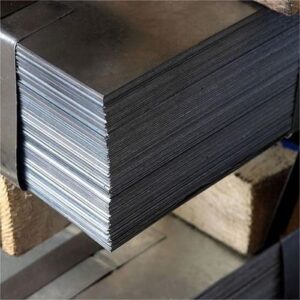
8079 O Cold Forming Aluminum Foil

| Nomen | 8079 O Cold Forming Aluminum Foil |
| Crassitudo | 0.01-0.2mm |
| Latitudo | 200mm – 1800mm,Mos |
| Superficies | Splendida, expolitum, hair line, brush, sand blast, varia, caelatum, etching, lacquered, etc. |
| Technical | Frigus volubilem ( CC )、Annealing ( O* )、Cast |
8079 O Cold Forming Aluminum Foil: Industria Applications, Properties, and Supplier Insights
Aluminum foil in the 8000 series plays a pivotal role in modern packaging, electronics, et industriae applicationes. Inter haec, 8079 alloy stands out for its excellent formability, obice possessiones, and suitability for cold forming processes that require delicate shaping without damaging the foil.
When the temper is O (annaeus) and the product is designed for cold forming, manufacturers gain a material that can be formed into complex, high-precision shapes while maintaining effective barrier performance and light weight.
This article dives into the essentials of 8079 O cold forming aluminum foil, exploring its chemistry, mechanical and barrier properties, typical applications, manufacturing considerations, and supplier perspectives, with a practical emphasis on reliability, qualitas, et valorem.
We also introduce ECO Alum, a supplier committed to delivering high-quality 8079 O cold forming aluminum foil at scale, with a focus on performance, traceability, ac elit satisfactio.
Quid est? 8079 O Cold Forming Aluminum Foil?
8079 O cold forming aluminum foil refers to aluminum foil manufactured from alloy 8079, with an O temper indicating the metal is in the annealed state.
The term “cold forming” in this context describes a manufacturing approach where the foil is formed at ambient temperatures—often in combination with rolling, effingens, and finishing steps—without the use of hot working to achieve the final geometry.
The result is a soft, highly formable foil that can be shaped into intricate profiles, packaging lids, sigilla, or barrier structures while preserving the foil’s inherent advantages: humilis density, excellent barrier to moisture and gases, and a smooth surface finish suitable for secondary processing, excudendi, and coating.
8079 est pars 8000-aluminium series family, which is aluminum-manganese and aluminum-magnesium alloys designed for high formability and good corrosion resistance.
The O temper denotes a fully annealed state, meaning the foil has the maximum ductility and the lowest yield strength among tempers.
In usu, 8079 O foil can be formed into delicate features, crisp edges, and complex profiles with minimized risk of cracking or work hardening during forming operations.
This combination of properties makes 8079 O cold forming aluminum foil attractive for specialized packaging, pharmaceutical and cosmetic applications, and other niche markets where precise forming and robust barrier performance matter.
Key takeaways:
– 8079 O indicates an annealed, highly formable foil alloy.
– Cold forming refers to forming the foil at room temperature to produce complex shapes without significant work hardening.
– The alloy is chosen for a balance of formability, obice perficientur, and compatibility with printing and coatings.
Quid? 8079 O Cold Forming Aluminum Foil Is Relevant for Modern Packaging
In packaging, the foil must perform across several dimensions: mechanical integrity during forming and sealing, barrier protection against moisture and gases, compatibility with printing and coatings, and consistency in thickness and surface finish.
The 8079 aluminium ffoyle O temper is well matched to processes that require careful forming, such as lid formation, CALLENUS, and three-dimensional wrapping features, without sacrificing barrier performance or seal integrity. Praeter:
- Formability: The O temper provides high elongation and low yield strength, enabling the foil to be shaped into complex forms with less risk of cracking or tearing during forming.
- Obice possessiones: Aluminum foil presents a dense barrier to moisture, oxygeni, aromatum, et lux. While thin foil is not a complete barrier in the same way as multi-layer laminates, its aluminum oxide layer provides excellent protection, and its performance is consistent and reliable across a wide range of temperatures.
- Printability and coatings: Foil surfaces can be prepared for high-quality printing or coated for additional barrier layers. The surface finish of 8079 O foil is typically smooth, allowing for precise printing, texturing, or adhesion of coatings.
- Compatibility with downstream processes: The soft, annealed state reduces the likelihood of premature work hardening, making it easier to form, fold, sigillum, and cut without introducing defects.
Haec proprietatibus facere 8079 O cold forming aluminum foil a practical choice for specific packaging applications, pharmaceutical blister components, and specialized consumer product packaging that demands precision and reliability.
Key Properties of 8079 O aluminium ffoyle
Understanding the properties of 8079 O aluminum foil helps buyers and engineers assess suitability for their applications.
The following lists summarize the main characteristics commonly associated with this alloy and temper, along with general performance expectations in typical use scenarios.
Alloy and temper
Alloy: 8079 (Al-Mn-Mg system with trace elements to balance formability and barrier performance)
Ingenium: O* (annaeus, mollis)
Forming condition: Cold forming-assisted processing (room-temperature forming with controlled finishing)
Mechanica proprietatibus (typical iugis)
Tensile vires: Low to moderate (as-rolled O temper)
CEDITAS: Valde humilis (consistent with annealed state)
Prolongatio ad intermissum: Altum (reflecting ductility in O temper)
Formability: Excellent for shaping into complex 3D geometries with careful process control
Repugnantia punctura: Sufficient for many consumer packaging applications; higher in thicker foils but still dependent on gauge and support structure
Thermal and barrier properties
Scelerisque conductivity: Characteristic of aluminum; suitable for heat sealing and heat transfer operations used in some packaging contexts
ERECTIUM: Optimum obice contra humorem, oxygeni, and aromas for practical packaging needs; improves with appropriate laminate or coating if used within a multi-layer structure
Caloris signationem: Compatible with common sealing technologies in packaging; surface treatment and coating can optimize seal integrity
Surface characteristics
Superficiem metam: Typically smooth and consistent, with potential for surface treatments (e.g., oxide passivation, protective coatings) depending on customer needs
Printability and coating compatibility: Suitable for printing and deposition procedures; surface preparation improves adhesion of inks and coatings
Corrosio resistentia
Corrosion performance: Adequate for typical packaging environments; corrosion resistance is influenced by alloying elements and any protective coatings or laminates used
Dimensional stability
Crassitudo tolerantiae: Tight tolerances achievable with controlled rolling and inspection
Dimensional stability: Suitable for seals and closures; careful handling reduces the risk of wrinkling or edge deformation
Vestibulum Process: 8079 O Cold Forming Aluminum Foil
1) Alloy ingot composition and casting
– The process begins with the selection of high-quality aluminum ingots with a composition tailored for the 8079 family.
– Impurities are minimized through refining and casting practices, setting the foundation for predictable mechanical behavior and corrosion resistance.
2) Homogenization and pre-rolling
– The cast slabs undergo homogenization heat treatment to even out the distribution of alloying elements.
– Slabs are then prepared for rolling, with surface cleaning and scale removal as necessary.
3) Cold rolling to foil gauge
– The slabs pass through multiple passes in a rolling mill to achieve the target gauge (crassitudine). The process uses annealing and intermediate cooling to control ductility.
– For cold forming applications, the material is kept within a temper that supports significant forming without cracking.
4) Anneratio et temperantia (O ingenium)
– Post volvens, the alloy is annealed to remove work hardening and restore ductility, assequendum O ingenium.
– The annealing atmosphere, temperatus, and duration are tightly regulated to ensure uniform softness and formability.
5) Surface finishing and inspection
– Surfaces may undergo cleaning, oxide passivation, or protective coatings depending on customer requirements.
– Superficiem metam, crassitudine uniformitatem, and edge quality are inspected, with non-destructive methods used to detect defects.
6) Slitting, flexu, et packaging
– The foil is slit to customer-specified widths and wound onto cores. Protective packaging and moisture barriers are applied for transport and storage.
– Final packaging ensures the foil arrives at the application site free of scratches, habensque, or traps for contaminants.
7) Quality control and testing
– Tension tests, elongation tests, oxygen/moisture barrier testing (ubi licet), and pinhole inspection are typical QA tests.
– Supplier QA uses process controls, statistical process control (SPC), and standard operating procedures (SOPs) to ensure repeatability.
Physical and Functional Performance: Formability, SECUNDUS, and Barrier
8079 O aluminum foil’s value in cold forming applications emerges from how its physical and functional properties align with manufacturing and packaging needs.
Formability and geometry
The O temper’s softness enables deep drawing, CALLENUS, and complex geometry without cracking.
Fixture design, tucker tools, and forming speeds must be optimized to minimize edge tears and wrinkling.
Sealing and adhesion
For packaging applications that depend on heat sealing, the surface finish and any coatings influence seal strength and consistency.
In laminates or multilayer structures, adhesion to polymer layers or coatings is a critical consideration.
ERECTIUM
Aluminum foil presents an effective barrier to moisture, gases, and aromas. Thickness and laminate combinations determine the final barrier properties of a packaging structure.
For pharmaceutical or food packaging, maintaining an inert barrier is essential to preserve product quality and shelf life.
Mechanical integrity during handling
The foil’s ductility supports forming steps but requires careful handling to avoid creases, habensque, or edge defects.
Puncture resistance is influenced by thickness and processing; higher thickness generally yields better resistance, but process optimization remains essential for thin foils.
Thermal behavior and heat transfer
Aluminum’s high thermal conductivity supports heat transfer in heat-seal processes, cooling operations, or other thermal steps in packaging lines.
Dimensional stability and consistency
Dimensional tolerances in thickness and width are critical for reliable forming and sealing.
Microstructural consistency across a coil reduces the risk of localized variability that could impact printability or coating adhesion.
Signa, Certification, and Quality Assurance
For contractors and end users, working with 8079 O cold forming aluminum foil requires confidence in quality and traceability.
Leading suppliers implement comprehensive QA programs, comprehendo:
- Raw material traceability: Full traceability from alloy billets to finished coils, along with batch numbers and chemical composition verifications.
- Process controls: Documented rolling schedules, furnum circuitus, surface finishing steps, and coil-to-coil consistency checks, supported by SPC data.
- Inspections and testing: Regular non-destructive testing (NDT) for surface defects, habensque, and edge quality; dimensional metrology for thickness and width; mechanical testing for tensile and elongation in accordance with internal standards or internationally recognized methods.
- Coatings and surface treatments: If coatings or laminates are applied, adhaesionem probat, crassitudine efficiens mensuras superiores, and compatibility assessments with inks and coatings are performed.
- Testimonia: ISO 9001 quality management systems, and ideally ISO 14001 environmental management certification. Depending on applications (e.g., pharmaceutical packaging), suppliers may also maintain GMP-like practices or product-specific certifications.
Nota: The exact standards and certifications can vary by supplier and region. Buyers should request a current certificate of conformity, material test reports (MTRS), and a detailed specification sheet for each order.
Comparationes: 8079 O Foil Versus Other Aluminum Foils
To help procurement teams choose the right foil for a given task, a comparison table is useful. The following table presents a simplified snapshot of 8079 O cold forming aluminum foil relative to other common 8000-series foils used in packaging and forming. The goal is to highlight typical strengths and trade-offs in a concise format.
Comparatio mensa (typical properties and applications)
- Columns: Admisce/Tempus, Typical Crassitudo dolor, Formability, Obex (Moisture/Oxygen), Thermal/Tensile Considerations, Communia Applications, Notable Pros, Notable Cons
- Rows: 8079 O*, 8011 O*, 8006 O*, 8021 O* (as examples)
8079 O vs 8011 O*
– Crassitudo range: 6-40 µm (8079 O*) vs 6–60 µm (8011 O*)
– Formability: Altum (8079 O*) vs Moderate to High (8011 O*, depending on thickness)
– Obex: Excellent in both; 8011 O is widely used in packaging with good moisture barrier
– Thermal/tensile: Similar for soft tempers; 8011 O may have slightly higher strength at thicker gauges
– Applications: 3D lids, specialized packaging, heat-seal components vs beverage cans or flexible packaging
– Pros: Superior formability in 8079 O for complex geometries; clean forming edges
– Cons: 8011 O may offer broader availability and established supplier networks
8006 O vs 8079 O*
– Crassitudo range: 6-40 µm (8079 O*) vs 6–60 µm (8006 O*)
– Formability: High for both; 8006 O may be slightly stiffer in very thin gauges
– Obex: Comparable
– Thermal/tensile: Similia; 8006 O may have slightly higher stiffness
– Applications: Food packaging, pharmaceutical closures (8006 O*) vs specialized cold forming components (8079 O*)
– Pros: 8006 O has a long track record in pharmaceutical and food packaging; 8079 O excels in deep-draw forming
– Cons: 8006 O may be less ideal for very fine forming features
8079 O vs 8021 O*
– Crassitudo range: 6-40 µm (8079 O*) vs 6–40 µm (8021 O*)
– Formability: Similia, sed 8079 O can deliver better deep-draw performance in some cases
– Obex: Comparable
– Applications: Seals, tiaris, and specialized geometry (8021 O is widely used for packaging structures)
– Pros: Similar performance with slight edge in 8079 O for unique shapes
– Cons: Availability and processing history may favor 8021 O in some regions
ECO alumen: Supplier Introduction and Capabilities
ECO alumen is a producer and supplier of aluminum foil products with a focus on 8079 O cold forming aluminum foil and related variants.
Their value proposition centers on consistent product quality, global reach, technical support, and reliable supply. Key aspects of ECO Alum include:
- Product range and capacity
- 8079 O foil in multiple gauges, latitudines, and coil lengths suitable for cold forming applications
- Auxiliary materials and laminates for packaging systems (when applicable)
- Flexibility to accommodate small-lot trials and larger scale manufacturing
- Manufacturing capabilities
- Integrated rolling, annealing, finishing, coating, and packaging lines
- In-process inspections with tight tolerances for thickness, latitudo, et superficies qualis
- Ability to customize surface treatments for improved printability and coating adhesion
- Qualitas et certificaciones
- ISO 9001-compliant quality management system with documented SOPs
- Traceability from raw material to finished product, including lot-level MTRs
- Ability to provide third-party testing data upon request (e.g., distrahentes, elongatio, barrier-related test results)
- Sustainability and supply chain
- Commitment to responsible sourcing, industria efficientiam, and waste management
- Transparent supplier relationships with clear lead times and production planning
- Environmentally conscious practices that align with customer CSR goals
- Customer support and service
- Technical guidance on process compatibility, formatam parametri, and lamination strategies
- Flexible logistics, including just-in-time delivery and regional distribution
- Sample program, testing support, and collaborative development for new applications
Specification Snapshot: Typical 8079 O Cold Forming Aluminum Foil
The following is a representative specification sheet for planning purposes. Always obtain an official material specification sheet from the supplier for procurement and engineering validation.
- Alloy: 8079
- Ingenium: O* (annaeus)
- METIOR (crassitudine): 6-40 µm (typical range for forming applications)
- Latitudo: 200–1700 mm (typicam, depending on mill)
- Superficiem metam: Polished/bright or matte depending on processing; surface treatment available if required
- Coatings: Optional protective layers or lamination for barrier enhancement or adhesive compatibility
- Mechanica proprietatibus (typical iugis):
- Tensile vires: Humilis (annaeus)
- CEDITAS: Valde humilis (annaeus)
- Prolongatio: Altum (indicative of ductility)
- Obice possessiones: Excellent barrier to moisture and gases for practical packaging purposes; enhanced or tailored in laminates
- Heat seal compatibility: Suitable with standard heat-sealing processes when used in monolayer or laminate configurations
- Superficiem curatio: Readily compatible with printing inks and coatings; finish and adhesion depend on the coating system
- tolerantiae: Tight thickness tolerances achievable with precise rolling and QC
- Packaging: Coil in moisture-protective packaging; vacuum-sealed or desiccated options if required
- Testimonia: ISO 9001; product test reports available; material traceability
Industrial notes:
– The exact numbers vary per customer, coil, et processum; request data sheets and batch records to validate the product for your application.
– For critical medical or pharmaceutical uses, ensure compatibility with regulatory requirements and obtain supporting documentation from the supplier.
Processing and Handling: Practical Guidelines for 8079 O Cold Forming Aluminum Foil
Forming parameters
Use forming tools and dies designed for soft, annealed foil to reduce edge tears.
Control forming speed to minimize work hardening and surface defects.
Optimize lubrication and surface contact to reduce friction and prevent localized heating.
Printing and coatings
If printing on 8079 O foil, select inks and coatings compatible with aluminum and the final laminate structure.
Surface pretreatment may be necessary to enhance adhesion and print quality.
Test print adhesion and color fastness under expected environmental conditions.
Heat sealing and lamination
For heat-sealed assemblies, calibrate sealing temperatures and dwell times to avoid foil damage.
In laminates, ensure that the adhesive system is compatible with aluminum and any polymer layers.
Validate seam integrity under typical storage conditions and product usage scenarios.
Storage and handling
Store away from corrosive environments and extreme humidity; keep coils in original packaging until use.
Avoid mechanical handling that could cause edge damage or creases.
Implement protective handling procedures to maintain surface quality and dimensional stability.
Quality control during procurement
Request incoming inspection data, comprehendo crassitudine, width uniformity, and surface condition.
Confirm that the supplier provides batch-level MTRs and end-use suitability documentation.
Consider initial pilot runs to validate forming performance and seal integrity before scale-up.
Safety and compliance
Follow standard occupational safety guidelines for handling metal foil to avoid cuts and injuries.
Ensure compliance with environmental and regulatory requirements for your specific market (recycling, disposal, and waste management).
FAQs 8079 O Cold Forming Aluminum Foil
Quid est? 8079 O aluminium foil?
8079 is an aluminum alloy in the 8000-series family. The O temper denotes an annealed, soft condition. When used in cold forming applications, the foil is processed to retain high ductility suitable for forming into complex shapes.
Quid “frigus formatam” mean in aluminum foil production?
Cold forming refers to forming and shaping the foil at room temperature, without hot work. The process relies on the foil’s ductility to achieve complex geometries while maintaining barrier performance.
What are typical applications for 8079 O cold forming aluminum foil?
Applications include packaging lids and closures, specialized packaging components requiring precise forming, and other product packaging where tight tolerances and robust barrier performance are essential.
What are the key properties to consider when selecting 8079 O foil?
Formability (ductility and edge quality), thickness and width tolerances, obice perficientur, heat-seal compatibility, printability and coating compatibility, and compatibility with the target laminate or packaging system.
How does ECO Alum support customers seeking 8079 O cold forming aluminum foil?
ECO Alum provides product availability, technical guidance, Sample temptationis, and end-to-end supply chain services. They emphasize traceability, QA, and customer support for application-specific needs.
How should I validate a supplier of 8079 O foil?
Evaluate technical specifications, review material test reports (MTRS), request sample coils for formability testing, cognoscere certificaciones (e.g., ISO 9001), and confirm lead times, logistics, and after-sales support.
Can 8079 O foil be used in multi-layer packaging?
Ita. In many packaging systems, aluminum foil acts as a barrier layer within laminates or multi-layer structures. The compatibility of the foil with adhesives, polymers, inks, and coatings is crucial for overall package performance.
conclusio
8079 O cold forming aluminum foil represents a specialized material option that combines exceptional formability with reliable barrier properties, making it well-suited for intricate packaging geometries and applications that demand precision and consistency.
When selecting this foil, buyers should consider the entire packaging system, including laminates, coatings, inks, and sealing technologies.
The 8079 O temper’s ductility enables complex shapes, while the aluminum base provides a robust barrier and compatibility with a range of downstream processes.
Supplier partners like ECO Alum bring additional value through dedicated capabilities in manufacturing, quality assurance, and supply chain reliability.
By providing traceability, testing data, and technical guidance, these suppliers help customers move from concept to validated products with confidence.
For engineers and procurement teams, a structured evaluation that aligns foil properties with process requirements—supported by pilot trials and lab testing—helps ensure that 8079 O cold forming aluminum foil delivers the expected performance in real-world packaging environments.
As markets evolve toward more sophisticated packaging solutions, 8079 O cold forming aluminum foil offers a practical combination of formability, obice perficientur, and compatibility with modern manufacturing lines.
With careful material selection, processus ipsum, and supplier collaboration, this foil can be a cornerstone of high-quality packaging and product protection across diverse industries.