
0.04mm, palyginti su 0,05 mm farmacine aliuminio folija
Executive Summary
Within the intricate ecosystem of modern pharmaceutical manufacturing, packaging transcends its role as a mere final step, emerging as a critical component intrinsic to product integrity, patient safety, and therapeutic efficacy. At the operational heart of the dominant blister packaging (PTP – Press-Through Packaging) system lies pharmaceutical aluminum foil, a specialized engineered material that serves as the primary, definitive barrier between the drug and its external environment. Among its defining physical properties, storis stands as the paramount parameter, orchestrating a complex and delicate balance between absolute barrier performance, mechanical robustness, production line efficiency, global regulatory compliance, and total cost economics. The industry’s prevalent specifications of 0.04mm (40 mikronų) and 0.05mm (50 mikronų), separated by a mere 0.01mm, represent a significant technological and economic crossroad for pharmaceutical companies worldwide. This seemingly minor differential cascades into substantial, measurable implications for packaging line performance, drug protection capability throughout its intended shelf life, material economics, and ultimate end-user experience.

aš. Foundational Principles and Evolving Standards of Pharmaceutical Aluminum Foil
1.1 Definition and Core Function
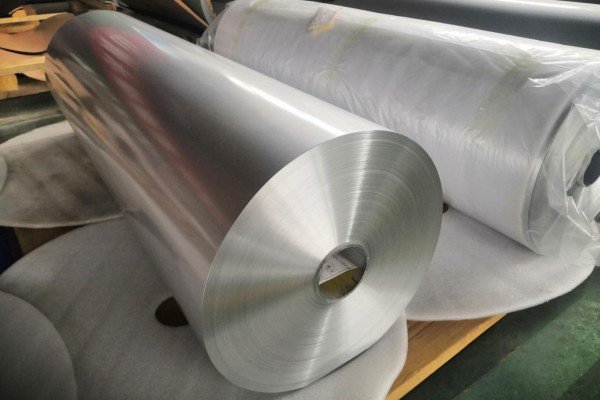
Pharmaceutical aluminum foil is a high-purity, precision-rolled product engineered explicitly for direct-contact primary packaging of medicinal products. Fabricated from specialized pharmaceutical-grade aluminum alloys such as 8011, 8021, ir 8079, it undergoes a meticulously controlled sequence of metallurgical and converting processes. This includes casting, homogenization, hot and cold rolling, tarpinis atkaitinimas, baigti valcuoti, valymas, and precise surface treatment (coating/printing). This rigorous transformation yields a material endowed with a unique and non-negotiable constellation of properties: absolute light barrier, exceptional resistance to moisture vapor and gas (deguonies) transmission, non-permeability, chemical inertness, controlled ease of tearing, and reliable heat-sealability. These attributes collectively establish it as the undisputed global standard for unit-dose, push-through (PTP) packaging of solid oral dosage forms—encompassing tablets, hard and soft gelatin capsules, caplets, and lozenges.
1.2 Multidimensional Value Proposition
The value proposition of pharmaceutical aluminum foil is multidimensional and critical to the drug product lifecycle:
- Barrier Integrity and Stability Assurance: It provides a near-hermetic seal against the primary environmental stressors: deguonies, vandens garai, and ultraviolet light. This directly prevents the dominant drug degradation pathways of oxidation, hydrolysis, and photolytic decomposition, which are crucial for maintaining labeled potency, saugumo, and shelf life throughout global distribution chains.
- Global Regulatory Compliance: Its manufacture, composition, and performance are mandated to adhere to a stringent framework of global standards. This includes national pharmacopoeias (pvz., Kinijos farmakopėja, USP, EP), specific drug packaging material standards (pvz., YBB series), and overarching food contact/material safety regulations (pvz., FDA 21 CFR, EU Framework Regulation 1935/2004), ensuring ultimate patient safety.
- High-Speed Manufacturing Compatibility: It is specifically designed for seamless, reliable integration with modern, automated high-speed blister packaging lines. It supports throughputs exceeding 300 blisters per minute while ensuring consistent sealing quality and forming accuracy, which is fundamental to operational efficiency.
- Functional and Patient-Centric Utility: It accommodates high-quality printing for critical product identification, prekės ženklas, dozavimo instrukcijos, and advanced anti-counterfeiting measures (pvz., sequential QR codes, holograms). The engineered easy-push-through feature directly enhances patient compliance, convenience, and accessibility, especially for elderly and pediatric populations.
1.3 The Standardization Framework: 0.04mm and 0.05mm
Both 0.04mm and 0.05mm are well-established, fully compliant, and codified thicknesses within international and national material standards. They are governed not by a single specification, but by a robust, interlocking framework that mandates a comprehensive suite of quality attributes beyond mere thickness. This includes: atsparumas tempimui, elongation at break, bursting strength, pinhole frequency and size distribution, šilumos sandarinimo stiprumas, coating adhesion, and stringent limits for extractables, leachables, and heavy metals. Compliance with harmonized standards ensures both thickness variants meet the same non-negotiable safety and quality baseline. The fundamental distinction, therefore, is not one of compliance or safety, but one of performance gradientir application-specific suitability.
1.4 Thickness as the Critical Design Variable
In packaging design, thickness operates as the foundational and most influential variable, exerting direct and often proportional influence on all key performance axes:
- Barrier Performance and Defect Statistics: Increased thickness reduces the statistical probability of microscopic defects (like sub-critical pinholes) occurring through the volume of material, leading to more consistent and reliable long-term barrier properties, although both grades in this range offer exceptional, “complete” apsauga.
- Mechanical and Physical Properties: Key properties such as tensile strength, puncture resistance, bursting strength, and stiffness generally scale with material thickness. This directly affects durability during high-speed conversion, transportavimas, storage, and end-user handling.
- Apdorojimas & Conversion Behavior: Thinner foils (0.04mm) typically exhibit lower bending stiffness, which can enhance conformability during deep drawing and significantly reduce the force required for patient push-through. Thicker foils (0.05mm) offer greater inherent rigidity, which can be beneficial for maintaining blister shape, deep-draw integrity, or providing extra physical protection against crushing.
- Economic and Environmental Impact: Material cost is directly proportional to weight and volume; a shift from 0.04mm to 0.05mm represents a significant increase in raw aluminum consumption per unit area, directly impacting packaging cost and environmental footprint (lifecycle assessment).
- Risk Profile: Selecting an inadequate thickness for a given application (pvz., a very large, heavy tablet in a deep blister) could elevate the risk of foil fracture under stress, potentially compromising package integrity—a Critical Quality Attribute (CQA) that can lead to stability failures or recalls.

II. Material Science, Metallurgy, and Microstructural Characteristics
2.1 Alloy Selection and Strategic Pairing
The selection of the base aluminum alloy is the first critical step in tailoring foil performance to application needs. The industry predominantly utilizes soft-temper (O temperamentas) variants of 1xxx and 8xxx series aluminum alloys, chosen for their high purity, puikus formavimas, and proven compatibility with pharmaceutical requirements.
- Lydinys 8011: A versatile, cost-effective workhorse alloy containing controlled additions of iron and silicon. It offers an excellent, balanced combination of adequate strength, geras formavimas, and reliable barrier properties, making it suitable for the majority of conventional solid dosage forms.
- Lydinys 8021: Characterized by a finer, more uniform grain structure and an optimized composition (often with added manganese), it provides superior barrier performance, particularly against moisture vapor transmission. This makes it the ideal choice for highly hygroscopic or particularly moisture-sensitive drug formulations.
- Lydinys 8079: A premium pharmaceutical-grade alloy with very tightly controlled impurity limits and microstructure. It offers the most favorable combination of high intrinsic strength, exceptional deep-draw formability, and consistent, high-grade barrier properties. It is often specified for high-value, potent, or sensitive pharmaceuticals.
While all three alloys can be successfully produced in both thicknesses, a strategic pairing is common industry practice: 0.04mm foil frequently employs 8021 arba 8079 lydiniai to offset the inherent strength reduction from the thinner gauge, ensuring it still meets or exceeds all mechanical and protective requirements. 0.05mm foil provides greater formulation flexibility, performing admirably with all three alloys, potentially allowing for cost optimization with 8011 where its enhanced thickness already guarantees ample strength and protection.
2.2 Precision Gauge Control: The Cornerstone of Quality
Storio vienodumas is a non-negotiable quality metric, paramount for achieving consistent heat-sealing and ultimate blister integrity. Both target specifications demand exceptionally tight tolerances, typically within ±0.002mm (±2 microns). Praktikoje, premium-tier manufacturers control 0.04mm foil within 0.038–0.042mm and 0.05mm foil within 0.048–0.052mm. This precision is achieved via state-of-the-art foil rolling mills equipped with advanced, real-time thickness control systems (pvz., X-ray or laser gauges with automatic gauge control, AGC). This ensures the entire coil, from core to tail, maintains a consistent cross-section, thereby eliminating weak points that could lead to leakers or sealing failures.
2.3 Microstructural Narratives: A Tale of Two Thicknesses
A microscopic examination reveals distinct structural narratives that directly dictate macroscopic performance:
- 0.04mm Foil Microstructure: Achieving this thinner gauge consistently requires a greater number of controlled rolling passes with precise inter-pass annealing. This intensive thermo-mechanical processing results in a refined, equiaxed, and very uniform grain structure with higher dislocation density and superior surface finish. The practical benefits translate to excellent coating adhesion, enhanced printability and resolution, and a smooth, uniform substrate that promotes consistent, uniform heat sealing across the web.
- 0.05mm Foil Microstructure: The relatively thicker cross-section allows for a slightly different process window, often resulting in a more robust, slightly larger grain structure with greater inherent toughness and deformation resistance. This translates directly into higher puncture resistance, standumas, and a margin of safety against through-thickness defects.
2.4 The Composite Structure: Dual-Side Functionality
Pharmaceutical foil is a sophisticated composite structure with intentionally differentiated functionalities on each side:
- Printing/External Side: This side is coated with a protective, printable lacquer. It accepts high-quality printing (inks, varnishes) for graphics and text and provides essential resistance to abrasion, tvarkymas, and environmental exposure during shelf life.
- Heat-Seal/Internal Side (Drug Contact Side): This side is coated with a specialized polymer-based (pvz., PVC, PVDC, PP, or acrylic-based) heat-seal lacquer. It is formulated to bond securely and irreversibly to the blister cavity forming film (typically PVC, PVDC, or Aclar) esant tam tikrai temperatūrai, spaudimas, and dwell time parameters on the packaging machine.
The thickness of the aluminum foil substrate itself influences the performance of both sides: the flatter, more uniform surface of 0.04mm foil enhances print resolution and registration accuracy, while the greater mass and structural rigidity of 0.05mm foil can support thicker or more robust functional coatings and may offer slightly better resistance to curl.
III. Granular Comparative Analysis of Core Physical and Functional Properties
3.1 Dimensional and Gravimetric Specifications
| Parametras | 0.04mm Pharmaceutical Foil | 0.05mm Pharmaceutical Foil | Practical Implication |
|---|---|---|---|
| Nominal Thickness, | 0.040 mm (40 µm) | 0.050 mm (50 µm) | Primary design and specification variable. |
| Typical Industry Tolerance, | ±0.002 mm | ±0.002 mm | Indicator of manufacturing precision; critical for consistency. |
| Theoretical Basis Weight, | ~108 g/m² | ~135 g/m² | Direct driver of material cost. 0.05mm uses ~25% more aluminum per square meter. |
| Yield per Kilogram (500mm width), | ~18.5 meters/kg | ~14.8 meters/kg | A decisive cost-efficiency advantage: 0.04mm provides ~25% more packaging area per unit weight purchased., |
3.2 Mechanical Integrity and Strength Profile
Mechanical properties are rigorously tested per pharmacopoeial methods (pvz., tensile test, burst test). The data below represents typical ranges for premium-grade foils from qualified suppliers.
| Veiklos rodiklis | 0.04mm Pharmaceutical Foil | 0.05mm Pharmaceutical Foil | Pharmacopoeial Minimum | Implication |
|---|---|---|---|---|
| Tempimo stiprumas (MPa), | 100 – 130 | 110 – 145 | ≥80 | Resistance to stretching during high-speed unwinding and forming. 0.05mm is intrinsically stronger. |
| Pailgėjimas lūžio metu (%), | 8 – 15 | 10 – 18 | ≥6 | Measure of ductility and formability before fracture. Both are more than sufficient for standard blister forming. |
| Bursting Strength (kPa), | 120 – 180 | 180 – 250 | ≥ 98 | Critical indicator of abuse resistance. 0.05mm offers significantly higher resistance to internal pressure or external crushing forces, a key factor for heavy tablets or harsh logistics. |
| Atsparumas pradūrimui (N), | 4.0 – 6.0 | 5.5 – 8.0 | Often a client specification | Resistance to sharp edges or accidental piercing. 0.05mm is superior, providing an extra safety margin. |
| Standumas (Bending Modulus), | Žemiau | Aukštesnis | N/A | 0.04mm is more pliable, aiding conformity; 0.05mm offers more “body” and resistance to buckling or creasing. |
Išvada: While 0.05mm foil demonstrates superior mechanical strength across all measured metrics, it is imperative to note that 0.04mm foil comfortably meets and often exceeds all pharmacopoeial minimums by a wide margin. It is fully capable of withstanding the rigors of modern high-speed packaging, standard global distribution, and patient use for the vast majority of drug products. The extra strength of 0.05mm represents a performance buffer, not a necessity, for most applications.
3.3 Barjeras: The Primary and Non-Negotiable Function
The fundamental and primary purpose of aluminum foil in pharmaceutical packaging is to provide an impermeable barrier. Aliuminis, as a monolithic metal, provides a barrier that is several orders of magnitude superior to any polymeric material. Once a critical minimum thickness (generally accepted to be above 0.025mm or 25µm) is achieved, the barrier becomes effectively absolute.
- Vandens garų perdavimo greitis (WVTR): Both 0.04mm and 0.05mm high-quality foils exhibit WVTR values žemiau 0.01 g/(m² · 24 val) under standard test conditions (38°C, 90% RH). This is effectively zero for all practical pharmaceutical purposes, protecting even the most hygroscopic active pharmaceutical ingredients (APIs).
- Deguonies perdavimo greitis (OTR): Similarly, OTR for both is essentially 0 cm³/(m²·24h·atm), completely preventing oxidative degradation, a common pathway for many APIs and excipients.
- Light Transmission: Both provide 100% opacity, completely blocking the full spectrum of UV, visible, and infrared light, which is crucial for light-sensitive drugs (photolytics).
Key Insight: For the vast majority of pharmaceutical applications, there is no clinically, chemically, or stability-relevant difference in the barrier performance of 0.04mm versus 0.05mm foil when sourced from a quality supplier. The barrier is a function of the metal’s inherent crystalline impermeability, not its thickness within this range. Concerns about barrier insufficiency for 0.04mm are unfounded from a materials science perspective, provided the foil is manufactured under controlled conditions and is free of gross defects.
3.4 Defect Analysis: The Criticality of Pinhole Control
Pinholes are microscopic perforations that can theoretically compromise barrier integrity if they are numerous, large, or aligned. Their control is a Critical Quality Attribute (CQA).
- Standard Requirement: Pharmacopoeial standards set strict, pass/fail limits. A typical specification is: Zero pinholes >0.3mm in diameter; ≤1 pinhole in the 0.1-0.3mm range per square meter; and no clustering of pinholes.
- Manufacturing Reality: Modern foil rolling technology—utilizing fine-grained alloys, filtered melts, and clean-room practices—allows premier producers to achieve these stringent limits consistently for both thicknesses. The risk of pinhole formation is managed through metallurgical and process control (švara, rolling lubrication, atkaitinimas), not solely by increasing bulk thickness. Todėl, a well-manufactured 0.04mm foil can have pinhole statistics identical to, and often better than, a 0.05mm foil. The assumption that “thicker is always better” for pinholes is an oversimplification.

3.5 Heat Seal Performance and End-User Functionality (Openability)
The interaction between the foil’s heat-seal coating and the blister cavity forming film is critical for creating a hermetic, child-resistant yet senior-friendly seal. Openability, or push-through force, is a key patient-centric attribute.
| Veiklos rodiklis | 0.04mm Pharmaceutical Foil | 0.05mm Pharmaceutical Foil | Industry Target / Standartinis |
|---|---|---|---|
| Šilumos sandarinimo stiprumas (to PVC/PVDC), | 5.0 – 8.5 N/15 mm | 5.5 – 9.0 N/15 mm | Typically ≥5.0 N/15mm (must be strong, often child-resistant) |
| Typical Heat Seal Temperature Range, | 130 – 170 °C | 135 – 175 °C | Must be optimized for the specific blister film and coating. |
| Stūmimo jėga (Tearing Force), | 1.5 – 3.5 N, | 2.5 – 5.0 N, | 1.5-4.5 N (Balances ease for elderly with child-resistance) |
| Peel Character, | Clean, consistent peel with lower force. | Slightly higher, more sustained force required. | Should be smooth, not fibrous. |
- 0.04mm Foil: The lower mass requires less energy input to reach sealing temperature, leading to a potentially faster heat-seal response and a wider, more forgiving processing window on packaging lines, which boosts yields. Jo significantly lower push-through force is a major ergonomic and accessibility advantage, especially for elderly or arthritic patients. This is often leveraged in marketing as “Senior-Friendly” arba “Easy-Open” pakavimas.
- 0.05mm Foil: Provides a robust, high-strength seal. The higher push-through force can be perceived as a more “secure” arba “kokybės” feel but may present accessibility challenges for a segment of the population. It may align better with certain child-resistant packaging (CRP) testing requirements, though both can be formulated to meet CRP standards.
Iv. Performance in Commercial Manufacturing: Processing and Equipment Adaptability
4.1 High-Speed Blister Packaging Line Performance
Modern blister lines are high-precision systems operating at staggering speeds, placing exacting demands on material handling, consistency, ir patikimumas.
- 0.04mm Foil: Its lower weight per unit area and reduced stiffness contribute to excellent feedability and web tension control. It has lower inertia during rapid start-stop cycles and causes less wear on forming and sealing tools. It is the undisputed preferred choice for ultra-high-speed lines (250-400 blisters/minute and above) as it minimizes the risk of costly web breaks and tension control issues. It is the established global standard for high-volume OTC and generic drug production.
- 0.05mm Foil: Its higher stiffness provides better tracking stability and resistance to wrinkling on lines with long, unsupported web paths. It is perfectly suited and widely used for medium to high-speed lines (120-250 blisters/minute) and is often chosen for larger blister formats (pvz., for calendar packs) or where line conditions are less optimized, as it is more forgiving of minor misalignments.
4.2 Formability and Blister Cavity Compatibility
- Shallow to Medium-Depth Blisters (Standartinis): Both foils perform excellently. 0.04mm foil may offer slightly better conformity to complex or multi-level cavity shapes due to its higher pliability.
- Deep-Draw Blisters: Used for large tablets, kapsulės, or multi-unit doses. 0.05mm folija, with its higher tensile strength and elongation, is frequently recommended for very deep draws (>12-15mm). Its greater resistance to thinning and potential fracture at the critical radii and corners of the deep draw provides a larger safety margin during forming and ensures integrity under the stress of a tightly packed tablet.
4.3 Secondary Operations: Spausdinimas, Die-Cutting, and Slitting
- Spausdinimas: The smoother, more uniform surface of 0.04mm foil can yield marginally superior print definition, color vibrancy, and registration accuracy. The thicker, more dimensionally stable 0.05mm foil may offer slight advantages in high-speed, multi-color rotary printing by reducing register drift over very long runs.
- Die-Cutting/Cutting: 0.04mm foil generally results in cleaner cuts with less burr formation and lower long-term tool wear on punch and die sets. Its lower thickness can also allow for tighter nesting of blister pockets on the sheet, potentially improving material utilization (derlius) by a few percentage points, which compounds cost savings.
V. Strategic Application Mapping and Drug Product Considerations
The choice between 0.04mm and 0.05mm is not arbitrary; it is an application-driven, risk-based decision. Below is an expanded strategic guide for matching foil thickness to product needs.
5.1 Primary Domains for 0.04mm Pharmaceutical Foil (The Optimized Workhorse)
- High-Volume Solid Oral Dosage Forms: Conventional tablets, hard-shell capsules, softgels, and lozenges for mass-market therapeutics (analgesics, antihistamines, vitaminai, common antibiotics).
- OTC (Over-the-Counter) Vaistai: Where supply chain cost-competitiveness, maximum high-speed packaging efficiency, and user-friendly openability are paramount commercial and design requirements.
- Generics and Essential Medicines: For public health programs, tender businesses, and markets with extreme cost sensitivity, maximizing the number of doses per kilogram of foil is a critical strategic objective.
- Drugs with Standard Shelf-Life (2-3 metų): The vast majority of solid dosage forms fall into this category. 0.04mm provides complete stability support as proven by countless regulatory filings and ICH stability studies.
- Pediatric and Geriatric-Friendly Packaging: The lower, controlled push-through force is a significant design advantage and a marker of patient-centricity for populations with reduced hand strength or dexterity.
- Sustained-Release/Modified-Release Formulations: Where the primary packaging need is a reliable long-term barrier against moisture and oxygen, not extreme physical protection against crushing.
5.2 Primary Domains for 0.05mm Pharmaceutical Foil (The Specialized Solution)
- High-Value, Potent, and Specialized APIs: Biologics (in solid dosage form), oncologics, specialized hormones, antipsychotics, and other high-cost/high-potency drugs where an extra margin of physical protection is easily justified within the overall product cost structure.
- Drugs with Extended Shelf-Life (3-5+ metų): For long-term stockpiling (strategic national reserves, military) or drugs with very slow degradation profiles where maximum assurance over decades is the primary design goal, beyond standard ICH conditions.
- Large, Dense, or Heavy Dosage Units: Large oblong tablets, big capsules (pvz., 000 dydis), or chewy doses that exert more static and dynamic stress on the blister pocket walls and lidding.
- Deep-Draw and Special-Shape Blisters: As previously noted, for mechanical performance during the forming process itself to prevent splits or tears.
- Export/Global Supply Chain Products: Subjected to extended, multi-modal logistics involving variable temperatures, drėgmės, and potential pressure changes (air freight), and frequent handling. The extra robustness can mitigate risk in less controlled logistics environments.
- Military, Field, or Humanitarian Aid Kits: Where packages must withstand extreme handling, variable climates, and potential rough conditions without compromise.

5.3 Decision-Matrix for Rational Thickness Selection
| Decision Factor | Leans Toward 0.04mm | Leans Toward 0.05mm | Rationale & Pastabos |
|---|---|---|---|
| Drug Value & Potency, | Standartinis, Generic, Medium-value | High-Value, Potent, Specialty, Biologic | Risk-benefit and cost-of-goods analysis. The cost of foil is a smaller fraction of the product value. |
| Required Shelf-Life, | ≤ 3 metų (Standard ICH) | ≥ 3 – 5+ metų (Prailgintas) | Barrier is equal; the decision is based on mechanical aging and risk philosophy over very long periods. |
| Tablet Size/Weight/Density, | Small to Medium, Standard weight | Large, Dense, Sunkus, Odd-shaped | Mechanical stress on the blister pocket during transport and patient use. |
| Blister Cavity Depth, | Standartinis, Shallow (≤10mm) | Deep-Draw (>12mm) | Formability and integrity during the conversion process. |
| Packaging Line Speed, | Very High Speed (>250/min) | Standard to High Speed (120-250/min) | Web handling, tension control, and line efficiency. |
| Primary Cost Driver, | Medžiagos kaina, Yield (Cost/Dose) | Rizikos mažinimas, Premium Image/Perception | Must be analyzed through a Total Cost of Ownership (TCO) lens. |
| Target Patient Population, | General Public, Elderly, Pediatric | General Adult Population | Push-through force ergonomics and accessibility requirements. |
| Distribution Channel Complexity, | Standard Retail/Pharmacy Warehouse | Complex Logistics, Long-haul Export, Variable Climate | Abuse resistance in potentially harsh supply chains. |
VI. Comprehensive Total Cost of Ownership (TCO) Analysis
A sound economic analysis must extend far beyond the simple price-per-kilogram to encompass the full production lifecycle, conversion efficiency, and logistics.
1. Direct Material Cost: This is the most straightforward and largest difference. 0.05mm foil is approximately 25% heavier per unit area, translating directly to a 20-28% didesnė žaliavos kaina for the same packaging area, depending on alloy premium and global aluminum market conditions.
2. Conversion & Apdorojimo kaina:
- Yield Efficiency: 0.04mm provides ~25% more area per kilogram. This means fewer roll changes, less associated downtime, and higher meters of packaged product per unit of raw material input. This directly boosts overall equipment effectiveness (OEE).
- Line Efficiency: On optimized high-speed lines, 0.04mm foil can contribute to higher sustainable running speeds and lower waste (scrap rate) due to its superior handling.
- Energijos suvartojimas: Marginally lower energy may be required for heating the thinner foil mass during the sealing process, though this is often a minor factor.
3. Logistics, Warehousing, and Waste Cost: The lower weight and volume of 0.04mm foil shipments reduce freight costs (charged by weight and sometimes volume). It also increases storage capacity in warehouses. End-of-life waste (foil scrap) is also proportionally lower.
4. Kokybė & Risk Cost: This includes the potential costs associated with leakers, product recalls, customer complaints, or stability failures. While 0.05mm offers a theoretical mechanical safety margin, a well-specified and qualified 0.04mm foil from a superior supplier presents a negligible difference in real-world failure rates for compliant applications. The quality cost is overwhelmingly influenced by the supplier’s Quality Management System (QMS) ir nuoseklumą, not by this 0.01mm thickness differential.
Illustrative TCO Model (Cost per Million Finished Blisters, 500mm web width):
| Cost Component | 0.04mm Pharmaceutical Foil (Currency Base) | 0.05mm Pharmaceutical Foil (Currency Base) | Variance | Commentary |
|---|---|---|---|---|
| Žaliavų kaina, | 18,900 | 23,625 | +25.0%, | Direct calculation based on area consumption and price/weight. |
| Processing Waste (5% scrap rate), | 945 | 1,181 | +25.0% | Waste cost is proportional to material cost. |
| Line Efficiency Credit, | (500) | 0 | -500, | Estimated savings from higher speed/less downtime for 0.04mm. Real value can be significant. |
| Pakuotė & Logistics Cost, | 1,200 | 1,500 | +25.0% | Proportional to weight of material shipped. |
| Quality Failure Risk Allocation, | 380 | 350 | -7.9% | A slightly lower risk premium may be assigned to 0.05mm, though debatable. |
| Total Estimated Cost, | 20,925, | 26,656, | +27.4%, | 0.05mm imposes a ~27% higher total cost for equivalent output., |
Išvada: For the overwhelming majority of applications where 0.04mm foil meets all technical and protective requirements, it delivers a compelling and quantifiable Total Cost of Ownership advantage of 25-30% compared to 0.05mm. The strategic switch to 0.04mm represents a significant operational efficiency and direct cost-saving initiative without compromising quality, stabilumas, or regulatory compliance.
VII. Regulatory Compliance, Kokybės užtikrinimas, and Validation Pathways
Both 0.04mm and 0.05mm foils are fully qualified, compliant, and widely referenced materials within all major global regulatory frameworks. The choice is not dictated by regulation but by the manufacturer’s justification.
1. Pharmacopoeial and International Standards Compliance: They are required to meet identical test requirements and limits as stipulated in the Chinese Pharmacopoeia, USP <671> “Containers-Performance Testing”, EP 3.2.1 “Materials for Containers”, JP, and relevant YBB standards. Key universal tests include:
- Identification & Kompozicija: Verification of aluminum purity and alloying elements.
- Physicochemical Tests: Thickness, mass per unit area, atsparumas tempimui, pailgėjimas, skylutės, sealing strength, surface polarity.
- Biological Safety & Biocompatibility: Cytotoxicity (USP <87>, ISO 10993-5), sensitization, and irritation tests (typically performed on aqueous and/or solvent extracts of the material).
- Chemical Safety: Strict limits for heavy metals (Pb, Cd, Kaip, Hg ≤ 1ppm), fluorescent substances, volatile compounds, and residue on ignition.
2. Drug Master File (DMF) and Supplier Qualification: Reputable, global foil suppliers hold and maintain active Drug Master Files (Type III for packaging components) with key regulatory bodies (pvz., JAV FDA, EMA, NMPA). These confidential files detail the exact composition, manufacturing process, in-process controls, and specifications for their foil products, including both 0.04mm and 0.05mm variants. Auditing the supplier’s quality system (compliance with ISO 15378 “GMP for pharmaceutical packaging materials” is a key standard) is significantly more critical to assuring quality than the choice of thickness within the standard range.
3. Stability Studies and Packaging Validation: The foil is one component of the primary packaging sistema. Formal stability studies (ICH Q1A(R2)) must be conducted with the chosen foil thickness as an integral part of the final packaging configuration. A change in foil thickness (pvz., from 0.05mm to 0.04mm) for an already approved product is typically classified as a “Minor Change – Type II” per ICH and regional variation guidelines. This requires generating additional stability data (pvz., 3-6 months accelerated and/or ongoing real-time data) to demonstrate equivalence and a prior approval supplement submission, but it does not necessitate a full new drug application. Forward-thinking pharmaceutical companies often conduct their registration stability studies on the most cost-effective, fit-for-purpose thickness (increasingly 0.04mm) from the outset, building the optimal configuration into their original marketing authorization.
Key Regulatory Point: There is no regulatory preference or mandate for 0.05mm over 0.04mm. The responsibility lies entirely with the Marketing Authorization Holder (MAH) to demonstrate and document the suitability of the chosen packaging system through stability data and quality controls. Tens of thousands of approved drug products globally successfully and safely use 0.04mm foil.
VIII. Advanced Considerations and Future-Focused Outlook
1. Sustainability and Environmental, Social, and Governance (ESG) Drivers: The global push towards sustainable and circular packaging heavily favors source reduction. 0.04mm foil represents a direct 20% reduction in aluminum usage compared to 0.05mm. This translates to a lower carbon footprint in production (aluminum smelting is energy-intensive), reduced energy consumption in rolling and transportation, and less material requiring end-of-life management. Adopting 0.04mm is a tangible, measurable action to advance corporate ESG and sustainability goals.
2. Coating and Material Innovations: The functional performance of both foil grades is being continuously enhanced by advanced coating technologies. Developments include:
- Solvent-free and water-based lacquers: Reducing VOC emissions and improving workplace safety.
- Advanced heat-seal polymers: Offering wider sealing temperature ranges for better process tolerance and stronger bonds to emerging blister films (pvz., cyclic olefin copolymer, COC).
- Functional coatings: Enabling enhanced child-resistance (CR) properties without increasing the push-through force, or providing surface properties for improved ink adhesion and abrasion resistance.
3. The Role in High-Barrier Laminate Structures: For the most extreme barrier requirements (pvz., for drugs that are exquisitely sensitive to minute levels of moisture or oxygen), aluminum foil is often incorporated as a layer in high-barrier laminates, typically with polymers like Aclar® (polychlorotrifluoroethylene, PCTFE) or cyclo-olefin copolymer (COC). In such laminate structures, the foil layer (whether 0.04mm or 0.05mm) already provides an absolute barrier; the overall laminate’s performance is determined by the integrity of the seals and the polymer layers. The thickness choice within the laminate then hinges primarily on the mechanical needs of the final structure and cost.
4. Integration with Smart and Connected Packaging: As pharmaceutical packaging evolves to include smart elements for adherence monitoring, anti-counterfeiting, and patient engagement (pvz., RFID tags, NFC antennas, or printed electronics), the foil substrate’s properties become part of the functional design. 0.04mm folija, with its excellent surface planarity and uniformity, can provide an ideal, stable substrate for the precision printing of conductive inks or the attachment of thin electronic components.
IX. Conclusive Summary and Strategic Recommendations
The decision between 0.04mm and 0.05mm pharmaceutical aluminum foil is a definitive exercise in precision application engineering, risk-based decision making, and strategic cost management. It requires moving beyond historical precedent or perceived safety margins to an evidence-based selection process.
0.04mm Pharmaceutical Foil is the mainstream, optimized, and intelligent workhorse of the modern pharmaceutical industry. It delivers:
- Uncompromised Barrier Protection: Scientifically equal to 0.05mm for moisture, deguonies, and light transmission in real-world pharmaceutical applications.
- Full Global Regulatory Compliance: Meets and exceeds all pharmacopoeial and safety standards, supported by decades of successful use in thousands of approved products.
- Superior Manufacturing Efficiency: The ideal partner for modern, high-speed blister lines, offering excellent formability, tvarkymas, and yield.
- Enhanced Patient-Centric Design: Provides easier, more accessible push-through functionality, aligning with design-for-all principles.
- Significant Economic and Competitive Advantage: Offers approximately 25-30% lower Total Cost of Ownership, a direct contribution to gross margin and product affordability.
- Tangible Sustainability Benefit: Reduces raw material consumption, energy use, and environmental footprint, supporting corporate responsibility goals.
0.05mm Pharmaceutical Foil serves as the specialized, high-assurance solution for specific, justifiable niches:
- Exceptional Mechanical Durability: For products demonstrably requiring extreme physical protection against crushing or puncture.
- Deep-Draw and Large-Format Compatibility: Where the forming process itself dictates the need for higher strength material.
- Long-Term, High-Risk Scenarios: Justified for ultra-high-value drugs, extreme supply chain conditions, or very long shelf-life requirements where the cost premium is insignificant relative to product value or risk mitigation.
Final, Actionable Recommendation:
Už baigta 85-90% of all pharmaceutical solid oral dosage forms—encompassing the vast universe of tablets, kapsulės, and the majority of OTC and prescription drugs—0.04mm pharmaceutical aluminum foil is not merely “adequate”; it is the technically sound, economically intelligent, and strategically optimal default choice. The incremental mechanical benefits of 0.05mm foil are unnecessary for these applications and come at a substantial and avoidable recurring cost premium.
Pharmaceutical companies are strongly advised to critically challenge legacy specifications and internal standards that default to 0.05mm without specific justification. By partnering with a technically proficient, globally compliant foil supplier, companies can validate the switch to 0.04mm through standard, manageable stability protocols. This initiative unlocks annual savings of 25% or more on one of the largest packaging material cost items, without any compromise to product quality, patient safety, or regulatory standing.
In an industry facing relentless cost pressures, sustainability mandates, and the need for patient-friendly design, the strategic, widespread adoption of 0.04mm pharmaceutical foil represents a clear, impactful, and readily accessible opportunity for optimization, value creation, and enhanced competitiveness.