
1. Įvadas
Aluminum sheet metal plays an essential role in various industries, from aerospace and automotive to construction and marine engineering.
Jo lengvas svoris, atsparumas korozijai, and excellent thermal conductivity make it a go-to material for both structural and decorative applications.
Among the many forms in which aluminum is fabricated, 16 matuoklio aliuminio lakštas stands out as a widely used thickness that strikes a balance between strength and flexibility.
Understanding metal gauge systems is critical for material selection, as improper thickness can compromise product integrity, increase material costs, or create design limitations.
This article provides a detailed technical breakdown of what 16 gauge aluminum means in terms of thickness, properties, and performance.

2. Understanding Gauge Systems
What Does “Gauge” Mean in Metalworking?
In metal fabrication, terminas “gauge” is a traditional unit of measurement that indicates the thickness of sheet metal.
Tačiau, unlike linear units such as inches or millimeters, the gauge scale is nonlinear and inversely proportional—a lower gauge number represents a thicker sheet, and vice versa.
This system originated in the 19th century, long before the widespread adoption of standardized metric units.
For aluminum sheet metal, gauge continues to be widely used in industries such as construction, automobilių, ŠVOK, and aerospace.
But because the gauge system isn’t universally standardized across materials, it’s essential to understand its context-specific implications.
Differences Between Aluminum and Steel Gauge Systems
A common misconception is that gauge values are interchangeable between materials like steel and aluminum.
In reality, they follow different gauge charts. Pavyzdžiui, kol 16 matuoklis plieno yra apytiksliai 0.0598 colių (1.52 mm) storas, 16 matuoklis aliuminio yra 0.0508 colių (1.29 mm).
| Matuoklis | Aliuminis (colių) | Aliuminis (mm) | Steel (colių) | Steel (mm) |
|---|---|---|---|---|
| 14 | 0.0641 | 1.63 | 0.0747 | 1.90 |
| 16 | 0.0508 | 1.29 | 0.0598 | 1.52 |
| 18 | 0.0403 | 1.02 | 0.0478 | 1.21 |
This distinction is crucial, as substituting one material’s gauge for another without correction can lead to underrated mechanical strength arba overengineering.
Importance of Using a Material-Specific Gauge Chart
Because of these discrepancies, relying on a material-specific gauge chart is critical.
Most manufacturers and industry standards—such as ASTM B209 for aluminum sheets—publish detailed thickness conversion tables to avoid ambiguity.
Professionals in design, inžinerija, and procurement should always verify aluminum sheet thickness in either inches or millimeters when accuracy is critical.
Pavyzdžiui, a 16 gauge aluminum sheet used in an aircraft skin or HVAC duct must match design tolerances exactly to maintain structural performance and energy efficiency.
3. Exact Thickness of 16 Matuoklis Aliuminio lakštas
When working with aluminum sheet metal, understanding the precise thickness of a specific gauge is critical for ensuring mechanical performance, compatibility, and compliance with design requirements.
Let’s examine what “16 gauge” truly means for aluminum and what factors influence this measurement.
Standard Thickness in Inches and Millimeters
In aluminum sheet metal, 16 matuoklis is defined as:
- 0.0508 colių
- 1.29 milimetrų
This value is based on the most commonly accepted American Wire Gauge (AWG) scale for aluminum.
It is thinner than the same gauge in steel, as aluminum has a different density and formability profile.
This thickness provides a balance between strength and weight, making it ideal for applications where moderate structural integrity is needed without the added mass of heavier gauges.
| Matuoklis | Aluminum Thickness (colių) | Aluminum Thickness (mm) |
|---|---|---|
| 14 matuoklio aliuminio lakštas | 0.0641 | 1.63 |
| 16 matuoklio aliuminio lakštas | 0.0508 | 1.29 |
| 18 matuoklio aliuminio lakštas | 0.0403 | 1.02 |
| 20 matuoklio aliuminio lakštas | 0.0320 | 0.81 |
Tolerances and Variations Due to Manufacturing Methods
Although the nominal thickness of 16 gauge aluminum is standardized, tolerances exist based on manufacturing processes:
- According to ASTM B209, the standard tolerance for 1.29 mm (16 matuoklis) aluminum sheet thickness is typically ±0.07 mm depending on alloy, nuotaika, and width.
- Rolling mill accuracy, alloy behavior, ir post-processing techniques such as annealing or flattening can influence slight variations.
Pavyzdžiui:
- A 16 gauge aluminum sheet may range from 1.22 mm iki 1.36 mm in practice, especially in large-scale industrial batches.
These tolerances are crucial when the aluminum is used in precision-engineered systems such as electronics enclosures, aerospace components, arba medical devices.
Influence of Alloy Type and Temper
Nors 16 gauge defines a nominal thickness, aluminum alloy and temper condition can slightly influence thickness perception due to differences in hardness and ductility:
- Alloy 5052-H32 į 16 gauge will feel stiffer and more resilient than 1100-O due to its strain-hardened condition.
- While the actual thickness remains constant, machinability and formability can vary greatly.
Pavyzdžiui:
- 1100-O (Minkštas): Easy to bend and shape; used in decorative panels or light-duty cladding.
- 3003-H14 (Vidutinė jėga): Suitable for ductwork or siding.
- 5052-H32 (Didelė jėga): Common in marine and automotive panels.
4. Comparison with Other Gauges
Suprasti, kaip 16 gauge aluminum sheet compares to nearby gauges is essential when selecting the appropriate material for structural integrity, weight management, and fabrication requirements.
Aluminum Sheet Gauge Comparison Table (14–20 Gauge)
| Matuoklis | Storis (colių) | Storis (mm) | Relative Thickness | Tipiškos programos |
|---|---|---|---|---|
| 14 | 0.0641 | 1.63 | Thickest in this group | Load-bearing panels, marine enclosures, heavy-duty structures, trailer and truck skins |
| 16 | 0.0508 | 1.29 | Medium thickness | HVAC housings, aerospace skins, automobilių plokštės, ženklinimas, light structural components |
| 18 | 0.0403 | 1.02 | Thinner | Stogo danga ir dailylentės, ortakiai, equipment cladding, gaubtai |
| 20 | 0.0320 | 0.81 | Thinnest in this group | Decorative trims, elektronikos korpusai, atšvaitai, lightweight protective covers |
While all four gauges have their place, 16 matuoklio aliuminio lakštas offers an excellent midpoint — robust enough for moderate loads, yet formable and lightweight.
Selecting the proper gauge should always align with the application’s functional, structural, and economic requirements.
5. Paraiškos 16 Matuoklis Aliuminio lakštas
The 16 matuoklio aliuminio lakštas, with a nominal thickness of approximately 0.0508 colių (1.29 mm), strikes an optimal balance between strength, formuojamumas, ir svorio.
This makes it one of the most versatile thicknesses used across multiple industries. Below are some of the most prominent application areas:
Automotive and Transportation
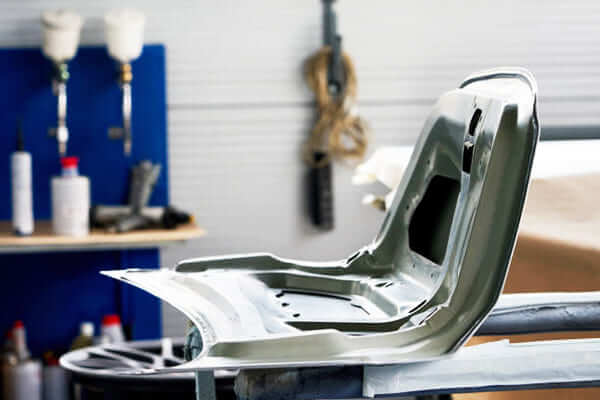
16 gauge aluminum is widely used in vehicle body panels, chassis reinforcements, ir Šilumos skydai due to its favorable strength-to-weight ratio.
Its corrosion resistance also makes it suitable for priekabos, truck beds, and rail components, where long-term exposure to weather conditions is a concern.
Pavyzdys: In lightweight electric vehicle designs, 16 gauge aluminum helps reduce vehicle weight by up to 30%, improving energy efficiency and battery range.
Statyba ir architektūra
In the construction sector, this gauge is commonly used for exterior panels, roof flashings, soffits, ir rain screens.
The material offers durability against wind, rain, and UV exposure while maintaining architectural aesthetics.
Be to, 16 gauge aluminum sheets are chosen for interior wall claddings, elevator panels, ir decorative facades, especially in commercial and public buildings.
HVAC and Ductwork
Aluminum’s thermal conductivity and corrosion resistance make it ideal for HVAC enclosures, ventilation systems, ir duct panels.
The 16 gauge thickness is stiff enough to withstand air pressure and environmental stress, while still being lightweight and easy to fabricate.
Industrial Fabrication and Equipment
Industrial manufacturers utilize 16 gauge aluminum for machinery covers, gaubtai, toolboxes, ir protective guards.
It offers the durability needed for mechanical protection while allowing efficient fabrication through cutting, lenkimas, ir suvirinimas.
Marine and Aerospace
Given its excellent corrosion resistance in saline environments, 16 gauge aluminum is also applied in small marine vessels, boat interiors, ir aircraft skins or fairings.
Its ability to resist oxidation without heavy coatings is a critical asset in these fields.

Consumer Products and Furniture
Home appliance manufacturers often use this gauge for microwave oven panels, refrigerator backs, ir kitchen equipment.
Similarly, aluminum furniture and shelving systems frequently feature 16 gauge sheets due to their lightweight yet sturdy properties.
6. Mechanical and Physical Properties of 16 Matuoklis Aliuminio lakštas
Understanding the mechanical and physical properties of 16 gauge aluminum sheet is essential for selecting the right material for structural, pramoninis, and commercial applications.
While actual values can vary based on alloy and temper, the following covers general characteristics commonly observed in this thickness.
Thickness Overview
- Nominal Thickness: ~0.0508 inches (1.29 mm)
- Svoris (for Alloy 5052-H32): ~1.84 lbs/ft² (9.0 kg/m²)
- Tankis (Aliuminis): 2.70 g/cm³
Mechaninės savybės (Typical Values)
| Turtas | Value Range | Notes |
|---|---|---|
| Tempimo stiprumas | 110 – 260 MPa | Varies by alloy (pvz., 1100, 3003, 5052, 6061) |
| Derlingumo stiprumas | 34 – 215 MPa | Lower for pure alloys, higher for heat-treated |
| Pailgėjimas lūžio metu | 5% – 30% | Reflects formability |
| Kietumas (Brinelis) | 25 – 95 HB | Depends on alloy and temper |
| Elastingumo modulis | ~69 GPa | Similar across most aluminum alloys |
Fizinės savybės
| Turtas | Typical Value |
|---|---|
| Šilumos laidumas | ~130 – 235 W/m·K |
| Elektros laidumas | ~35 – 62% IACS |
| Lydymosi taškas | 600°C – 660°C |
| Šiluminio plėtimosi koeficientas | 23.1–24.0 µm/m·K |
| Atsparumas korozijai | Aukštas (especially for 5000 serija) |
| Atspindėjimas | ~80% – 92% |
Influence of Alloy and Temper
The mechanical behavior of 16 gauge aluminum can vary significantly depending on the specific alloy and temper used:
- 3003-H14: Offers excellent formability and moderate strength; ideal for ductwork and architectural applications.
- 5052-H32: One of the strongest non-heat-treatable alloys, with superior corrosion resistance, ypač jūrinėje aplinkoje.
- 6061-T6: Heat-treatable and high-strength, used for structural parts but less formable than softer alloys.
Formability and Machinability
- Formuojamumas: Excellent in tempers like H14, O, or H32; tinka giliam piešimui, lenkimas, and rolling.
- Apdirbamumas: Vidutinis; alloys like 6061 are easier to machine but may require lubrication and sharp tooling.
7. Išvada
The 16 matuoklio aliuminio lakštas, with a standardized thickness of 0.0508 colių (1.29 mm), is a widely used and highly versatile material.
It combines the benefits of light weight, formuojamumas, and strength—ideal for a variety of commercial and industrial applications.
Tačiau, proper material selection requires more than just knowing the gauge.
Users must also factor in alloy type, mechanical requirements, environmental conditions, and fabrication processes to ensure optimal performance.
When chosen correctly, 16 gauge aluminum provides exceptional durability, thermal efficiency, and cost-effectiveness.