Aluminum Circle for Road Sign
| پیرامیٹر | Core specification |
| کھوٹ | 1050, 1060, 1100, 3003 (5052 اختیاری) |
| غصہ | اے, H12, H14, H16, H18, H22, H24 |
| موٹائی | 0.8-4.0 ملی میٹر (tolerance ±0.05 mm) |
| قطر | Ø300–1500 mm (tolerance ±1.0 mm) |
| پیداوار | CC or DC rolled, blanked or laser cut |
| سطح | روشن, ہموار, deburred; anodized optional |
| کنارہ | ڈیبرنگ, protective film available |
Aluminum Circle for Road Sign
1. Introduction to Aluminum Circle for Road Sign
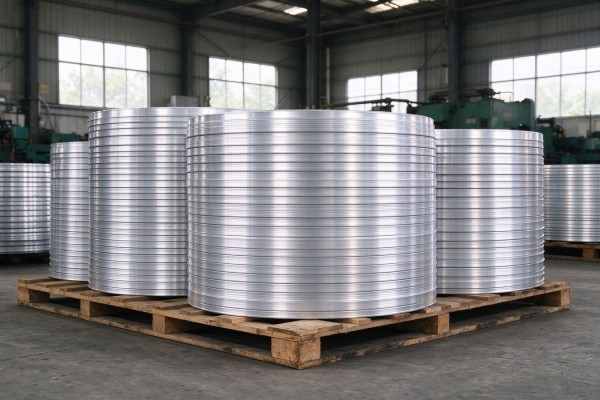
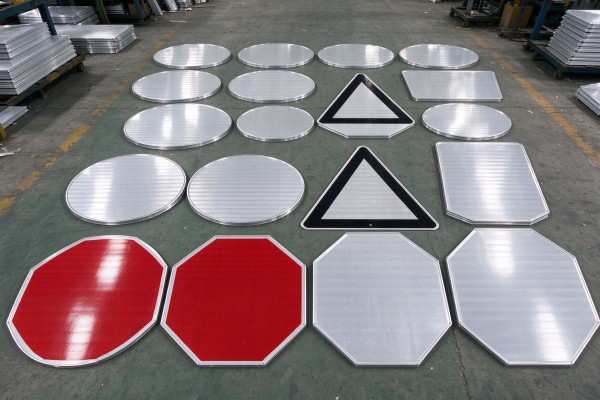
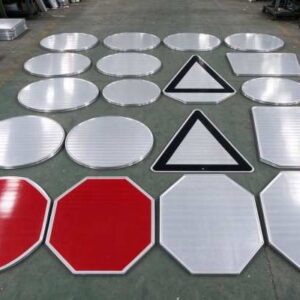
An aluminum circle for road sign is a flat, round blank stamped or cut from rolled aluminum sheet and used as the substrate of circular traffic signs.
عملی طور پر, these round blanks carry speed limit numbers, prohibition symbols and regulatory messages.
Because the signs stay outdoors for years and face sunlight, بارش, frost and road salt, the substrate material directly affects how long the sign stays legible.
اس لیے, aluminum has largely replaced steel and plastic for this job.
اس کے بنیادی حصے میں, the disc is a mill product rather than a finished sign. It is produced in commercially pure alloys such as 1050, 1060 اور 1100, or in stronger alloys such as 3003 اور 5052.
The sign maker then applies reflective sheeting, screen prints the symbol or adds a coating. خاص طور پر, aluminum is light, corrosion resistant and easy to form.
This guide covers the mechanical and physical properties, فوائد, مینوفیکچرنگ کے عمل, four application cases, pricing and Eco Alum supply. It also includes a core parameter table.
Our standard range includes the 1060 ایلومینیم دائرہ اور 1100 ایلومینیم دائرہ, together with stronger grades for large or coastal signs.
2. مکینیکل پراپرٹیز
تناؤ کی طاقت اور لمبائی
Even though a sign blank is not a load-bearing part, it must survive stamping, transport and handling without cracking.
اس لیے, tensile strength and elongation are the first mechanical properties to review. In the commercially pure alloys, tensile strength typically sits between about 60 اور 120 MPa depending on the temper.
اس دوران, elongation describes how much the metal can deform before it fails, which matters during blanking and edge forming.
عملی طور پر, a soft O temper offers the highest elongation and forms very easily, while a work-hardened H14 or H24 temper gives a stiffer blank at the cost of some elongation.
The mill tests both values on each batch and records them on the mill certificate. اس کے نتیجے میں, the sign maker can confirm that the disc will cut and trim cleanly.
For stronger needs, a 3003 blank raises the strength without sacrificing much formability.
سختی, Dent Resistance and Toughness
Road signs are shipped, lifted and sometimes struck during installation, so the blank also needs reasonable hardness and dent resistance.
A work-hardened temper is firmer and less easily dented than a soft blank. تاہم, the gauge matters just as much as the alloy. A thicker disc resists bending in the wind and stays flat, which keeps the reflective face smooth.
خاص طور پر, toughness describes how the material absorbs impact rather than shattering. Aluminum does not become brittle in cold weather, so the sign stays reliable through frost and winter storms.
In turn, this toughness reduces damage during handling. For large signs exposed to high wind pressure, a heavier gauge or a 3003 alloy is commonly chosen to keep the panel from flexing.
3. جسمانی خصوصیات
کثافت, Melting Point and Weight
ایلومینیم کے بارے میں کثافت ہے 2.7 g/cm³, which is far lower than steel. This low density is a major reason sign blanks are so easy to handle.
A large round sign can be carried and mounted by a small crew, and the light load reduces stress on the support pole. ایک ہی وقت میں, aluminum has a clearly defined melting point well above any normal outdoor temperature.
عملی طور پر, the blank never approaches its melting point in road use. اس لیے, its physical dimensions stay stable even on hot asphalt in summer.
The light weight also lowers freight cost, because more blanks fit in a shipment without exceeding weight limits. This combination of light weight and stable dimensions is especially useful for large-diameter highway signs.
Fire Resistance and Operating Temperature
Aluminum is naturally non-combustible and does not release toxic fumes when heated. اس کے نتیجے میں, it supports the fire-safety expectations of roadside infrastructure.
A metal sign tolerates a wide range of air temperatures, from cold winter conditions to hot sun. That said, the blank should not be exposed to direct flame or to surfaces hot enough to soften it.
In ordinary road, parking and construction-zone use, تاہم, the sign stays well within its safe temperature window. The non-combustible substrate also means a small roadside fire will not turn the sign into a fuel source.
اس لیے, metal is preferred over plastic for permanent outdoor signage where fire and heat exposure are concerns.
رکاوٹ, Corrosion Resistance and Reflectivity
A central physical benefit of aluminum is its natural corrosion resistance. The metal quickly forms a thin protective oxide layer that seals the surface against rain and humidity.
اسٹیل کے برعکس, it does not rust. اس لیے, an aluminum sign stays smooth and readable in damp climates without extra protection, although anodizing can add a thicker oxide layer for harsh settings.
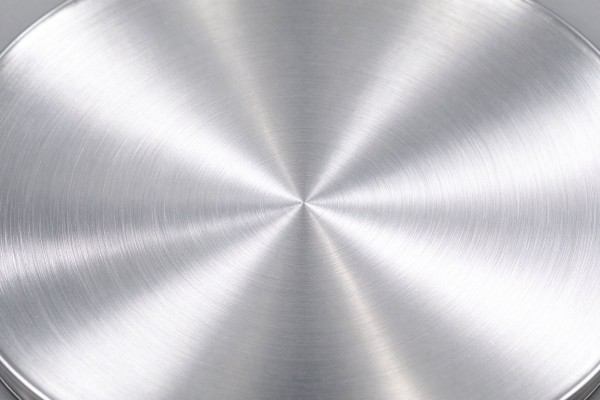
اس کے علاوہ, the bright surface reflects light and radiant heat. Once reflective sheeting is applied, this smooth base helps headlights bounce back to the driver at night.
The flat, clean substrate also gives the sheeting a strong bond so it does not peel or bubble. ایک ساتھ, these physical properties explain why aluminum has become the standard sign material worldwide.
4. فوائد
Alloy Comparison and Why Aluminum Wins
Put simply, aluminum has become the default sign substrate because it balances weight, durability and cost.
The commercially pure alloys are smooth and corrosion resistant, while the manganese and magnesium alloys add strength for large or coastal signs.
اس لیے, buyers can match the alloy to the project rather than paying for performance they do not need.
| کھوٹ | سیریز | Typical behavior in signage |
| 1050 / 1060 / 1100 | 1xxx | خالص, ہموار, سنکنرن مزاحم, اقتصادی, standard signs |
| 3003 | 3xxx | اعلی طاقت, dent and wind resistant, large highway signs |
| 5052 | 5xxx | اعلی طاقت, salt-spray resistant, coastal and premium use |
For large expressway panels, the 3003 aluminum circle is a common upgrade, while the 1050 aluminum circle covers most municipal and rural roads at a lower cost.
Beyond the alloy choice, aluminum signs offer several practical advantages. پہلے, they are light and easy to transport and mount.
اگلا, they resist rust and weather without ongoing maintenance. اس کے علاوہ, the smooth surface gives reflective sheeting a strong, lasting bond.
آخر میں, aluminum is fully recyclable, and recycling uses only a small fraction of the energy needed for primary metal. ایک ساتھ, these benefits explain its wide adoption.
5. مینوفیکچرنگ کا عمل
رولنگ, Annealing and Gauge Control
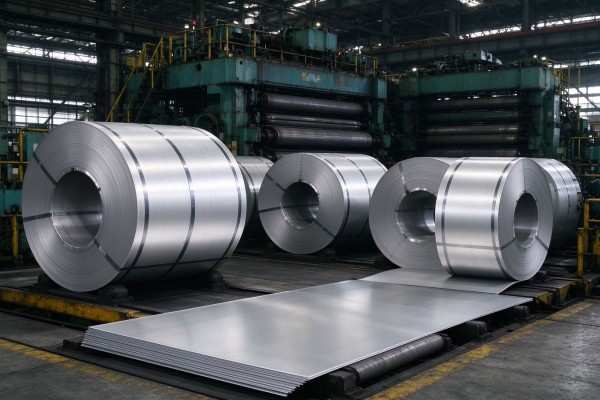
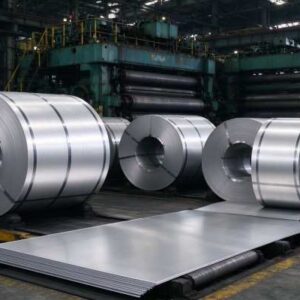
In production, a sign blank starts from an aluminum ingot that is cast and rolled into sheet. Along the way, the metal passes through hot and cold rolling mills that reduce it to the ordered thickness.
It is then annealed as needed to soften it, or left in a work-hardened temper for a stiffer blank. The mill controls gauge tolerance closely, because a flat, even sheet is essential for a smooth sign face.
Reaching a clean, flat surface is a precision process. Rolling oil, roll finish and tension all affect the final surface. The sheet is inspected for gauge consistency and surface defects before it moves to blanking.
A uniform sheet thus cuts and finishes cleanly, while an uneven one can produce wavy or off-spec blanks. For premium jobs, a
a hot-rolled aluminum disc can be specified for a denser, more stable structure.
Blanking, Deburring and Surface Treatment
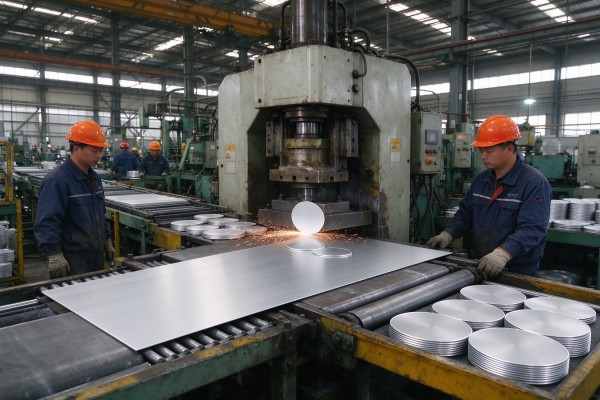
رولنگ کے بعد, the flat sheet is fed into a stamping or blanking press. There, a circular die cuts the round disc in one stroke, although laser cutting is also used for low-volume or custom diameters.
The edges are then deburred so they are safe to handle and will not catch the reflective film. A protective film may also be applied to prevent scratches in transit.
اس کے نتیجے میں, the delivered blank is ready for the sign maker, who can apply reflective sheeting, screen print the symbol or add a coating without secondary work.
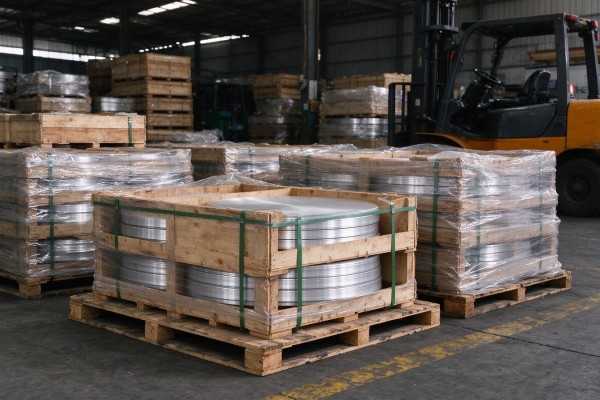
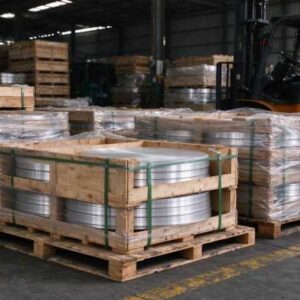
For harsh settings, the disc may be anodized to build a thicker oxide layer. آخر میں, the finished blanks are packed flat with moisture-proof wrapping and palletized for export.
6. درخواستیں: Four Key Cases
Highway and Expressway Regulatory Signs
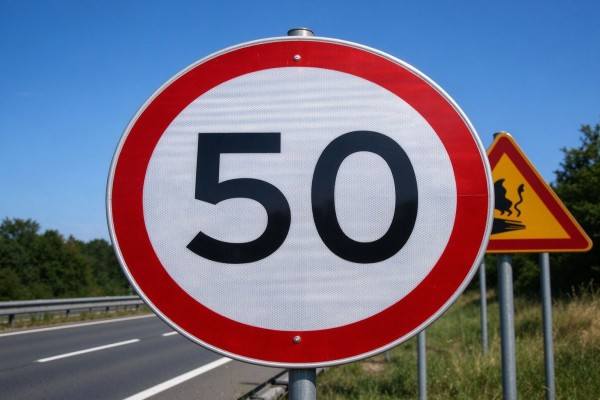
The first case is highway and expressway regulatory signage. These large round signs carry speed limits and prohibition messages and are exposed to strong wind and long viewing distances.
اس لیے, a 3003 blank in a medium-to-heavy gauge is commonly chosen. دی stronger alloy resists dent and wind pressure, while the flat face keeps the reflective symbol crisp at high speed.
اس معاملے میں, the light weight of the aluminum panel is also valuable. A large disc can be lifted and mounted on a gantry or pole without heavy equipment. The non-corrosive substrate then stays smooth for years of exposure.
The blank is sized to the standard highway diameter and fitted with high-grade reflective sheeting for night visibility.
Urban Municipal and Intersection Signs
The second case covers urban municipal and intersection signs. In cities and towns, round signs regulate turns, parking and access at junctions. a 1060 یا 1100 blank in a standard gauge is usually enough, because the panels are smaller and mounted in sheltered streets.
These pure alloys give a smooth, economical base with good reflective-film adhesion.
یہاں, the corrosion resistance of aluminum keeps the signs readable through rain and street washing. The blanks are also easy to cut and replace as traffic rules change.
Because many municipal projects buy in volume, the lower cost of the 1xxx alloys helps keep the project within budget without losing durability.
Coastal and High-Humidity Area Signs
The third case is signage in coastal and high-humidity areas. Near the sea, signs face salt spray and damp air that accelerate corrosion. اس لیے, a 5052 blank is often specified.
The magnesium alloy offers high strength and very good salt-spray resistance, so the sign stays smooth and legible in island and seaside environments.
اس معاملے میں, an anodized or coated surface can add further protection. The natural oxide layer already seals the aluminum, and anodizing builds a thicker barrier.
اگرچہ 5052 costs more than the pure alloys, it extends the service life and reduces replacement in corrosive locations. This makes it the cost-effective choice over the full life cycle.
Construction Zone, Parking Lot and Temporary Signs
The fourth case covers construction zones, parking lots and temporary signage. These signs may be moved often and need quick, low-cost installation.
A standard aluminum blank is light enough to carry between sites and tough enough to survive repeated handling. The rigid metal also stays readable in wind, unlike thin plastic panels that curl or tear.
یہاں, the recyclability of aluminum is a further benefit. Temporary signs can be returned and reprocessed rather than sent to landfill.
Parking lot and warehouse signs also use the same blanks for speed and access control. In every case, the disc is matched to the expected service life and handling, so buyers avoid paying for more alloy than the job requires.
7. Price and MOQ
Aluminum sign blanks are commonly priced per kilogram or per piece, with the metal base linked to the London Metal Exchange plus rolling, blanking and surface treatment.
A heavier gauge or a stronger alloy costs more, while the 1xxx alloys remain the most economical. اس لیے, buyers should compare the delivered cost against the required service life rather than choosing only the cheapest blank.
The minimum order quantity is often a pallet or a set number of pieces per size, while custom diameters and tempers may require a larger volume.
As with any mill product, total cost includes yield. A flat, clean blank that bonds well to reflective sheeting avoids rework, so consistent quality is worth more than a small price saving.
Because metal prices move with the market, quotations carry a limited validity, and dense flat packing keeps freight efficient.
8. Eco Alum Supply
ایکو الوم کمپنی, Ltd supplies rolled aluminum products including aluminum plates, کوئلز, ورق, strips and aluminum discs.
The company works with a rich supply chain and advanced equipment in the rolled aluminum industry, so it can support sign makers with both standard and custom blanks. Our focus is on reliable quality and responsive service for customers in different markets.
خاص طور پر, we provide aluminum circles for road signs in 1050, 1060, 1100 اور 3003 مرکب, with a range of tempers, gauges and diameters. We also support custom sizes, ڈیبرنگ, protective film and export packing.
To request a quotation and a sample, please email [email protected] or call +86 19924932491. Our team helps you select the alloy and gauge, sample before volume and hold reorders to the same specification.
9. اکثر پوچھے گئے سوالات
س: What is an aluminum circle for road sign?
a: It is a flat round blank cut or stamped from rolled aluminum sheet and used as the substrate of circular traffic signs such as speed limit and prohibition signs.
س: Which alloy is commonly used for road signs?
a: The 1xxx alloys 1050, 1060 اور 1100 are common for standard signs, جبکہ 3003 adds strength for large highway signs and 5052 resists salt spray in coastal areas.
س: What thickness is typical for sign blanks?
a: Small signs often use about 0.8–1.5 mm, medium-to-large signs use 1.5–3.0 mm, and large or high-strength panels may use 3.0–4.0 mm.
س: Why is aluminum preferred over steel or plastic?
a: Aluminum is light, does not rust, tolerates weather and fire, and gives reflective sheeting a smooth, strong bond while remaining fully recyclable.
س: Can the diameter and temper be customized?
a: ہاں. Diameters, gauges and tempers can be matched to the project, and blanks can be supplied with deburring and protective film ready for sheeting.
س: Do the blanks come with a mill certificate?
a: ہاں, a mill certificate with alloy, temper and mechanical properties is provided, and export documents are supplied on request.
10. نتیجہ
مختصر میں, an aluminum circle for road sign is a light, durable and corrosion-resistant blank for circular traffic signage.
Its mechanical and physical properties give it the strength, چپٹا پن, fire resistance and weather tolerance these signs need, while the alloy choice lets buyers balance cost and performance.
The right specification matches the alloy, gauge and diameter to the setting and uses a clean, flat blank that bonds well to reflective sheeting.
آخر کار, for sign makers and infrastructure buyers, the opportunity is consistency. A blank that always cuts cleanly, stays flat, resists corrosion and carries the right documents wins repeat orders.
Choosing the correct alloy and gauge, with honest thickness and a supplier that samples and certifies, separates a professional signage supply chain from a disposable budget blank.