

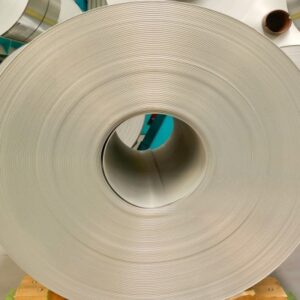


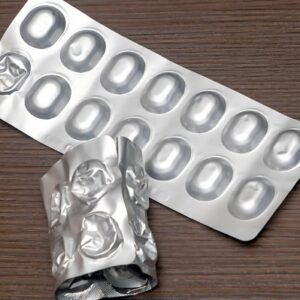
8079 Eyin Temper 0.020mm Pharmaceutical Laminated bankanje

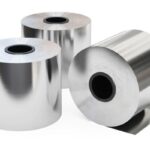
8079 Eyin Temper 0.020mm Pharmaceutical Laminated bankanje
I. ọja Akopọ
1. What is Pharmaceutical Laminated Aluminum Foil?
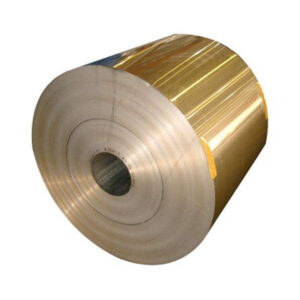
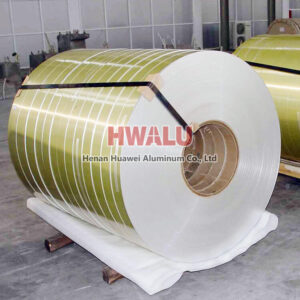
Pharmaceutical laminated aluminum foil is a high-end composite packaging material specifically designed for the pharmaceutical industry. It uses high-purity aluminum alloy as the core substrate and is laminated with polymer films through specialized processes.
It serves as one of the core substrates for both primary and secondary pharmaceutical packaging. Unlike general consumer packaging materials, pharmaceutical laminated foil adheres to stringent industry standards, focusing on three core dimensions: pharmaceutical storage safety, efficacy stability, and hygiene cleanliness.
Pharmaceuticals have extremely high requirements for the barrier properties of packaging materials. The packaging must effectively isolate external oxygen, omi oru, ultraviolet rays, òórùn, and volatile impurities to prevent moisture absorption, itẹdi, bajẹ, ati isonu ti ipa.
Nigbakanna, pharmaceutical packaging materials must be non-toxic, pollution-free, aging-resistant, and compatible with automated production lines. With its irreplaceable high-barrier and high-safety attributes, composite aluminum foil has become the core packaging material for mainstream pharmaceuticals such as tablets, awọn agunmi, awọn lulú, ati biologics, serving as a critical barrier to ensure drug quality and extend shelf life.

2. Ifihan si 8079 O Temper Aluminum Foil
8079 aluminum alloy is a premium alloy specifically used in the pharmaceutical packaging field. Unlike ordinary aluminum alloys, this material features extremely low impurity content, high material uniformity, and a dense internal structure, laying the foundation for high-end pharmaceutical packaging quality at the raw material level.
Among various pharmaceutical aluminum foil alloy systems, 8079 alloy consistently holds a core position in the high-end pharmaceutical packaging market due to its stable physical properties and ultimate barrier performance.
Awọn “O ibinu” refers to soft-state annealing treatment, a key process in aluminum foil processing. After thorough annealing, the internal stress of the 8079 aluminum foil is completely eliminated, significantly improving flexibility, igbelage, ati ṣiṣe.
This avoids issues common with hard-tempered foil, such as cracking, breaking, and poor molding effects, making it perfectly suitable for complex pharmaceutical packaging processing requirements.
The 0.020mm thickness specification introduced here is a mainstream mid-to-high-end specification for pharmaceutical composite packaging. This thickness achieves a perfect balance between performance and cost.
It avoids the defects of thinner gauges, such as high pinhole rates and insufficient barrier properties, while also avoiding the drawbacks of thicker materials, such as poor flexibility, high processing costs, and inadequate molding fit. It is widely applicable to various conventional and high-end pharmaceutical composite packaging scenarios.
3. Basic Product Specifications
The standardized parameters of 8079 O Temper 0.020mm Pharmaceutical Laminated Foil are clear and highly adaptable, with support for customization. Core specifications are as follows:
Conventional Physical Specifications
| Nkan | Paramita |
|---|---|
| Alloy ite | 8079 |
| Ibinu | O ibinu (Asọ State) |
| Sisanra | 0.020mm |
| Ìbú | 100-1600mm (Isọdi) |
| Eto | Single layer or multi-layer composite |
| Dada Ipari | Imọlẹ ẹgbẹ kan, one side matte |
| Main Application | Pharmaceutical Composite Packaging |
Ogue kemikali kemikali (Ida Ibi)
8079 elegbogi aluminiomu bankanje adopts a high-purity formula with extremely low impurity content and stable, uniform composition, meeting the high-purity aluminum standards for pharmaceutical packaging materials. This ensures material density, low pinhole rates, and high barrier performance from the source.
| Ohun elo Kemikali | Standard akoonu |
|---|---|
| Aluminiomu (Al) | ≥99.00% |
| Irin (Fe) | 0.40%~0.80% |
| Silikoni (Ati) | ≤0.30% |
| Ejò (Ku) | ≤0.05% |
| Manganese (Mn) | ≤0.05% |
| Iṣuu magnẹsia (Mg) | ≤0.05% |
| Zinc (Zn) | ≤0.10% |
| Individual Impurities | ≤0.03% |
| Lapapọ Awọn Aimọ | ≤0.50% |
II. Core Reasons Why 8079 Aluminum Foil is the Preferred Choice for Pharmaceutical Composites
1. Superior idankan Performance
8079 aluminum foil offers industry-leading comprehensive barrier capabilities, serving as a core guarantee for the long-term storage of high-end pharmaceuticals.
Its dense and uniform material structure provides all-around protection against environmental factors: efficiently blocking oxygen to prevent oxidative failure; strongly resisting water vapor to eliminate moisture absorption, mimu, ati ibajẹ; providing 100% UV shielding to prevent photosensitive drugs from decomposing; and effectively blocking external odors, eruku, and volatile substances to prevent contamination and ensure drug purity and stability.
2. O tayọ ni irọrun
After O temper softening and annealing, the internal stress of 8079 aluminum foil is fully released, significantly enhancing its flexibility and elongation.
Compared to ordinary hard-tempered foil, this product is suitable for complex packaging processes such as deep drawing, tutu lara, ṣigọgọ, and fitting. During the production of blister packs and shaped pharmaceutical packaging, it does not suffer from stretching cracks, fifọ, or fractures, perfectly conforming to various packaging molds and adapting to diverse pharmaceutical packaging structure designs.
3. Oṣuwọn Pinhole Low Lalailopinpin
Pinholes are a core defect affecting the barrier performance of pharmaceutical aluminum foil; even tiny pinholes can lead to water vapor and oxygen penetration, shortening drug shelf life. 8079 pharmaceutical aluminum foil uses high-purity virgin aluminum raw materials to minimize impurity defects from the source.
Coupled with precision rolling and homogenized heat treatment processes, it strictly controls internal micropores and surface defects. Its pinhole rate is far lower than industry standards and that of ordinary 8011 aluminiomu bankanje, fully meeting the stringent packaging requirements for high-end prescription drugs, isedale, and highly sensitive pharmaceuticals.
4. Good Composite Adaptability
This aluminum foil features high surface flatness, excellent cleanliness, and stable surface tension, offering strong compatibility with various medical-grade polymer films for robust lamination. It can be laminated with PET film to enhance printing effects and surface hardness;
with OPA (Ọra) film to improve puncture and tensile resistance; with PVC film to suit conventional blister packaging processes; and with PE heat-seal layers or CPP film to ensure superior heat-sealing integrity. It can be configured into multiple composite structures according to different pharmaceutical packaging needs, adapting to the full range of pharmaceutical packaging applications.

III. Core Anfani ti 8079 Eyin Temper 0.020mm Pharmaceutical Laminated bankanje
1. Significantly Enhances Drug Storage Stability
Relying on ultimate barrier properties, this product constructs an all-around protective barrier for pharmaceuticals, effectively blocking erosion from oxygen, ọrinrin, imole, ati awọn impurities.
It significantly delays the oxidation, ọrinrin gbigba, and decomposition of drugs, effectively extending the overall shelf life and reducing efficacy loss during storage. It solves the pain points of conventional packaging—such as easy deterioration and short validity periods—ensuring the stability of drug efficacy throughout its lifecycle.
2. Meets High-End Pharmaceutical Packaging Needs
With the upgrading of the pharmaceutical industry, the packaging requirements for highly sensitive drugs, prescription drugs, isedale, and vaccines have increased dramatically.
8079 O temper pharmaceutical laminated foil, with its ultra-low pinhole rate, ultra-high barrier properties, and high stability in molding, is perfectly suited for high-barrier pharmaceutical packaging, special prescription drug sealing packaging, and biologic long-term storage packaging. It is the preferred base material for high-end pharmaceutical packaging.
3. Comprehensively Improves Packaging Safety
The product boasts excellent anti-pollution, anti-puncture, and anti-mechanical damage capabilities. High-cleanliness production processes ensure the material is free of impurities and residues, preventing secondary contamination of drugs.
The substrate’s strong toughness and dense structure resist friction, funmorawon, and puncture damage during transportation and warehousing, avoiding drug failure and contamination caused by packaging breakage, thereby comprehensively enhancing the safety of drugs in the distribution chain.
4. Compatible with High-Speed Automated Packaging Production
This aluminum foil features uniform thickness, a flat surface, and stable tension. The composite layers are firmly bonded, ensuring smooth operation on high-speed automated packaging equipment without deviation, fifọ, tabi delamination.
Its excellent composite performance and processing stability effectively improve automated production efficiency, reduce packaging scrap rates, and ensure high yield in mass production, meeting the needs of large-scale, standardized pharmaceutical manufacturing.
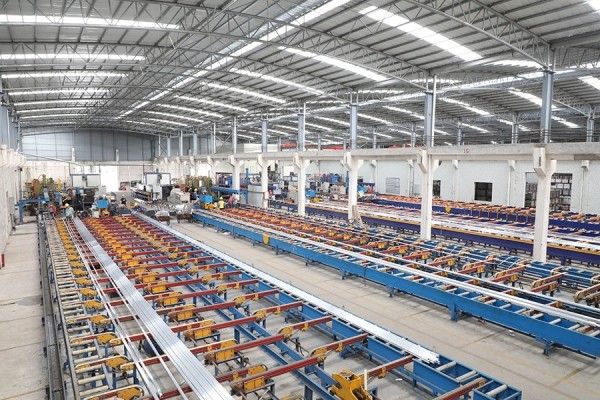
V. Production Process Analysis of 8079 O Temper Pharmaceutical Laminated Foil
1. Aluminum Melting and Alloy Control
The production process uses high-purity aluminum ingots as raw materials. Precise melting processes are employed for alloy proportioning, strictly controlling the content of various trace elements to prevent excessive impurities.
Standardized alloy composition regulation enhances the overall purity and structural uniformity of the aluminum material, guaranteeing barrier performance and stability from the source and avoiding issues like pinholes and breakage caused by raw material defects.
2. Hot Rolling and Cold Rolling Processes
Multi-pass hot rolling and precision cold rolling processes are adopted to gradually roll the aluminum material to the standard thickness of 0.020mm. Online thickness monitoring systems regulate the process in real-time to ensure consistent thickness throughout the coil.
Nigbakanna, internal structural defects are eliminated, grain structures are refined, and the density and mechanical stability of the substrate are improved, laying a solid foundation for subsequent lamination and forming processes.
3. Itọju Annealing
Annealing jẹ ilana mojuto fun ṣiṣẹda bankanje aluminiomu ti o tutu-ipinlẹ ibinu. Nipasẹ iṣakoso iwọn otutu kongẹ ati annealing akoko, awọn ti abẹnu wahala ti ipilẹṣẹ nigba sẹsẹ ti wa ni patapata tu, significantly imudarasi ohun elo rirọ ati elongation, ati ki o silẹ jin-yiya formability.
Eyi yoo fun bankanje mejeeji toughness ati ṣiṣu, ni ibamu daradara si ọpọlọpọ awọn ilana iṣakojọpọ eka pupọ ati imukuro awọn dojuijako processing.
4. Itọju dada
The formed aluminum foil undergoes multiple precision cleaning and degreasing processes to thoroughly remove surface oil, eruku, ati awọn impurities, ensuring the surface meets medical-grade cleanliness standards.
Nigbakanna, surface tension parameters are precisely adjusted to ensure uniform and stable adhesion, effectively enhancing the bonding strength of coatings and films during subsequent lamination processes, preventing quality issues such as delamination, bubbling, and peeling.
5. Composite Processing
Depending on product structure requirements, Awọn ilana akọkọ mẹta ni a lo: gbẹ lamination, epo lamination, ati extrusion lamination.
- Solventless Lamination: Ore ayika, iyokù-ọfẹ, ni kikun ibamu pẹlu ilera awọn ajohunše.
- Lamination gbẹ: Ga konge lamination ati ti o dara iduroṣinṣin.
- Extrusion Lamination: Ṣiṣe iṣelọpọ giga ati awọn idiyele iṣakoso.Multi-ilana aṣamubadọgba pade igbekalẹ, išẹ, ati awọn ibeere aabo ayika ti awọn idii elegbogi oriṣiriṣi.
6. Ayẹwo ọja ti pari ati Iṣakojọpọ
Ṣaaju ki o to kuro ni ile-iṣẹ, pari awọn ọja faragba lile, olona-onisẹpo igbeyewo, pẹlu pinhole erin, sisanra uniformity igbeyewo, composite peel strength testing, heat-sealing performance testing, and barrier performance testing, ensuring all parameters comply with pharmaceutical packaging standards.
After passing inspection, products are packaged in a dust-free and sterile manner to avoid contamination during transportation and storage.

VI. Key Technical Parameter Analysis
1. Darí Properties
8079 O temper 0.020mm pharmaceutical laminated foil has stable and balanced mechanical properties, balancing flexibility and strength, fully meeting industrial processing requirements.
| Nkan | Typical Indicator |
|---|---|
| Sisanra | 0.020mm |
| Agbara fifẹ | 80-130 MPa |
| Ilọsiwaju | ≥8% |
| Pinhole Oṣuwọn | Kekere Lalailopinpin |
| Dada Cleanliness | Medical Grade |
2. Idankan duro Properties
This product possesses top-tier comprehensive barrier capabilities, serving as the core guarantee for long-term pharmaceutical protection. All barrier performance metrics meet high-end pharmaceutical packaging standards.
| Nkan | Iṣẹ |
|---|---|
| Omi Vapor Idankan duro | O tayọ |
| Idanimọ atẹgun | O tayọ |
| Ina ina | 100% |
| Iripa Arema | O tayọ |
3. Apapo Performance
The product features high surface cleanliness, aṣọ ẹdọfu, and even adhesive coating. After lamination with various polymer films, it exhibits high peel strength and tight, stable interlayer bonding, without risks of delamination, bubbling, or cracking. The laminated product is aging-resistant and friction-resistant, maintaining structural stability during long-term storage and use without delamination failure.
VII. Awọn aaye Ohun elo akọkọ
With its ultra-low pinhole rate, 100% opasitet, extreme barrier properties against water vapor and oxygen, excellent cold-forming performance, and medical-grade cleanliness, 8079 O Temper 0.020mm Pharmaceutical Laminated Foil is suitable for all categories of pharmaceutical packaging scenarios.
Unlike conventional 8011 aluminiomu bankanje, which is only suitable for ordinary pharmaceuticals, this product targets the mid-to-high-end, ga-idaabobo, and long-shelf-life pharmaceutical packaging market. It is adaptable for tablets, awọn agunmi, awọn lulú, biopharmaceuticals, and medical devices, compatible with both conventional heat-sealing and low-temperature cold-forming processes. It is currently the core base material for high-value-added pharmaceutical packaging.
1. Tablet Packaging
Tablets represent the largest volume of pharmaceutical forms in the market, including Western immediate-release tablets, awọn tabulẹti idaduro idaduro, controlled-release tablets, Chinese patent medicine tablets, and chewable tablets.
Most tablets are prone to moisture softening, oxidative discoloration upon exposure to oxygen, and decomposition failure upon light exposure, requiring stable packaging barrier and formability.
8079 O temper 0.020mm composite foil is a preferred material for high-end tablet packaging, widely used in automatic blister packaging, individual strip sealing packaging, and bagged tablet packaging.
In blister packaging scenarios, the foil’s excellent flexibility adapts to high-speed press molding without cracks or pinhole defects. When paired with a PET/AL/PE composite structure, it enables high-definition printing and firm heat sealing.
This not only clearly displays drug information and meets traceability requirements but also provides all-around isolation from water vapor, atẹgun, ati imọlẹ, effectively preventing tablets from caking, oxidizing, ofeefee, and losing efficacy.
For functional tablets like sustained-release and controlled-release formulations, the stable barrier performance protects the drug release structure from environmental damage, accurately maintaining drug efficacy stability and significantly extending shelf life.
2. Capsule Packaging
Capsules are divided into hard capsules and soft capsules, each with distinct packaging challenges. Hard capsule shells are porous, highly susceptible to moisture, softening, fifẹ, and sticking, leading to leakage and deterioration of the powder inside.
Soft capsules often contain oily components that are prone to oxidative leakage and photodegradation, demanding high sealing, idina, and puncture resistance from packaging. Ordinary foil packaging often fails due to poor forming and insufficient barriers, nigba ti 8079 O temper pharmaceutical laminated foil perfectly solves these industry pain points.
This product, with its ultra-low pinhole rate and strong interlayer stability, is suitable for high-strength OPA/AL/PVC composite structures. It offers excellent puncture and crush resistance, effectively withstanding external forces during transportation and storage, preventing capsule breakage, jijo, or powder loss.
Nigbakanna, its extreme moisture-proof, atẹgun-idiwọ, and light-shielding capabilities completely isolate humid air and UV rays, preventing hard capsules from absorbing moisture and sticking or becoming brittle, and avoiding oil oxidation and discoloration in soft capsules.
It is currently widely used in the sealed packaging of prescription capsules, health supplement capsules, and imported pharmaceutical capsules, serving as the core specialized material for cold-formed blister packaging of capsules.
3. Powder Pharmaceutical Packaging
Powder pharmaceuticals include antibiotic powders, oral granules, traditional Chinese medicine powders, and sterile injectable powders.
These drugs have fine particles and a large specific surface area, making them highly hygroscopic. Upon contact with moisture, they quickly cake, dissolve, oxidize, or fail, and may even breed bacteria. Their packaging requirements for moisture-proofing, oxygen-barrier properties, and sterility far exceed those of ordinary pharmaceuticals.
8079 0.020mm pharmaceutical laminated foil, when combined with a PET/AL/CPP high-temperature resistant, high-barrier composite structure, offers industry-top-tier water vapor and oxygen barrier capabilities, achieving near-zero permeability protection.
This completely prevents powder caking, itẹdi, ati ibajẹ. Siwaju sii, the material is produced in a dust-free and sterile environment, with no oil stains, impurities, or exudates, fully complying with the sterile packaging standards for powdered drugs and avoiding secondary contamination.
Its excellent heat-sealing stability makes it suitable for various packaging forms such as pouches, sachets, and can lid sealing. It is widely used in the sealed storage packaging of amoxicillin, cephalosporin antibiotic powders, pediatric medical granules, ultra-fine traditional Chinese medicine powders, and sterile injectable powders, effectively ensuring the purity and pharmaceutical activity of powdered drugs.
4. Medical Device Sterile Packaging
Medical devices and consumables have stringent compliance requirements for packaging material cleanliness, ailewu, and protection.
They must be sterile, ti kii-majele, iyokù-ọfẹ, and possess good dust-proof, ọrinrin-ẹri, and anti-pollution capabilities to ensure the device remains clean, ifo, and fully functional within its validity period. 8079 O temper pharmaceutical laminated foil,
relying on medical-grade production standards and stable physical properties, has become a core material for high-end medical device packaging.
This product is free of heavy metal leaching and chemical residues, fully compliant with GMP pharmaceutical cleanliness standards. It effectively isolates external bacteria, eruku, omi oru, ati microorganisms, providing all-dimensional sterile protection for disposable medical consumables, medical dressings, medical accessories, and small precision medical instruments.
Main application scenarios include disposable syringe packaging, medical gauze and cotton swab dressing packaging, medical catheter and precision accessory packaging, and surgical consumable sealing packaging.
Ni afikun, the material’s strong toughness and abrasion resistance prevent packaging breakage and device contamination, adapting to the harsh conditions of long-term storage, gbigbe, and distribution of medical devices.
5. Biopharmaceutical and High-Value Pharmaceutical Packaging
Awọn ẹkọ nipa isedale, àwọn abé̩ré̩ àje̩sára, targeted drugs, and high-end specialty drugs are high-value-added, highly sensitive active pharmaceuticals. Their active ingredients are extremely unstable and easily affected by oxygen, ọrinrin, otutu, imole, and trace impurities, leading to reduced activity, failure, tabi spoilage.
This represents the highest protection level scenario in pharmaceutical packaging, which ordinary pharmaceutical aluminum foil cannot meet.
8079 Eyin Temper 0.020mm Pharmaceutical Laminated bankanje, with its ultimate low pinhole characteristics, top-tier barrier performance, and stable physicochemical inertness, is the preferred base material for biopharmaceutical packaging.
Tirẹ 100% opasitet, zero water vapor permeability, and zero oxygen permeability provide maximum stabilization of pharmaceutical biological activity, preventing the decomposition and failure of active ingredients, and significantly extending the shelf life of vaccines and biologics under both cold-chain and ambient storage conditions.
Nigbakanna, the material’s strong weather resistance adapts to environmental changes in cold-chain transportation, low-temperature storage, and ambient distribution.
It is widely used in vaccine encapsulation, antibody biologics, targeted anti-tumor drugs, and high-end immunotherapy preparations, providing the highest level of security for high-value, highly sensitive pharmaceuticals.

VIII. Ifiwera Laarin 8079 ati 8011 Aluminum Foil in Pharmaceutical Composite Packaging
8011 ati 8079 are the two most commonly used aluminum alloy materials in the pharmaceutical packaging field. There are significant differences in their performance and application scenarios, as detailed below:
| Ifiwera Nkan | 8079 O ibinu | 8011 O ibinu |
|---|---|---|
| Idankan Performance | Onipele | O tayọ |
| Pinhole Oṣuwọn | Kere | Lọ silẹ |
| Irọrun | Dara julọ | O dara |
| Deep Drawing Performance | Onipele | O dara |
| High-End Pharma Applications | Extensive | Aṣa |
| Idiyele | Ti o ga | Kere |
In high-end pharmaceutical packaging scenarios, the industry tends to choose 8079 O temper aluminum foil. The core reasons are its lower pinhole rate, which eliminates micro-permeability risks from the source; stronger comprehensive barrier capabilities that meet the protection needs of highly sensitive drugs; and excellent cold-stamping formability that satisfies complex packaging processes.
It maximizes drug shelf life and ensures the storage and usage safety of high-end pharmaceuticals, making it the quality choice for high-end pharmaceutical packaging. Ni ifiwera, 8011 aluminum foil offers higher cost-effectiveness and is only suitable for conventional, ordinary pharmaceutical packaging.
XI. Awọn ibeere nigbagbogbo (FAQ)
Aami: Kí nìdí 8079 Iwọ bankanje aluminiomu temper ti o dara fun iṣakojọpọ elegbogi giga-giga?
A1: 8079 O temper aluminiomu bankanje ẹya ẹya ile ise-yori olekenka-kekere pinhole oṣuwọn, oru omi pupọ ati awọn ohun-ini idena atẹgun, o tayọ ni irọrun, ati ki o jin-yiya formability. Ko ni awọn eewu mimọ ati pe o funni ni iduroṣinṣin to lagbara, pese gbogbo-ni ayika, Idaabobo aabo igba pipẹ fun opin-giga ati awọn oogun elegbogi ti o ni itara pupọ. O jẹ ohun elo ipilẹ mojuto fun iṣakojọpọ elegbogi giga-giga.
Q2: Ṣe sisanra 0.020mm jẹ sipesifikesonu ti a lo nigbagbogbo?
A2: Bẹẹni, 0.020mm is a mainstream mid-to-high-end universal specification in the pharmaceutical composite packaging field. This thickness perfectly balances barrier performance, mechanical processing performance, and production costs. It is suitable for the composite packaging production of the vast majority of tablets, awọn agunmi, and powder pharmaceuticals, offering strong versatility.
Iwe asan: Le 8079 pharmaceutical composite aluminum foil be used for cold forming packaging?
A3: Bẹẹni. 8079 O temper soft-state aluminum foil undergoes thorough annealing, resulting in high elongation, ti o dara ni irọrun, and excellent deep-drawing formability. It does not crack or break after forming and is the core specialized material for pharmaceutical cold-formed blister packaging.
Q4: How do you choose between 8079 ati 8011 pharmaceutical aluminum foil?
A4: The application scenarios for the two products are clearly defined:
- For conventional tablets, awọn agunmi, and other low-protection requirement pharmaceutical packaging, iye owo-doko 8011 O temper aluminum foil can be selected.
- For high-sensitivity drugs, prescription drugs, isedale, and high-end cold-forming packaging scenarios, prioritize the superior performance of 8079 aluminiomu bankanje.
Q5: Can pharmaceutical composite aluminum foil extend the shelf life of drugs?
A5: Bẹẹni. 8079 pharmaceutical composite aluminum foil provides 100% UV shielding, efficient oxygen and water vapor barriers, and prevents external odor and impurity contamination. It effectively inhibits drug oxidation, ọrinrin gbigba, jijera, ati ibajẹ, significantly improving storage stability and extending the shelf life of pharmaceuticals.
XII. Ipari
With its ultra-low pinhole rate, excellent all-around barrier performance, superior flexibility and formability, and stable composite processing performance, 8079 O Temper 0.020mm Pharmaceutical Laminated Foil has become a benchmark material in the field of high-end pharmaceutical composite packaging.
Compared to ordinary pharmaceutical aluminum foil, this product offers irreplaceable advantages in drug safety protection, long-term storage, adaptation to complex processes, and compatibility with automated production, perfectly aligning with the stringent quality standards of the pharmaceutical industry.
As the global pharmaceutical industry continues to upgrade, market demands for the safety, iduroṣinṣin, and longevity of pharmaceutical packaging continue to rise. Idena giga, high-safety, and high-stability pharmaceutical packaging materials have become the mainstream trend in the industry.
Ni ojo iwaju, 8079 O temper 0.020mm pharmaceutical laminated foil will continue to be widely used in high-end scenarios such as cold-formed blister packaging, high-barrier pharmaceutical composite packaging, and biopharmaceutical packaging, providing solid material support for global pharmaceutical safety and quality assurance.