
1100 Aluminum Sheet for Sale: Grades, Sizes and Buyer’s Guide
1100 Aluminum Sheet for Sale: Grades, Sizes and Buyer’s Guide
Introduction
1100 aluminum sheet is one of the most practical commercially pure aluminum plates you can buy: with a minimum 99.0% aluminum content and a small copper addition, it is slightly stronger than 1050/1060 while keeping excellent formability, Resistencia le corrosión, weldability and thermal conductivity.
It is the default sheet for chemical equipment, cookware and deep-drawn parts, heat sinks, signs and general fabrication that do not need high strength.
Offered factory-direct, 1100 sheet can be supplied in standard 4×8 ft and metric sizes or cut to your dimensions, with the temper and surface finish the product needs.
This guide covers the composition, properties, sizes and weights, Aplicaciones, fabrication, how it compares with 1050, 1060 y 3003, and how to order.
What Is 1100 Le' aluminio?
1100 is a non-heat-treatable 1xxx-series alloy strengthened only by cold work and softened by annealing. Sheet generally runs about 0.2–6 mm thick (thicker material is plate), supplied flat or cut to length. Its characteristic advantages are:
- Excellent ductility for bending, stamping, spinning and deep drawing, especially in the O temper.
- Very good atmospheric and chemical corrosion resistance from the self-healing oxide film.
- Slightly higher strength than 1050/1060 thanks to a controlled 0.05–0.20% copper addition.
- High thermal and electrical conductivity, plus excellent weldability and easy machining.
- Sáasil (tu yo'olal 2.71 g leti' cm³), rust-free and lower cost than alloyed grades; anodizes to a good film.
- The trade-off is modest strength; load-bearing or wear parts should use 3003, 5052 o 6061.
Chemical Composition and Mechanical Properties
The controlled chemistry (per ASTM B209 / GB/T 3190) keeps silicon plus iron and copper within tight limits so forming, welding and corrosion performance stay high:
| Elemento | Ti' le | Wa + Fe | Cu | Mn | Zn |
| 1100 | ≥99.0 | ≤0.95 | 0.05–0.20 | ≤0.05 | ≤0,10 |
Mechanical properties change with temper, so the same 1100 sheet can be supplied soft and deep-drawable or hard and rigid (typical Rm values):
| Atemperar | Tensile (Mpa) | Character |
| O (annealed) | approx. 75–110 | Softest; deep drawing, spinning, maximum formability |
| H12 / H22 | approx. 95–125 | Quarter-hard; light forming |
| H14 / H24 | approx. 110–150 | Half-hard; common general-purpose temper |
| H16 / H26 | approx. 135–170 | Three-quarter-hard; stiffer panels |
| H18 | approx. 150–200 | Full-hard; rigid, limited forming |
Values vary slightly with thickness and standard; confirm tensile and yield on the mill certificate for your gauge.
The small copper addition is what distinguishes 1100 in service.
It gives a modest but useful gain in strength without sacrificing the pure-aluminum forming that lets the sheet be drawn into deep pots and liners, and the metal still anodizes into a uniform, protective film used on trim and nameplates.
1100 thus occupies a deliberate middle ground—not as soft and conductive as 1060, but not as alloyed as 3003, which is why it appears so often in cookware, chemical and general-purpose stock.
Standard Sizes, Surfaces and Weight
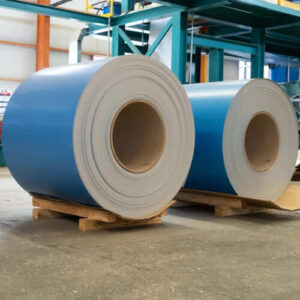
1100 sheet is produced from about 0.2 Utia'al 6 milímetro (plate to 200 mm+ on request), in widths up to roughly 2600 mm and lengths to 12,000 milímetro. Common sizes include 4×8 ft (1219×2438), 1000×2000, 1220×2440, 1250×2500 and 1500×3000, plus custom blanks to drawing.
| Superficie / finish | Typical use |
| Mill finish (optional PVC/PVDF protective film) | General sheet, fabrication stock, cladding |
| Brushed / mirror | Decorative panels, nameplates, lighting |
| Anodized / color-coated | Chemical and outdoor panels, durable signage, trim |
| Embossed / circles | Aislamiento, anti-slip, cookware discs and deep-drawn parts |
Weight is easy at 2.71 g leti' cm³: kg per m² = thickness (milímetro) × 2.71; a 4×8 ft sheet covers about 2.972 m².
| Espesor | kg/m² | Weight per 4×8 sheet |
| 0.5 milímetro | 1.36 | approx. 4.0 kg |
| 1.0 milímetro | 2.71 | approx. 8.1 kg |
| 1.5 milímetro | 4.07 | approx. 12.1 kg |
| 2.0 milímetro | 5.42 | approx. 16.1 kg |
| 3.0 milímetro | 8.13 | approx. 24.2 kg |
Typical Applications
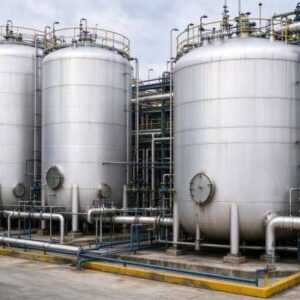
- Chemical process equipment, storage tanks, vessels, pipes and fittings that need corrosion resistance and weldability.
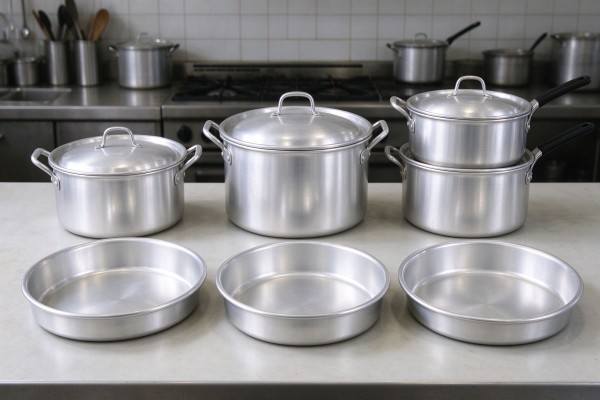
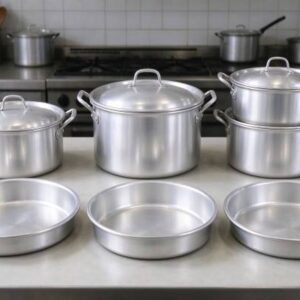
- Cookware, cooking utensils and deep-drawn or spun parts, plus aluminum circles for pots and pans.
- Disipadores ooxoj, lamp reflectors, bottle cap stock, printing plates and food packaging components.
- Signs, nameplates and decorative or anodized architectural trim, and general stamped or bent parts.
Fabrication and Surface Treatment
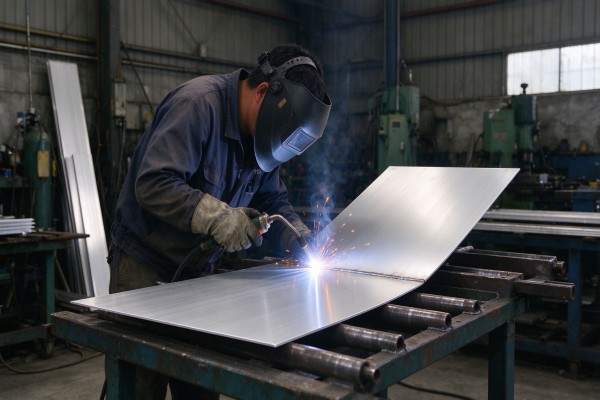
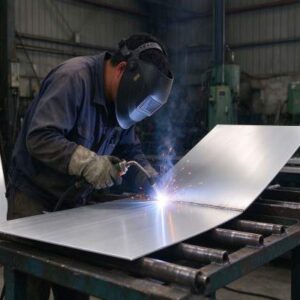
1100 cuts, shears, bends and forms readily and can be laser, plasma or water-jet cut, stamped, spun and drilled; it welds cleanly by common processes and takes anodizing, brushing, polishing and coating well.
Use O temper for the deepest draws and harder tempers where the finished part must hold shape; generous bend radii and clean, oil-free surfaces help on high-speed lines.
1100 vs 1050, 1060 y 3003
| Grade | Min. Ti' le / alloying | Strength | Best fit |
| 1050 | 99.50% Ti' le | Low | Most economical general sheet and cladding |
| 1060 | 99.60% Ti' le | Low | Best conductivity/reflectivity; signs and electrical parts |
| 1100 | 99.00% Ti' le, a little Cu | Low-medium | Slightly stronger; forming, soldadura, químico, cookware |
| 3003 | Ti' le + Mn (tu yo'olal 1.2%) | Medium | Tu yo'olal 20% stronger; floors, tread, tougher cladding |
Choose 1100 when you need a little more strength and weldability than 1050/1060 with the same pure-aluminum forming and corrosion; step up to 3003 for real added strength.
Quality Control, Pricing and How to Order
QC covers thickness and flatness, width/length and diagonal tolerance, surface quality and tensile/yield by temper and chemistry on the MTC; ISO 9001 mills support SGS/BV inspection.
Sheet is interleaved with protective film and packed on pallets or in cases with moisture-proof wrapping for export. Pricing follows the aluminum ingot base plus a processing fee, with thinner/wider gauge, custom cutting, surface treatment and small quantities adding cost;
compare per ton and per finished blank on identical specs under FOB/CFR/CIF (commonly 30% deposit, balance against the bill of lading). To quote, send alloy/temper (1100), espesor, sheet or blank dimensions, surface, quantity, application and destination port.
Verify new material on production-gauge samples rather than photos: run the sheet through your forming, welding or cutting line at normal speed, measure thickness across the width, inspect the surface and, for food or chemical use, confirm the compliance paperwork matches the lot.
A signed pre-production sample then becomes the receiving standard, and an integrated mill that rolls and finishes in-house will hold that standard more reliably across repeat orders than spot resellers.
Frequently Asked Questions
Q: Ba'ax le jéelo' 1100 aluminum sheet used for?
Un: Chemical tanks, vessels and piping, cookware and deep-drawn parts, heat sinks, Bix, bottle cap and printing stock, and general fabrication needing formability and corrosion rather than high strength.
Q: How strong is 1100 compared with 1060 y 3003?
Un: It is slightly stronger than 1050/1060 due to a small copper addition, but 3003 (manganeso) is about 20% stronger; H18 1100 reaches roughly 150–200 MPa tensile.
Q: What temper should I choose?
Un: O for deep drawing and spinning, H14/H24 for general sheet, H16/H26 for stiffer panels and H18 for the most rigid plate with little forming.
Q: What sizes and thicknesses are available?
Un: About 0.2–6 mm sheet in widths to roughly 2600 milímetro, including 4×8 ft and metric standards, with plate and cut-to-size blanks on request.
Q: Can it be welded, anodized and cut to size?
Un: Yes—1100 welds cleanly, anodizes and finishes well, and can be laser or sawn cut, bent and supplied as custom blanks with protective film.
Q: How much does a 4×8 sheet weigh?
Un: Roughly 8.1 kg at 1 milímetro, 12.1 kg at 1.5 milímetro, 16.1 kg at 2 mm and 24.2 kg at 3 milímetro, using kg/m² = thickness (milímetro) × 2.71 over 2.972 m².
Conclusión
1100 aluminum sheet is the slightly stronger, easy-to-fabricate pure-aluminum plate for chemical equipment, cookware, heat transfer and signs.
Specify the temper from how the panel is processed, fix thickness and cut size, choose the surface, and buy on mill certificates, tolerances and approved samples rather than price alone.