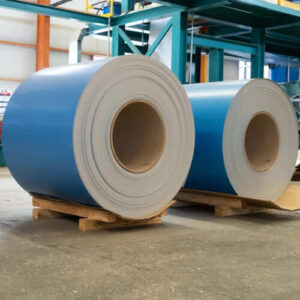


8011 O Temper 0.008mm Aluminum Foil for Food Packaging


Al metal alloy: 8011
Alu temper: O
Espesor: 0.008milímetro
8011 O Temper 0.008mm Aluminum Foil for Food Packaging
1. Introduction
8011 O temper 0.008mm aluminum foil has become a preferred material in the food packaging industry due to its excellent flexibility, superior barrier properties, stable processing adaptability, and high cost-effectiveness. The ultra-thin specification of 0.008mm (8 Micras) imposes extremely high requirements on production processes, equipment precision, and quality control, serving as a significant indicator of technical capability.
2. Introducción u 8011 Aleación aluminio
Leti'e' 8011 aluminum alloy belongs to the 8xxx series (Al-Fe-Si system) and is one of the most widely used and cost-effective aluminum foil alloys in the fields of food packaging, Envases farmacéuticos, Ju'un u aluminio utia'al u wotoch, and container foil. Its mature production process and stable performance meet the packaging processing demands of various scenarios.
Based on high-purity aluminum (Al content ≥ 99.0%), 8011 alloy is modified by adding appropriate amounts of alloying elements such as Fe (0.6–1.0%) and Si (0.5–0.9%). Compared to 1xxx series pure aluminum foils (p'el ej.., 1235, 1145), it exhibits significant advantages in comprehensive performance:
- Higher Mechanical Strength: Tensile strength is 20%-30% higher than that of 1xxx series pure aluminum foil, effectively preventing damage and punctures during packaging and enhancing integrity.
- Better Puncture Resistance: Capable of withstanding punctures from food particles and sharp impurities, preventing package failure and subsequent oxidation or contamination of food.
- Superior Formability: Adapts well to complex processing techniques such as folding, deep drawing, and heat sealing without issues like creasing or wrinkling.
- Lower Pinhole Rate: Through optimized alloy composition and process control, pinhole counts can be controlled within 3 holes/m², far superior to the pinhole levels of 1xxx series pure aluminum foil.
- More Stable Composite Processing Performance: Surface tension is easily adjustable; composite strength with substrates like PET, PEI, BOPP, and paper is ≥1.5N/15mm, preventing delamination.
Based on these advantages, 8011 aluminum foil is particularly suitable for food packaging structures with high-performance requirements, especially for long-shelf-life, high-oil, and easily oxidized foods, effectively extending shelf life and enhancing packaging quality.
3. Chemical Composition of 8011 O Temper Food Packaging Aluminum Foil
Le composición química ti' 8011 O temper foil strictly complies with the GB/T 3880.1-2012 “Wrought aluminum and aluminum alloy plates, strips and foils” standard. The content of Fe and Si elements is core to its performance, while other impurity elements must be strictly controlled to ensure food safety and processing performance.
| Elemento | Contenido (%) | Función | Impurity Control Requirement |
|---|---|---|---|
| Ti' le | Remainder (≥99.0%) | Base material determining basic flexibility and ductility. | Purity ≥99.0%, avoiding performance impact from impurities. |
| Fe | 0.6–1.0 | Enhances mechanical strength, puncture resistance, and tear resistance. | Excess reduces flexibility; deficiency leads to insufficient strength. |
| Wa | 0.5–0.9 | Improves processing stability, rolling performance, and surface quality. | Works synergistically with Fe; ratio must be strictly controlled. |
| Cu | ≤0,10 | Trace amounts improve strength, but excess reduces corrosion resistance. | Strictly controlled to avoid affecting food safety. |
| Mn | ≤0.20 | Auxiliary element to enhance strength and processing performance. | Excess causes brittleness, affecting flexibility. |
| Zn | ≤0,10 | Impurity element with no significant beneficial effect. | Strictly controlled to avoid affecting foil performance. |
Note: The above chemical composition meets food-grade aluminum foil standards, allowing direct contact with food without leaching harmful substances.
5. Core Performance Advantages of 8011 O Temper 0.008mm Aluminum Foil
8011 O temper 0.008mm aluminum foil has become the preferred material in the food packaging industry primarily because it combines four major advantages: barrier properties, food safety performance, Propiedades mecánicas, and thermal stability. It perfectly adapts to the core needs of food packaging while aligning with industry trends toward lightweight and eco-friendly development.
5.1 Excelentes propiedades barrera
The greatest core advantage of aluminum foil is its near 100% barrier capability. It effectively blocks external water vapor, oxígeno, sáasil, aroma, bacteria, and other substances, preventing food oxidation, moisture absorption, spoilage, and odor transfer, thereby extending shelf life. The barrier performance of 8011 8-micron foil is rigorously tested, as shown below:
| Barrier Object | Effect | Industry Testing Standard | Application Scenario |
|---|---|---|---|
| Water Vapor | Jach ma'alo'ob, WVTR ≤0.1g/(㎡·24h) | GB/T 1037-2021 | Milk powder, biscuits, dried goods, etc. |
| Oxygen | Jach ma'alo'ob, OTR ≤0.1cm³/(㎡·24h·atm) | GB/T 1038-2000 | Meat, oils, nuts, etc. |
| Sáasil | Complete opacity, 100% shading | GB/T 2410-2008 | Coffee, tea, vitamins, etc. |
| Aroma | High retention, aroma transmission ≤0.5% | QB/T 4156-2010 | Chocolate, spices, flavored foods, etc. |
| Bacteria | Good barrier, effectively prevents bacterial invasion | GB 4806.1-2016 | Cooked food, dairy products, ready-to-eat meals, etc. |
Due to its superior barrier properties, 8011 8-micron foil is particularly suitable for packaging easily oxidized, high-oil, high-aroma, and long-shelf-life foods, effectively protecting nutritional components and flavor while reducing food waste.
5.2 Outstanding Food Safety Performance
The core requirement for food packaging materials is safety, non-toxicity, and harmlessness. 8011 O temper 0.008mm foil strictly follows food-grade standards, mainly reflected in:
- Non-toxic and Odorless: Chemical composition consists of elements permitted in food-grade applications, free of harmful impurities (p'el ej.., Pb, Cd, Hg). The foil itself is non-toxic and tasteless, causing no food contamination.
- No Harmful Substance Migration: Under normal usage conditions (including high/low temperatures and acid/base environments), 8011 foil does not leach any harmful substances and does not alter food composition or flavor upon contact.
- High Surface Cleanliness: Production strictly controls surface oil, oxide spots, and impurities. Finished foil is clean, odorless, and stain-free, suitable for direct food contact.
- Compliance with International Standards: Meets FDA (U.S. Ma'alo'ob meyaj beetik u janalbe'eno'ob yéetel Medicamentos) food contact standards, EU EC 1935/2004 food packaging standards, SGS testing requirements, and China’s GB 4806.1-2016 “General Safety Requirements for Food Contact Materials and Products,” enabling export to multiple countries and regions.
Adicionalmente, 8011 foil offers good corrosion resistance, showing no corrosive reactions when in contact with acidic or alkaline foods (p'el ej.., fruits, dairy products, condiments), ensuring food safety and stability.

5.3 Good Mechanical Properties
Although 8011 O temper 0.008mm foil is ultra-thin, its rational alloy design and process control provide good mechanical properties capable of meeting the operational demands of high-speed automatic packaging lines. Specific characteristics are shown below:
| Propiedad | Characteristic | Specific Indicator (O Temper) | Application Advantage |
|---|---|---|---|
| Resistencia le tracción | Stable, resistant to breakage | 70-90Mpa | Adapts to high-speed packaging, preventing web breaks. |
| Alargamiento | Ka'anal, good plasticity | ≥30% | Adapts to folding, deep drawing, etc. |
| Puncture Resistance | Ma'alob, resistant to damage | ≥1.2N | Withstands punctures from food particles/sharp impurities. |
| Flexibilidad | Jach ma'alo'ob, fine texture | No creases/cracks after 180° bending | Conforms to food shape, enhancing packaging aesthetics. |
Its good mechanical properties enable 8011 8-micron foil to adapt to high-speed automatic packaging lines (speeds up to 300-500 packs/minute) without issues like jamming, creasing, or breaking, effectively improving packaging efficiency. Simultaneously, it withstands certain external impacts during transportation and storage, preventing package damage and protecting food integrity.
5.4 Good Thermal Stability
Food packaging often involves processes like heat sealing, retorting, baking, and freezing, requiring materials to maintain stable performance under high and low temperatures without deformation, damage, or harmful substance migration. 8011 O temper foil exhibits excellent thermal stability:
- High-Temperature Resistance: Withstands temperatures up to 200°C, suitable for retort packaging (121°C high-pressure retorting) and baking packaging (180°C baking) without deformation, melting, or harmful substance release.
- Low-Temperature Resistance: Withstands temperatures down to -40°C, suitable for frozen food packaging (p'el ej.., dumplings, frozen meat) without becoming brittle or cracking, maintaining good flexibility and barrier properties.
- Good Heat Sealing Performance: When laminated with heat-sealable substrates like PE or CPP, heat seal strength is ≥1.5N/15mm, with a wide sealing temperature range (120-160° C), adapting to different sealing processes to ensure airtight packages.
Thanks to its good thermal stability, 8011 8-micron foil is widely applicable in retorting, baking, congelación, and other food packaging scenarios, meeting diverse food packaging and processing needs.
6. Main Application Areas of 8011 O Temper 0.008mm Aluminum Foil
With its excellent comprehensive performance, 8011 O temper 0.008mm foil is widely used across multiple segments of the food packaging industry, including flexible packaging, Ju'un u aluminio utia'al u wotoch, container/closure foil, and vacuum/retort packaging, making it an indispensable core material in modern food packaging.
6.1 Flexible Food Packaging
Flexible food packaging is the primary application area, accounting for over 60% of total consumption. It is widely used in snacks, dairy products, grain/oil foods, confectionery, and chocolate. Its core advantages are lightweight, high barrier properties, and easy processing, effectively extending shelf life and enhancing packaging quality.
Common applications include:
- Snack Food Packaging: Chips, biscuits, nuts, puffed foods, etc. Aluminum foil laminates effectively block oxygen and light, preventing oxidation, moisture absorption, and flavor loss.
- Dairy Product Packaging: Milk powder, yogurt, cheese, etc. Aluminum foil laminates provide high barrier protection and freshness, preventing milk powder caking and preserving yogurt flavor and nutrition.
- Grain & Oil Food Packaging: Edible oil, condiments, dried goods, etc. Aluminum foil laminates block oxygen and water vapor, preventing oil oxidation and dried goods spoilage.
- Confectionery & Chocolate Packaging: Aluminum foil laminates or individual wraps provide light shielding and aroma retention, preventing melting and moisture absorption while enhancing aesthetics.
In flexible packaging, 8011 8-micron foil is typically laminated with other substrates. Common structures and features are shown below:
| Composite Structure | Characteristics | Application Scenarios |
|---|---|---|
| PET/AL/PE | High barrier, Ka'anal resistencia, easy heat sealing, high gloss surface. | Chips, biscuits, nuts, etc. |
| BOPP/AL/PE | Low cost, good barrier, strong printability. | Ordinary snacks, grain/oil foods. |
| PET/AL/CPP | Retort-resistant, high barrier, good sealing. | Retorted foods, Bak', soy products. |
| PET/AL/PET/PE | Ka'anal resistencia, high barrier, wear-resistant, suitable for premium packaging. | Premium chocolate, milk powder, health products. |
6.2 Ju'un u aluminio utia'al u wotoch
8011 O temper 0.008mm foil is also a key variety for household use, mainly for grilling, baking, food preservation, and wrapping in home kitchens. Its core advantages are good flexibility, fast heat conduction, easy forming, and convenient use.
Specific applications and characteristics:
- Grilling: Wrap meat, vegetables, etc., to prevent charring and moisture loss while locking in flavor for tender results.
- Baking: Line baking trays to prevent sticking and facilitate cleaning, reducing post-baking workload.
- Preservation: Wrap leftovers, fruits, vegetables, etc., to block oxygen and water vapor, preventing oxidation, moisture absorption, and spoilage.
- Envoltura janalbe'eno'ob: Wrap sandwiches, rice balls, sushi, etc., for portability and preventing odor transfer or leakage.
Household 8011 8-micron foil is typically supplied in rolls or sheets, featuring a clean surface and soft texture, easily cut to size for daily family use.
6.3 Container Foil and Lidding Foil
8011 O temper 0.008mm foil is also widely used in container and lidding foil applications, primarily for sealing food containers. Core requirements include good heat sealing performance, stable stamping performance, and low pinhole rates to ensure reliable sealing and prevent leakage/contamination.
Common applications:
- Yogurt Lidding Film: Seals yogurt cups, requiring good heat sealing and easy peelability for consumer convenience.
- Milk Tea/Beverage Sealing: Seals milk tea or juice cups, preventing leakage and providing barrier properties against oxidation and flavor loss.
- Lunch Box Lids: Seals disposable lunch boxes and food storage containers, blocking oxygen and moisture to prevent food spoilage during transport/storage.
- Beverage Sealing Foil: Seals bottled drinks and canned goods, ensuring airtightness and preventing leakage/contamination.
Container and lidding foils demand high quality: pinholes ≤2 holes/m², heat seal strength ≥1.8N/15mm, and good stamping performance without cracking or edge defects.
6.4 Vacuum and Retort Packaging
Vacuum and retort packaging are crucial for extending food shelf life. 8011 O temper 0.008mm foil, with its excellent barrier properties and thermal stability, is a core material for such packaging, widely used for meat products, prepared foods, ready-to-eat meals, and military rations.
Core functions in vacuum/retort packaging:
- Prevent Oxidation: After vacuum packaging, the foil effectively blocks external oxygen, preventing oxidation and extending shelf life (typically to 6-12 months).
- Prevent Spoilage: Blocks microbial invasion (bacteria, mold) and prevents moisture absorption/odor transfer, ensuring food safety and stability.
- Withstand High-Temperature Retorting: During 121°C high-pressure retorting, the foil maintains stable performance without deformation, breakage, or harmful substance migration, ensuring food safety.
Common applications include vacuum-packed cured meats, sausages, beef jerky, and retort pouches for prepared meals, instant rice, and military compressed foods. 8011 foil significantly enhances the shelf life, safety, and transportability of these products.

7. Comparison with Other Food Packaging Aluminum Foils
Besides 8011, alloys like 1235 y 8021 are also common. Differences in performance and cost lead to varied suitable applications. The following detailed comparison assists food packaging enterprises in material selection.
| Comparison Item | 8011 Ju'un aluminio | 1235 Ju'un aluminio | 8021 Ju'un aluminio |
|---|---|---|---|
| Strength | Higher (Tensile Strength 70-90MPa) | Lower (Tensile Strength 50-70MPa) | Superior (Adapts to fine processing) |
| Pinhole Performance | Jach ma'alo'ob (≤3 holes/m²) | Average (≤5 holes/m²) | Exceptional (≤1 hole/m²) |
| Packaging Adaptability | Broader (Folding, deep drawing, retorting, etc.) | Ordinary (Mainly simple packaging) | Jach ma'alo'ob (Complex folding, deep drawing) |
| Composite Performance | More Stable (Composite strength ≥1.5N/15mm) | Average (Composite strength ≥1.2N/15mm) | Superior (Higher fit) |
| Cost | Medium (5%-10% higher than 1235) | Lower | Higher (Premium alloy) |
| Application Range | General food packaging (snacks, dried goods, etc.) | Ordinary packaging, emphasis on pharmaceutical foil & fine food packaging | High-end packaging, emphasis on pharmaceutical foil & fine food packaging |
Summary: 8011 foil’s comprehensive performance is far superior to 1235, making it more suitable for mid-to-high-end food packaging with higher performance requirements (p'el ej.., long shelf life, high oil, easy oxidation). 1235 foil is lower cost, suitable for ordinary food packaging with less demanding performance requirements.
8. Industry Development Trends and Conclusion
8.1 Industry Development Trends
As the global food packaging industry evolves towards high barrier properties, lightweight, and eco-friendliness, demand for 8011 O temper 0.008mm foil will continue to rise. Three major trends emerge: Yáax, ultra-thinning upgrades, pushing towards 6-7 micron specifications for further lightweight and cost reduction. Second, high-end composite structures, combining aluminum foil with PET, BOPP, and biodegradable materials to develop functional high-barrier composites. Third, green environmental protection, leveraging the recyclability and reusability of aluminum foil to align with global low-carbon packaging trends and promote circular economy practices.
8.2 Conclusión
8011 O temper 0.008mm food packaging aluminum foil has become a core material in the modern flexible packaging industry due to its excellent barrier properties, good flexibility, stable processing performance, outstanding food safety performance, and high cost-effectiveness. It is widely used in flexible packaging, Ju'un u aluminio utia'al u wotoch, container/lidding foil, and vacuum/retort packaging.
Compared to other alloys like 1235 y 8021, 8011 foil demonstrates significant advantages in versatility and cost-effectiveness, meeting the core needs of the vast majority of food packaging applications. With increasing industry demands for performance and environmental protection, the market demand for 8011 ultra-thin food packaging foil will continue to grow, promising broader application prospects.
9. Frequently Asked Questions (Jejeláas k'at chi'ob)
- Q: What food packaging scenarios is 8011 aluminum foil most suitable for?
- Un: It is suitable for the vast majority of scenarios, especially long-shelf-life, high-oil, easily oxidized foods, and high-speed packaging lines.
- Q: What are the core differences between 8011, 1235, y 8021 aluminum foils?
- Un: 8011 offers high cost-effectiveness and strong versatility; 1235 has lower costs; 8021 targets high-end, fine packaging applications.
- Q: Enlatar 8011 aluminum foil come into direct contact with food?
- Un: Yes, it complies with food-grade standards and does not leach harmful substances.