The Ultimate Encyclopedia of 1050 Le' aluminio : In-Depth Analysis from Metallurgy to Practical Application

The Ultimate Encyclopedia of 1050 Le' aluminio (Commercial Pure Aluminum): In-Depth Analysis from Metallurgy to Practical Application
I. Overview and Material Positioning
1050 Le' aluminio belongs to the 1xxx series aluminum alloys. According to international naming conventions, it represents a commercial pure aluminum with an aluminum content of no less than 99.5%. It is commonly designated as 1050 in the Chinese National Standard (GB/T), while in European standards (EN), it is often referred to as AW-1050A (EN AW-Al99.5) with the numerical designation 3.0255. It is also a registered standard grade in the Aluminum Association (AA) standards.
U modo u non-heat-treatable alloy, the core value of 1050 does not lie in its mechanical strength, but rather in its extreme chemical stability and physical properties (conductividad eléctrica, Conductividad térmica, and reflectivity). It plays the role of a “foundation material” within the aluminum alloy family, analogous to mild steel (p'el ej.., Q235) in the steel industry. Its mature production process and low casting/rolling costs make it a cornerstone material for connections, conduction, anti-corrosion, and deep stamping applications.
🔍 In-Depth Interpretation:
- Ba'axten elegir. 1050 over 1060? While 1060 has higher purity (99.6%), 1050 offers a better balance between strength and formability, and is usually more cost-competitive.
- What does “non-heat-treatable” mean? It means you cannot increase its hardness through quenching and aging like you would with 6061-T6. Its strength can only be increased through cold working (rolling, drawing).
II. Metallurgical Characteristics and Micro-Mechanisms
1. Crystal Structure and Ductility
1050 aluminum possesses a Face-Centered Cubic (FCC) crystal structure. This structure grants the material extremely high toughness and ductility, and it is not prone to brittle transitions even in low-temperature environments (such as liquid nitrogen temperatures), unlike some steels which suffer from cold brittleness. This is why 1050 is highly suitable for linings in cryogenic equipment (p'el ej.., LNG carriers).
2. Self-Healing Oxide Film
Pure aluminum instantly reacts with oxygen in the air to form a dense layer of γ-Al₂O₃ (corundum) cha'ano' approximately 2-10 nanometers thick. This film is extremely compact and prevents further oxidation of the internal metal. If the surface is scratched, a new oxide film forms instantly upon exposure to air or water. This is the fundamental reason for its far superior corrosion resistance compared to ordinary carbon steel.
III. Detailed Chemical Composition (Mass Percentage %)
Precise chemical composition is key to determining the performance of 1050. Even trace impurities can significantly affect conductivity and processing performance.
| Elemento | Symbol | Contenido (%) | Function and Impact |
|---|---|---|---|
| Aluminio | Ti' le | ≥ 99.50 | Matrix element, determines high conductivity, Conductividad térmica, and corrosion resistance. |
| Hierro | Fe | ≤ 0.40 | The most common impurity. Iron has very low solubility in aluminum and forms needle-like iron-rich phases, slightly reducing plasticity and corrosion resistance but increasing strength. |
| Silicio | Wa | ≤ 0.25 | Often coexists with iron. Moderate silicon can improve casting performance, but excessive amounts in pure aluminum reduce ductility. |
| Cobre | Cu | ≤ 0.05 | Impurity element. Copper significantly increases strength but drastically reduces corrosion resistance (especially intergranular corrosion) and conductivity. |
| Manganeso | Mn | ≤ 0.05 | Trace presence, minimal impact on properties. |
| Magnesio | Mg | ≤ 0.05 | Trace presence. |
| Zinc | Zn | ≤ 0.05 | Trace presence, generally considered a harmless impurity. |
| Titanium | Teechi' | ≤ 0.03 | Sometimes added as a grain refiner, helping to refine grains and improve processing surface quality. |
| Láak'o'ob | – | ≤ 0.03 (each) | Strictly controlled to ensure the characteristics of pure aluminum. |
IV. Temper Details and Mechanical Property Spectrum
The properties of 1050 aluminum sheet vary greatly with its “temper.” Temper is determined by the combination of annealing and cold working.
1. Temper Definition and Applicable Scenarios
| Atemperar | Full Name & Process Description | Hardness Level | Recommended Application Scenarios |
|---|---|---|---|
| O | Annealed | ⭐ (Softest) | Extreme Deep Drawing: Such as cookware bodies, lamp cup stretching. Best plasticity, lowest strength. |
| H111 | Strain-Hardened | ⭐⭐ | General Forming: Slightly stronger than O-temper, retains most of its plasticity. |
| H12 / H22 | 1/4 Hard | ⭐⭐⭐ | Shallow Stamping/Bending: Parts requiring certain shape retention capability. |
| H14 / H24 | Half Hard | ⭐⭐⭐⭐ | General Sheet Metal: Leti'e' most common temper in the market. Suitable for bending, rolling, and shallow drawing. |
| H16 / H26 | 3/4 Hard | ⭐⭐⭐⭐⭐ | Structural Parts: Requires higher strength, parts with small deformation. |
| H18 / H28 | Full Hard | ⭐⭐⭐⭐⭐⭐ | Rigidity Requirement: Such as nameplates, gaskets; basically no further plastic processing. |
(Note: H2x tempers refer to materials that are strain-hardened beyond the target hardness and then partially annealed. Their flaking resistance and toughness are usually better than H1x tempers of the same level.)
2. Detailed Mechanical Property Data Sheet
| Performance Indicator | O Temper (Annealed) | H14 Temper (Half Hard) | H18 Temper (Full Hard) | Test Standard |
|---|---|---|---|---|
| Resistencia le tracción (Rm) | 60 – 100 Mpa | 105 – 145 Mpa | 160 – 200 Mpa | GB/T 228 |
| Proof Strength (Rp0.2) | ≥ 20 Mpa | ≥ 85 Mpa | ≥ 140 Mpa | GB/T 228 |
| Alargamiento (A50mm) | ≥ 30% | ≥ 12% | ≥ 6% | GB/T 228 |
| Brinell Hardness (HBW) | 17 – 23 | 32 – 38 | 45 – 55 | GB/T 231 |
| Shear Strength | ~ 40 Mpa | ~ 70 Mpa | ~ 95 Mpa | – |
V. Physical Property Parameters (Performance at High and Low Temperatures)
| Physical Property | Value | Engineering Significance |
|---|---|---|
| Densidad (20° C) | 2.71 g leti' cm³ | First choice for lightweight design, weight is only 30% of copper. |
| Melting Range | 646 – 657 ° C | Easy to cast and remelt for recycling. |
| Conductividad térmica (20° C) | 222 W/(m·K) | Extremely high heat dissipation efficiency, 3-5 times that of steel. |
| Electrical Conductivity | 61.0 % IACS | Second only to copper, ideal for high-voltage transmission and busbars. |
| Coefficient of Thermal Expansion (20-100° C) | 23.8 × 10⁻⁶ /K | A variable that must be considered when designing heated components. |
| Specific Heat Capacity | 900 J/(kg·K) | – |
| Elastic Modulus (Young’s Modulus) | 69 – 71 GPa | Basic data for force-deformation calculations. |
| Poisson’s Ratio | 0.33 | – |
VI. Deep Processing and Manufacturing Guide
Due to the “soft yet tough” nature of 1050 aluminio, special strategies must be adopted during processing:
1. Machining
- Challenge: Extremely prone to generating a Built-up Edge (BUE), leading to rough surfaces, and chips tend to wrap around the tool.
- Countermeasures:
- Use high-speed steel or carbide tools with large rake angles and sharp cutting edges.
- Increase cutting speed and reduce feed rate.
- Must use specialized aluminum alloy cutting fluid for strong cooling and lubrication.
2. Welding
- Advantage: Excellent weldability, no crack tendency.
- Recommended Process: TIG (Tungsten Inert Gas) soldadura is the most common, producing beautiful and dense welds; MIG (Metal Inert Gas) welding can also be used for automated production.
- Note: Welding wire typically uses ER1100 or ER4043. After welding, the weld and heat-affected zone will soften (returning to a state close to O temper).
3. Forming
- Bending: The minimum bending radius recommended for H14 temper is 1.0t – 1.5t (t = plate thickness). O temper can achieve 0t dead bending.
- Deep Drawing: 1050-O is an excellent material for making aluminum pots and bottle caps, allowing for large drawing ratios.
4. Surface Treatment
- Anodización: Although the pure aluminum oxide film has high transparency and good adsorption, its wear resistance is inferior to alloys like 6061 due to the lack of alloying elements. It is often used for mirror reflector plates after chemical polishing.
- Capa: Adheres extremely well to paints and powder coatings.
VII. In-Depth Analysis of Industry Applications
| Industry Sector | Specific Application Examples | Material Selection Reason |
|---|---|---|
| Power & Electrical | Transformer windings, bus ducts, capacitor casings, lithium battery flexible connections | High conductivity, low density, low cost. |
| Thermal Management | CPU heatsink fins, LED streetlight housings, AC heat exchangers, vapor chambers | Ultra-high thermal conductivity, easy to process into complex cooling structures. |
| Chemical Anti-Corrosion | Concentrated nitric acid storage tanks, pharmaceutical reactor linings, acid transport pipes | Extremely strong corrosion resistance in oxidizing media and remains ductile at low temperatures. |
| Architecture & Decoration | Aluminum ceilings, curtain wall composite panel cores, roof panels, blinds | Good weather resistance, easy to roll coat, easy to form. |
| Lighting Industry | Streetlight reflectors, spotlight reflector cups, automotive headlight reflectors | Visible light reflectivity > 85%, excellent optical performance. |
| Food & Cookware | Non-stick pan substrates, aluminum steamers, food packaging foil, lunch box molds | Non-toxic, odorless, easy to clean, fast heat conduction. |
| Printing & Plate-making | PS plate base, CTP plate base | Good dimensional stability, good ink affinity after surface treatment. |
VIII. Competitor Comparison: 1050 vs 1060 vs 1100 vs 3003
To assist in better material selection, here is a detailed comparison of 1050 with common similar materials:
| Characteristic | 1050 (Al99.5) | 1060 (Al99.6) | 1100 (Al99.0) | 3003 (Al-Mn) |
|---|---|---|---|---|
| Aluminum Purity | 99.5% | 99.6% | 99.0% | 96.7% (Balance Mn) |
| Conductivity/Thermal Cond. | Jach ma'alo'ob | Optimal | Ma'alob | Medium |
| Resistencia le corrosión | Jach ma'alo'ob | Jach ma'alo'ob | Jach ma'alo'ob | Ma'alob |
| Strength | Low | Low | Medium-Low | Medium (20% higher than 1050) |
| Price | Economical | Slightly Higher | Medium | Medium |
| Comprehensive Evaluation | King of Cost-Effectiveness, suitable for most general scenarios. | Suitable for places with extreme requirements for conductivity/heat dissipation. | Suitable for general parts requiring slightly more strength. | Suitable for structural parts requiring both rust prevention and certain strength. |
IX. Embalaje, Storage, and Inspection Standards
1. Standard Packaging
To prevent surface oxidation discoloration or scratches on pure aluminum, regular export packaging usually includes:
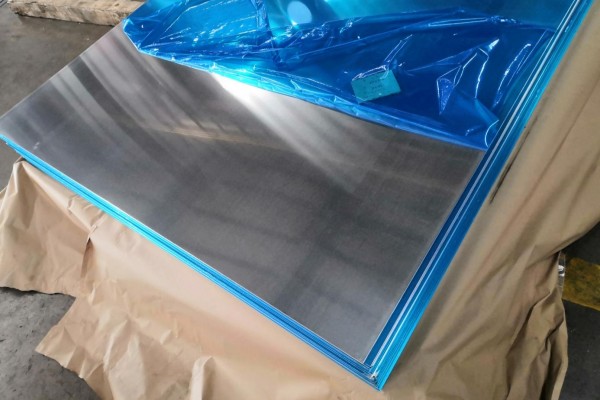
- Inner Layer: Individual sheets separated by PE blue film or neutral kraft paper.
- Middle Layer: The entire stack of sheets is tightly wrapped with moisture-proof paper + plastic bubble film.
- Outer Layer: Placed on a fumigation-free pallet, strapped with steel bands, and covered externally with a corrugated carton or plywood case.
2. Storage Recommendations
- Should be stored in an indoor warehouse that is dry, ventilated, and free of acid/alkali mist.
- Avoid direct contact with the ground; use wooden pads to elevate the material.
3. Inspection Points
- Dimensional Tolerance: Check if the thickness complies with GB/T 3880 or EN 485 standards.
- Propiedades mecánicas: Spot-check hardness or request a Mill Test Certificate (MTC).
- Surface Quality: No cracks, oil stains, severe scratches, or roller marks.
Q&Un
Q1: Enlatar 1050 aluminum sheet be used for ship decks or structural parts in seawater environments?
Un: Absolutely not recommended. Although 1050 resists atmospheric corrosion, it is very sensitive to chloride ions (Cl⁻). Seawater is rich in chlorides, which can cause pitting corrosion and crevice corrosion, rapidly penetrating thin sheets. Marine environments should use 5xxx series (p'el ej.., 5052, 5083) Al-Mg alloys, which have excellent resistance to seawater.
Q2: Why does H14 temper 1050 aluminum sheet crack easily during bending?
Un: There could be three reasons:
- Bend Radius Too Small: Although H14 is half-hard, it still needs to follow the minimum bending radius (usually recommended 1.0t~1.5t, where t is plate thickness); too small an R angle will cause outer side tearing.
- Grain Direction (Anisotropy): Aluminum sheets have a fiber flow direction during rolling. Bendability is best if the bending line is perpendicular to the rolling direction; it is more likely to crack if parallel to the rolling direction.
- Material Impurities: If iron and silicon impurities are at the upper limit, or if the grain size is coarse, plasticity will also decrease.
Q3: Enlatar 1050 undergo Hard Anodizing?
Un: Difficult and not recommended. Hard anodizing usually requires the presence of elements like magnesium and silicon (p'el ej.., 6061) to support the hardness and adhesion of the thick oxide film. The oxide film generated by pure aluminum 1050 is relatively soft and difficult to form a thick film (usually <25μm), and its hardness and wear resistance are far from meeting hard anodizing standards.
Q4: Why does 1050 aluminum sheet sometimes turn black or develop white spots after being stored for a period of time?
Un: This is usually due to poor packaging.
- White Spots: Usually water stains or alkaline residues. Moisture trapped between sheets cannot evaporate, causing local corrosion.
- Blackening: Possibly oil oxidation or contact with rubber/sulfide-releasing plastics. Always use neutral packaging materials and ensure the warehouse is dry and ventilated.
Q5: Is there a big price difference between 1050 y 1060? Where does it mainly differ?
Un: The price difference per ton is usually a few hundred RMB. The differences mainly lie in:
- Raw Material Cost: 1060 requires higher purity aluminum ingots, and scrap recycling requirements are stricter.
- Process Control: Producing 99.6% purity aluminum sheet requires finer impurity control processes than 99.5%.
- Application Distinction: If the requirement for conductivity is not extremely critical (p'el ej.., ordinary heat sinks vs. ultra-high voltage busbars), 1050 offers better cost-effectiveness.
Q6: What should I do if the strength of 1050 aluminum sheet decreases after welding?
Un: This is a normal phenomenon (annealing effect). Arc heat causes the cold-working hardening effect in the weld and heat-affected zone to disappear, returning to a soft state close to O temper. If the structure requires strength, the cross-sectional thickness at the weld should be increased during design to compensate for the strength loss, or consider using mechanical connection methods like riveting or adhesive bonding instead of welding.
Summary
1050 Le' aluminio is more than just a piece of metal; it is a low-cost solution for conduction, heat dissipation, and anti-corrosion demands in modern industry. It sacrifices high strength in exchange for unparalleled processing tolerance and chemical stability. Whether you are designing an LED luminaire requiring efficient heat dissipation, searching for a material for acid-alkali resistant chemical containers, or needing to stamp complex hardware parts in large quantities, 1050 Le' aluminio is your preferred “safe bet” y “economic choice.”