
Industrial Aluminum Rust Removal & Prevention for Longevity
Introduction: Rust on Industrial Aluminum? Don’t Let Corrosion Cripple Production Efficiency!
In fields such as machinery manufacturing, aerospace, chemical equipment, and rail transit, aluminum alloys have become core materials due to their lightweight and high-strength properties. However, humid heat, salt spray, and acid-alkaline media in industrial environments can easily damage the native oxide film (5-10nm) on the aluminum surface, forming loose aluminum rust mainly composed of Al₂O₃・nH₂O and AlOOH.
The hazards of aluminum rust are far more serious than you might think: It not only reduces the tensile strength of components by 15%-30% but also may cause failures such as hydraulic system blockages and heat dissipation inefficiencies, leading to equipment downtime for maintenance and increased corporate costs.
This article details the 4 core industrial aluminum rust removal technologies and 5 rust prevention solutions to help you accurately address aluminum rust issues in different scenarios and extend the service life of aluminum materials by more than 50%.
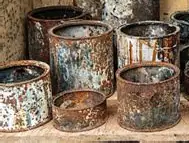
A.Industrial Aluminum Rust – Understand the Hazards First, Then Choose the Right Solution
3 Main Causes of Industrial Aluminum Rust (Avoid These “Rust Traps”)
Aluminum rust in industrial scenarios is not caused by a single factor but by the coupling of multiple environmental conditions. Early avoidance can reduce the risk of corrosion by 80%:
- Electrochemical Corrosion: Electrolytes such as Cl⁻ and SO₄²⁻ in chemical workshops accelerate the galvanic reaction between the aluminum substrate and the oxide film. The generated Al(OH)₃ dehydrates to form loose aluminum rust, which is the main cause of rust on aluminum materials in chemical equipment.
- Stress Corrosion Cracking (SCC): For components under tensile stress (e.g., aircraft engine blades, pressure vessels), the oxide film breaks along stress concentration areas, and the aluminum substrate continues to corrode, forming transgranular aluminum rust.
- High-Temperature Oxidation: For industrial furnaces and turbine components operating above 200℃, the native oxide film becomes multi-layered. The outer layer peels off due to differences in thermal expansion, and the inner layer forms a porous oxide layer, which eventually develops into aluminum rust.
Hazard Classification of Industrial Aluminum Rust – Which Level Does Your Equipment Fall Into?
Different degrees of corrosion have vastly different impacts on equipment. Accurately determining the level is key to selecting the right treatment solution:
| Rust Severity | Rust Coverage Rate | Impact on Mechanical Properties | Equipment Risks (Must Be Alert!) | Recommended Treatment Timing |
| Mild | ≤10% | Strength reduction ≤5% | No direct failure, but monitoring is required | Within 1 month |
| Moderate | 10%-30% | Strength reduction 5%-15% | Seal failure, precision deviation, affecting production | Within 7 days |
| Severe | ≥30% | Strength reduction ≥15% | Structural fracture, system paralysis, potential safety accidents | Immediate |
B.4 Core Industrial Aluminum Rust Removal Technologies – Select on Demand for Efficient Rust Removal
Mechanical Grinding – “Quick Solution” for Mild-to-Moderate Rust (Low Cost, Easy Operation)
Applicable Scenarios: Mild-to-moderate aluminum rust (coverage ≤20%) on mechanical parts, pipe exteriors, etc., especially suitable for on-site maintenance.
Technical Points (Easy for Beginners to Master):
- Tool Selection: Choose a 750-1500W angle grinder, matched with 80-120 mesh aluminum oxide grinding wheels (for rough grinding to remove rust) and 320-400 mesh wheels (for fine grinding and repair).
- Key Parameters: Rotation speed 1800-3000r/min, grinding angle 15-30° (to avoid scratching the substrate), feed rate 50-100mm/s.
- Operation Steps:
-
- Pretreatment: Use compressed air (0.6-0.8MPa) to blow off dust. If oil contamination exceeds 5mg/cm², soak in a 5% Na₂CO₃ solution (60℃) for 10 minutes to degrease.
-
- Grading Grinding: First, perform rough grinding to remove thick rust, then fine grinding until the surface roughness reaches Ra ≤1.6μm.
-
- Post-Treatment: Use a vacuum to remove aluminum powder (dust concentration ≤10mg/m³), and wipe residual powder with isopropyl alcohol.
Cost Reference: Approximately \(0.75-\)1.5 per square meter. No professional equipment is required, making it suitable for small-to-medium batch processing.
Sandblasting Removal – “Killer” for Severe Rust (Suitable for Pre-Coating Preparation)
Applicable Scenarios: Severe aluminum rust (coverage ≥30%) on storage tanks, large structural components, etc., or pretreatment before coating.
Technical Points (High Efficiency with Automation):
- Abrasive Selection: Use 0.5-1.0mm quartz sand (low cost) for thick rust removal, and 0.1-0.3mm aluminum oxide sand (to avoid damage) for precision components.
- Core Parameters: Compressed air pressure 0.5-0.8MPa, sandblasting distance 150-250mm, spray angle 45°, moving speed 200-300mm/min.
- Quality Standard: Reach Sa2.5 level (no visible aluminum rust or oxide scale, residual contaminants ≤5%), surface roughness Ra 2.0-5.0μm (to improve coating adhesion).
- Pitfall Avoidance Guide: Seal threaded holes and sealing surfaces with silicone rubber plugs. Rust prevention treatment must be completed within 4 hours after sandblasting (to prevent re-oxidation).
Cost Reference: Approximately \(2.25-\)3.75 per square meter, suitable for large-batch, large-area rust removal.
Chemical Removal – “Efficient Choice” for Batch Processing (2 Types: Acidic/Chelating)
Applicable Scenarios: Batch processing of small components (e.g., electronic heat sinks, fasteners) or aluminum rust in complex gaps.
a.1 Acidic Rust Removal (High Efficiency, Low Cost, Suitable for Ordinary Components)
- Core Formula (Volume Ratio): 10% HCl + 0.5% thiourea (inhibitor to protect the substrate) + 0.2% sodium dodecylbenzene sulfonate (to enhance rust removal effect).
- Process Parameters: Temperature 25-35℃, immersion time 20-40 minutes, corrosion rate ≤0.5g/(m²・h).
- Control Points: For aluminum alloys containing >2% Cu, increase the inhibitor concentration to 0.8%. Test the Al³⁺ concentration every 10 minutes; replenish with new solution if it exceeds 15g/L.
b.2 Chelating Rust Removal (Low Corrosion, Suitable for Precision Components)
- Formula System: 8%-10% EDTA disodium + 3% disodium hydrogen phosphate + 0.5% triethanolamine (pH 9.0-10.0).
- Advantages: Surface corrosion amount ≤0.1g/m², flatness deviation after rust removal ≤0.02mm, suitable for aerospace landing gear and precision sensors.
- Operation Tips: Control the temperature at 40-50℃, immersion time 30-60 minutes, and rinse with deionized water (conductivity ≤50μS/cm) afterward.
Advanced Technologies – “High-End Solutions” for Precision Components (Laser/Plasma)
Applicable Scenarios: Precision components with high accuracy requirements in aerospace and semiconductors (e.g., engine blades, chip heat sinks).
a.1 Laser Cleaning Technology
- Equipment Selection: Pulsed Nd:YAG laser (wavelength 1064nm), power 100-300W.
- Key Parameters: Pulse frequency 20-50kHz, scanning speed 300-500mm/s, spot diameter 0.2-0.5mm.
- Advantages: Surface roughness after rust removal Ra ≤0.8μm, heat-affected zone ≤50μm, no mechanical damage.
b.2 Plasma Cleaning Technology
- Process Points: Argon plasma (purity 99.999%), vacuum degree 10⁻³-10⁻⁴Pa, power 150-300W, treatment time 10-20 minutes.
- Effects: Surface contact angle ≤30° (improves coating adhesion), carbon residue ≤0.1%, suitable for semiconductor aluminum substrates.
C. 5 Industrial Aluminum Rust Prevention Solutions – Stop Rust at the Source
Anodic Oxidation – “First Choice” for General Protection (Strong Salt Spray Resistance)
Applicable Scenarios: General components such as industrial pipes and structural parts, especially suitable for humid environments.
Standardized Operation Process:
- Pretreatment: Degreasing (5% NaOH, 50℃, 10 minutes) → Pickling (10% HNO₃, room temperature, 5 minutes) → Rinsing with deionized water (conductivity ≤10μS/cm).
- Oxidation Parameters: 18%-20% H₂SO₄, temperature 20-22℃, current density 1.2-1.5A/dm², time 30-40 minutes (film thickness 15-20μm).
- Sealing Treatment: Soak in a 5% nickel acetate solution (85℃, 20 minutes), boiling water weight loss ≤30mg/dm² (to ensure sealing performance).
- Performance Index: Neutral salt spray resistance ≥1000 hours (GB/T 10125), suitable for indoor and outdoor general protection.
Powder Coating – “Specialized” for Outdoor/Corrosive Environments (Excellent Weather Resistance)
Applicable Scenarios: Outdoor equipment enclosures, rail transit aluminum materials, and chemical workshop components.
Process Points:
- Powder Selection: Polyester-epoxy powder (Tg ≥50℃, impact strength ≥50kg・cm, anti-impact and anti-peeling).
- Spraying Parameters: Electrostatic voltage 60-80kV, powder flow rate 50-80g/min, atomization pressure 0.3-0.5MPa.
- Curing Conditions: Bake at 180-200℃ for 20-25 minutes (crosslinking degree ≥90%).
- Core Advantages: Coating thickness 60-80μm, adhesion (cross-cut test) ≤Grade 1, salt spray resistance ≥2000 hours, anti-ultraviolet aging.
Chromium-Free Passivation – “New Choice” for Eco-Friendly Pretreatment (Replaces Traditional Chromate)
Applicable Scenarios: Aluminum materials for food machinery and medical equipment (with high environmental requirements), or pretreatment before coating.
Main Process:
- Passivation Solution Formula: 5%-8% hydrofluozirconic acid + 2% zirconium nitrate, pH 3.0-4.0, temperature 25-30℃.
- Operation Steps: Soak for 5-8 minutes to form a 50-100nm passivation film.
- Performance: Neutral salt spray resistance ≥240 hours, coating adhesion improved by 30%, compliant with RoHS environmental standards.
Regular Maintenance System – “Key” to Extending Protection Life (Differentiated by Component Type)
Maintenance cycles vary greatly among different industrial components. Blind maintenance increases costs; a precise plan ensures efficiency:
| Component Type | Inspection Cycle | Maintenance Content | Detection Method (Simple and Easy to Operate) |
| Chemical Equipment Aluminum | 1 month | Surface corrosion, coating integrity | Visual inspection + coating thickness gauge (to measure thickness) |
| Aerospace Components | 500 flight hours | Stress corrosion cracking, pitting depth | Eddy current testing + penetration testing (to check cracks) |
| Rail Transit Aluminum | 3 months | Salt spray corrosion, weld integrity | Ultrasonic testing + salt spray test paper (to measure corrosion) |
| General Mechanical Aluminum | 2 months | Oxide film damage, gap corrosion | Visual inspection + alcohol wiping (to check adhesion) |
Environmental Control – Reduce “Source Triggers” of Rust (Low Cost, High Return)
- Humidity Control: Maintain relative humidity ≤65% in industrial workshops. Equip dehumidifiers in hot and humid areas (dew point ≤15℃) to avoid moisture condensation.
- Corrosive Medium Control: Control Cl⁻ concentration ≤50mg/m³, and use activated carbon adsorption + spray absorption systems (essential for chemical workshops).
- Galvanic Corrosion Protection: Install polyimide insulation gaskets at aluminum-steel connection points. Repair damaged coatings with matching paint within 24 hours (to prevent expansion).

D.FAQ About Industrial Aluminum Rust Treatment – Answers to Your Top 10 Concerns
- Q: How often does rust prevention need to be re-applied after industrial aluminum rust treatment?
A: In ordinary environments (e.g., machinery workshops), every 1-2 years; in corrosive environments (e.g., chemical plants, coastal areas), every 6-12 months; in outdoor exposure environments, inspection is recommended every 6 months.
- Q: Can sandblasting be used for rust on precision aluminum alloy components (e.g., sensors)?
A: Not recommended! Sandblasting damages precision. Ultrasonic cleaning (25-40kHz) or laser cleaning (Ra ≤0.8μm) is recommended.
- Q: Will acidic rust removal corrode the aluminum substrate?
A: No, if an inhibitor is added! Inhibitors such as thiourea and urotropine can control the corrosion rate within 0.5g/(m²・h).
- Q: Which has better rust prevention effect: chromium-free passivation or anodic oxidation?
A: Anodic oxidation films are thicker (15-20μm) with salt spray resistance ≥1000 hours; chromium-free passivation films are thinner (50-100nm), suitable for pretreatment and need to be used with coatings.
- Q: How to dispose of industrial aluminum powder waste? Can it be recycled?
A: Yes, it can be recycled! Collect and hand it over to professional institutions for smelting and recycling (recovery rate ≥90%). Non-recyclable parts should be disposed of in accordance with industrial solid waste regulations.
- Q: Which rust prevention solution is suitable for aluminum materials in high-temperature environments (e.g., industrial furnaces)?
A: Ceramic-based coatings (heat resistance ≥800℃) or high-temperature anodic oxidation (film thickness 20-30μm, heat resistance 300℃) are recommended.
- Q: Which technology is the most efficient for batch aluminum rust treatment?
A: Acidic chemical rust removal is the most efficient, capable of processing hundreds of small components per hour, suitable for fasteners, heat sinks, etc.
- Q: What protective equipment do operators need during rust removal?
A: For chemical rust removal: acid-resistant protective clothing (resistant to ≥30% HCl) + chemical goggles; for physical rust removal: N95 dust masks + noise-canceling earmuffs.
- Q: Aluminum alloy welds are prone to rust – how to prevent this?
A: After welding, remove the oxide film with 10% nitric acid pickling, then perform chromium-free passivation, and finally apply weld-specific anti-rust paint (e.g., epoxy zinc-rich paint).
- Q: With limited costs, which method should be chosen for mild-to-moderate aluminum rust?
A: Prioritize mechanical grinding (\(0.75-\)1.5 per square meter), followed by citric acid ultrasonic cleaning (suitable for gap rust) – low cost and easy to operate.
Conclusion: “Selection Guide” for Industrial Aluminum Rust Treatment (Quick Matching of Solutions)
| Rust Severity | Component Type | Recommended Technology | Advantages | Cost (per square meter) |
| Mild | General Mechanical Parts | Mechanical Grinding | Easy operation, no professional equipment required | \(0.75-\)1.5 |
| Moderate | Pipes, Heat Sinks | Ultrasonic Cleaning | No damage, suitable for gap rust | \(1.5-\)2.25 |
| Severe | Storage Tanks, Structural Components | Sandblasting Removal | Thorough rust removal, suitable for pre-coating | \(2.25-\)3.75 |
| Precision Components | Aerospace Parts | Laser/Plasma Cleaning | High precision, no mechanical damage | \(7.5-\)15 |
| Batch Small Components | Fasteners, Electronic Parts | Acidic Chemical Rust Removal | High efficiency, low cost | \(1.2-\)1.8 |