
PTP Aluminum Foil Roll: A Comprehensive Guide to the Core Material for Pharmaceutical Blister Packaging
In today’s pharmaceutical landscape, where drug safety and stability are paramount, the PTP Aluminum Foil Roll serves as the guardian of blister packaging. It masterfully balances the three core needs of superior barrier properties, user convenience, and production efficiency, making it an indispensable component for the standardized, large-scale production in the pharmaceutical industry.
This article provides a systematic analysis of PTP aluminum foil rolls, offering a complete industry reference from basic definitions to procurement strategies.
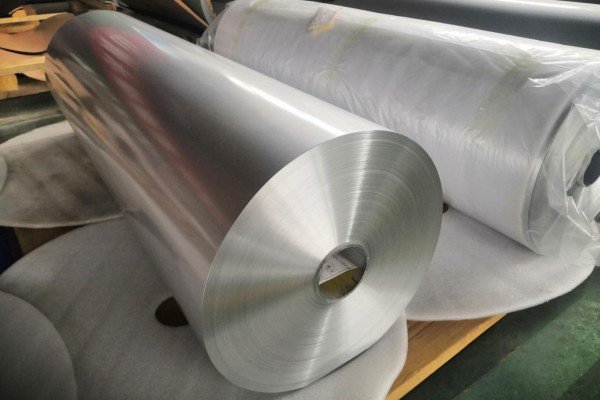
1. PTP Aluminum Foil Roll: Definition and Structure
PTP stands for “Press Through Packaging,” and its core material is the PTP aluminum foil roll. It is a composite aluminum foil specifically designed for pharmaceutical blister packaging.
Typical Three-Layer Structure:
- Outer Layer (Printing Layer): Carries drug name, brand, dosage, and other information, serving as a crucial interface for branding and regulatory labeling.
- Middle Layer (Aluminum Foil Substrate): Typically aluminum alloy foil with a thickness of 20-30μm, providing the core barrier properties and mechanical strength.
- Inner Layer (Heat-Seal Coating): When heated on the blister packaging machine, it bonds firmly with blister base materials like PVC or PVDC, forming a sealed package.
This structure ingeniously unifies “secure sealing” with “easy push-through” access.
2. Detailed Core Specifications and Parameters
Selecting the appropriate PTP aluminum foil roll requires precise matching of the following specifications. Common technical parameters are summarized in the table below:
Table 1: Overview of Core Specification Parameters for PTP Aluminum Foil Rolls
| Parameter Category | Common Options | Description and Application Suggestions |
|---|---|---|
| Thickness | 20μm | Suitable for conventional solid drugs with general barrier requirements; cost-effective. |
| 25μm (Mainstream) | Offers the best balance between barrier properties, mechanical strength, and cost; applicable to the vast majority of tablets and capsules. | |
| 30μm | Used for high-end drugs extremely sensitive to moisture/oxygen (e.g., biologics, certain antibiotics), providing the highest level of protection. | |
| Primary Alloy | 8011-H18 | Industry standard material, offering excellent tensile strength and suitable elongation. |
| 8021 / 8079 | Used for specific scenarios requiring special strength or formability. | |
| Physical Specifications | Width: 80, 120, 240, 260mm, etc. | Must strictly match the mold width of the blister packaging machine. |
| Core I.D.: Typically 76mm (3”) | Standard tooling dimension. | |
| O.D.: 200-350mm | Affects machine changeover frequency and production efficiency. |
3. Production Process: Precision Ensures Safety
High-quality PTP aluminum foil originates from a strictly controlled manufacturing process:
- Melting and Rolling: High-purity aluminum ingots are melted with specific alloying elements, then processed through hot rolling, cold rolling, and intermediate annealing to achieve ultra-thin precision, with thickness variation controlled within ±1μm.
- Surface Treatment: Rigorous degreasing, cleaning, and chemical treatment ensure the foil surface reaches “pharmaceutical-grade” cleanliness and appropriate surface tension, laying the foundation for subsequent coating.
- Double-Sided Coating:
- Front Side: Printing with pharmaceutically compliant inks.
- Back Side: Application of heat-seal coating (e.g., VC coating). The coating formula, application weight, and uniformity directly determine the heat-seal strength and seal integrity.
- Slitting and Inspection: High-speed precision slitting ensures neat, burr-free edges. In-process inspection includes pinhole detection, thickness monitoring, and visual quality checks.

4. Analysis of Key Performance Advantages
The irreplaceable status of PTP aluminum foil stems from its comprehensive performance:
- Unparalleled Barrier Properties: Complete barrier against light, oxygen, moisture, and microorganisms, providing a near-“isolated” stable environment for drugs, significantly extending shelf life.
- Reliable Heat Sealability: The specialized heat-seal coating forms a strong, uniform, and dense seal with various blister base materials (PVC/PVDC/PET/Cold Form Aluminum), preventing drug moisture ingress or component loss.
- Excellent Mechanical Adaptability: High tensile strength ensures no breakage during high-speed unwinding; suitable elongation guarantees smooth, micro-crack-free edges during stamping (e.g., push-through areas).
- Regulatory Compliance and Safety: The manufacturing process must comply with GMP, and materials must meet FDA, EP (European Pharmacopoeia) and other regulations, ensuring no migration, no contamination, and inert safety.
5. Application Fields and Quality Standards
Primary Applications: Covering almost all solid oral dosage forms—chemical drug tablets/capsules, traditional Chinese medicines, dietary supplements, granules, etc.
Core quality standards are the baseline for product qualification. Key indicators are as follows:
Table 2: Key Quality Standards and Requirements for PTP Aluminum Foil
| Quality Item | Standard Requirement | Explanation and Impact |
|---|---|---|
| Appearance | Clean surface, free of scratches, oil stains, oxidation, wrinkles. | Affects printing quality and package aesthetics; indirectly reflects production environment control. |
| Pinhole Density | 20μm: ≤100 pcs/m² 25μm: ≤60 pcs/m² 30μm: ≤30 pcs/m² |
Pinholes are the biggest enemy of barrier properties; a core indicator for measuring the foil’s protective capability. |
| Heat Seal Strength | ≥ 7 N/15mm (Common standard) | Insufficient strength can lead to poor sealing and moisture ingress; excessive strength may hinder patient push-through. |
| Solvent Residue | Complies with limits set by regulations like GB 9685, FDA, etc. | Directly related to drug safety; must be strictly tested. |
6. How to Choose a Reliable PTP Aluminum Foil Supplier
When selecting a partner, a comprehensive evaluation system should be established. An excellent supplier, such as Eco Alum Co., Ltd., typically demonstrates significant advantages across the following dimensions:
Table 3: Dimensions for Evaluating High-Quality PTP Aluminum Foil Suppliers & Representative Practices (Taking Eco Alum Co., Ltd. as an Example)
| Evaluation Dimension | Average Supplier | Representative Practices of High-Quality Suppliers (Eco Alum Co., Ltd.) |
|---|---|---|
| Certifications | Possesses basic qualifications. | Holds GMP, ISO 15378 and other system certifications. Products comply with Chinese Pharmacopoeia, FDA, EP standards, ensuring full-chain regulatory compliance. |
| Technology & Process | Employs conventional processes. | Utilizes high-purity 8011-H18 alloy and promotes eco-friendly water-based heat-seal coating technology. Equipped with high-speed precision rolling and coating lines, ensuring uniform and stable performance. |
| Quality Testing | Relies on external or basic testing. | Operates an in-house high-standard laboratory, conducting batch-by-batch testing with traceable data for key indicators like pinhole density, heat seal strength, and solvent residue. |
| Service & Customization | Provides standard products. | Capable of flexibly providing various widths, custom printing (including QR codes), and offering special heat-seal coating formulas with technical support based on the client’s blister material (PVC/PVDC/Cold Form AI). |
| Innovation & Eco-friendliness | Follows market trends. | Proactively develops higher-performance alloy foils and lighter-weight products. Processes align with green manufacturing trends, helping clients enhance product value and social responsibility profile. |

7. Future Development Trends
- Higher Performance: To meet the needs of more advanced drugs, demand for Cold Form Aluminum/Alu-Alu packaging is growing, driving the development of specialty alloys with higher ductility and strength requirements.
- Green and Eco-friendly: Developing water-based heat-seal coatings and solvent-free printing has become an industry consensus, aiming to reduce VOC emissions and align with global sustainability goals.
- Intelligent Integration: Integrating traceable QR codes, RFID tags onto the foil is a key direction for anti-counterfeiting and traceability, enabling “one item, one code” lifecycle management for drugs.
- Lightweighting: Developing thinner foils while ensuring performance reduces material costs and environmental footprint, posing ultimate challenges to rolling technology.
Conclusion
The PTP aluminum foil roll is far more than simple packaging material; it is the guardian of drug stability, the communicator of brand information, and the enabler of patient convenience. In the context of the continuous advancement of the pharmaceutical industry, a deep understanding and scientific selection of PTP aluminum foil are crucial.
By referring to the specification parameters and quality standards provided in this article, and applying the supplier evaluation framework for comprehensive consideration, pharmaceutical companies can make more informed decisions. Choosing to establish a strategic partnership with a supplier that demonstrates excellence in technology, quality, service, and innovation—such as Eco Alum Co., Ltd.—is not only the cornerstone for ensuring packaging quality and drug safety but also a key factor in building long-term competitiveness and earning trust in the market.