
PTP Aluminum Foil 8011: An In-Depth Analysis of the Core Material for Pharmaceutical Blister Packaging
Abstract
PTP Aluminum Foil 8011 is a high-performance aluminum foil material specifically developed for solid pharmaceutical blister packaging. Its core function is to provide near-perfect protective barriers for tablets, capsules, and other solid dosage forms. As the substrate for Press Through Packaging (PTP), it is directly related to drug stability, safety, and dosing convenience. This article provides a detailed analysis of the material science behind 8011 alloy, its precise manufacturing process, its stringent quality control system, and its central role in the pharmaceutical industry, offering a comprehensive technical and application guide for pharmaceutical companies, packaging engineers, and industry professionals.
1. Material Definition and Industry Positioning
1.1 Basic Definition of PTP Foil
PTP, the abbreviation for Press Through Packaging, is commonly referred to in Chinese as “press-through packaging” or “blister packaging.” Its structure typically consists of two parts:
- Forming Film (Blister Film): A transparent plastic sheet (e.g., PVC, PVDC) that is pre-heated and formed to create cavities (blisters) to hold the tablets.
- Lidding Material: The PTP aluminum foil, which is heat-sealed to the blister film, individually sealing the drug in each blister cavity.
During use, the patient simply applies pressure to the back of the foil at the location of the tablet to push (or peel) it through the foil. This packaging format combines the advantages of unit dosing, excellent protection, portability, and high patient compliance.
1.2 Industry Status of 8011 Aluminum Alloy
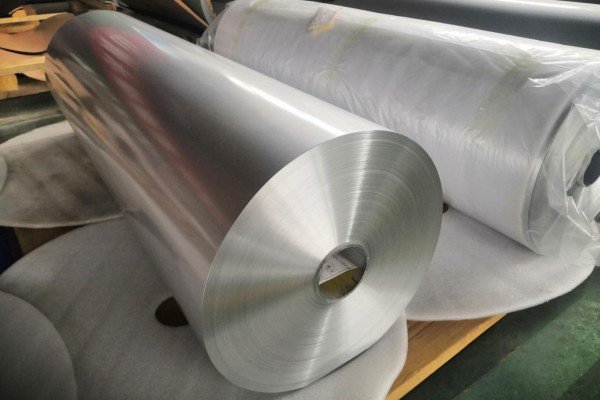
Among numerous aluminum alloy grades, 8011 alloy is globally recognized as the “gold standard” material for manufacturing pharmaceutical PTP foil due to its optimal balance of strength, formability, bendability, and surface quality. It belongs to the non-heat-treatable 8xxx series aluminum alloys (Al-Fe-Si series). Its properties are primarily regulated through cold work hardening (e.g., H18, H19 temper) and annealing processes, making it exceptionally suitable for ultra-thin rolling and subsequent high-speed stamping.
Industry Terminology Clarification:
- PTP Foil: Emphasizes its function and application (lidding material).
- Pharmaceutical Aluminum Foil / Coated Aluminum Foil: Emphasizes its final product form (coated with pharmaceutical-grade heat-seal lacquer).
- 8011 Alloy Foil: Emphasizes its base material composition.
These terms are often used interchangeably in pharmaceutical industry procurement and technical communication.
2. Chemical Composition and Microstructural Analysis of 8011 Alloy
The performance advantages of 8011 alloy are rooted in its precisely controlled chemical composition.
| Element | Standard Content Range (wt.%) | Role and Impact in the Material |
|---|---|---|
| Al | Balance (≥97.5) | Base metal, providing fundamental metallic properties, ductility, and barrier properties. |
| Fe | 0.60 – 1.00 | Key strengthening element. Forms acicular or skeletal AlFeSi intermetallic compounds with Si. These fine, hard particles effectively pin grain boundaries and dislocations, significantly increasing the material’s strength and hardness while inhibiting recrystallized grain growth, resulting in a refined microstructure. |
| Si | 0.50 – 0.90 | Another key element. Forms compounds with Fe, regulating the form of Fe presence. Excess Si can form brittle free silicon, damaging toughness; whereas an appropriate Fe/Si ratio (typically close to 1:1) enables the formation of more uniform and fine compounds, optimizing overall performance. |
| Cu | ≤ 0.10 | Impurity element, strictly controlled. Trace amounts of Cu can increase strength but significantly reduce the foil’s corrosion resistance and may affect compatibility with drug formulations, hence the lower the better. |
| Mn | ≤ 0.20 | Impurity element, typically introduced from raw materials. Trace amounts of Mn can provide solid solution strengthening but also need control. |
| Mg, Zn, Ti, etc. | Each ≤ 0.05 – 0.10 | All are strictly controlled impurity elements. Their presence may affect alloy purity, corrosion resistance, and surface treatment effectiveness. |
Summary of Materials Science Advantages:
- Combination of High Strength and Good Formability: The dispersion-strengthening phases formed by Fe and Si allow 8011 foil to have sufficient tensile strength and stiffness at very thin gauges (e.g., 0.02mm) to withstand subsequent processing and transportation; meanwhile, the aluminum matrix ensures good ductility for easy stamping without cracking.
- Stable Microstructure: The uniform distribution of fine compound phases results in better anisotropic properties, uniform performance after rolling, and a smooth surface finish.
- Excellent Pinhole Control: The pure alloy composition and homogeneous microstructure greatly reduce the probability of critical pinholes (through-thickness defects) occurring during rolling to micrometer-level thicknesses.
3. In-Depth Analysis of the Core Properties of PTP Aluminum Foil 8011
3.1 Absolute Barrier Properties: The Cornerstone of Drug Stability
Aluminum foil is the only flexible packaging material that provides a comprehensive, absolute barrier.
- Water Vapor Transmission Rate (WVTR): Theoretically 0. The actual product must pass strict testing to ensure near-zero moisture transmission even under high temperature and humidity conditions. This is the primary guarantee against drug deliquescence, mold growth, and efficacy reduction.
- Oxygen Transmission Rate (OTR): 0. Completely blocks oxygen, preventing oxidation and degradation of active ingredients (e.g., vitamins, antibiotics, lipids).
- Light Barrier: Completely opaque, especially blocking 100% of ultraviolet (UV) light, effectively protecting light-sensitive drugs.
- Microbial and Contaminant Barrier: The dense metallic structure completely blocks bacteria, molds, dust, and gaseous odors, ensuring drug hygiene.
3.2 Reliable Heat Seal Performance: The Key to Seal Integrity
One or both sides of PTP aluminum foil are coated with a specialized pharmaceutical-grade heat-seal lacquer.
- Function of the Heat-Seal Lacquer: At the heat-sealing station of the blister packaging machine, under specific temperature, pressure, and time, this coating melts and bonds with the surface of the PVC or other forming film, forming a strong seal upon cooling.
- Performance Requirements:
- Suitable Activation Temperature: Must match the melting point of the forming film to ensure fast, stable sealing.
- Good Hot Tack: Provides sufficient initial strength immediately after sealing and during cooling to prevent peeling during line conveyance.
- Controlled Peel Strength: The seal must be strong enough to pass drop and vibration tests, yet allow the patient (including the elderly) to push the tablet through relatively easily. Peel force typically has specified range requirements (e.g., 0.5-2.5 N/15mm).
- Excellent Compatibility: The heat-seal lacquer must meet pharmaceutical standards—non-toxic, odorless, and must not migrate or react with the drug.
3.3 Outstanding Mechanical and Processing Performance
This is fundamental for ensuring the continuous, stable operation of high-speed automated blister packaging lines.
- Stamping/Forming Performance: On the packaging machine, the foil must be instantly stamped to create specific tear lines (e.g., circular, cross-shaped) and may undergo slight stretching. The excellent ductility and work-hardening characteristics of 8011 foil result in clean, burr-free stamping cuts and minimal risk of micro-cracks.
- Web Running Stability: The foil roll must maintain stable tension during high-speed unwinding, transportation, and rewinding without wrinkling or wandering. This requires extremely tight thickness tolerances and flatness (free of edge waves or buckles).
- Pinhole Resistance: The material must resist stress concentration during high-speed stamping and subsequent handling to avoid generating new pinholes.
3.4 Excellent Surface and Printing Performance
PTP foil is the direct carrier of drug information.
- Surface Treatment: To enhance the adhesion of ink and heat-seal lacquer, the foil surface usually undergoes primer treatment to improve its surface energy.
- Printability: Gravure printing can be used to achieve high-definition, high-contrast text, graphics, and barcodes. This is crucial for drug name, strength, batch number, expiry date, manufacturer, and anti-counterfeiting marks.
- Protective Overcoat: After printing, a transparent protective overprint varnish is applied to prevent abrasion of the printed content during transportation and use, and to improve surface gloss.

4. Complete Production Process Flow and Precision Control
The production of PTP aluminum foil is a technology-intensive, high-precision continuous process line.
- Alloy Melting and Casting:
- Uses high-purity primary aluminum (e.g., >99.7%).
- Precisely adds elements like Fe and Si in the melting furnace, employing refining and degassing processes to remove hydrogen and impurities.
- The melt is filtered and then cast via a continuous caster into alloy slabs approximately 6-8mm thick.
- Hot Rolling:
- The slab is heated above its recrystallization temperature and rolled through a hot rolling mill into hot-rolled coils 2-4mm thick. This process initially breaks down the cast structure and homogenizes the composition.
- Cold Rolling:
- Carried out at room temperature through multiple passes, this is the key process for thickness reduction and achieving desired mechanical properties. Massive rolling forces cause work hardening, gradually reducing thickness to 0.3-0.5mm.
- Foil Rolling:
- The core process. On specialized foil rolling mills, “double rolling” is often used—rolling two layers of foil together to prevent breakage at extreme thinness. The final gauge (0.016–0.025mm) is achieved. This process demands extreme precision in roll alignment, rolling oil cleanliness, and tension control.
- Annealing:
- Controlled annealing is performed based on the desired product temper (soft O-temper, or hard H18/H19 temper). Annealing relieves internal stress, adjusts mechanical properties, and stabilizes dimensions. Pharmaceutical foil typically undergoes low-temperature annealing to restore some plasticity while retaining a certain level of strength.
- Surface Treatment and Coating:
- Conducted in a cleanroom environment. The foil is first degreased and cleaned to ensure absolute surface cleanliness.
- Primer Coating: A very thin adhesive layer is applied to enhance subsequent coating adhesion.
- Heat-Seal Lacquer Coating: A precision coater (e.g., micro-gravure, knife coater) uniformly applies the formulated pharmaceutical heat-seal lacquer. The coated foil then passes through a long drying oven for controlled drying and curing.
- Printing: Food and pharmaceutical-grade inks are used for multi-color printing.
- Protective Overcoating: A final transparent protective layer is applied.
- Slitting and Inspection:
- High-speed slitting to customer-specified widths.
- Full Online Inspection: Includes thickness measurement (beta gauge), pinhole detection (spark or CCD vision system), surface defect detection, etc.
- Final QC: Sampling and testing of all key parameters: heat seal strength, solvent residues, microbial limits, print quality, etc.
5. Quality Standards: Meeting the World’s Most Stringent Regulatory Requirements
5.1 Core Regulations and Standards
- United States: Must comply with FDA 21 CFR 175.300 (indirect food additives) and GMP requirements. The material and its coating components must be on the FDA’s list of permitted substances.
- European Union: Must comply with relevant requirements under EU 10/2011 (food contact plastic materials) or stricter pharmacopoeial guidelines. Suppliers must be able to provide a complete Declaration of Conformity (DoC) and migration test data.
- China: Must comply with YBB standards (National Drug Packaging Material Standards) and obtain registration/filing.
- International Standards: ISO 15378 (Good Manufacturing Practices for primary packaging materials for medicinal products) is a key quality system standard.
5.2 Detailed Explanation of Key Performance Test Items
| Test Item | Test Method / Standard | Significance and Requirements |
|---|---|---|
| Pinholes | Detection in a darkroom under specific voltage | Core safety indicator. For 0.02mm thick products, the number of pinholes per standard area must be extremely low or zero. Pinholes are a direct cause of barrier failure. |
| Thickness & Tolerance | Micrometer or online thickness gauge | Affects barrier properties, mechanical strength, and cost. Tolerance is typically controlled within ±5%. |
| Heat Seal Strength | ASTM F88 / GB/T 2358 | Simulates the actual drug removal process. Peel force must be within a reasonable range that ensures seal integrity while allowing easy opening. |
| Solvent Residues | Gas Chromatography-Mass Spectrometry (GC-MS) | Detects total residual solvents (e.g., benzene, ketones, esters) and specific harmful substances from printing/coating processes. Must be below strict limits (e.g., total ≤5 mg/m²). |
| Microbial Limits | Pharmacopoeial methods (e.g., USP <61>) | Tests for total aerobic microbial count, total combined yeasts/molds count, ensuring hygiene levels. |
| Print Quality & Adhesion | Colorimeter, rub resistance test (e.g., crockmeter) | Ensures printed content is clear, accurate, durable, and resistant to abrasion, guaranteeing traceability. |
| Unwinding Performance | Practical simulation on packaging machine | Evaluates the smooth running of the foil roll on high-speed packaging equipment—checking for web breaks, wrinkles, or misalignment. |
6. Market Trends, Application Expansion, and Supplier Selection Strategy
6.1 Market Drivers and Trends
- Growth in Chronic Disease Medications: Conditions like diabetes and hypertension requiring long-term medication drive demand for unit-dose blister packaging.
- Child Safety & Senior-Friendly Features: PTP packaging combines child resistance (difficult to remove multiple units at once) and senior-friendly (easy identification, easy access) characteristics.
- Automation & Smart Manufacturing: Industry 4.0 in pharma promotes high-speed packaging lines, demanding higher consistency, stability, and traceability of foil. Each roll has a unique “ID” (batch/roll number) for full traceability.
- Sustainability: Aluminum foil is infinitely recyclable. The industry is exploring thinner gauges (e.g., 0.018mm) for source reduction without compromising performance, and optimizing coatings to reduce environmental impact.
6.2 Beyond Traditional Tablets & Capsules: Application Expansion
- High-Barrier Nutraceuticals: Products extremely sensitive to oxygen and moisture, like fish oil and probiotics, increasingly use aluminum foil blisters.
- Medical Devices & Diagnostic Tests: Sterile gauze, surgical blades, blood glucose test strips, etc., use sterile PTP packaging for ready-to-use assurance.
- Oral Liquid Sachets: Some pediatric liquid sachets (aluminum-plastic laminate) also often use 8011 alloy for the aluminum layer.
6.3 Comprehensive Checklist for Selecting a High-Quality Supplier
Pharmaceutical companies should view foil suppliers as critical material partners, not just vendors. Evaluation should cover:
- Compliance Foundation:
- Does the supplier have a GMP-grade clean production environment certified by authoritative bodies (especially coating and slitting areas)?
- Does the product have regulatory compliance certificates for key target markets (e.g., FDA Master File, EU DoC)?
- Technical & Quality Capabilities:
- Does it have full supply chain control (from casting to coating)? This offers more stability than a supplier who merely purchases and coats base foil.
- Does it have advanced online inspection systems and a complete chemical/physical laboratory?
- Is its Quality Management System certified to ISO 15378? Can it provide complete, traceable batch Certificates of Analysis (CoA)?
- Product & Service Capabilities:
- Customization Ability: Can it flexibly adjust heat-seal lacquer formulations to suit different forming films (PVC, PVDC, PCTFE, PET)? Can it provide complex multi-color printing and anti-counterfeiting solutions?
- Technical Support: Does it have a professional application technical team to assist customers with machine compatibility issues, heat-seal parameter optimization, etc.?
- Stability & Consistency: What is the feedback from long-term customers? Is the performance variation between batches minimal?
- Sustainability & Social Responsibility:
- Is there a focus on environmentally friendly processes and product lifecycle assessment?
- Corporate social responsibility performance.
Conclusion
PTP Aluminum Foil 8011 is far more than a thin layer of metal. It is the product of material science, precision manufacturing, and stringent pharmaceutical regulations—a “loyal guardian” protecting every single dose from the factory to the patient’s hand. As pharmaceutical packaging evolves towards greater safety, convenience, and intelligence, a deep understanding and scientific selection of 8011 PTP foil have become indispensable for pharmaceutical companies building product competitiveness and ensuring patient drug safety. Choosing it is choosing a commitment to quality and safety.