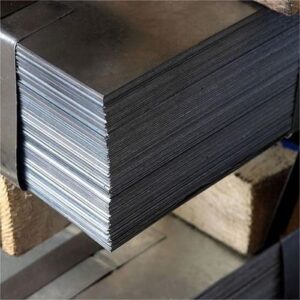
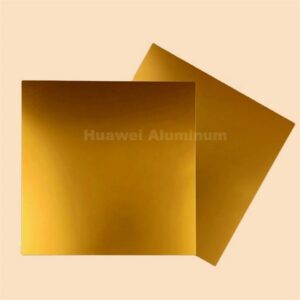
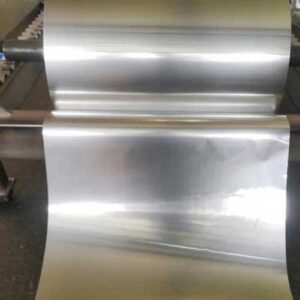
8011 Lacquered Aluminum for Bottle Caps


| Name | 8011 Lacquered Aluminum for Bottle Caps |
| Thickness | 0.20-0.50 mm |
| Width | 600 mm – 1500 mm,Customize |
| Surface | Lacquer-coated (food-grade) with clear or color lacquer, glossy or matte finish, embossed, printed options |
| Technical | Hot rolled ( DC )、Cold rolling ( CC )、Cast |
8011 Lacquered Aluminum for Bottle Caps: A Comprehensive Guide for Industries, Suppliers, and End-Users
The beverage packaging industry increasingly relies on high-performance materials that combine safety, reliability, and aesthetics. Among these, 8011 lacquered aluminum for bottle caps stands out as a versatile solution that optimizes barrier properties, seal integrity, and production efficiency.
This article provides an in-depth, data-supported look at 8011 Lacquered Aluminum for Bottle Caps, its properties, coatings, applications, and the market landscape, with a particular focus on ECO Alum as a leading supplier in this space.
Introduction to the topic and scope
Bottle caps and closures must ensure the integrity of a product from bottling to consumption. They face challenges including chemical compatibility with beverages, mechanical stresses during capping, and long-term aging concerns.
Lacquered aluminum caps combine the intrinsic advantages of aluminum with the protective and functional benefits of polymeric or ceramic-like lacquers, delivering an effective barrier against moisture, oxygen, and flavor migration.
Key focal points in this guide include:
- The rationale for using 8011 aluminum in bottle caps and the role of corrosion resistance, formability, and seal integrity.
- The lacquered coating systems commonly applied to 8011 caps, including their chemistry, performance, and regulatory compliance.
- The supplier landscape, with a detailed look at ECO Alum, a prominent player in the 8011 lacquered aluminum space.
- Practical advice for specification, testing, and quality assurance to ensure reliability across different beverage categories.
- Comparative analyses, practical selection guidelines, and FAQs to address typical customer questions.

What is 8011 Lacquered Aluminum for Bottle Caps?
The alloy: 8011 explained
- 8011 aluminum is part of the 8000-series aluminum alloys, which are non-heat-treatable and rely on work-hardening for strength. This makes 8011 especially suitable for malleable, draw-forming processes required to produce bottle caps and closures.
- Typical composition features a high aluminum content with trace elements that improve corrosion resistance and workability. The alloy is known for its compatibility with food-contact applications when used as part of a laminated or coated system.
- In closure applications, 8011’s ductility supports deep drawing and necking operations, enabling efficient cap production with tight tolerances.
The lacquered approach: why lacquer on bottle caps?
- Lacquer coatings on bottle caps serve multiple functions: they act as a barrier to moisture, oxygen, and aroma transfer; they improve the surface for better sealing with the bottle finish; and they provide a smooth, low-friction surface that can enhance automated capping processes.
- Lacquering can also improve adhesion between the aluminum substrate and functional liners or seals used in closures.
- Food-contact safety is paramount; lacquers used with 8011 caps are designed to meet regulatory requirements for beverage packaging, with attention to migration limits and compatibility with common beverage chemistries (soft drinks, juices, water, and alcoholic beverages in certain segments).
Core advantages of 8011 Lacquered Aluminum for bottle caps
- Excellent drawability for complex cap geometries and high-speed production lines.
- Superior corrosion resistance in typical beverage environments, including acidic and carbonated beverages.
- Consistent surface quality and low defect rates, which reduces downstream rejection risk.
- Enhanced seal performance when combined with standard crown caps, liner systems, and sealing profiles.
- Lightweight and recyclable material, aligning with sustainability initiatives and circular economy goals.
Typical constraints and considerations
- Compatibility with specific lacquer chemistries requires careful specification to avoid pinholes, coating delamination, or lacquer migration.
- Adhesion between lacquer and aluminum must be optimized to resist heat sealing and mechanical stresses during bottling and transport.
- Cost considerations: lacquered 8011 caps can be more expensive than plain metal caps, but the reduced defect rates and improved shelf-life performance often yield a favorable total cost of ownership.

Market Overview and Applications
Beverage industry needs and drivers
- The rise of premium beverages and non-carbonated drinks has emphasized the importance of cap aesthetics, aroma-barrier performance, and seal integrity.
- Carbonated beverages demand strong barrier properties and robust sealing to prevent gas loss and flavor leakage.
- Still beverages and water require reliable corrosion resistance over extended shelf-life periods, with coatings that maintain cosmetic appeal and functional integrity.
Regional trends
- In North America and Europe, there is growing demand for lacquered aluminum closures that meet stringent food-contact regulations and traceability requirements.
- Asia-Pacific markets are expanding capacity for lacquered closures driven by rising beverage production and the need for cost-effective, scalable packaging solutions.
- Sustainability mandates push suppliers to offer low VOC coatings, minimized weight through optimized thickness, and higher recyclability.
Compliance landscape and standards
- Regulatory frameworks commonly referenced include FDA food-contact regulations for coatings, EU food-contact directives, and relevant national implementation standards.
- Coating suppliers often pursue certifications such as ISO 9001 for quality management, ISO 14001 for environmental management, and sometimes supplier-specific food safety schemes.
- Consumer safety data sheets and regulatory disclosures detail migration testing, such as overall migration (OM) tests, to reassure customers about beverage compatibility.
Comparative Analysis: 8011 Lacquered Aluminum vs. Alternatives
Comparison table: alloys, coatings, and performance
| Parameter | 8011 Lacquered Aluminum for Bottle Caps | Alternative A: 3003/3003-H14 Lacquered | Alternative B: uncoated 8011 or other alloys | Notes |
|---|---|---|---|---|
| Alloy family | 8000-series, non-heat-treatable | 3000-series, non-heat-treatable | Various | 8011 is preferred for closures due to drawability. |
| Typical coating types | Epoxy phenolic, polyurethane, PVDF, epoxy-based | Similar coatings or none | None or minimal surface treatment | Coatings determine barrier and migration resistance. |
| Formability (drawability) | High, suitable for deep draws; good hole alignment | High, often easier to form | Lower with older or harder alloys | Formability critical for cap necking and threading. |
| Corrosion resistance | Excellent in beverage environments | Good; depends on coating and environment | Moderate to variable | Coatings significantly influence corrosion resistance. |
| Barrier properties | Strong barrier to moisture and oxygen when properly coated | Good barrier with coatings; variable with coating quality | Primarily dependent on substrate; lacquered system reduces risk | Lacquer barrier is essential for shelf life. |
| Regulatory compliance | Commonly FDA-compliant coating systems; traceability standard | Similar, but check coating approvals | Requires coating if any | Compliance complexity scales with coating and material. |
| Cost considerations | Moderate to high, depending on thickness and coating | Lower material cost, coating adds | Generally lowest cost if uncoated | Total cost of ownership depends on defect rates and performance. |
| Recyclability | Excellent: aluminum is highly recyclable; lacquer adds some processing considerations | Excellent if coatings are removal-friendly | Depends on substrate and coatings | Recyclability improves with efficient post-consumer processing. |
Evaluation for specific beverage types
- Carbonated soft drinks: The combination of 8011 alloy properties with robust lacquering yields reliable gas retention and barrier performance, minimizing off-flavors and aroma migration.
- Still water: The corrosion resistance and seal integrity of lacquered 8011 caps reduce corrosion risks and ensure stable shelf life with minimal flavor alteration.
- Juices and functional beverages: The lacquer system can be tuned for flavor and aroma barrier, while maintaining safety and regulatory compliance.

About ECO Alum: Supplier Introduction
Company overview
ECO Alum is a leading supplier in aluminum packaging, including 8011 lacquered aluminum for bottle caps.
The company emphasizes sustainable practices, traceability, and end-to-end quality assurance.
ECO Alum positions itself as a partner for beverage producers seeking reliable supply chains, consistent product performance, and responsive technical support.
Core capabilities
- Global supply network with integrated sourcing from primary aluminum producers and trusted lacquer suppliers.
- Customizable lacquer systems: epoxy phenolic, polyurethane, PVDF, and hybrid coatings designed for beverage contact.
- Engineering support for cap design, material specification, and process optimization.
- Quality assurance programs, including incoming inspection, in-process tests, and finished goods verification.
Quality and certifications
- ISO 9001-based quality management for manufacturing processes and supplier relationships.
- ISO 14001-aligned environmental management to reflect sustainability commitments.
- Food-contact compliance programs with documentation for regulatory bodies, migration testing, and supply chain transparency.
- Traceability systems to track alloy lot numbers, coating batches, and processing history.
Why customers choose ECO Alum
- Strong technical support for specification development and coating selection.
- Reliable lead times and responsive logistics, essential for just-in-time manufacturing in beverage lines.
- Proven track record across multiple beverage categories, including carbonated, still water, and juice products.
- Emphasis on sustainability and recyclability aligns with corporate social responsibility goals.
Manufacturing and Coating Technologies
Materials and supply chain controls
- Alloy ingot quality and billet specs underpin the consistency of 8011 sheets used for caps.
- Coil and sheet manufacturing controls ensure uniform thickness, surface finish, and dimensional tolerances.
- Pre-treatment and cleaning steps reduce surface contaminants that could affect lacquer adhesion.
Lacquer coating technologies
- Epoxy phenolic lacquers: Durable barriers with good adhesion to aluminum and excellent heat resistance; widely used in beverage closures.
- Polyurethane lacquers: Flexible, impact resistant, and offering strong chemical resistance; may be chosen for harsher filling environments.
- PVDF (polyvinylidene fluoride) lacquers: High barrier properties and chemical resistance; used for premium closures requiring excellent long-term stability.
- Hybrid systems: Combinations designed to balance barrier performance, adhesion, and environmental considerations.
Surface preparation and adhesion
- Surface roughness and cleanliness influence lacquer adhesion. Typical steps include degreasing, micro-abrasion, and surface activation.
- Adhesion-promoting primers may be used to improve bond strength between aluminum and lacquer.
- Post-coating testing ensures uniform surface coverage and absence of pinholes or delamination.
Quality assurance and testing
- Mechanical tests: Tensile strength, yield, elongation, and formability to ensure cap integrity during capping processes.
- Adhesion tests: Tape tests or cross-cut tests to verify lacquer-substrate bonding.
- Barrier tests: Oxygen transmission rate (OTR) and water vapor transmission rate (WVTR) measurements to assess barrier performance.
- Migration tests: Overall migration and specific migration tests to demonstrate regulatory compliance for food-contact coatings.
- Visual and defect inspections: Pinhole inspection, coating thickness uniformity, and surface defect scouting.
Practical Specification and Selection Guide
How to specify 8011 Lacquered Aluminum for Bottle Caps
- Alloy grade: 8011; temper dependent on drawing requirements (e.g., O temper or extra soft) for cap forming.
- Coating system: Select lacquer type (epoxy phenolic, polyurethane, PVDF) based on beverage type, storage conditions, and regulatory needs.
- Coating thickness: Typical coating thickness ranges may be specified in micrometers (µm), balancing barrier performance and cost.
- Adhesion and compatibility: Define required adhesion strength and compatibility with liner materials, sealants, and bottle finishes.
- Surface finish: Gloss level, surface roughness, and uniformity must meet processability criteria for capping equipment.
- Regulatory compliance: Document FDA/EFSA/European directives compliance for coatings, including migration test results.
- Packaging and packaging integrity: Outline corrosion resistance specifications, pinhole criteria, and inspection methods.
Process considerations and supply chain logistics
| Factor | Guidance | Why it’s important | ECO Alum relevance |
|---|---|---|---|
| Lead times | Align with production schedules; consider buffer stock | Reduces line stoppages | ECO Alum offers reliable lead times and quick order processing |
| Coating choice | Select based on beverage type and regulatory needs | Affects barrier, migration, and adhesion | ECO Alum provides multiple coating options and technical support |
| Thickness tolerances | Maintain tight tolerances to ensure seal integrity | Prevents leaks and pinhole formation | Quality control programs ensure thickness consistency |
| Temperature exposure | Validate lacquer stability under pasteurization or hot-fill | Prevents cracking and delamination | Coatings chosen for thermal stability |
| Recyclability goals | Prefer coatings and materials that facilitate recycling | Aligns with sustainability targets | ECO Alum’s processes emphasize recyclability and low environmental impact |
Quality, Compliance, and Sustainability
Quality management framework
- A robust supplier quality management approach includes incoming material inspections, process controls, and final product verification.
- Statistical process control (SPC) methods are used to track coating thickness, adhesion, and defect rates.
- Non-conformance handling includes root-cause analysis, corrective actions, and preventive actions to prevent recurrence.
Compliance considerations
- Coatings intended for beverage contact must pass migration tests and be registered with the relevant regulatory bodies, including food-contact safety standards.
- Documentation such as material declarations, batch traceability, and coating formulation disclosures support compliance and consumer confidence.
- Supplier audits and third-party certifications help ensure consistent performance across batches and production lines.
Sustainability and circular economy
- Aluminum itself is highly recyclable, and modern lacquers are designed to be compatible with recycling streams when properly processed.
- ECO Alum emphasizes sustainable procurement, reduced energy usage, and minimized waste in the coating and forming processes.
- Efforts to lower VOC emissions and optimize coating thickness contribute to a lower environmental footprint without compromising performance.
FAQs About 8011 Lacquered Aluminum for Bottle Caps
What makes 8011 a good choice for bottle caps?
8011 provides high drawability for cap formation, excellent corrosion resistance, and compatibility with common coating systems, making it well-suited for beverage closures.
How do lacquer coatings affect safety and regulatory compliance?
Lacquer coatings used with 8011 caps are designed to comply with food-contact regulations, with migration testing and certification to demonstrate safety for beverage use.
Are lacquered caps recyclable?
Yes, aluminum is highly recyclable, and lacquered caps can be recycled with appropriate processing. The industry continues to improve coating formulations to maximize recyclability.
How do I choose the right coating system?
Consider beverage type, storage temperature, flavor sensitivity, and regulatory requirements. PVDF, epoxy phenolic, or polyurethane coatings offer different balances of barrier performance and adhesion.
What tests should be specified for a new cap design?
Adhesion tests, pinhole inspections, coating thickness checks, OTR/WVTR measurements, and migration testing are essential to verify performance and regulatory compliance.
What are the typical limitations of 8011 lacquered caps?
Potential pinholes, coating delamination under extreme thermal cycling, and color or gloss variations if processes are not tightly controlled. These risks can be mitigated with proper surface preparation, coating selection, and rigorous QA.
Conclusion
8011 Lacquered Aluminum for Bottle Caps represents a mature, high-performance solution for modern beverage packaging.
The ability to combine the favorable mechanical properties and drawability of 8011 with carefully selected lacquer coatings delivers reliable cap performance, strong barrier properties, and robust regulatory compliance.
The result is a packaging system that supports shelf life, flavor integrity, and consumer safety across various beverage categories.
ECO Alum stands out as a credible, customer-centered supplier that blends technical depth with practical execution.
Their emphasis on material sourcing, coating methodology, and end-to-end quality assurance makes them a compelling partner for brands seeking dependable supply and consistent performance.
As the packaging landscape evolves—driven by sustainability goals, evolving regulatory requirements, and consumer expectations—8011 lacquered aluminum closures will continue to be a central component of beverage packaging strategies.