
8021-O Aluminum Foil: Decoding the Secrets Behind Its High Strength and Excellent Corrosion Resistance
In the intricate landscape of modern industry, one material stands out for its unique balance of properties—it is both tough and long-lasting against environmental degradation; it can withstand demanding industrial encapsulation while protecting sensitive electronic components. This is 8021-O aluminum foil, a soft-tempered foil refined through precise processes within a specific alloy family. This article will provide an in-depth analysis of the chemical composition, microstructure, core properties, production processes, and diverse applications of 8021-O aluminum foil, address common questions, and offer a comprehensive understanding of why this high-performance material is a preferred choice in numerous fields.
I. A Materials Science Perspective: Analysis of Composition and Microstructure
The macroscopic properties of any material are rooted in its microscopic world. The exceptional characteristics of 8021-O aluminum foil must first be understood through its chemical composition and resulting metallographic structure.
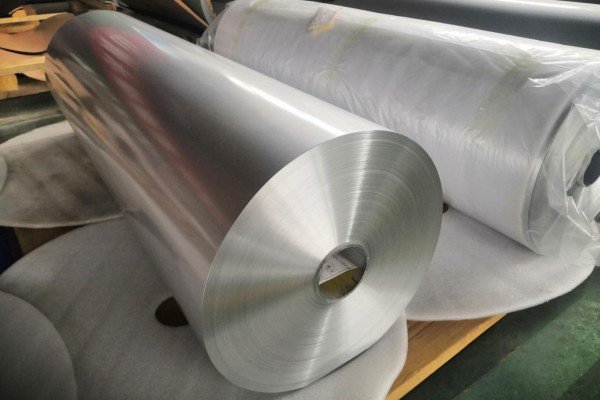
1.1 Precise Chemical Composition Design
The typical chemical composition of 8021 aluminyo haluang metal is strictly controlled within the following ranges (weight percentage), with the core design philosophy being the optimal balance between strength and corrosion resistance.
Table 1: Typical Chemical Composition of 8021 aluminyo haluang metal (Weight %)
| Elemento | Content Range | Primary Role and Influence |
|---|---|---|
| Bakal na Bakal (Fe) | 1.0 – 1.5 | Core Strengthening Element. Forms dispersed AlFeSi intermetallic compounds, creating a dispersion strengthening effect, which is key to enhancing strength. |
| Silicon (Si Si) | 0.05 – 0.20 | Combines with iron to form stable precipitate phases, optimizing the strengthening effect while avoiding potential negative impacts on corrosion resistance from free silicon. |
| Tanso (Cu) | ≤ 0.05 | Strictly Controlled Element. Kept extremely low to eliminate the risk of galvanic corrosion, crucial for ensuring mahusay na paglaban sa kaagnasan. |
| Mga mangganeso (Mn) | ≤ 0.05 | Strictly Controlled Element. Prevents the formation of detrimental phases, ensuring microstructural homogeneity and corrosion resistance. |
| Magnesium (Mg) | ≤ 0.05 | Strictly Controlled Element. Avoids the formation of strengthening phases that could reduce formability and maintains high corrosion resistance. |
| Aluminyo (Al) | Balance | High-purity matrix, providing good electrical and thermal conductivity along with fundamental anti-corrosion properties. |
This formulation—”high Fe, low Si, ultra-low impurities (Cu, Mn, Mg)”—is the result of precise engineering to achieve the best balance between strength, pagiging formable, and corrosion resistance.
1.2 Microstructure After Annealing (O Temper)
“O” stands for fully annealed. After being cold-rolled to the target thickness, 8021 aluminyo foil undergoes precisely controlled heat treatment in an annealing furnace. This process:
- Eliminates Work Hardening: Internal stresses and lattice distortions from cold rolling are recovered, making the material very soft and significantly increasing its elongation.
- Stabilizes Precipitation: Intermetallic compounds formed by iron (e.g., Al₃Fe) are dispersed uniformly as fine particles within the aluminum matrix. These hard particles, akin to stones in concrete, effectively hinder dislocation movement. This allows the material to retain a higher fundamental strength compared to pure aluminum foil, even while being softened (favorable for forming). This dispersion strengthening is the microscopic mechanism behind the mataas na lakas potential of 8021-O aluminum foil.
- Homogenizes the Structure: Results in a uniform, equiaxed recrystallized grain structure, leading to consistent and stable properties.
II. In-Depth Analysis of Core Properties: How High Strength and Corrosion Resistance are Achieved
Understanding its internal makeup allows for a clear interpretation of the two hallmark properties of 8021-O aluminum foil.
2.1 Mataas na Lakas (Compared to Pure Aluminum Foil)
Dito na, “mataas na lakas” is a relative concept. In the “O” temper of aluminum foil, we seek “strength potential” on the basis of excellent ductility.
Table 2: Mechanical Property Comparison of 8021-O vs. Common O-Temper Aluminum Foils
| Property Indicator | 8021-O Aluminum Foil | 1235-O Pure Aluminum Foil | 3003-O Aluminum Foil | Mga Pananalita |
|---|---|---|---|---|
| Lakas ng Paghatak (MPa) | 100 – 140 | 70 – 100 | 110 – 150 | 8021-O strength is significantly higher than pure aluminum foil, approaching that of 3003-O. |
| Yield Lakas (MPa) | 40 – 80 | 20 – 50 | 40 – 80 | Offers moderate yield strength, making it easy for forming processes. |
| Pagpapahaba (%) | ≥ 15 | ≥ 20 | ≥ 15 | Maintains good ductility, suitable for deep drawing and complex forming. |
| Primary Strengthening Mechanism | Dispersion Strengthening (AlFe phases) | Weak Solid Solution Strengthening | Solid Solution Strengthening (Mn) | 8021-O achieves a balance of strength and formability through dispersion strengthening. |
- Practical Significance: This strength means that during subsequent processing (such as stamping into lithium-ion battery casings or capacitor shells), it better resists uneven deformation and wrinkling, improving forming stability. When used as a barrier layer in composite materials, it can withstand greater lamination and subsequent processing stresses, reducing the risk of pinholes or rupture due to insufficient strength during production and use.

2.2 Napakahusay na Paglaban sa Kaagnasan
This is the most renowned characteristic of 8021 aluminyo foil, particularly in fields sensitive to corrosive media (e.g., pharmaceuticals, pagkain, electronic encapsulation).
- Chemical Purity: Strict control of elements like copper and magnesium, which are prone to cause galvanic corrosion, fundamentally reduces the driving force for forming corrosive micro-cells.
- Stable Secondary Phases: The intermetallic compounds formed by iron are chemically relatively inert and are not prone to become initiation sites for preferential corrosion in most environments.
- Dense Oxide Film: Aluminum naturally forms a dense, passivating alumina (Al₂O₃) film. The pure matrix and uniform structure of 8021-O aluminum foil ensure the continuity and density of this oxide film, effectively blocking the ingress of moisture, oxygen, and electrolytes.
- Performance Demonstration: In tests for salt spray corrosion, damp heat corrosion, and exposure to acid/alkali media, 8021-O aluminum foil performs significantly better than many other aluminum alloy foils. Halimbawa na lang, in lithium-ion battery electrolyte environments (containing LiPF₆ in organic esters), its excellent corrosion resistance is crucial for ensuring long-term cycle life and battery safety.
III. From Ingot to Foil: The Precision Production Chain
Exceptional performance relies on precision manufacturing. The birth of a high-quality 8021-O aluminum foil is a meticulous chain integrating metallurgy, deformation processing, and heat treatment technologies.
Table 3: Key Production Process Steps for 8021-O Aluminum Foil and Their Objectives
| Process Step | Brief Description of Main Operation | Core Control Points and Objectives |
|---|---|---|
| 1. Melting & Casting | Batching, melting, refining, and casting into slabs according to composition requirements. | Ensures precise composition and high melt purity, laying the foundation for superior properties. |
| 2. Hot Rolling & Homogenization | Slabs are heated, hot-rolled to intermediate gauge, and undergo homogenization annealing. | Breaks down the as-cast structure, achieving initial uniform distribution of composition and precipitate phases. |
| 3. Cold Rolling | Multi-pass cold rolling to target thickness (e.g., 0.006-0.2mm). | Precisely controls thickness tolerance, flatness, and surface quality to achieve desired dimensions. |
| 4. Annealing (O Temper Treatment) | Full recrystallization annealing in a protective atmosphere. | Core Process. Eliminates work hardening, achieves uniform soft-temper microstructure, and optimizes mechanical properties and surface characteristics. |
| 5. Slitting & Inspection | Slitting to required widths and comprehensive performance inspection. | Ensures product dimensions and properties (mekanikal na mga katangian, pinholes, surface tension, atbp.) meet specifications. |
IV. A Broad Spectrum of Applications: Where is 8021-O Aluminum Foil Needed?
Thanks to its golden combination of mataas na lakas and mahusay na paglaban sa kaagnasan, 8021-O aluminum foil shines in numerous high-end applications.
Table 4: Major Application Fields and Performance Advantages of 8021-O Aluminum Foil
| Application Field | Typical Uses | Core Advantages Provided by 8021-O Aluminum Foil |
|---|---|---|
| New Energy Lithium-Ion Batteries | Cylindrical/prismatic/pouch cell casings, covers, tabs. | High strength ensures casing rigidity; Napakahusay na paglaban sa kaagnasan withstands electrolyte attack; O temper offers excellent deep-drawability. |
| High-End Food & Pharmaceutical Packaging | Mga pack ng paltos, easy-peel lids, milk powder can seals, high-barrier laminated bags. | Superior barrier properties (kahalumigmigan, oxygen, liwanag); Napakahusay na paglaban sa kaagnasan against contents (acids, salts); Food safety compliance. |
| Power Capacitors | Low-voltage electrode foil, casings. | Good electrical conductivity, uniform texture, stable chemical properties. |
| High-Performance Composite Materials | Barrier layer for construction waterproofing membranes, solar backsheets, special protective materials. | High strength reduces pinholes and breakage during processing and use; Weather and corrosion resistance ensure long-term performance. |
| Other Industrial Fields | Substrate for hydrophilic foil in AC units, premium labels, decorative materials. | Good adaptability for surface treatment, napakahusay na formability, attractive metallic luster. |

V. Frequently Asked Questions (FAQ)
Q1: What is the main difference between 8021-O aluminum foil and the commonly available 1235-O aluminum foil?
A: The core difference lies in the performance enhancements brought by alloying elements. 1235 is a pure aluminum series (Al content ≥99.35%), which is very soft with excellent formability but lower strength. 8021-O aluminum foil, through the addition of iron, achieves higher strength and significantly better corrosion resistance while maintaining excellent formability (O temper), making it particularly suitable for applications requiring both strength and resistance to corrosive environments, such as lithium battery casings and high-barrier packaging.
Q2: For lithium battery applications, how do I choose the appropriate thickness for 8021-O aluminum foil?
A: Thickness selection involves a comprehensive trade-off between battery design factors (energy density, safety, cost). The common range is 0.08mm to 0.15mm. Thicker foil (e.g., >0.12mm) offers higher lakas ng loob, better casing rigidity, and resistance to mechanical abuse. Thinner foil (e.g., <0.10mm) helps reduce battery weight and increase energy density but places higher demands on rolling and annealing uniformity, and its paglaban sa kaagnasan must remain adequate after thinning. Specific choices should be determined through in-depth communication with your material supplier based on cell model, structural design, and safety standards.
Q3: What specific media does the “mahusay na paglaban sa kaagnasan” of 8021-O aluminum foil protect against?
A: 8021-O aluminum foil performs excellently in neutral and most mildly corrosive environments. This includes: atmospheric environments (especially industrial and marine atmospheres), tubig, most salt solutions (e.g., sodium chloride), common organic solvents, lithium-ion battery electrolytes, and food media within a wide pH range (e.g., fruit juices, dairy products). For extreme corrosive environments involving strong acids, strong alkalis, or high concentrations of chloride ions, specific evaluation testing is still recommended. Its corrosion resistance primarily stems from high purity and a stable passive film.
Q4: When ordering 8021-O aluminum foil, what technical parameters should be specified besides thickness and width?
A: To ensure the material suits your production process, it is advisable to clarify the following parameters:
- Mechanical Properties: Specific ranges or minimum values for tensile strength, yield strength, and elongation.
- Surface Condition: Requirement for bright/matte finish on one or both sides? What is the required surface wetting tension (dyne level), crucial for printing and lamination?
- Pinhole Rating: Maximum allowable number of pinholes per unit area, critical for high-barrier applications.
- Coil Specifications: Core inner diameter, maximum outer diameter, and gross weight to match your unwinding equipment.
- Special Requirements: Certifications like low heavy metal content (RoHS, REACH), food-grade approval (e.g., FDA, LFGB), or specific requirements for rolling oil residue.
Q5: What should be noted during the stamping/forming process of 8021-O aluminum foil?
A: Although it is in the soft (O) temper, its mataas na lakas characteristic means stamping parameters may differ from those for pure aluminum foil. Recommendations:
- Use sharp dies and ensure appropriate die clearance to reduce burrs and cracking.
- Proper lubrication can improve material flow, enhance surface finish, and reduce die wear.
- Some slight springback may occur after forming, which might require slight compensation in die design. Sharing your specific forming process details with your material supplier can lead to more tailored application support.
About Eco Alum Co., Ltd.
With years of deep experience in the field of high-performance aluminum materials, Eco Alum Co., Ltd. is dedicated to providing customers with innovative, reliable, and sustainable aluminum foil solutions. We have a profound understanding of the critical role 8021-O aluminum foil plays in sectors like new energy, high-end packaging, and specialty composites, and we are committed to being your trusted materials partner.
Our Commitment to Technology and Quality:
We operate modern precision rolling lines and strictly controlled annealing processes to ensure that every coil of 8021-O aluminum foil we produce excels in mataas na lakas, mahusay na paglaban sa kaagnasan, extremely low pinhole counts, and superior surface uniformity. From raw material selection to final slitting, we implement a full-process quality management system to guarantee stable, reliable product performance that meets the most stringent industrial application standards.
Our Service and Support:
Our technical team not only supplies high-quality products compliant with industry standards but also provides professional technical consultation and material selection advice tailored to your specific application scenarios (such as deep drawing for battery casings or lamination processes for high-barrier packaging). We firmly believe that a deep understanding of our customers’ process challenges is key to delivering truly valuable solutions.
Partnership:
Choosing Eco Alum Co., Ltd. means selecting not just a high-performance material, but a long-term partner dedicated to supporting your business success with expertise and卓越的品质. We look forward to collaborating with you to explore more application possibilities for 8021-O aluminum foil and help your products stand out in the marketplace.