
Barrier Efficacy of Pharmaceutical Composite Aluminum Foil in Solid Dosage Packaging
The integrity of solid dosage packaging relies heavily on the performance of Aluminum Barrier Foil, which serves as the primary defense mechanism against environmental degradation for sensitive Active Pharmaceutical Ingredients (APIs). This analysis details the structural requirements and quantifies the superior barrier properties of composite aluminum foils against the critical threats of moisture and oxygen ingress.
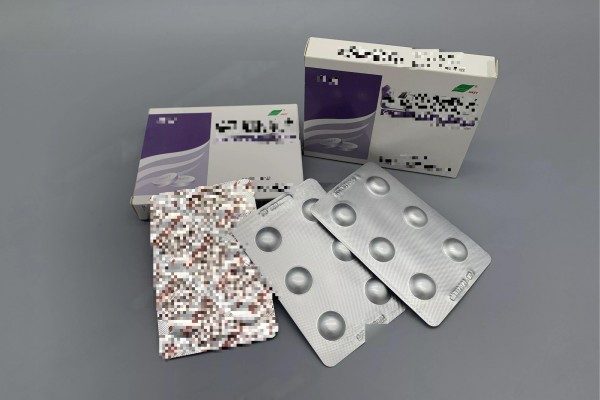
1. The Critical Role of Barrier Materials
Maintaining the chemical stability and therapeutic efficacy of oral solid dosage forms is paramount in pharmaceutical manufacturing.
APIs are frequently susceptible to degradation pathways, including hydrolysis (moisture-driven) and oxidation (oxygen-driven).
These reactions necessitate packaging materials that offer near-absolute impermeability, a requirement uniquely met by aluminum-based composites.
2. Structural Design of Composite Foils
Pharmaceutical composite foils are sophisticated multilayer laminates engineered to combine the absolute barrier function of metal with the necessary mechanical and sealing properties of polymers.The structure is optimized to withstand processing stresses while ensuring a hermetic seal.
2.1 The Impermeable Core
The core of the composite is the aluminum layer, typically ranging from 20 $\mu$m to 50 $\mu$m in thickness.
Aluminum’s dense, non-porous metallic lattice physically blocks the passage of gas and water vapor molecules.
This metallic layer is the fundamental component responsible for the highAluminum Barrier Foilpagganap.
2.2 Functional Polymer Layers
The aluminum core is laminated between polymeric layers, each serving a specific purpose.
An outer layer (e.g., OPA or PET) provides mechanical strength and resistance to abrasion during handling.
The inner layer, often a heat seal lacquer (HSL) or a polymer like PVC, ensures a robust, low-temperature seal to the blister base web.

3. Oxygen Barrier Performance (OVP)
Oxidative degradation can rapidly diminish API potency and generate unwanted byproducts.
The Oxygen Transmission Rate (OTR), measured in $\text{cc}/(\text{m}^2 \cdot \text{day})$, is the standard metric for OVP.
An intactAluminum Barrier Foilexhibits an OTR that is virtually zero, often falling below the detection limits of standard testing equipment (e.g., MOCON instruments).
The primary risk to OVP is the presence of pinholes or micro-cracks, which can be introduced during the rolling or lamination processes.
Table 1: Comparative Oxygen Transmission Rates (OTR) of Packaging Materials
| Material Type | Ang kapal ($\mu$m) | Test Conditions | OTR ($\text{cc}/(\text{m}^2 \cdot \text{day})$) | Barrier Classification |
| Standard PVC | 250 | $23^\circ\text{C}$, 0% RH | 10 – 15 | Low |
| PVDC Coated PVC | 250 | $23^\circ\text{C}$, 0% RH | 0.1 – 1.0 | Medium-High |
| Composite Aluminum Foil | 25 (Al layer) | $23^\circ\text{C}$, 0% RH | $< 0.005$ | Napakahusay |
| Cold Form Foil (Alu-Alu) | 45 (Al layer) | $23^\circ\text{C}$, 0% RH | $< 0.001$ | Superior |

4. Moisture Barrier Performance (MVP)
Moisture Vapor Transmission Rate (WVTR), measured in $\text{g}/(\text{m}^2 \cdot \text{day})$, is often the most critical parameter for drug stability.
The aluminum layer ensures extremely low WVTR values, paggawa ngAluminum Barrier Foilindispensable for hygroscopic APIs.
4.1 The Alu-Alu System
For highly moisture-sensitive drugs (e.g., Class I APIs), the Alu-Alu blister system provides maximum protection.
This system utilizes composite aluminum foil for both the lidding and the base web (Cold Form Foil, CFF).
The CFF process requires precise control to prevent stress-induced micro-fractures in the thickAluminum Barrier Foilduring cavity formation.
Table 2: WVTR Performance and Suitability for Solid Dosage Forms
| API Sensitivity Class | Required WVTR ($\text{g}/(\text{m}^2 \cdot \text{day})$) | Typical Packaging Solution | Key Barrier Mechanism |
| Class I (Highly Sensitive) | $< 0.05$ | Cold Form Foil (Alu-Alu) | Near-Zero Permeability of Al |
| Class II (Moderately Sensitive) | $0.05 – 0.5$ | PVDC/PVC Blister with Aluminum Lidding | PVDC Coating and Aluminum Seal |
| Class III (Least Sensitive) | $> 0.5$ | Standard PVC/Aluminum Blister | Aluminum Lidding Seal |
5. Quality Assurance and Integrity Testing
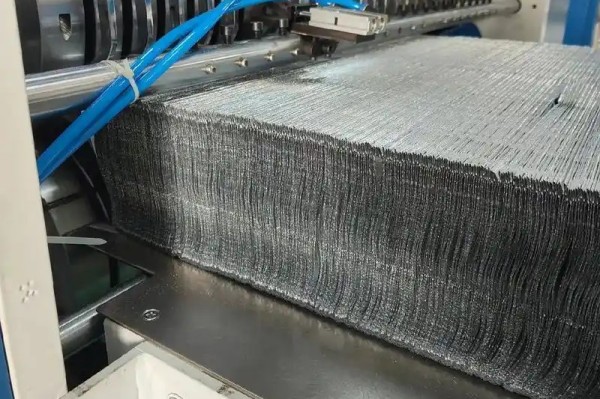
To ensure sustained barrier efficacy, rigorous quality control is mandatory throughout the packaging process.
Permeation testing (OTR and WVTR) verifies the intrinsic properties of the flatAluminum Barrier Foilmaterial.
Post-packaging testing is essential to confirm the integrity of the final hermetic seal, which is the most common point of failure.
Methods such as dye penetration, vacuum decay, and high-voltage leak detection (HVLD) are used to validate seal integrity.
Microscopic and electrochemical analyses are employed to detect and quantify pinholes, which severely compromise the barrier function of theAluminum Barrier Foil.
Pangwakas na Salita
Composite aluminum foils represent the gold standard for achieving superior barrier protection in pharmaceutical packaging. Their structural design ensures near-zero permeability to both oxygen and moisture, safeguarding the stability of sensitive APIs. The overall barrier performance is contingent upon the quality of theAluminum Barrier Foil material and the precision of the final sealing process, necessitating continuous adherence to stringent quality standards.