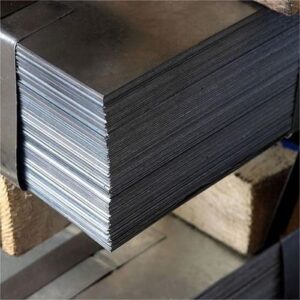
Grade of Anodized Aluminum Foil


Grade of Anodized Aluminum Foil
Introduction
In today’s fields of industrial manufacturing, architectural design, and high-end product development, anodized aluminum foil is a critical material. From aerospace to consumer electronics, this specially treated aluminum offers exceptional corrosion resistance, aesthetics, and functionality. This guide provides a systematic framework for selecting the optimal grade, focusing on the crucial role of aluminum alloy substrate grades alongside anodizing specifications.
Anodized Aluminum Foil Fundamentals, Core Specifications, and Alloy Grades
What is Anodized Aluminum Foil?
Anodized aluminum foil features a dense aluminum oxide layer electrochemically grown on a specific aluminum alloy substrate. This process enhances hardness, wear and corrosion resistance, and provides aesthetic qualities. Ang base alloy’s chemical composition is fundamental, directly affecting the oxide layer’s quality, color uniformity, and final performance.
Analysis of Key Aluminum Alloy Substrate Grades
Performance is not determined by the anodizing process alone; the base alloy grade is a more critical factor. Different alloys behave differently after anodizing. Selecting the correct alloy is the first step to success.
| Serye ng haluang metal | Typical Grades | Primary Alloying Elements | Suitability for Anodizing | Key Characteristics After Anodizing | Typical Application Fields |
|---|---|---|---|---|---|
| 1xxx Series | 1050, 1060 | Al ≥ 99.0% | Napakahusay | Transparent, uniform layer; excellent dyeability, bright colors. Lower hardness. | High-end decor, mga signage, reflectors. |
| 3xxx Series | 3003, 3005 | Mn (Mga mangganeso) | Mabuti na lang | Light to medium gray; suitable for dark colors. Good strength & paglaban sa kaagnasan. | Architectural interiors, Mga Kagamitan, containers. |
| 5xxx Series | 5052, 5083 | Mg (Magnesium) | Makatarungan sa Mabuti | Often slight yellowish tint. High-Mg grades (e.g., 5083) need careful process control. High strength, excellent marine corrosion resistance. | Marine, transport, structures (non-critical appearance). |
| 6xxx Series | 6061, 6063 | Mg, Si Si (Mg, Silicon) | Napakahusay | Most common & ideal substrate. Dense, hard, uniform layer; good dyeability; stable colors. Best balance of mechanics & anodizing. | Building curtain walls, windows, automotive parts, mga electronics. |
| 7xxx Series | 7075 | Zn, Mg, Cu | Mga Maralita | Low transparency, often dark green/gray; hard to get light/bright colors. Very high hardness possible (hard coat). | Aerospace, high-strength sports gear (functional coatings). |
Alloy Selection Guide:
- Best Decoration/Dyeing: 1xxx or 6xxx series (e.g., 6063).
- Lakas ng loob & Aesthetics: 6xxx series (e.g., 6061).
- High Strength/Wear (Appearance Secondary): 7xxx series hard anodizing.
- High Formability: 5xxx series (e.g., 5052), with process coordination.
- Construction Standard: 6063 and 6061 are dominant.
Key Variables in the Anodizing Process
Process variables interact with the alloy to determine final quality:
- Electrolyte Type: Sulfuric (most common), oxalic, or phosphoric acid.
- Voltage/Current Density: Controls thickness, porosity, hardness.
- Temperature & Time: Affect growth rate, structure, and final thickness.
- Sealing Process: (Hot water, cold, mid-temp) determines final protection, stain resistance, color fastness.
Product Specification Parameters
| Parameter | Architectural (6063) | Interior Decor (1050/6063) | Industrial (6061) | Electronics (1050) | Marine (5083) |
|---|---|---|---|---|---|
| Oxide Thickness | AA-M12C: ≥25µm | AA-M10C: 10-15µm | 15-30µm | 5-10µm | 20-25µm+ |
| Surface Hardness | Webster ≥12 | Webster ≥8 | Webster ≥14 | Pencil H4-H6 | Webster ≥10 |
| Salt Spray Test | ≥2000h (Class I) | ≥500h (Class III) | ≥1500h | ≥500h | ≥3000h (CASS) |
| Color Stability (ΔE) | ≤3.0 (5000h Xenon) | ≤2.0 (3000h Xenon) | ≤4.0 (5000h Xenon) | ≤1.5 (2000h UV) | ≤5.0 (5000h Xenon) |
| Main Standards | AAMA 611, GB 5237.2 | GB/T 12967, ISO 7599 | ASTM B580, MIL-A-8625 | IEC 61249 | ASTM B928 |
Unique Advantages
- Exceptional Corrosion & Wear Resistance
- Enhanced Electrical Insulation & Thermal Performance
- Durable, UV-stable Aesthetics
- Fully Recyclable & Environmentally Friendly
Technical Specifications and Grade System
International Standards & Classification
Key standards like ASTM B893-20 define grades by thickness/performance:
- Architectural: AA-M12C (Class I, exterior), AA-M25C (Class II), AA-M10C (Class III, interior).
- Industrial: Hard, Kulay, and Functional anodizing types.
Core Performance Indicators
- Oxide Thickness: Ranges from 5-10µm (liwanag) sa >30µm (extra-heavy duty).
- Surface Hardness: Standard (H4-H6 pencil) to Hard anodizing (up to H9).
- Paglaban sa kaagnasan: Evaluated via Salt Spray (ASTM B117), Alkali, and CASS tests.
- Sealing Quality: Assessed by acid dissolution (ISO 2932) or admittance (ISO 2931).
Selecting Grades by Application Scenario
Architectural and Curtain Wall
- High-Rise Curtain Walls: 6063 haluang metal, AA-M12C (≥25µm). Key: UV/acid rain/pollution resistance, color consistency (∆E<5).
- Interior Decor/Ceilings: 1050 o 6063, AA-M10C (10-15µm). Key: Color uniformity, ease of cleaning.
- Special Climates: Coastal (high salt spray resistance), Industrial (enhanced chemical resistance), High-altitude (UV-stabilized oxide).
Industrial Manufacturing
- Electronics: Heat sinks (1050, 5-10µm), Housings (6061), Precision parts (6061/7075 hard coat, 15-25µm).
- Automotive/Aerospace: Interior trim (6061, decorative), Functional parts (2024/7075, hard coat), Exterior trim (rigorous weathering tests).
- Food & Packaging: 1050/6061, FDA/EU-compliant, fully sealed, chemical/steam cleaner resistant.
Consumer Products & Design
- Consumer Electronics: 6061/5052, 8-12µm, with textures (brushed/sandblasted). Must pass RCA/steel wool tests.
- Home & Lighting: 1050/6063, focus on color/gloss options, heat dissipation, electrical safety.
Comprehensive Evaluation Framework
Needs Analysis & Priority Ranking
Evaluate in this order:
- Substrate Needs: Strength, pagiging formable, weldability -> Determine Serye ng haluang metal.
- Environment: Indoor/outdoor/special, corrosion agents -> Determine Oxide Grade (Class I, II, III).
- Mechanical Needs: Wear, hardness -> Decide on Hard Anodizing.
- Chemical Exposure: Cleaners, chemicals -> Influences Sealing Process.
- Aesthetics: Color, gloss, texture -> Determines Dyeing & Pre-treatment.
- Cost/Lifecycle: Initial cost, lifespan, maintenance.
Matching Matrix: Application vs. Grade
| Application Scenario | Recommended Alloy | Recommended Anodizing | Oxide Thickness | Key Test Standards |
|---|---|---|---|---|
| Coastal Curtain Wall | 6063, 5052 | AA-M12C (Class I) | ≥25µm | ASTM B117, B368 |
| General Building Windows | 6063 | AA-M25C (Class II) | 20-25µm | AAMA 611 |
| Interior Signage | 1050, 6063 | AA-M10C (Class III) | 10-15µm | Visual/Colorimeter |
| Electronics Housing | 6061, 5052 | Industrial Decorative | 8-12µm | ASTM F2357 |
| Industrial Frame | 6061 | Hard/Thick-Film | 15-30µm | MIL-A-8625 T III |
| Food Contact Surface | 1050, 6061 | FDA Grade, Sealed | 10-20µm | FDA CFR 21 |
Supplier Evaluation
Assess:
- Material Control: Ability to certify/trace alloy grade and temper.
- Process Expertise: Experience with your chosen alloy grade.
- Certifications: ISO 9001, industry-specific (AAMA, QUALANOD).
- Testing: In-house capability for thickness, hardness, kulay ng kulay, sealing tests.
- Prototyping: Willingness to provide samples using specified material.
Future Development Trends
Technological Innovation
- Nanostructured Anodizing: For special optical/electrical properties.
- Smart Alloy Development: New alloys for better anodizing performance.
- Multifunctional Coatings: Antibacterial, self-cleaning via nanoparticles.
- Low-Temperature Processes: For energy savings and sustainability.
Sustainable Development
- Green Processes: Chromium-free sealing, electrolyte recycling.
- Circular Economy: Improved anodizing of recycled aluminum.
- Lifecycle Optimization: Lower carbon footprint, enhanced durability.

Frequently Asked Questions (FAQ)
Q1: Why is 6063 preferred over pure aluminum (e.g., 1100) for architectural anodizing?
A1: While 1xxx series has better dyeability, 6063 offers a superior balance: higher strength (for load/wind resistance), excellent anodizing characteristics (dense, uniform, hard oxide), good extrusion formability, and proven cost-effectiveness for profiles.
Q2: What’s the best alloy for black anodizing?
A2: 6xxx serye ng mga (6063/6061) is best for deep, stable black via standard processes. 1xxx serye ng mga (1050) gives the purest black but is softer. Avoid 7xxx series (7075) as it yields greenish, uneven blacks.
Q3: My part is welded before anodizing. Any alloy concerns?
A3: Oo nga. 6xxx serye ng mga (6063/6061) weld well, though the Heat-Affected Zone (HAZ) may show slight color variation. 5xxx serye ng mga (5052) are also weldable but require careful anodizing. 2xxx/7xxx series have poor weldability. Always test anodize welded samples first.
Q4: What’s the difference between hard and standard anodizing?
A4: Hard anodizing uses low-temperature, high-current processes (alloys: 6061/7075) to produce a very thick (50-100µm+), hard (HV 400-600), opaque coating for function, not decoration. Standard anodizing is for thinner, decorative, or protective layers.
Q5: How can I verify the alloy grade from a supplier?
A5: 1) Request the Mill Certificate. 2) For critical projects, specify the grade in the order and consider third-party spectroscopic analysis. 3) Evaluate the supplier’s technical rationale for their alloy recommendation.
About Eco Alum Co., Ltd.
Eco Alum Co., Ltd. is a technology leader in high-end anodized aluminum solutions. We combine deep expertise in aluminum alloy material science with advanced anodizing processes to deliver optimal performance for your application.
Our Core Strengths:
- Materyal & Process Mastery: We guide you from alloy selection (6063, 6061, 5052, atbp.) through precision anodizing for optimal results.
- Application Expertise: Customized solutions for architecture, mga electronics, automotive, and industrial design.
- Innovation & Quality: R&D focused on new alloys and processes; certified to ISO 9001, ISO 14001, and QUALANOD standards.
- Sustainability: Pioneering chromium-free sealing and promoting low-carbon material choices.
Our Product Series:
- Architectural Elite (6063): For curtain walls, 15-year guarantee.
- Industrial Guardian (6061/5083): High strength & paglaban sa kaagnasan.
- Electronics Precision (1050/6061): For aesthetics, heat dissipation, and shielding.
- Design & Art (1050/6063): Superior dyeability for creative applications.
- Custom Innovation: Tailored solutions from alloy to finish.
At Eco Alum, we believe the right alloy is the foundation for successful anodizing. Our team provides comprehensive support—from material selection to application engineering—to ensure your project achieves the perfect balance of performance, aesthetics, and value.
Choose Eco Alum as your technical partner. Let our high-performance anodized aluminum foil be the foundation of your next successful project. Contact us for technical consultation or visit our website for more information.