
Valóban biztonságosak az alumínium sütőedények?
A Technical Deep Dive into Food-Grade Aluminum Standards and Supply Chain Selection
As professionals in the aluminum industry, we are frequently asked a critical question by customers:
In an era of increasing focus on healthy eating, are aluminum baking utensils still a safe choice?
The answer is unequivocal: igen – ha a megfelelő alumíniumot használják és megfelelően dolgozzák fel.
Az alumínium továbbra is a legszélesebb körben használt fémanyag a globális sütőedénygyártásban, és ez nem véletlen. A hővezető képességtől és a gyárthatóságtól az újrahasznosíthatóságig, költséghatékonyság, és a szabályozási megfelelés, Az alumínium olyan előnyök kombinációját kínálja, amelyeket semmilyen más anyag nem tud teljes mértékben helyettesíteni.
Az igazi probléma nem az hogy vajon alumíniumot kell használni, hanem inkább milyen típusú alumíniumot használnak – és hogyan kezelik.
This article is written from the perspective of a professional aluminum material supplier and serves as a technical safety guide for bakeware manufacturers, brand owners, beszerzési csapatok, and processing enterprises.

1. From a Materials Science Perspective: Why Aluminum Remains the “Gold Standard” for Bakeware
1.1 Unmatched Thermal Performance
Aluminum has a thermal conductivity of approximately 235 W/(m·K)—about 15 times higher than stainless steel (~16 W/(m·K)). This translates into:
- Uniform heat distribution: Heat spreads quickly and evenly across the pan surface, preventing localized hot spots and uneven baking
- Fast thermal response: Shorter preheating time and precise temperature control
- Energy efficiency: Reduced baking time and lower energy consumption
For manufacturers, choosing aluminum is not just selecting a material—it is choosing a stable physical foundation for consistent product performance.
1.2 A Model Material for the Circular Economy
As supply chain sustainability becomes increasingly important, aluminum’s elméleti 100% recyclability without performance degradation provides significant ESG value.
Csak újrahasznosított alumíniumra van szükség ~5% of the energy needed to produce primary aluminum, making it an ideal material for brands committed to low-carbon and sustainable supply chains.
2. Core Technical Section: Safety Standards and Compliance Control for Food-Grade Aluminum
As a responsible aluminum supplier, we recognize that material compliance is the lifeline of product quality. The following are the key technical standards that food-grade aluminum must meet.
2.1 Precise Selection of Alloy Grades
Not all aluminum alloys are suitable for food contact. For bakeware manufacturing, we recommend and regularly supply the following food-grade aluminum alloys:
| Ötvözet | Főbb jellemzők | Tipikus alkalmazások |
|---|---|---|
| 3003 | 1.0–1.5% Mn, kiváló korrózióállóság, jó alakíthatóság, költséghatékony | Household baking pans, cake molds, tálcák |
| 3004 | Nagyobb erő, mint 3003, jó alakíthatóság, superior fatigue resistance | Deep-drawn products, heavy-duty bakeware |
| 5052 | 2.2–2.8% Mg, nagy szilárdságú, excellent corrosion resistance and weldability | Commercial bakeware, professional equipment |
Critical control point: Heavy metal impurities (Pb, CD, Hg, Cr⁶⁺) are strictly limited to levels far below regulatory thresholds.
2.2 International Compliance and Certification Systems
Our food-grade aluminum materials fully comply with major global food-contact regulations, beleértve:
- FDA 21 CFR 175.300 (Egyesült Államok) – Migration limits for coatings and metal substrates
- EU 10/2011 & EK sz. 1935/2004 – EU framework for food-contact materials, ensuring chemical stability with acidic and oily foods
- GB 4806.9-2016 (Kína) – National food safety standard for metal materials and articles
When sourcing materials, we strongly recommend requesting:
- Malomvizsgálati bizonyítvány (MTC)
- Third-party test reports (SGS, TÜV, Intertek)
- Alloy composition spectrometric analysis reports
2.3 Strict Control of Trace Elements
Safety differences often lie in micro-level impurity control. During melting and casting, we implement:
- Ólom (Pb): < 0.01%
- Kadmium (CD): < 0.001%
- Arsenic (Mint) & Antimony (Sb): controlled at trace levels
Each batch undergoes full-spectrum analysis using spectrometers to eliminate potential risks at the source.
3. Eloxálás: Building the Ultimate Safety Barrier for Aluminum (Technical Highlight)
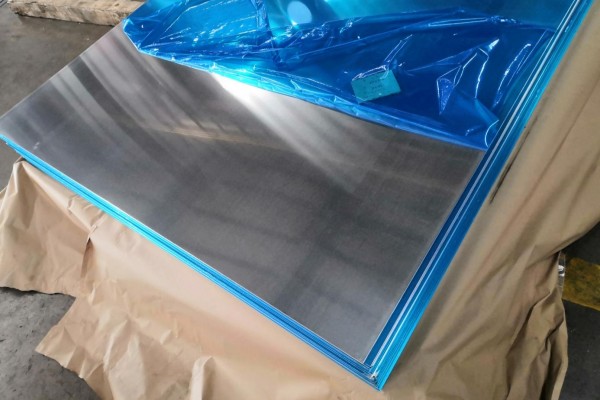
For most premium bakeware manufacturers, we strongly recommend eloxált alumínium lemezek.
This is not a simple surface finish—it is a structural reinforcement at the material level.
3.1 Mi az eloxálás?
Az eloxálás egy elektrokémiai oxidációs folyamat in which aluminum acts as the anode in an electrolyte (jellemzően kénsav), forming a dense aluminum oxide (Al2O3) réteg.
This oxide layer is not a coating, but a ceramic-like structure grown from the base metal itself, jellemzően 5–25 microns thick, adjustable based on application requirements.
3.2 Triple Safety Protection of Anodized Aluminum
| Safety Dimension | Mechanizmus | End-User Value |
|---|---|---|
| Chemical inert barrier | Al₂O₃ is stable within pH 4–8.5, preventing direct contact between aluminum and acidic foods | Eliminates ion migration concerns and flavor transfer |
| Structural reinforcement | Mohs hardness up to 9 (near sapphire), far exceeding base aluminum (2.5–3) | High scratch and wear resistance |
| Permanent protection | Atomic-level bonding prevents peeling or degradation | No risk of coating ingestion; qualifies as a permanent FDA-recognized barrier |
For brands seeking differentiation, hard anodized aluminum offers near-stainless-steel hardness with significantly longer service life.
4. Debunking Myths: Scientific Evidence vs. Market Misconceptions
4.1 “Aluminum Causes Alzheimer’s Disease” — An Obsolete Theory
Early hypotheses from the 1990s suggested a link between aluminum and Alzheimer’s disease. This theory has since been thoroughly disproven:
- WHO (2010): No conclusive evidence of a causal relationship
- Alzheimer’s Association: Everyday aluminum exposure is not a known risk factor
- Modern studies suggest aluminum accumulation is a result, not a cause, of neurodegeneration
4.2 Real-World Aluminum Intake Data
According to the Európai Élelmiszerbiztonsági Hatóság (EFSA):
- Tolerálható heti bevitel (TWI): 1 mg/ttkg
- Actual dietary intake: ~0.2–1.5 mg/kg/week (mainly from food additives, víz, szemek, tea)
- Migration from compliant aluminum bakeware:
< 0.01 mg/kg food under normal baking conditions (<200°C)
Következtetés: Properly certified food-grade aluminum bakeware poses no health risk.
5. Material Selection Guide for Manufacturers and Brands (B2B Focus)
5.1 Vastagság (Nyomtáv) Kiválasztás: Preventing Warping
Recommended thickness:
- Household bakeware: 0.8–1.2 mm
- Commercial bakeware: 1.5–2.0 mm
- Anti-warping design: rolled edges or reinforced ribs
Sheets thinner than 0.6 mm are highly prone to thermal warping.
5.2 Surface Treatment Comparison
| Treatment | Költség | Biztonság | Recommended Use |
|---|---|---|---|
| Bare aluminum | Alacsony | Közepes | Entry-level, disposable bakeware |
| Eloxált | Közepes | Nagyon magas | Középső- to high-end brands |
| Pre-coated (silicone/ceramic) | Magas | Magas | Non-stick applications |
| Clad (Al-SS) | Nagyon magas | Nagyon magas | Induction-compatible premium products |
6. Következtetés: Material Quality Defines Product Safety
The safety of aluminum baking pans depends on supply chain control, not the material itself. Three factors are decisive:
- Correct alloy selection (3003 / 3004 / 5052)
- Controlled manufacturing processes
- Complete regulatory compliance
As a professional supplier of food-grade aluminum sheets and cookware alloy solutions, we ensure full batch traceability and compliance documentation with every shipment.

Take Action: Get Your Customized Material Solution
biztosítunk:
- ✅ Free alloy samples
- ✅ FDA & EU compliance pre-assessment
- ✅ Customized anodizing thickness
- ✅ SGS / Intertek third-party testing
Gyakran Ismételt Kérdések (GYIK)
K: How to quickly verify food-grade compliance?
A: Check alloy grade (3003/3004/5052), review MTC, confirm third-party reports.
K: Key difference between household and commercial bakeware?
A: Háztartás: 3003, 0.8–1.2 mm. Kereskedelmi: 3004/5052, 1.5–2.0 mm with reinforcement.
K: Is thicker anodizing always safer?
A: Nem. 5–10 μm for household, 15–25 μm for commercial is sufficient.
K: Can recycled aluminum be food-grade?
A: Igen, with proper refining and full traceability.
K: What shortens bakeware lifespan?
A: Prolonged acidic storage, sharp utensils, dry heating above 250°C.