
식품 포장용 코팅 알루미늄 호일의 경화 공정에서 냄새의 근본 원인과 체계적인 제어 전략
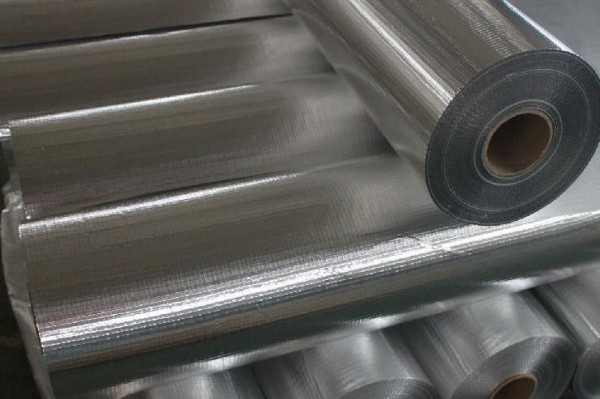
In the field of food packaging, coated aluminum foil has become a key material for the packaging and preservation of products such as dairy, 초콜릿, cooked foods, and fast food, thanks to its exceptional barrier properties, 내열성, 그리고 안전.
The curing process is the core stage of its production. It facilitates the cross-linking reaction of the coating materials to form a dense protective film. This process directly determines the final performance of the foil and its food safety compliance.
하지만, the irritating odors generated during curing not only deteriorate the production environment but may also remain on the finished products. This raises consumer safety concerns and poses risks of non-compliance with national standards like GB 31604.60-2024.
그러므로, systematically analyzing the root causes of odor and establishing an effective control system covering the entire production chain has become a critical challenge that must be addressed to drive the industry’s high-quality development.

1. Analysis of the Root Causes of Odor in the Curing Process
Odor generation permeates the entire process from raw materials to the finished product. Its core sources are insufficiently reacted substances, chemical by-products, and contaminants introduced due to poor process control. The causes can be categorized into the following three main types:
1.1 Inherent Defects in Raw Materials and Formulation
Raw materials are the fundamental source of odor. Improper selection or flawed formulation directly leads to post-curing odor issues.
- Solvent Residue Issues: The use of high-boiling-point, high-residue solvents (예를 들어, 톨루엔, 사이클로헥사논) or solvents of substandard purity means their impurities struggle to volatilize completely during curing, leading to residual, pungent odors.
- Risks from Curing Agents: Free isocyanate monomers potentially present in traditional solvent-based curing agents, and residues from phenolic crosslinkers, can release irritating odors during or after curing and may pose migration safety risks.
- Substrate Contamination: If improper rolling oils (예를 들어, high viscosity, wide boiling range) are used during aluminum foil stock production, residual oil that fails to volatilize completely at curing temperatures can also generate odor.
- Formulation Imbalance: Excessive addition of additives like plasticizers or stabilizers, or poor compatibility between components, leads to incomplete curing reactions. The unreacted substances can then slowly release odor over time.
1.2 Improper Control of Curing Process Parameters
Precise control of process parameters is key to ensuring complete reactions; incorrect settings directly induce odor.
- Insufficient Temperature or Time: Curing temperatures that are too low or durations that are too short result in incomplete cross-linking reactions of resins, 용매, and curing agents. This leaves behind unreacted monomers or intermediate products that become sources of later odor release.
- Localized Overheating and Degradation: Excessively high temperatures, especially in processes like electromagnetic induction curing, can cause localized overheating, leading to polymer degradation or even carbonization of the coating. This produces noticeable burnt, acrid odors and other irritating gases.
- Improper Airflow and Ventilation: Inadequate airflow speed inside the curing oven fails to promptly remove volatile by-products and residual solvents generated during the reaction, allowing them to accumulate and potentially re-contaminate the product. Excessively high airflow, 하지만, may affect the coating surface quality.
1.3 Secondary Pollution from Production Environment and Equipment
The cleanliness of the production environment and equipment directly impacts product purity.
- Ambient Air Pollution: If pollutants like other volatile organic solvents or dust are present in the workshop air, they can be adsorbed by the uncured coating surface and subsequently become “entrapped” within the cured film, creating complex odors.
- Equipment Contamination: Equipment such as curing ovens and conveyor belts accumulate coating decomposition products, polymer residues, and grease on inner surfaces over prolonged operation. Under continuous high temperatures, 이러한 침전물은 스스로 분해되거나 새로운 제품과 상호 작용할 수 있습니다., 호일 표면에 타는 냄새 및 기타 냄새가 발생합니다..
- 다운스트림 프로세스의 영향: 슬리팅 및 리와인딩 중, 과도한 장력이 가해지면, 코일이 너무 팽팽하게 감겨지는 원인, 보관 및 운송 중 층 사이에 갇혀 있는 미량의 휘발성 물질의 확산 및 탈출을 방해할 수 있습니다.. 이로 인해 최종 사용자가 패키지를 열 때 눈에 띄는 냄새가 날 수 있습니다..

2. 전 공정 악취 제어 시스템 구축
To fundamentally control and eliminate odor, a systematic management plan from source to end must be established, focusing on four core dimensions: 원료, 프로세스, 장비, and environment, all working in synergy.
2.1 소스 제어: Optimizing Raw Material Selection and Formulation Design
Strictly controlling raw material quality and formulation science is the most effective way to eliminate odor risks at the root.
테이블 1: Key Raw Material Selection and Control Points
| Material Category | Recommended Selection & 제어점 | 목표 & Standard Reference |
|---|---|---|
| Solvent | Prioritize high-purity, low-boiling-point eco-friendly solvents (예를 들어, 에틸 아세테이트, 에탄올). Strictly control purity (≥99.9%), 수분, and impurity content. | Achieve low residue and rapid, thorough volatilization. Meet limit requirements for substances like benzene series in standards such as GB 31604.60-2024. |
| Curing Agent | Select low-odor, food-contact-grade products, 예를 들어, waterborne polyurethane curing agents with low free monomer content, blocked isocyanates, BPA/BADGE-free phenolic crosslinkers. | Residual monomer content <0.05%, low odor grade (0-1), ensuring complete reaction and safety. |
| 알루미늄 호일 기판 | Select rolling oils that are low-viscosity, high-flash-point, and easily volatilized. Enhance the post-rolling air-knife cleaning process. | Ensure rolling oil completely volatilizes during foil annealing and the initial coating curing stages, with minimal surface residue. |
| Additives | Use food-grade, low-odor additives strictly in limited quantities. Optimize component compatibility in the formulation through experimentation. | Avoid over-addition, ensure they participate in the reaction or remain stable, 이동이나 악취 발생 방지. |
2.2 프로세스 최적화: 경화 공정 매개변수의 정밀한 조정
온도 등 핵심 변수를 꼼꼼하게 제어하여, 시간, 경화 중 공기 흐름, 완전한 반응이 보장됩니다, 휘발성 물질이 효과적으로 제거됩니다..
테이블 2: 다단계 경화 공정에 권장되는 매개변수
| 경화단계 | 주요 목표 | 온도 조절 범위 | 시간/공기 흐름 제어 포인트 | 예상결과 |
|---|---|---|---|---|
| 예열단계 | 대부분의 용매를 완전히 휘발시킵니다. | 80°C – 100°C | 충분한 탈출을 보장하기 위해 코팅 두께와 용매 함량에 따라 시간을 조정하십시오.. | 용매 잔류물을 대폭 감소, 후속 가교 반응을 위한 깨끗한 표면 생성. |
| 코어 경화 단계 | 수지와 경화제의 철저한 가교반응 완성 | 150°C – 180°C (특정 공식에 따라 조정) | 시간은 코팅의 깊은 층에서 완전한 반응을 보장해야 합니다.. 균일한 오븐 공기 흐름을 유지합니다. 1.5-2.5 밀리미터/초. | 조밀하게 형성, 완전 경화 필름; 미반응 단량체 제거; 균일한 공기 흐름으로 소분자 부산물 제거에 도움. |
| 냉각단계 | 코팅 구조 안정화, 내부 스트레스 감소 | 실온으로 점진적 냉각 | 온도 충격을 피하기 위해 냉각 속도를 제어하십시오.. | 열 스트레스로 인한 코팅의 미세 균열 방지, 응력 방출로 인한 경화 후 휘발 감소. |
| 특수공정 (예를 들어, 호일 파우치 경화) |
저온에서 완전 경화 달성 | 45°C – 55°C | 경화시간을 대폭 연장 48-72 시간. | 열에 민감한 물질의 분해를 방지하면서 시간을 연장하여 완전한 반응을 보장합니다.; 고온에 견디지 않는 복합 구조물에 적합. |
2.3 장비 보증: 강화된 유지보수 및 청소 관리
생산 장비의 청결과 적절한 상태는 2차 오염을 방지하고 공정 안정성을 보장하는 데 필수적입니다..
- 정기적인 청소 체제 확립: Develop and enforce weekly cleaning schedules for equipment interior surfaces like curing ovens and conveyor belts. Use neutral cleaning agents for thorough residue removal, followed by complete drying to prevent cross-contamination.
- Implement Preventive Maintenance: Regularly inspect, service, and calibrate systems like heating elements, fans, and air ducts to ensure temperature uniformity and ventilation efficiency. Optimize and adjust systems like tension control and air-knife nozzles on slitters to ensure their effectiveness.
- Install End-of-Pipe Treatment Devices: Equip the exhaust outlets of curing ovens with waste gas treatment devices like activated carbon adsorbers or catalytic oxidizers. These treat collected volatile organic compounds, reducing environmental impact and preventing exhaust gases from recirculating and contaminating the workshop.
2.4 환경 관리: Creating a Clean and Stable Production Environment
A well-controlled production environment is a prerequisite for manufacturing high-quality products.
- Strictly Control Workshop Environment: Maintain workshop cleanliness. Ensure adequate ventilation (recommended air change rate ≥6 times/hour) and control appropriate temperature and humidity (예를 들어, 20-25°C, 50-60% RH). Strictly prohibit the storage or use of odorous chemicals within the workshop.
- Strengthen Whole-Process Quality Control: Establish a full-process quality traceability system from raw material intake to finished product dispatch. Beyond routine physical property testing, conduct regular sensory evaluations and instrumental analysis (예를 들어, Gas Chromatography-Mass Spectrometry, GC-MS) on finished products. Proactively monitor odor-causing substances to ensure products meet safety and odor standards.
3. 결론
Odor control in the curing process of coated 알루미늄 호일 for food packaging is a systematic engineering task requiring cross-departmental and inter-process collaboration. The guiding principle must be “source prevention as the foundation, process control as the core, and end-of-pipe treatment as the safeguard.”
By systematically implementing environmentally friendly and high-purity raw materials, precise and standardized curing processes, clean and intelligent production equipment, and standardized workshop environment management, companies can not only effectively solve odor challenges and ensure 100% product compliance with increasingly stringent food contact material safety standards like GB 31604.60-2024, but also significantly enhance production efficiency, product consistency, and market competitiveness.
앞으로 찾고 있습니다, as consumer awareness of environmental protection and safety rises, being odor-free and low in residues has become essential for high-end food packaging. Relevant enterprises should continue to increase investment in R&D for low-odor materials, digital process monitoring, and life-cycle management. Through close collaboration with industry chain partners, the coated aluminum foil for food packaging sector can be collectively propelled towards a greener, 더 안전한, and higher-performance future, providing a solid material foundation for global food safety.