
Aliuminio folija oro kondicionavimo kanalams
Paklausa dėl air-conditioning aluminum foil has increased significantly as HVAC systems require higher efficiency, lower energy consumption, and improved airflow stability. As a key material in duct manufacturing, air-conditioning aluminum foil offers a specialized combination of lightweight strength, anti-corrosion performance, and reflectivity that helps maintain both thermal and mechanical stability inside modern air-distribution systems.
Why Air-Conditioning Aluminum Foil Matters in HVAC Performance
Air-conditioning aluminum foil is widely applied in flexible ducts, rigid ducts, and composite insulation structures. The foil’s high reflectivity minimizes thermal gain, its corrosion resistance prevents long-term degradation, and its low density helps reduce the overall load of large-scale HVAC installations.
In modern ducting systems, aluminum foil ensures:
- Higher insulation efficiency
- Reduced condensation and microbial growth
- Improved airflow stability
- Longer service life in humid and variable-temperature environments

Key Technical Properties Required for Air-Conditioning Aluminum Foil
Manufacturers typically focus on the following performance indicators:
| Turtas | Technical Requirement | Effect on HVAC Ducting |
|---|---|---|
| Folijos storis | 0.03–0.12 mm | Determines strength and flexibility in duct shaping |
| Tempimo stiprumas | 70– 130 MPa | Ensures durability under bending and vibration |
| Surface Reflectivity | ≥ 85 % | Enhances thermal insulation performance |
| Atsparumas korozijai | Aukštas, especially in humid airflow | Prevents internal duct oxidation |
| Sukibimas (for laminated foil) | ≥1.0 N/mm | Improves bonding with PET, PE, or fiberglass materials |
| Pailgėjimas | ≥15 % | Ensures duct flexibility and installation safety |
These technical characteristics directly influence duct stability, fire resistance, and long-term durability.
Atvejo analizė: „Eco Alum Co.“, Ltd Achieves 18% Efficiency Improvement in a Commercial HVAC Retrofit
„Eco Alum Co.“, Ltd, a specialized manufacturer of HVAC-grade aluminum foil, recently supported a large commercial building retrofit project in Southeast Asia. The previous ducting system suffered from air leakage, mold growth, and high energy consumption.
„Eco Alum Co.“, Ltd supplied a custom 0.06 mm 8011-O air-conditioning aluminum foil, laminated with PET for improved tear resistance. After replacement:
- Air leakage dropped by 31%
- Cooling system energy consumption decreased by 18%
- The indoor humidity index improved, reducing condensation risk
This project demonstrates the importance of choosing engineered-grade aluminum foil with proper material certification and surface treatment.
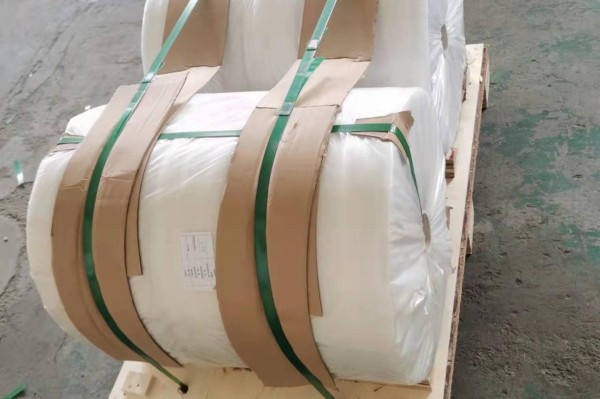
Palyginimas: Air-Conditioning Aluminum Foil vs. Standard Packaging Foil
| Savybė | Air-Conditioning Aluminum Foil | Standard Packaging Foil | Performance Difference |
|---|---|---|---|
| Lydinio tipas | 8011, 1100, 1235 | 8011, 3003 | HVAC foil requires specialized alloys for stability |
| Storio diapazonas | 0.03–0.12 mm | 0.009–0,020 mm | HVAC foil is thicker for mechanical strength |
| Paviršiaus apdorojimas | Antikorozinė, lacquer, hydrophobic | Minimal treatment | Higher durability in ducts |
| Lamination Options | PET, PE, fiberglass | Popierius, PE | HVAC foil demands stronger composite structures |
| Atsparumas temperatūrai | -40°C to 150°C | -20°C to 120°C | Better performance in harsh HVAC environments |
| Structural Strength | Aukštas | Žemas | Essential for duct stability |
This comparison highlights why specialized air-conditioning aluminum foil is required instead of general-purpose foil.
Applications of Air-Conditioning Aluminum Foil
Air-conditioning aluminum foil plays a structural and functional role throughout the entire HVAC air-movement and insulation chain. Its applications extend beyond simple duct wrapping and include composite structures, thermal barriers, vapor retarders, and internal lining materials. The following subsections expand on the most critical use scenarios.
Flexible Air Ducts (AL–PET–AL Composite Foil)
Flexible ducts rely heavily on aluminum foil laminated with PET or PE. The laminated structure provides:
- Didelis tempimo stiprumas to support bending and installation stress
- Superior vapor resistance, preventing moisture migration
- Internal bright reflectivity to reduce friction loss and support stable airflow
- Long-term anti-corrosion performance in humid environments
These ducts are widely installed in residential apartments, malls, sandėliai, and hotel HVAC systems, where space constraints require flexibility.
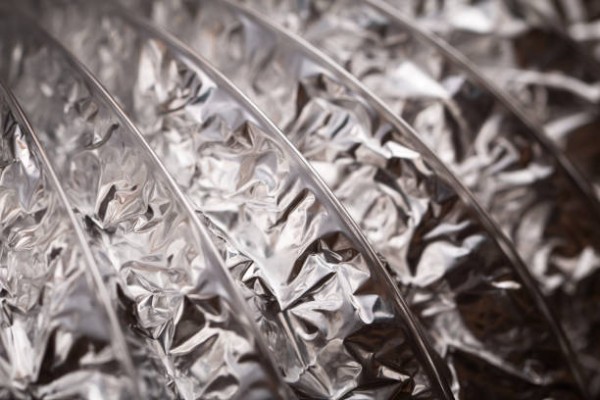
Rigid Duct Panels for Commercial HVAC Systems
Rigid ventilation ducts—especially fiberglass ducts and phenolic ducts—use aluminum foil as:
- External skin (anti-moisture and anti-dust layer)
- Internal lining (reflective, anti-bacterial surface)
The foil enhances structural stability and prevents fiber shedding into the airflow. Many large buildings, such as airports and hospitals, require rigid ducts lined with high-grade air-conditioning aluminum foil due to its fire resistance and hygiene performance.
Insulation Materials for Air-Handling Units (AHU) and VRF Systems
In high-capacity AHU and VRF systems, aluminum foil is applied in insulation layers to:
- Reduce thermal bridging in large-volume airflow
- Prevent condensation forming on equipment surfaces
- Improve HVAC energy management and load efficiency
Common structures include AL–XPE foam, AL–fiberglass wool, ir AL–rubber insulation.
Acoustic Damping Materials
Because aluminum foil is stiff but lightweight, it is widely used in acoustic duct liners. It acts as:
- A protective film over sound-absorbing material
- A reflector controlling airflow resistance
- A fire-safe barrier for acoustic panels
This is critical for HVAC systems in cinemas, conference centers, and office buildings where low noise levels are required.
Outdoor HVAC Unit Protection (Sun and Moisture Barriers)
Aluminum foil laminated with weather-resistant coating is used to protect outdoor piping and ducts:
- Reflects UV and heat
- Prevents corrosion from rain or ocean wind
- Minimizes thermal loss in outdoor refrigerant lines
This improves long-term performance in tropical and coastal regions.
High-Humidity Environment Ducting
In environments such as food factories, swimming pools, and pharmaceutical cleanrooms, aluminum foil is essential because:
- It remains stable even under continuous humidity exposure
- It prevents mold and bacteria growth
- It maintains airtightness for controlled ventilation systems
These industries require stricter hygiene and condensation control standards.
Common Quality Problems and How to Avoid Them
Air-conditioning aluminum foil performance can significantly affect HVAC system efficiency, ilgaamžiškumas, ir saugumą. Below is a comprehensive breakdown of typical issues, priežasčių, and engineering recommendations.
Foil Cracking or Tearing During Duct Forming
Causes:
- Insufficient elongation (<15%)
- Incorrect alloy temper
- Excessive rolling stress left in the foil
- Poor-quality lamination or adhesive aging
Sprendimai:
- Pasirinkite O temperamentas (atkaitintas) aluminum foil for maximum ductility
- Specify elongation requirements with suppliers
- Ensure proper aging and stress-relieving treatment
- Select manufacturers like „Eco Alum Co.“, Ltd that provide controlled mechanical properties
Delamination in Laminated Foil Products (AL–PET–AL, AL–PE)
Causes:
- Low-grade adhesives
- Uneven coating application
- Poor corona treatment
- Insufficient bonding pressure during lamination
Sprendimai:
- Require ≥1.0 N/mm adhesion strength per QC standard
- Ensure PET/PE layers undergo corona treatment >38 dynes
- Request lamination with solvent-based or polyurethane high-bonding adhesives
- Choose suppliers with automated lamination lines
Pinholes or Surface Defects Reducing Vapor Barrier Performance
Causes:
- Excessive rolling pressure
- Contaminated aluminum melt
- Surface scratches during slitting
- Poor workshop cleanliness
Sprendimai:
- Specify pinhole density limits (≤50 pinholes/m² for HVAC foil)
- Ensure melt purity and filtering
- Use dust-free slitting workshops
- Select foil thickness ≥0.05 mm to reduce pinhole probability
Oxidation Spots or Corrosion in High-Humidity Areas
Causes:
- Foil stored in non-controlled humidity environment
- No surface lacquer or inadequate anti-corrosion film
- Foil exposed to condensation during transportation
Sprendimai:
- Request hydrophobic or anti-corrosion treated foil
- Require packaging with moisture-proof film
- Store below 60% RH and avoid temperature shock
- For coastal regions, pasirinkti lacquered aluminum foil
Insufficient Tensile Strength Causing Duct Deformation
Causes:
- Using packaging-grade foil instead of HVAC-grade foil
- Wrong alloy selection (pvz., 1100 used for large ducts instead of 8011/3003)
- Low control of rolling parameters
Sprendimai:
- For large ducts, pasirinkti 8011-O or 3003-O with tensile strength >90 MPa
- Require mechanical property certificates from the supplier
- Audit the manufacturer’s rolling mill accuracy and annealing process
Inconsistent Thickness Leading to Poor Lamination or Airflow Problems
Causes:
- Rolling mill precision issues
- Inaccurate tension control during slitting
- Inconsistent foil width
Sprendimai:
- Specify strict thickness tolerance (±0.002 mm for HVAC foil)
- Require suppliers to use AGC/AFC automatic thickness control
- Inspect slitting quality (edge burrs ≤0.02 mm)
Poor Fire Performance Due to Incorrect Material Selection
Some duct foils fail fire testing because:
- They use low-grade laminates
- Foil is too thin to resist ignition
- Surface coatings are flammable
Sprendimai:
- Ensure compliance with IN 13501, UL 181, or GB/T 17791
- Use flame-retardant PET/PE films
- Choose thicker foil (>0.06 mm) for commercial HVAC
Poor Adhesion to Insulation Materials
Causes:
- Incorrect adhesive type used for foam or fiberglass
- Low bonding temperature
- Poor surface cleanliness
Sprendimai:
- Use heat-activated adhesive for XPE or rubber foam
- Increase lamination pressure
- Clean foil surface before bonding
FAQ About Air-Conditioning Aluminum Foil
| Question | Answer |
|---|---|
| What thickness is best for flexible air ducts? | 0.05–0.08 mm is most commonly used for flexibility and strength. |
| Which alloy is preferred for ducting foil? | 8011-O and 1100-O are the most widely used due to ductility and corrosion resistance. |
| How does aluminum foil improve energy efficiency? | Its high reflectivity reduces thermal exchange, keeping cold air cooler for longer. |
| Can aluminum foil be used outdoors? | Taip, when laminated with PET or coated for weather resistance. |
| Why is hydrophobic treatment useful? | It prevents condensation and mold formation in humid airflow environments. |
Išvada
As HVAC systems evolve toward higher energy efficiency and stricter building standards, air-conditioning aluminum foil continues to be a crucial material for manufacturing durable, stabilus, and high-performance ducting systems. With the support of reliable producers like „Eco Alum Co.“, Ltd, enterprises can significantly improve duct longevity, reduce energy consumption, and optimize indoor climate performance.