
Problems and Process Improvement of Coating Brittleness in Pharmaceutical Aluminum Foil
Pharmaceutical aluminum foil is a critical material in drug packaging, widely used in blister packaging for solid dosage forms and sealing of infusion containers due to its excellent barrier properties, sealing performance, u s-sigurtà. The quality of the coating directly affects the storage stability, usage safety, and packaging compliance of pharmaceuticals. Coating brittleness, one of the most common quality defects in the production and application of pharmaceutical aluminum foil, not only compromises barrier performance, leading to moisture absorption, ossidazzjoni, and contamination of drugs, but may also introduce safety hazards due to the detachment of coating fragments.

1. Problem Characterization and Hazards of Coating Brittleness
1.1 Forms of Brittleness
Brittleness primarily manifests as cracks, detachment, or powdering of the coating at different stages, which can be categorized into three types:
1.1.1 Brittleness During Production
Surface cracks appear immediately after coating and curing, or brittleness occurs at the edges during slitting or winding due to tension.
1.1.2 Brittleness During Storage and Transportation
Brittleness occurs due to temperature and humidity fluctuations or external pressure, potentially accompanied by substrate damage.
1.1.3 Brittleness During Usage
The coating easily detaches, trabijiet, or even tears off in sheets during blister punching or patient opening.
According to General Rule 4055 of the Farmakopea Ċiniża2025 Edition, brittleness directly results in burst strength falling below the standard requirement (≥98 kPa). Brittle samples often exhibit burst strengths below 60 kPa, while water vapor and oxygen transmission rates are prone to exceed limits, compromising drug protection.
Tabella 1: Main Characteristics and Impacts of Coating Brittleness in Pharmaceutical Aluminum Foil
| Stage of Brittleness | Typical Characteristics | Key Impact Indicators | Potential Consequences |
|---|---|---|---|
| Proċess ta' Produzzjoni | Surface cracks after coating; edge brittleness during slitting/winding | Burst strength, adeżjoni tal-kisi | Immediate scrap generation, increased production costs |
| Storage & Trasport | Delaminazzjoni, xquq, localized detachment | Rata ta' trażmissjoni tal-fwar tal-ilma, rata ta 'trasmissjoni ta' ossiġnu | Telf ta' proprjetajiet ta' barriera, leading to moisture absorption and oxidation |
| Usage Process | Powdering during punching, tearing during opening | Dehra, integrità tal-kisi | Risk of foreign matter introduction, affecting drug safety and user experience |
| Common Impacts | Incomplete coating, visible or microscopic defects | Burst strength (often <60 kPa), prestazzjoni tal-barriera | Non-compliance with Farmakopea Ċiniżastandards, triggering regulatory risks |
1.2 Main Hazards of Brittleness
1.2.1 Drug Safety Risks
Coating fragments may contaminate drugs; reduced barrier properties can lead to moisture absorption, ossidazzjoni, and degradation, particularly affecting light-sensitive and hygroscopic drugs. Studies show that packaging with brittle defects can increase drug moisture content by an average of 2.3% wara 6 months of accelerated testing (40°C/75% RH), exceeding pharmacopoeial standards.
1.2.2 Compliance and Quality Risks
Coating brittleness is a severe quality defect that fails to meet standards such as the Farmakopea Ċiniżau Fojl tal-Aluminju Farmaċewtiku(YBB00152002-2015), potentially resulting in product registration failure, GMP audit non-conformity, ifakkar prodotti, and administrative penalties. Since the implementation of the associated review system, bejn wieħed u ieħor 18% of aluminum foil manufacturers have been eliminated due to coating quality issues.
1.2.3 Economic and Brand Risks
Increased scrap rates raise production costs; quality issues damage corporate reputation and customer relationships. Under the pressure of green procurement mechanisms, companies with poor quality face marginalization in the market.

2. Cause Analysis of Coating Brittleness
The causes of brittleness involve multiple factors, including raw materials, proċessi, pretreatment, u l-kundizzjonijiet ambjentali, all of which are interrelated.
Tabella 2: Key Cause Analysis of Coating Brittleness in Pharmaceutical Aluminum Foil
| Cause Category | Specific Factors | Mechanism of Action | Typical Manifestations or Poor Parameters |
|---|---|---|---|
| Inadequate Raw Material Compatibility | 1. Substrate quality defects | Uneven coating, stress concentration; poor adhesion | Low purity, tolleranza tal-ħxuna >±2μm, surface contamination |
| 2. Improper resin selection | Poor coating flexibility, high brittleness | High glass transition temperature (>50° C.), broad molecular weight distribution | |
| 3. Improper additive usage | Increased internal stress, poor compatibility | Improper plasticizer ratio, residwu għoli tas-solvent | |
| Unreasonable Production Processes | 1. Coating parameter deviations | Uneven coating thickness, internal stress generation | Excessive speed, devjazzjoni tal-ħxuna >±3% |
| 2. Poor curing process control | Improper crosslinking density, overly brittle or insufficient strength | Incorrect temperature/time, uneven UV exposure | |
| 3. Improper slitting and winding | Edge stress or continuous tensile stress | Excessive tension, excessive slitting speed | |
| Insufficient Substrate Pretreatment | Poor cleanliness and roughness | Weak coating adhesion, prone to delamination | Simple wiping only, surface energy <35 mN/m |
| Environmental Factors | Extreme temperature/humidity fluctuations or poor cleanliness | Thermal stress, poor curing, impurity introduction | Temperatura <15° C., umdità >80%, dust contamination |
2.1 Inadequate Raw Material Compatibility
2.1.1 Aluminum Foil Substrate Defects
Substrates (E.g., 8011, 8021 ligi) with low purity, high impurities, flatness fqira, or excessive thickness tolerance (>±2 μm) can lead to uneven coating and stress concentration. Surface oil stains or excessively thick oxide layers also reduce coating adhesion.
2.1.2 Improper Coating Resin Selection
Common resins (E.g., akriliku, polyurethane, EVA) with poor flexibility, excessively high glass transition temperatures (E.g., >50° C.), or broad molecular weight distribution can result in high brittleness after curing. Melt flow index fluctuations of heat-seal resins exceeding ±15% also increase brittleness risk.
2.1.3 Improper Additive Usage
Inappropriate amounts of plasticizers, poor compatibility between additives and resins, and high solvent residues can affect coating cohesion and flexibility, leading to cracking.
2.2 Unreasonable Production Process Parameters
2.2.1 Coating Parameter Deviations
Improper control of coating speed, ħxuna, or doctor blade pressure can result in uneven coating thickness (devjazzjoni >±3%). Excessively thick coatings are prone to internal stress due to inconsistent shrinkage, while overly thin coatings fail to form a complete protective layer.
2.2.2 Poor Curing Process Control
Excessively high temperatures or prolonged times in hot air curing can over-crosslink the coating, making it brittle; insufficient temperature or time leads to incomplete curing and low strength. Improper UV intensity or exposure time can cause uneven curing or localized overheating.
2.2.3 Improper Slitting and Winding
Excessive slitting speed or tension can cause edge cracking; excessive winding tension places the coating under continuous tensile stress, making it prone to brittleness during storage.
2.3 Insufficient Substrate Pretreatment
Poor surface cleanliness and roughness significantly affect coating adhesion. Superficial cleaning without chemical degreasing or electrochemical oxidation leaves oil and dust residues, weakening coating adhesion. Insufficient surface roughness (surface energy <35 mN/m) also hinders adequate wetting and spreading of the coating.
2.4 Environmental Factors
Production temperatures below 15°C or humidity above 80% can affect coating leveling and curing efficacy. Extreme temperature and humidity fluctuations during storage and transportation create thermal stress due to mismatched coefficients of thermal expansion between the foil and coating. Physical impacts or compression can directly cause brittleness. Poor production environment cleanliness allows dust particles to create stress concentration points, accelerating brittleness.
3. Process Improvement Measures for Coating Brittleness
Tabella 3: Key Control Parameters for Pharmaceutical Aluminum Foil Process Improvement
| Improvement Area | Control Parameter | Recommended Parameter/Standard | Għan tal-Kontroll |
|---|---|---|---|
| Materja Prima | Substrate thickness tolerance | Within ±2μm | Ensure coating uniformity |
| Substrate surface tension | ≥31 mN/m | Ensure good wettability | |
| Resin glass transition temperature (Tg) | 20-40° C. | Balance flexibility and strength | |
| Melt flow index variation of heat-seal resin | ≤±10% | Ensure process stability | |
| Proċess tal-kisi | Coating speed | 10-15 m/tiegħi | Ensure coating uniformity |
| Coating thickness uniformity | Deviation ≤±3% | Avoid internal stress concentration | |
| Piż tal-kisi | 2-5 g/m² | ||
| Curing Process | Hot air curing temperature/time | 80-100° C. / 3-5 min | Ensure complete crosslinking, avoid brittleness |
| UV curing intensity/time | 80-120 mJ/cm² / 1-2 s | ||
| Substrat Pretrattament | Chemical degreasing (temperature/time) | 50-60° C. / 1-2 min | Thoroughly remove oils |
| Electrochemical oxidation (voltage/time) | 10-15 V / 30-60 s | Improve surface energy and roughness | |
| Post-treatment surface tension | ≥35 mN/m | Ensure high coating adhesion | |
| Ambjent & Storage | Production environment temperature/humidity | 20-25° C. / 50-60% RH | Ensure process stability |
| Storage environment temperature/humidity | 15-25° C. / ≤60% RH | Prevent aging and moisture absorption |
3.1 Optimizing Raw Material Selection and Control
3.1.1 Strict Substrate Selection
Use high-purity, low-impurity 8011/8021 alloys with thickness tolerance controlled within ±2 μm and surface tension ≥31 mN/m. For high-demand products, substrates with thickness ≥0.030 mm can be selected, with pinhole rates below 0.1 kull metru kwadru.
3.1.2 Optimizing Resin and Additive Selection
Select resins with moderate glass transition temperatures (20–40°C) and uniform molecular weight distribution. Water-based or UV-curable resins are recommended to replace solvent-based types. Melt flow index variation of heat-seal resins should be ≤±10%. Optimize additive formulations, such as using plasticizers to improve flexibility and silane coupling agents to enhance adhesion, ensuring additive compatibility.
3.1.3 Establishing Raw Material Inspection Mechanisms
Strengthen incoming inspection, monitoring resin flexibility, molecular weight distribution, substrate cleanliness, roughness, eċċ., to prevent unqualified materials from entering production.
3.2 Optimizing Production Process Parameters
3.2.1 Precise Coating Process Control
Control coating speed at 10–15 m/min, doctor blade pressure at 0.1–0.3 MPa, and coating weight at 2–5 g/m², ensuring thickness uniformity deviation ≤±3%. Regularly maintain equipment to ensure coating uniformity.
3.2.2 Optimizing Curing Process Parameters
Hot air curing should be controlled at 80–100°C for 3–5 minutes with uniform air velocity of 1–2 m/s; UV curing intensity should be 80–120 mJ/cm² for 1–2 seconds. Monitor and adjust parameters in real-time.
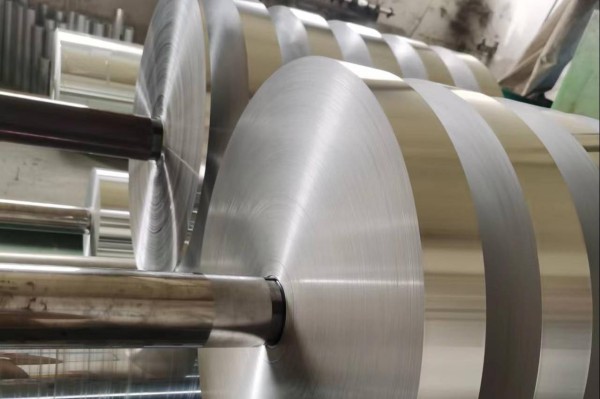
3.2.3 Improving Slitting and Winding Processes
Slitting speed should be 5–10 m/min, winding tension controlled at 50–100 N using constant tension winding. Allow wound coils to rest for 24–48 hours to release internal stress. Heat-sealing temperature fluctuations should be controlled within ±1°C.
3.3 Strengthening Substrate Pretreatment Processes
Implement a full-process pretreatment of “chemical degreasing – water rinsing – electrochemical oxidation – water rinsing – drying.” Ineħħi l-grass (50–60°C, 1–2 minutes) removes oils; electrochemical oxidation (10–15 V, 30–60 seconds) improves surface roughness and activity; use deionized water for rinsing; drying (80–90°C, 2–3 minutes) ensures surface dryness. Post-treatment substrate surface tension should be ≥35 mN/m.
3.4 Enhancing Environmental Control
3.4.1 Controlling the Production Environment
Maintain workshop temperature at 20–25°C, relative humidity at 50%–60%, and cleanliness at Grade D standards to reduce dust contamination.
3.4.2 Optimizing Storage and Transportation Conditions
Store finished products in a cool (15–25°C), nixxef (umdità ≤60%), and ventilated warehouse, avoiding direct sunlight and excessive stacking. Use shockproof and moisture-proof packaging during transportation, avoiding extreme temperature/humidity fluctuations and mechanical impacts.
3.5 Improving Quality Inspection Systems
3.5.1 Establishing Full-Process Inspection Mechanisms
Perform online monitoring of coating thickness and uniformity; test finished products for flexibility, adeżjoni, burst strength (≥98 kPa), rata ta 'trażmissjoni tal-fwar tal-ilma (≤0.5 g/(m²·24h)), eċċ.
3.5.2 Utilizing Professional Testing Equipment
Equip with pharmacopoeia-compliant burst testers (E.g., NPD-01B), use headspace gas chromatography for solvent residue testing, and employ microscopes to observe coating microstructure.
3.5.3 Establishing Quality Traceability and Stability Testing Systems
Create batch quality records for full traceability. Conduct regular stability tests to evaluate coating performance under different environmental conditions.

4. Verification of Improvement Effectiveness and Industry Trends
4.1 Example of Improvement Effectiveness
After implementing the above improvements, a company achieved a 30% increase in coating flexibility, a 25% improvement in adhesion, coating thickness uniformity deviation ≤±2%, curing completion rate >99%, and substrate pretreatment qualification rate of 100%. The scrap rate due to brittleness decreased from 8.5% għal taħt 0.3%, and product qualification rate reached 99.7%, with burst strengths meeting pharmacopoeial requirements. By switching to water-based coatings, VOC emissions were reduced by over 80%, successfully entering the supply chain of leading pharmaceutical companies.
Tabella 4: Comparison of Key Indicators Before and After Process Improvement in a Company
| Key Performance Indicator | Status Before Improvement | Status After Improvement | Improvement/Compliance Status |
|---|---|---|---|
| Coating Flexibility | Baxx, prone to cracking | Significantly improved | Improved by approximately 30% |
| Adeżjoni tal-kisi | Insufficient, prone to delamination | Strong bonding | Improved by approximately 25% |
| Coating Thickness Uniformity | Devjazzjoni >±5% | Deviation ≤±2% | Target achieved |
| Curing Completion Rate | ~95% | >99% | Quality significantly stabilized |
| Substrate Pretreatment Pass Rate | Instabbli | 100% | Source quality controlled |
| Brittleness Scrap Rate | 8.5% | <0.3% | Quality loss significantly reduced |
| Overall Product Qualification Rate | ~91% | 99.7% | Meets high-end customer requirements |
| Qawwa tat-tifqigħ | Partially below 98 kPa | All ≥98 kPa | 100% compliant with Farmakopea Ċiniża |
| Environmental Benefit (VOCs) | Using solvent-based coatings | Using water-based coatings | Emissions reduced by >80% |
4.2 Industry Development Trends
4.2.1 Greening of Coating Technologies
Water-based, UV-curable, and electron beam-curable coatings with low or zero VOCs will gradually replace solvent-based products.
4.2.2 Functional Development Towards Precision and Intelligence
Coatings are evolving towards intelligent anti-counterfeiting, one-item-one-code traceability, dynamic light protection, and smart sensing to meet the protective needs of highly active drugs.
4.2.3 Deepening Industry Regulations
Il- Farmakopea Ċiniżastandards continue to advance, with testing extending towards microstructure, chemical characterization, and biocompatibility, driving process and quality control upgrades in enterprises.
5. Konklużjoni
Coating brittleness in pharmaceutical aluminum foil is a quality defect caused by multiple factors, including raw materials, proċessi, pretreatment, u l-kundizzjonijiet ambjentali, posing threats to drug safety, corporate compliance, and economic interests. By systematically optimizing raw materials, precisely controlling process parameters, strengthening substrate pretreatment, strictly controlling environmental conditions, and improving quality inspection systems, the risk of brittleness can be effectively eliminated, enhancing product reliability.
Fil-futur, enterprises should follow industry trends towards greening, preċiżjoni, and functionalization, increase R&D investment, continuously advance process upgrades, strictly adhere to pharmacopoeia and related standards, and improve quality management systems to ensure drug safety with high-quality products and elevate the overall industry level.