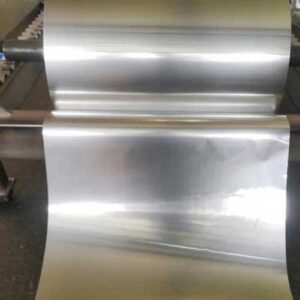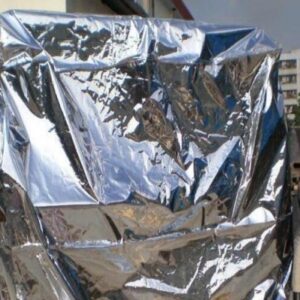
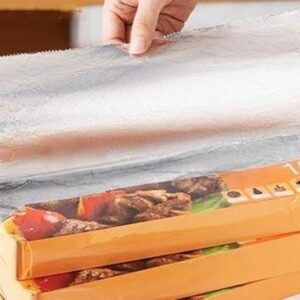
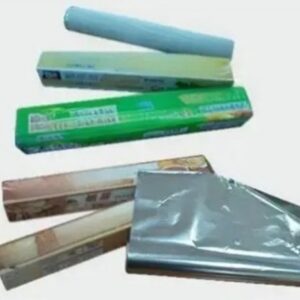
8011 O-Temper 0,009 mm aluminiumfolie voor melkdoppen
8011 O-Temper 0,009 mm aluminiumfolie voor melkdoppen
1. Invoering
1.1 Overzicht van 8011 O-Temper aluminiumfolie
- Basiskenmerken van 8011 Aluminium profiel: Behoort tot de legering uit de Al-Fe-Si-serie. Het beschikt over een stabiele compositie, uitstekende verwerkingsprestaties, en is vrij van schadelijke onzuiverheden van zware metalen, voldoen aan de voedselnormen. Het combineert een goede ductiliteit, vervormbaarheid, en barrière-eigenschappen, waardoor het geschikt is voor de meerstapsverwerking die nodig is voor melkdoppen.
- Betekenis van O-Temper: Verwijst naar de volledig uitgegloeide staat. Gloeien bij hoge temperaturen elimineert interne spanningen, resulterend in een zachte folie met uitstekende ductiliteit. Dit voorkomt scheuren en kreuken tijdens het stempelen, waardoor het de optimale temperatuur is voor melkdopfolie.
- Voordelen van 0,009 mm dikte: Balanceert lichtgewicht constructie, barrière-eigenschappen, en eenvoudig te openen functionaliteit. Het hecht stevig aan verschillende substraten, het verminderen van de verpakkingskosten en het energieverbruik, terwijl een gecontroleerde pelsterkte wordt gegarandeerd voor een gemakkelijke opening voor de consument.
1.2 Marktvraag & Achtergrond van de industrie
- De mondiale zuivelconsumptie blijft groeien, met opkomende markten als belangrijkste groeimotor, het verschaffen van een enorme markt voor melkdopfolie. Verbeterde voedselveiligheidsnormen wereldwijd en de trend van groene verpakkingen “Dubbele koolstof” Doelstellingen zorgen voor de wijdverspreide adoptie van 8011 O-temper folie.

2. Grondbeginselen van 8011 Aluminium profiel
2.1 Chemische samenstelling van 8011 Aluminium profiel
- 8011 legering heeft een aluminiumzuiverheid ≥99,0%. Kernlegeringselementen zijn Fe (0.7%-1.3%) en Si (0.2%-0.7%), met onzuiverheidselementen ≤0,1%. Fe en Si verfijnen granen, Verbeter de sterkte en rolprestaties, foliekwaliteit garanderen.
- In vergelijking tot 1235 En 8079 legeringen, 8011 biedt de beste balans van kracht, ductiliteit, en kosteneffectiviteit, waardoor het de eerste keuze is voor melkdoppen. Specifieke parameters worden hieronder weergegeven.
| Legering kwaliteit | Aluminiumzuiverheid | Kernlegeringselementen | Belangrijkste prestatiekenmerken | Belangrijkste toepassingsscenario's |
|---|---|---|---|---|
| 8011 | ≥99,0% | Fe (0.7%-1.3%), En (0.2%-0.7%) | Evenwichtige kracht & ductiliteit, gematigde kosten, uitstekende verwerkbaarheid | Zuivelverpakkingen zoals melkdoppen |
| 1235 | ≥99,35% | Voornamelijk Mn | Uitstekende ductiliteit, lagere sterkte | Laminaatfolie voor gewoon voedselverpakkingspapier |
| 8079 | Iets lager dan 8011 | Voornamelijk Fe, mg | Grote sterkte, slechte ductiliteit, moeilijk te rollen, hoge kosten | Hoogwaardige barrièreverpakking (bijv., farmaceutische blisterverpakkingen) |
3. Prestatiekenmerken van 8011 O-Temper 0,009 mm folie
3.1 Kern technische parameters
| Prestatie-indicator | Typische parameter | Teststandaard | Opmerkingen |
|---|---|---|---|
| Dikte | 0.009mm (±0,0005 mm) | GB/T 4947-2010 | Kan worden afgestemd op de wensen van de klant |
| Treksterkte | 70-90 MPa | GB/T 228.1-2010 | O-temper, consistente longitudinale/transversale eigenschappen |
| Verlenging | ≥30% | GB/T 228.1-2010 | Zorgt voor weerstand tegen scheuren tijdens het stempelen |
| Oppervlaktebevochtigbaarheid | 38-42 mN/m | GB/T 14216-2008 | Na coronabehandeling, geschikt voor coatings & lamineren |
| Dichtheid van gaatjes | ≤3 /m² (Diameter ≤0,03 mm) | GB/T 3048.10-2007 | Geen geclusterde gaatjes, het garanderen van de prestaties van de barrière |
| Barrière-eigenschappen | Zuurstof TR ≤0,1 cm³/(m²·24h·atm), Waterdamp TR ≤0,1 g/(m²·24u) | GB/T 1038-2000, GB/T 16928-2018 | Eigenschappen van standalone folie; prestaties verbeteren na lamineren |
3.2 Extra kernprestatiefuncties
- Barrière & Behoud van versheid:Uitstekende lichtblokkering, zuurstofbarrière, en vochtbestendige eigenschappen beschermen de voeding en smaak van zuivel, bacteriële besmetting tegengaan, en verleng de houdbaarheid.
- Warmteafdichtbaarheid: Compatibel met PE/PP-smeltlaslagen. Heatsealsterkte ≥3N/15mm zorgt voor een lekvrije afdichting, geschikt voor diverse zuivelvul- en hogesnelheidsproductielijnen.
- Veiligheid & Hygiëne:Niet giftig, geurloos, vrij van onzuiverheden van zware metalen, voldoet aan de nationale en internationale normen voor voedselcontact, veilig voor direct contact met zuivelproducten.
- Bedrukbaarheid & Decoratie:Glad oppervlak met sterke inkthechting, waardoor afdrukken en reliëfdruk mogelijk zijn om de esthetiek van de verpakking en de merkherkenning te verbeteren.
- Gemakkelijk te openen functie: Gecontroleerde afpelsterkte maakt een soepele opening mogelijk zonder scherpe randen, het bieden van een goede gebruikerservaring.

4. Productieproces van 8011 O-Temper Melkdopfolie
4.1 Selectie van grondstoffen
- Gebruik aluminium blokken met een zuiverheid ≥99,7%. Na het smelten en raffineren, schadelijke onzuiverheden ≤0,001%. Nauwkeurige controle van het Fe/Si-gehalte; filtratie zorgt voor insluitsels ≤5μm.
4.2 Rollend proces
- Ingots ondergaan homogenisatie bij 450-500°C, warmwalsen bij 350-400°C tot 3-5 mm, koudwalsen in meerdere doorgangen tot 0,015-0,02 mm, vervolgens dubbelrollen tot 0,009 mm met strikte precisiecontrole.
4.3 Gloeiproces
- Continu gloeien bij 300-400°C voor 2-4 uur bereikt O-temper verzachting, elimineert interne stress, voorkomt randgolf of vervorming, en waarborgt de verwerkbaarheid.
4.4 Oppervlaktebehandeling & Coating
- Alkalisch ontvetten en drogen. Breng 0,1-0,2 μm primer en 1-2 μm PE-smeltlascoating aan. Coronabehandeling verhoogt de oppervlaktespanning tot 38-42 mN/m voor compatibiliteit met lamineren en printen.
4.5 Snijden & Inspectie van eindproducten
- Spleet op de gewenste breedte (breedtetolerantie ±0,1 mm). Ondergaat meerdere inspecties, waaronder gaatjes en dikte. Verpakt met vochtbestendige materialen; strikte controle van opslag-/transporttemperatuur en vochtigheid.
5. Gelamineerde structuren voor melkdoppen
5.1 Gemeenschappelijke gelamineerde structuren
| Gelamineerde structuur | Toepassingsscenario | Structurele voordelen | Geschikte zuivelsoorten |
|---|---|---|---|
| PET/AL/PE | Yoghurt kopjes, afdichtingen voor verse melkflessen | Brengt de esthetiek in evenwicht, barrière, en smeltlassen; zeer praktisch | Yoghurt, verse melk, zuivel dranken |
| Papier/AL/PE | Melkpoeder blikjes, eiwitpoeder kan worden afgesloten | Onbuigzaam, vochtbestendig, geschikt voor harde containers | Melkpoeder, eiwit poeder, wei poeder |
| AL/Heat Seal-laag | Kleine zuivelproductzegels | Eenvoudige structuur, goedkoop, geschikt voor productie op hoge snelheid | Kleine yoghurtbekers, eenmalig verse melk |
| PET/AL/PET/PE | Premium zuivelproductzegels | High-end uiterlijk, sterke bescherming | Premium yoghurt, biologische melk |
5.2 Functie van elke laag & Compatibiliteit van apparatuur
- Buitenste laag (PET/Papier):Draagt afdrukken, zorgt voor stevigheid. Middelste laag (Aluminiumfolie):Kernbarrière, zorgt voor veiligheid. Binnenlaag (PE/PP):Afdichtingen tegen lekkage.
- Compatibel met snel vullen (300-1000 eenheden/min) en automatische afdichtingsapparatuur. Bestand tegen sterilisatie bij hoge temperaturen van 121°C, geschikt voor diverse zuivelsterilisatieprocessen.
6. Belangrijkste technische normen & Kwaliteitseisen
6.1 Internationale normen & Testmethoden
- Voldoet aan FDA (21 CFR 175.300), EU (EG) Nee 1935/2004 normen. Volgt ISO 22000, ISO 9001 kwaliteitssystemen. Ondergaat meerdere tests: gaatjes, sterkte van de heatseal, oppervlaktereinheid, enz.
6.2 Kernkwaliteitsindicatoren
| Indicator | Vereiste | Impact van non-conformiteit |
|---|---|---|
| Oppervlaktereinheid | Geen olie/vlekken, olie ≤5mg/m² | Heeft invloed op het lamineren, vervuilt zuivel |
| Pinholes-tarief | ≤3 /m², Diameter ≤0,03 mm | Verminderde barrière, productbederf |
| Dikte tolerantie | ±0,0005 mm | Stempelen van scheuren, onstabiele hitteafdichting |
| Sterkte van de hitteafdichting | ≥3N/15mm | Slechte afdichting, risico op lekkage |

7. Vergelijking met andere verpakkingsmaterialen
7.1 Aluminiumfoliedop vs. Kunststof dop
| Vergelijkingsdimensie | 8011 O-Temper aluminiumfoliedop | Traditionele plastic dop |
|---|---|---|
| Barrière/versheid | Uitstekend, verlengt de houdbaarheid | Arm, gevoelig voor oxidatie/bederf |
| Milieuvriendelijkheid/afdrukken | Recyclebaar, uitstekende afdrukkwaliteit | Moeilijk te degraderen, gemiddelde afdrukkwaliteit |
| Kosten | Gematigd, hoge algehele kosteneffectiviteit | Lagere initiële kosten, hoger verliespercentage |
7.2 Vergelijking: 8011 tegen. 1235 tegen. 8079 Aluminiumfolie
| Eigendom | 8011 | 1235 | 8079 |
|---|---|---|---|
| Geschiktheid voor melkdoppen | Optimaal (Balans van verwerkbaarheid & gemakkelijk te openen) | Goede ductiliteit maar lage sterkte | Hoge sterkte maar slechte vervormbaarheid |
| Vormbaarheid | Uitstekend | Goed | Arm |
8. Toepassingsscenario's & Toepassingen
8.1 Kerntoepassingsscenario's
- Zuivelverpakkingszegels: Omvat verse melk, yoghurt, zuivel drankjes, melkpoeder, eiwit poeder, enz. Geschikt voor kopjes, flessen, en blikjes.
- Hulpmiddel voor voedselverpakkingen: Gebruikt voor het sealen van klein voedsel, gezondheidsproducten, enz. Maakt gebruik van barrière-eigenschappen om de houdbaarheid op geautomatiseerde hogesnelheidslijnen te verlengen.
- Hoogwaardige verpakking:Ideaal voor biologische of geïmporteerde zuivelproducten, het combineren van afdichtingsprestaties met premium esthetiek om de merkperceptie te verbeteren.
8.2 Primaire toepassingen
- Afdichtende barrière: Isoleert zuurstof, vocht, licht, en microben om oxidatie te voorkomen, bederf, en lekkage, het garanderen van de productkwaliteit en -veiligheid.
- Handig gebruik: Gecontroleerde afpelsterkte zorgt voor gemakkelijk scheuren zonder scherpe randen, verbetering van de consumentenervaring voor alle gebruikersgroepen.
- Merkverbetering:Het bedrukbare en reliëfbare oppervlak bevat merkinformatie en productidentificatie, het stimuleren van esthetiek en herkenning.
- Groente & Milieuvriendelijk: 100% recyclebaar, sluit aan bij de trends op het gebied van groene verpakkingen, vermindert de vervuiling van verpakkingsafval, en voldoet aan de ontwikkelingsvereisten van de industrie.
9. Veelgestelde vragen (FAQ)
Q1: Waarom heeft 8011 O-Temper 0,009 mm folie wordt het voorkeursmateriaal voor melkdoppen?
A1:Het kernvoordeel ligt in de combinatie van kosteneffectiviteit en prestatiegeschiktheid. De Fe/Si-verhouding in 8011 biedt uitstekende verwerkbaarheid en barrière-eigenschappen. De O-temper zorgt voor scheurvrij stempelen. De dikte van 0,009 mm zorgt voor een evenwichtige lichtgewicht constructie, gemakkelijk openen, en kostenbeheersing, terwijl het voldoet aan de voedselnormen – perfect passend bij de kernbehoeften van zuivelverpakkingen.
Q2: Waarom wordt de diktetolerantie zo strikt gecontroleerd op ±0,0005 mm?
A2:Diktetolerantie heeft een directe invloed op de verwerkingsprestaties en productkwaliteit. Overmatige afwijkingen leiden tot breuk van het stempel of onstabiele hitteafdichting in dunne gebieden, terwijl dikke oppervlakken de kosten verhogen en een gemakkelijke opening belemmeren. De tolerantie van ±0,0005 mm zorgt ervoor dat de folie feilloos werkt op snelle stempel- en seallijnen, waardoor de consistentie van batch tot batch wordt gegarandeerd.
Q3: Wat zijn de belangrijkste verschillen tussen 8011, 1235, En 8079 folies?
A3: 1235 heeft een hogere zuiverheid maar een lagere sterkte, geschikt voor gewone laminaten, maar niet voor het stempelen van melkdoppen. 8079 heeft een hoge sterkte maar een slechte ductiliteit, is moeilijker te rollen, en kost meer, doorgaans gebruikt voor farmaceutische producten. 8011 biedt de beste balans van kracht, ductiliteit, en kosten, waardoor het de optimale keuze is voor melkdoppen.
Q4: Waarom wordt de dichtheid van gaatjes gecontroleerd op ≤3 /m²? Wat is de impact van te veel gaatjes?
A4:Gaatjes brengen de integriteit van de barrière in gevaar. Overmatige gaatjes (>3 /m²) zuurstof toelaten, vocht, en microben om de verpakking binnen te dringen, waardoor zuivelproducten gaan oxideren, vervuilen, en verkort de houdbaarheid. Strenge controle zorgt voor effectieve barrièreprestaties.
Q5: Voor welke zuivelscenario’s is deze folie geschikt?? Is het bestand tegen sterilisatie bij hoge temperaturen??
A5: Geschikt voor verse melk, yoghurt, melkpoeder, zuivel drankjes, enz., voor kopjes, flessen, en blikjes. Het is bestand tegen sterilisatie bij hoge temperaturen van 121 °C, volledig compatibel met verschillende zuivelsterilisatieprocessen zonder de prestaties of voedselveiligheid te beïnvloeden.
Vraag 6: Hoe recyclebaar is dat 8011 O-temper folie, en voldoet het aan de groene verpakkingstrends??
A6:Deze folie is 100% recyclebaar. Post-consumer schroot kan opnieuw worden gesmolten en opnieuw worden verwerkt zonder dat er vervuilend afval ontstaat. Dit sluit perfect aan bij de groene verpakkingstrend die wordt aangedreven door “Dubbele koolstof” doelstellingen en voldoet aan de milieuontwikkelingseisen van de mondiale voedselverpakkingsindustrie.