
Zomwe Zimayambitsa Mizu ndi Njira Zothetsera Kununkhira kwa Fungo mu Njira Yochiritsira ya Chophimba cha Aluminiyamu Chopaka Pakuyika Chakudya
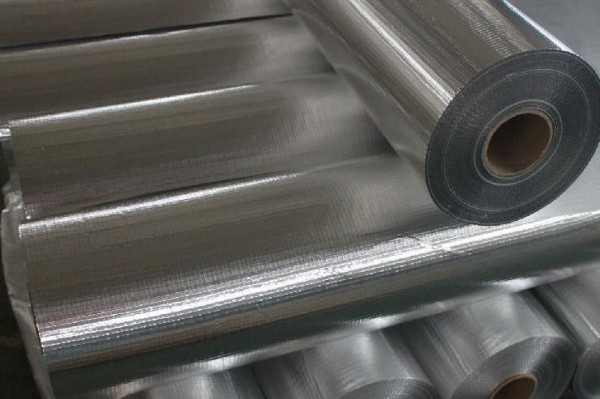
In the field of food packaging, coated aluminum foil has become a key material for the packaging and preservation of products such as dairy, chokoleti, cooked foods, and fast food, thanks to its exceptional barrier properties, kukana kutentha, ndi chitetezo.
The curing process is the core stage of its production. It facilitates the cross-linking reaction of the coating materials to form a dense protective film. This process directly determines the final performance of the foil and its food safety compliance.
Komabe, the irritating odors generated during curing not only deteriorate the production environment but may also remain on the finished products. This raises consumer safety concerns and poses risks of non-compliance with national standards like GB 31604.60-2024.
Choncho, systematically analyzing the root causes of odor and establishing an effective control system covering the entire production chain has become a critical challenge that must be addressed to drive the industry’s high-quality development.

1. Analysis of the Root Causes of Odor in the Curing Process
Odor generation permeates the entire process from raw materials to the finished product. Its core sources are insufficiently reacted substances, chemical by-products, and contaminants introduced due to poor process control. The causes can be categorized into the following three main types:
1.1 Inherent Defects in Raw Materials and Formulation
Raw materials are the fundamental source of odor. Improper selection or flawed formulation directly leads to post-curing odor issues.
- Solvent Residue Issues: The use of high-boiling-point, high-residue solvents (E.g., toluene, cyclohexanone) or solvents of substandard purity means their impurities struggle to volatilize completely during curing, leading to residual, pungent odors.
- Risks from Curing Agents: Free isocyanate monomers potentially present in traditional solvent-based curing agents, and residues from phenolic crosslinkers, can release irritating odors during or after curing and may pose migration safety risks.
- Substrate Contamination: If improper rolling oils (E.g., high viscosity, wide boiling range) are used during aluminum foil stock production, residual oil that fails to volatilize completely at curing temperatures can also generate odor.
- Formulation Imbalance:Zowonjezera zowonjezera zowonjezera monga plasticizers kapena stabilizers, kapena kusamvana bwino pakati pa zigawo, kumabweretsa kusakwanira kwamachiritso. Zinthu zomwe sizimakhudzidwa zimatha kutulutsa fungo pang'onopang'ono pakapita nthawi.
1.2 Kuwongolera kolakwika kwa Njira Zochiritsira
Kuwongolera molondola kwa magawo azinthu ndizofunikira pakuwonetsetsa kuti zonse zikuchitika; zoikamo zolakwika mwachindunji kuchititsa fungo.
- Kutentha kosakwanira kapena Nthawi: Curing temperatures that are too low or durations that are too short result in incomplete cross-linking reactions of resins, solvents, and curing agents. This leaves behind unreacted monomers or intermediate products that become sources of later odor release.
- Localized Overheating and Degradation: Excessively high temperatures, especially in processes like electromagnetic induction curing, can cause localized overheating, leading to polymer degradation or even carbonization of the coating. This produces noticeable burnt, acrid odors and other irritating gases.
- Improper Airflow and Ventilation: Inadequate airflow speed inside the curing oven fails to promptly remove volatile by-products and residual solvents generated during the reaction, allowing them to accumulate and potentially re-contaminate the product. Excessively high airflow, komabe, may affect the coating surface quality.
1.3 Secondary Pollution from Production Environment and Equipment
The cleanliness of the production environment and equipment directly impacts product purity.
- Ambient Air Pollution: If pollutants like other volatile organic solvents or dust are present in the workshop air, they can be adsorbed by the uncured coating surface and subsequently become “entrapped” within the cured film, creating complex odors.
- Equipment Contamination: Equipment such as curing ovens and conveyor belts accumulate coating decomposition products, polymer residues, and grease on inner surfaces over prolonged operation. Under continuous high temperatures, these deposits can decompose themselves or interact with new products, generating burnt odors and other smells that adhere to the foil surface.
- Impact of Downstream Processes: During slitting and rewinding, if excessive tension is applied, causing the coil to be wound too tightly, it can hinder the diffusion and escape of trace volatile substances trapped between layers during storage and transport. This can result in noticeable odor when the end-user opens the package.

2. Building a Whole-Process Odor Control System
To fundamentally control and eliminate odor, a systematic management plan from source to end must be established, focusing on four core dimensions: raw materials, ndondomeko, zida, and environment, all working in synergy.
2.1 Source Control: Optimizing Raw Material Selection and Formulation Design
Strictly controlling raw material quality and formulation science is the most effective way to eliminate odor risks at the root.
Tebulo 1: Key Raw Material Selection and Control Points
| Material Category | Recommended Selection & Control Points | Chage & Standard Reference |
|---|---|---|
| Solvent | Prioritize high-purity, low-boiling-point eco-friendly solvents (E.g., ethyl acetate, ethanol). Strictly control purity (≥99.9%), chinyezi, and impurity content. | Achieve low residue and rapid, thorough volatilization. Meet limit requirements for substances like benzene series in standards such as GB 31604.60-2024. |
| Curing Agent | Select low-odor, food-contact-grade products, E.g., waterborne polyurethane curing agents with low free monomer content, blocked isocyanates, BPA/BADGE-free phenolic crosslinkers. | Residual monomer content <0.05%, low odor grade (0-1), ensuring complete reaction and safety. |
| Aluminium Foil Substrate | Select rolling oils that are low-viscosity, high-flash-point, and easily volatilized. Enhance the post-rolling air-knife cleaning process. | Ensure rolling oil completely volatilizes during foil annealing and the initial coating curing stages, with minimal surface residue. |
| Additives | Use food-grade, low-odor additives strictly in limited quantities. Optimize component compatibility in the formulation through experimentation. | Avoid over-addition, ensure they participate in the reaction or remain stable, preventing migration or odor generation. |
2.2 Kutsindika: Precise Adjustment of Curing Process Parameters
By meticulously controlling core parameters like temperature, nthawi, and airflow during curing, complete reactions are ensured, and volatiles are effectively removed.
Tebulo 2: Recommended Parameters for Multi-Stage Curing Process
| Curing Stage | Primary Objective | Temperature Control Range | Time/Airflow Control Points | Expected Outcome |
|---|---|---|---|---|
| Preheating Stage | Fully volatilize most of the solvent | 80°C – 100°C | Adjust time based on coating thickness and solvent content to ensure sufficient escape. | Significantly reduce solvent residue, creating a clean surface for the subsequent cross-linking reaction. |
| Core Curing Stage | Complete thorough cross-linking reaction between resin and curing agent | 150°C – 180°C (adjust based on specific formulation) | Time must ensure complete reaction in the deep layers of the coating. Maintain uniform oven airflow at 1.5-2.5 m/s. | Form a dense, complete cured film; eliminate unreacted monomers; uniform airflow helps remove small-molecule by-products. |
| Cooling Stage | Stabilize coating structure, reduce internal stress | Gradual cooling to room temperature | Control the cooling rate to avoid temperature shock. | Prevent micro-cracks in the coating due to thermal stress, reducing post-cure volatilization caused by stress release. |
| Special Process (E.g., foil pouch curing) |
Achieve complete curing at low temperature | 45°C – 55°C | Significantly extend curing time to 48-72 maola. | Ensure complete reaction by extending time while avoiding degradation of heat-sensitive materials; suitable for composite structures not tolerant to high temperatures. |
2.3 Equipment Assurance: Enhanced Maintenance and Cleaning Management
The cleanliness and proper condition of production equipment are fundamental to avoiding secondary pollution and ensuring process stability.
- Establish a Regular Cleaning Regime: Develop and enforce weekly cleaning schedules for equipment interior surfaces like curing ovens and conveyor belts. Use neutral cleaning agents for thorough residue removal, followed by complete drying to prevent cross-contamination.
- Implement Preventive Maintenance: Regularly inspect, service, and calibrate systems like heating elements, fans, and air ducts to ensure temperature uniformity and ventilation efficiency. Optimize and adjust systems like tension control and air-knife nozzles on slitters to ensure their effectiveness.
- Install End-of-Pipe Treatment Devices: Equip the exhaust outlets of curing ovens with waste gas treatment devices like activated carbon adsorbers or catalytic oxidizers. These treat collected volatile organic compounds, reducing environmental impact and preventing exhaust gases from recirculating and contaminating the workshop.
2.4 Kuwongolera Zachilengedwe: Creating a Clean and Stable Production Environment
Malo oyendetsedwa bwino opanga zinthu ndizofunikira kwambiri popanga zinthu zapamwamba kwambiri.
- Strictly Control Workshop Environment:Sungani ukhondo pa msonkhano. Onetsetsani mpweya wokwanira (akulimbikitsidwa kusintha kwa mpweya ≥6 nthawi / ola) ndikuwongolera kutentha ndi chinyezi choyenera (E.g., 20-25°C, 50-60% RH). Letsani mwamphamvu kusunga kapena kugwiritsa ntchito mankhwala onunkhira mkati mwa msonkhano.
- Limbikitsani Ulamuliro Wamtundu Wathunthu:Khazikitsani njira yotsatirika bwino kwambiri kuyambira pakudya mpaka kutumizidwa komaliza. Kupitilira kuyezetsa katundu wamba, kuwunika pafupipafupi zomvera ndi kusanthula zida (E.g., Gasi Chromatography-Mass Spectrometry, GC-MS) pa zinthu zomalizidwa. Yang'anirani mwachangu zinthu zomwe zimatulutsa fungo kuti muwonetsetse kuti zinthu zikukwaniritsa zofunikira zachitetezo ndi fungo.
3. Mapeto
Kuwongolera fungo mu njira yochiritsira yokutira zitsulo za aluminiyumu kulongedza chakudya ndi ntchito yaumisiri mwadongosolo yomwe ikufuna mgwirizano wapamadipatimenti osiyanasiyana komanso njira zopangira. Mfundo yotsogolera iyenera kukhala “kupewa magwero ngati maziko, Kuwongolera njira ngati pachimake, ndi chithandizo chakumapeto kwa chitoliro ngati chitetezo.”
Ndi mwadongosolo kukhazikitsa wochezeka zachilengedwe ndi mkulu-chiyero zopangira, njira zochiritsira zolondola komanso zokhazikika, zida zopangira zoyera komanso zanzeru, ndi kasamalidwe koyenera ka malo a msonkhano, makampani sangathe bwino kuthetsa mavuto fungo ndi kuonetsetsa 100% kutsata kwazinthu zomwe zikuchulukirachulukira zolimba zachitetezo chazakudya monga GB 31604.60-2024, komanso kumapangitsanso kwambiri kupanga bwino, kusasinthasintha kwazinthu, ndi mpikisano wamsika.
Kuyang'ana M'tsogolo, pamene kuzindikira kwa ogula za chitetezo cha chilengedwe ndi chitetezo kukwera, kukhala wopanda fungo komanso kuchepa kwa zotsalira kwakhala kofunikira pakulongedza zakudya zapamwamba. Mabizinesi oyenerera akuyenera kupitiliza kukulitsa ndalama mu R&D kwa zipangizo otsika fungo, kuwunika kwa digito, ndi kayendetsedwe ka kayendetsedwe ka moyo. Kupyolera mu mgwirizano wapamtima ndi ma chain chain partners, zitsulo zotayidwa za aluminiyamu za gawo lolongedza chakudya zimatha kuyendetsedwa pamodzi kuti zikhale zobiriwira, otetezeka, ndi tsogolo labwino kwambiri, providing a solid material foundation for global food safety.