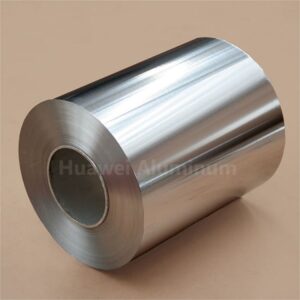
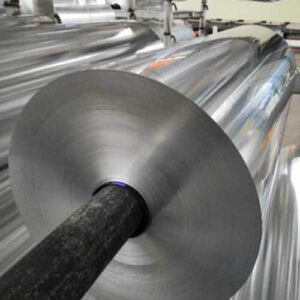
1060 aluminum foil


Model:1060 Aluminum Foil
Applications:Packaging, electrical, insulation
Customization:Gauge, width, temper
Certifications:ISO 9001
Key Features:High purity, stable properties
Packaging:Standard export packing
1060 Aluminum Foil
1. Material Characteristics and Engineering Positioning
1060 aluminum foil is a high-purity aluminum foil with a nominal aluminum content of not less than 99.60%. In practical engineering applications, this alloy is not designed to achieve strength through alloying elements. Instead, it relies on a high-purity aluminum matrix to provide stable elongation behavior, predictable rolling performance, and reliable thermal and electrical conductivity.
From a materials selection perspective, 1060 aluminum foil is typically regarded as a functional base material rather than a structural alloy. Its primary engineering value lies in excellent formability at thin gauges, low batch-to-batch property variation, and consistent performance under long-term, high-volume supply conditions.
2. Standard Export Specifications and Basic Data
2.1 Chemical Composition Control (wt.%)
| Element | Al | Fe | Si | Cu | Mn | Mg | Zn | Others |
|---|---|---|---|---|---|---|---|---|
| Limit | ≥99.60 | ≤0.35 | ≤0.25 | ≤0.05 | ≤0.03 | ≤0.03 | ≤0.05 | ≤0.03 |
Note: Fe and Si are unavoidable impurity elements. Their content has a direct influence on elongation performance and surface quality and must be tightly controlled during upstream processing.
2.2 Typical Export Supply Range
| Item | Unit | Common Range | Remarks |
|---|---|---|---|
| Thickness | μm | 6 – 300 | From ultra-thin foil to industrial gauges |
| Width | mm | 5 – 1800 | Slitting available per order |
| Core ID | mm | 76 / 152 / 300 | International standard cores |
| Coil Weight | kg | 300 – 1200 | Depends on width and thickness |
| Surface Finish | — | Bright / Matte | Determined by final rolling |
| Temper | — | O / H14 / H18 | Selected by application |
3. Engineering-Based Classification of 1060 Aluminum Foil
In actual use, 1060 aluminum foil is more effectively classified by application and processing route rather than by alloy designation alone. Common categories include:
- Packaging and barrier-grade aluminum foil
- Industrial functional aluminum foil
- Electrical and electronic aluminum foil
- Building insulation and reflective system foil
- Substrate foil for composite materials
This classification aligns closely with downstream engineering selection logic and helps identify critical performance indicators.
4. Key Technical Parameters by Application Category
4.1 Packaging and Barrier Applications
| Parameter | Unit | Typical Value | Engineering Focus |
|---|---|---|---|
| Thickness | μm | 6 – 25 | Balance between barrier and flexibility |
| Tensile Strength | MPa | 60 – 90 | Stability in high-speed packaging |
| Elongation | % | ≥12 | Forming yield |
| Pinhole Grade | — | ≤ Class A | Gas and vapor barrier performance |
4.2 Industrial Functional Applications
| Parameter | Unit | Range | Description |
|---|---|---|---|
| Thickness | μm | 30 – 300 | Protection and functional support |
| Tensile Strength | MPa | 70 – 110 | Service life requirements |
| Flatness | I-Unit | ≤20 | Lamination and bonding quality |
4.3 Electrical and Electronic Applications
| Parameter | Unit | Requirement | Technical Significance |
|---|---|---|---|
| Electrical Conductivity | %IACS | ≥60 | Electrical consistency |
| Surface Roughness | μm | ≤0.5 | Bonding reliability |
| Thickness Tolerance | μm | ±3% | Precision manufacturing |
5. Engineering Interpretation of Material Performance
The performance advantages of 1060 aluminum foil are not derived from alloy strengthening mechanisms, but from the intrinsic characteristics of high-purity aluminum, including:
- Stable elongation behavior at thin gauges, reducing the risk of rolling and slitting cracks
- Consistent thermal and electrical conductivity for functional applications
- Natural formation of a dense aluminum oxide layer, providing good corrosion resistance in most environments
- Predictable material behavior suitable for standardized production and long-term supply programs
6. Typical Application Areas
- Food and pharmaceutical packaging barrier layers
- Capacitors, electromagnetic shielding, and conductive components
- Building insulation and reflective systems
- Industrial insulation and protective materials
- Intermediate layers in multilayer composite structures
7. Manufacturing and Quality Control at Eco Alum Co., Ltd
Eco Alum Co., Ltd specializes in the large-scale production and export of aluminum foil products. The company operates an integrated manufacturing process covering casting, hot rolling, cold rolling, precision rolling, slitting, and annealing. For 1060 aluminum foil, particular attention is given to chemical composition stability, thickness uniformity, and surface quality to meet export-grade application requirements.
8. Logistics and Delivery Conditions
- Proximity to major export ports enables efficient container loading
- Standard export packaging with moisture and pressure protection
- Support for FCL and LCL shipments
- Familiarity with international trade terms and documentation
9. Engineering Comparison with Other Common Aluminum Foil Alloys
| Alloy | Purity Level | Strength | Formability | Typical Applications |
|---|---|---|---|---|
| 1060 | Very high | Medium | Excellent | Packaging, electronics |
| 1100 | High | Low | Good | General packaging |
| 3003 | Medium | Higher | Fair | Cookware, appliances |
| 5052 | Lower | High | Moderate | Industrial structures |
10. Representative Supply Cases
Case 1: Ultra-thin 1060 Aluminum Foil for Food Packaging
Thickness: 12 μm. Supplied in volume to Southeast Asia. Controlled pinhole grade and elongation helped reduce packaging failure rates.
Case 2: Conductive Aluminum Foil for Electronics
Process adjustments were made to meet conductivity and surface requirements. The product passed internal customer validation and entered stable supply.
11. Frequently Asked Engineering Questions
Q: Is 1060 aluminum foil suitable for load-bearing or structural applications?
A: No. For applications requiring mechanical strength, alloys such as 3003 or 5052 are recommended.
Q: How should O temper and H temper be selected?
A: O temper is preferred for forming and lamination. H temper is selected where dimensional stability is required.
Q: Can 1060 aluminum foil be used for further coating or lamination?
A: Yes, it can be used as a substrate for composite processing, subject to confirmation of specific process conditions.