
Diferenças entre folha de alumínio comercial para grandes operações de serviços alimentícios e folha de alumínio doméstica
Comercial folha de alumínio desempenha um papel fundamentalmente diferente em operações de serviços de alimentação em grande escala em comparação com a folha de papel alumínio tradicional, e compreender essas diferenças é essencial para selecionar o material certo para cozinhar, embalagem, e tarefas de gerenciamento térmico em cozinhas profissionais.
Visão geral do plano de fundo
Embora as folhas comerciais e domésticas sejam feitas principalmente de alumínio laminado, suas expectativas de desempenho divergem significativamente. Restaurantes, cozinhas centrais, empresas de catering, e refeitórios institucionais exigem produtos de alumínio capazes de suportar altas cargas térmicas, estresse mecânico, uso de grande volume, e exigências higiênicas. Em contraste, a folha doméstica é otimizada para conveniência, embalagem de alimentos leves, e cozinhar todos os dias.
Essas distinções afetam a seleção da liga, temperamento, espessura, compatibilidade de revestimento, propriedades de tração, e formato da embalagem.
Explicação Técnica
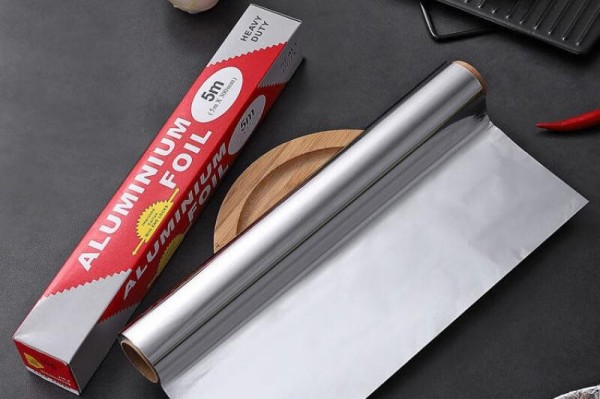
A folha de alumínio comercial é geralmente produzida em espessuras mais espessas (10–25 mícrons) com maior resistência à tração, melhor resistência à perfuração, e melhor resistência térmica. Isto é conseguido através:
- Selecionando ligas de qualidade alimentar, como 8011, 3003, ou 8006.
- Otimizando a taxa de redução de laminação para garantir espessura uniforme.
- Utilizando tolerâncias mais rigorosas para atender aos requisitos de conformidade HACCP e FDA/EFSA.
A folha de alumínio doméstica normalmente usa 8011 liga com menor dureza e espessura de 8–12 mícrons – adequada para panificação típica ou cobertura de alimentos, mas inadequada para estresse de nível industrial.
Detalhes do processo de fabricação
1. Fusão e fundição de ligas
Folha comercial requer precisão de liga, desgaseificação, filtração, e refinamento de grãos para garantir estabilidade de resistência.
2. Laminação a Quente → Laminação a Frio
A folha comercial geralmente passa por passagens adicionais de laminação a frio para melhorar o acabamento superficial e a uniformidade mecânica.
3. anelamento
O recozimento controlado produz níveis de dureza específicos:
- Temperamento suave (O) para embrulhar e modelar.
- Temperamento duro (H18) para formação de contêineres.
A folha comercial geralmente usa dureza intermediária para resistir ao rasgo durante o uso em alta velocidade.
4. Tratamento da superfície
A folha de nível profissional pode incluir:
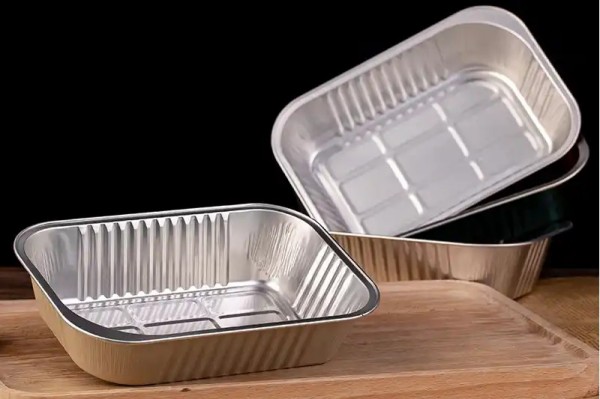
- Lubrificantes seguros para contato com alimentos para conformação de recipientes de estampagem profunda.
- Revestimentos antiaderentes para aplicações de panificação industrial.
- Gravação para aumento de força.
5. Embalagens Industriais
Diâmetros de núcleo maiores, caixas reforçadas, e rolos contínuos (até 100–300 metros) apoiar operações comerciais ininterruptas.
Cenários de aplicação
| Tipo de aplicativo | Uso Comercial | Uso Doméstico |
|---|---|---|
| Embalagem de alimentos | Preparação de cozinha de alto volume, produção centralizada de refeições | Armazenamento básico de alimentos em casa |
| Culinária & Cozimento | Fornos industriais, grelhadores, vaporizadores | Assar no forno, forro de panela |
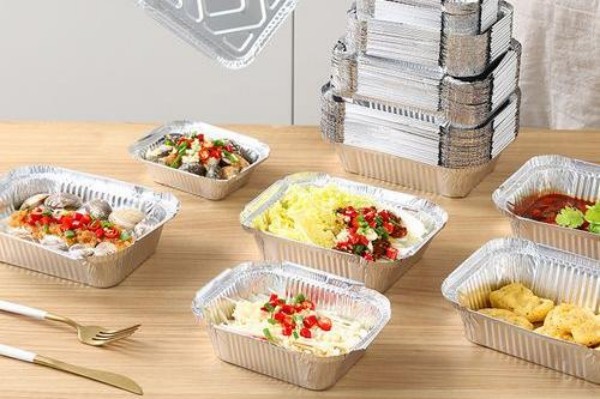
| Formação de contêineres | Bandejas de papel alumínio, tampas, panelas de catering | Pequenas bandejas descartáveis |
| Retenção de Calor | Serviço de bufê, operações de entrega | Mantenha a comida quente brevemente |
| Embalagem | Refeições congeladas, pacotes de catering | Sobras, marmitas |
A folha de alumínio comercial sustenta ciclos de aquecimento prolongados, maior pressão mecânica, e manuseio contínuo - requisitos que a folha de alumínio doméstica não pode satisfazer de forma confiável.
Tabelas de dados
Mesa 1: Comparação de especificações
| Parâmetro | Folha de alumínio comercial | Folha de alumínio doméstica |
|---|---|---|
| Espessura | 10–25 μm | 8–12 μm |
| Opções de liga | 8011 / 3003 / 8006 | Principalmente 8011 |
| Temperamento | O / H22 / H24 / H18 | O |
| Resistência à tracção | 90–135 MPa | 60–90 MPa |
| Comprimento do rolo | 100–300m | 5–20m |
| Resistência ao Calor | Mais alto, estável até 350°C | Padrão, até 250–300°C |
Mesa 2: Métricas de desempenho
| Propriedade | Grau Comercial | Grau doméstico |
|---|---|---|
| Resistência à punção | Alto | Médio |
| Resistência ao rasgo | Alto | Baixo-Médio |
| Formabilidade | Adequado para estampagem profunda | Limitado |
| Uniformidade da superfície | Controle de nível industrial | Nível básico do consumidor |
| Custo por metro | Mais baixo (volume) | Mais alto (embalagens de varejo) |
Controle de qualidade em folhas de qualidade comercial
As cozinhas profissionais exigem protocolos de controle de qualidade rigorosos, Incluindo:
- Controle de Desvio de Espessura (<±2% para película comercial).
- Teste de densidade pinhole para garantir risco mínimo de contaminação.
- Verificações de limpeza de superfície (óleo residual <3 mg/m²).
- Testes de resistência mecânica para puxar, rasgar, e resistência à perfuração.
- Conformidade com Segurança Alimentar com FDA, LFGB, e padrões GB4806.
- Avaliação de planicidade do rolo para desenrolar perfeitamente durante o serviço.
- Odor & Testes de migração de revestimento para estabilidade em altas temperaturas.
Essas medidas garantem durabilidade, higiene, e confiabilidade do processo em ambientes exigentes de serviços de alimentação.
Perguntas frequentes
Q1: O papel alumínio doméstico pode substituir o papel alumínio comercial em um restaurante?
Não recomendado – resistência ao rasgo e espessura insuficientes para uso profissional.
Q2: Por que a folha de alumínio comercial é mais cara?
Ligas de maior qualidade, tolerâncias mais rigorosas, e embalagens industriais aumentam custo.
Q3: Ambos os tipos atendem aos padrões de contato com alimentos?
sim, mas a folha comercial passa por testes de lote mais rigorosos para desempenho consistente.
Q4: Folha mais grossa é sempre melhor?
Nem sempre; a espessura deve corresponder à aplicação (vaporizadores, grelhadores, prensas formadoras, etc.).

Conclusão
Folha de alumínio comercial e folha doméstica servem a propósitos fundamentalmente diferentes. A folha comercial oferece maior resistência, durabilidade, resistência ao calor, e estabilidade estrutural – atributos essenciais para cozinhar em grande escala, embalagens industriais, e fluxos de trabalho intensivos de cozinha. A folha metálica doméstica continua adequada para tarefas diárias, mas não consegue atender às demandas mecânicas e térmicas do serviço de alimentação profissional. A escolha do tipo correto de película afeta diretamente a eficiência, segurança, e custos operacionais de longo prazo em qualquer ambiente de cozinha.