
Fabricante de folha de alumínio Ptp | Guia farmacêutico de folha de alumínio
Within the highly regulated pharmaceutical industry, packaging is an integral part of the drug product. PTP (Pressione através da embalagem) Frustrar, commonly known as cold-forming aluminum foil, serves as the core material for mainstream blister packaging of tablets and capsules. Its performance foundation lies directly in the quality of the upstream aluminum base foil and the precision of the lamination process. This article provides an in-depth guide from the perspectives of material science, application matching, e gerenciamento da cadeia de suprimentos, revealing the material science and systems engineering behind this “safety shield.”

1. Folha PTP: A Precision Engineered Multi-Layer Composite System
PTP foil is not simple packaging material; it is a precisely engineered functional material system designed for ultimate protection, precise dosing, and brand identification. Each layer fulfills a specific physical and chemical mission, integrated through advanced coating, impressão, e processos de laminação. Understanding this laminated structure is the starting point for understanding all its performance characteristics.
Mesa 1: Breakdown of Typical PTP Foil Structure and Functional Requirements
| Structure Layer | Common Material/Composition | Funções principais | Key Requirements for the Aluminum Base Foil |
|---|---|---|---|
| Camada Externa (Protective/Printing Layer) | Poliéster (BICHO DE ESTIMAÇÃO), Nylon (NY) or specialty coating | 1. Carries brand printing and text information 2. Abrasion and scratch resistance 3. Protects the middle aluminum layer from scoring or sticking during heat sealing |
Provides a clean, uniform substrate with suitable surface tension (typically dyne level ≥32) to ensure excellent adhesion of coatings or films. |
| Camada de Barreira Central | Hard-temper aluminum foil, typical thickness: 20µm, 25µm, 30µm | 1. Provides near-absolute barrier against moisture, oxigênio, e luz 2. Imparts overall structural strength and rigidity to the package 3. Forms the basic mechanical layer for the “empurrar” dosing mechanism |
Low Pinhole Count: The core metric for assessing foil rolling quality. Alta Pureza: Typically requires aluminum purity ≥99.5%, minimizing corrosion points from impurities. Excelentes propriedades mecânicas: Uniform and stable tensile strength and elongation at break. |
| Camada Interna (Heat Seal Layer) | Polyvinyl Chloride (PVC), Polyvinylidene Chloride (PVDC) or special medical hot-melt adhesives (por exemplo., for Alu-Alu) | 1. Forms a strong, hermetic seal with PVC/PVDC blister films under heat and pressure 2. Must possess good drug compatibility |
The backside of the foil must have extremely high cleanliness and activity to ensure the heat-seal material forms a strong, stable chemical bond, preventing delamination. |
Structural Insight: In this system, the aluminum layer is the undisputed “heart.” It determines the theoretical upper limit of the package’s barrier performance. Its surface properties (por exemplo., nível dine, limpeza) directly influence the bond strength with other functional layers, thereby determining the reliability of the entire composite structure. A defect in any layer can lead to the failure of the entire barrier system.
2. Application Matching: Precisely Selecting Foil Solutions for Different Drug Properties
The stability challenges of pharmaceuticals are diverse, ranging from moisture absorption and oxidation to odor migration and lipid compatibility. There is no “one-size-fits-all” packaging solution. Scientific selection based on the drug’s physicochemical properties and risk points is a core task for drug development and packaging engineers.
Mesa 2: PTP Foil Selection Guide Based on Drug Characteristics
| Drug Property/Category | Primary Risks | Recommended PTP Foil Structure | Solution Advantages & Notas |
|---|---|---|---|
| Conventional Tablets/Capsules | Absorção de umidade, Oxidation | OP/AL/PVC or OP/AL/PVDC | PVDC coating provides better moisture barrier than PVC, a cost-effective choice for most solid dosage forms. |
| Highly Moisture-Sensitive Drugs | Strong hygroscopicity, extreme sensitivity to moisture | Cold-Forming Aluminum Foil (Alu-Alu) | Both lid and forming webs are aluminum foil, providing the highest grade of moisture and oxygen barrier. No PVC/PVDC film required. |
| Drugs with Volatile Components | Component volatilization/loss, or susceptibility to odor ingress | Increased foil thickness (por exemplo., 30µm) with specialty high-barrier heat-seal layers | Thicker foil further reduces gas permeation; specialty sealants lock in volatile molecules. |
| Topical Suppositories / High-Lipid Content Drugs | Lipid migration, compatibility risks with PVC | AL/PE (Polietileno) or AL/special co-extruded films | PE layer offers excellent lipid resistance and greater chemical stability, avoiding issues like plasticizer migration. |
Selection Logic Extended: The selection above is not just about material choice but relates to total lifecycle cost. Por exemplo, for high-value or extremely moisture-sensitive biologics, although Alu-Alu costs more, its unparalleled barrier can significantly extend shelf-life and reduce cold-chain logistics risks, offering greater overall benefit. Conducting joint development and accelerated stability testing with packaging suppliers early on is a key step in validating selection effectiveness.

3. Folha Base de Alumínio: The Foundation Determining PTP Performance Limits
If PTP foil is the “safety shield” for drugs, then the aluminum base foil within it is the “specialty steel” forged to make that shield. The performance requirements for pharmaceutical packaging aluminum foil are far higher than for common food packaging foil. Its quality control begins with high-purity alumínio ingots and is achieved through precise rolling, anelamento, and surface treatment processes.
Mesa 3: Detailed Key Performance Indicators for Pharmaceutical-Grade PTP Aluminum Base Foil
| Indicador de desempenho | Padrão de teste (Referência) | Requisito Típico | Impacto no processamento downstream & Drug Packaging |
|---|---|---|---|
| Espessura & Tolerância | GB / T 22627, ISO 4593 | 20±5%, 25±5% µm | Thickness uniformity is fundamental for consistent barrier properties, stable sealing performance, e qualidade de impressão. |
| Contagem de furos | ASTM D4792, YBB methods | Zero furos >0.3mm diameter per m² under specific lighting | Critical Indicator. Any visible pinhole completely destroys the foil’s barrier, leading to drug moisture ingress and failure. |
| Tensão de molhamento superficial | GB / T 14216 | ≥32 mN/m (tipicamente 32-34) | Ensures excellent adhesion of printing inks and functional coatings, preventing delamination during use. |
| Resistência à tracção | GB / T 228.1 | ≥150 MPa (Temperamento duro) | Ensures sufficient mechanical strength to run on high-speed blister packaging lines without breaking. |
| Alongamento na ruptura | GB / T 228.1 | 1% – 3% | Appropriate ductility helps the foil adapt to mold shapes during pressing, reducing rupture risk. |
| Volatile Content | Pharmacopoeia methods | Muito baixo, typically requiring customized control | Prevents substances released by the foil itself from contaminating the drug, crucial for high-risk dosage forms like inhalers. |
| Microbiological Limits | USP <61>, ChP | Must comply with regulations for pharmaceutical packaging materials | Result of production environment and process control, directly related to the microbiological safety of the drug. |
Strategic Significance of Base Foil Quality: The microcrystalline structure, tamanho do grão, and surface morphology of the aluminum base foil not only affect the above macro-indicators but also profoundly influence its behavior in subsequent coating, impressão, e processos de laminação. A technologically leading foil supplier (como Eco Alum Co., Ltd.) can provide base foil with ultra-low pinhole count, exceptional surface uniformity, and excellent deep-draw formability through core technologies like alloy optimization, lubrificação de rolamento, and tension control. This lays an irreplaceable material foundation for downstream PTP manufacturers to produce high-quality, high-yield products.
4. Beyond Material: The Process Control and Quality Systems of Excellent Manufacturers
Having high-quality base foil is just the first step. Transforming it into a PTP finished product compliant with pharmaceutical regulations relies on a series of precise processing technologies and strict quality control systems. The stability of the process window is key to distinguishing average manufacturers from industry leaders.
Mesa 4: Core PTP Foil Process Control Points and Quality Relevance
| Etapa do processo | Key Control Parameters | Quality Control Objectives | Impact on Final Product |
|---|---|---|---|
| Revestimento & Laminação | Coating weight uniformity, drying temperature profile, lamination pressure & velocidade | Interlayer bond strength (≥1.5 N/15mm), no bubbles, no wrinkles | Ensures the multi-layer structure functions as a single unit, preventing delamination. Coating uniformity directly affects heat-seal strength consistency. |
| Impressão | Ink viscosity, dot reproduction, registration accuracy, curing degree | Color accuracy, sharp text (registration error ≤0.2mm), no solvent residue, resistência à abrasão | Impacts accurate drug information and brand image. Solvent residue and ink rub-off are serious quality and safety issues. |
| Corte & Retrocedendo | Tension control, knife precision, rewind hardness | Smooth edges, no burrs, no layer shifting, no deformed cores | Affects efficiency on the customer’s high-speed filling line. Poor slitting can cause web breaks and jams. |
| Inline Inspection | 100% surface vision inspection (furos, manchas, defeitos de impressão) | Automatic defect identification and marking, aiming for “zero defeito” AQL (Acceptable Quality Level) | Establishes the final quality firewall, the most critical quality assurance before product shipment. |
Value of Process Integration: The core competency of an excellent PTP manufacturer lies in its ability to deeply integrate material science, precision machinery, and automation control technologies. Examples include using online NIR (Infravermelho próximo) technology to monitor coating thickness in real-time or employing high-resolution CCD cameras to detect micron-level defects invisible to the human eye. This deep process control capability is the guarantee for transforming qualified raw materials into superior finished products.
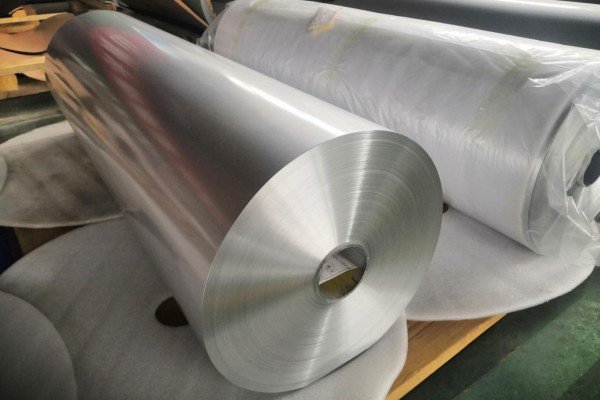
5. Systematic Assessment: Building Strategic Supply Chain Partnerships
Na indústria farmacêutica, suppliers are an extension of one’s own quality system. Selecting a PTP foil supplier should not be merely a procurement activity but a process of building a long-term strategic supply chain partnership. This requires a systematic framework that goes beyond price, based on a comprehensive capability assessment.
Mesa 5: Framework for Strategic PTP Foil Supplier Assessment
| Dimensão Avaliação | Core Evaluation Content | On-Site Audit & Document Review Points |
|---|---|---|
| Certificações & Conformidade | 1. Drug Packaging Material Registration Certificate (Category I) 2. Sistemas de Qualidade: ISO 15378 (priority over ISO9001), GMP compliance 3. International Access: USP, PE compliance, DMF (Arquivo Mestre de Medicamentos) filing status |
Verify certificate validity and scope; review quality manual, management review reports; check DMF filing number and correspondence. |
| Technical R&D Capability | 1. Capability for packaging solutions for novel drugs (por exemplo., biológicos, HPAPIs) 2. Joint development mechanisms with foil suppliers (por exemplo., Eco Alum Co., Ltd.) 3. Completeness of lab testing items and instrument sophistication |
Review R&D project records, patents, joint development agreements; review raw material qualification and change control processes; assess lab capabilities for testing furos, resistência da vedação térmica, solvent residue, extractables/leachables. |
| Production Assurance System | 1. Cleanroom classification (at least Grade D) and environmental monitoring data 2. Equipment sophistication and stability (coating head precision, printing press color units, inline inspection systems) 3. Application of DOE (Design of Experiments) and SPC (Controle Estatístico de Processo) for process parameters |
Observe real-time environmental monitoring data; check equipment maintenance records and critical spare parts inventory; review CPK (Process Capability Index) reports for critical process parameters. |
| Qualidade & Supply Chain Management | 1. Supplier management for raw materials, especially the aluminum base foil (use of established reputable suppliers) 2. Full traceability from master roll to finished product batch 3. Process for handling non-conforming batches and CAPA (Corrective and Preventive Action) effectiveness |
Review supplier list and quality agreements for key materials like aluminum foil; perform random batch traceability exercise; review recent OOS (Out-of-Specification) and complaint handling reports. |
| Sustentabilidade | 1. Eco-design of products (por exemplo., downgauging, feasibility of using renewable material coatings) 2. Carbon footprint management and clean production practices |
Inquire about R&D on eco-friendly alternatives; review energy usage data and emission reduction targets. |
The Future of Partnership: Assessing a supplier is not only about examining their current state but also envisioning their future development potential. As sustainability becomes a global imperative, evaluating a supplier’s initiatives in areas like foil downgauging (reducing weight while maintaining performance), using eco-friendly coatings, and overall carbon footprint management is crucial for pharmaceutical companies fulfilling ESG responsibilities and complying with future regulations. Partnering with suppliers who can provide innovative solutions in this area will yield a long-term competitive advantage.
Conclusão: Building on Material Science, Co-Forging the Shield for Life and Health
PTP foil is a paragon of modern pharmaceutical engineering, integrating material science, precision processing, e gestão da qualidade. Its excellent performance is the result of a tightly interlinked value chain, starting from high-purity aluminum ingots, undergoing precise rolling, strict QC, functional lamination, and finally fulfilling its protective mission on high-speed packaging lines.
This in-depth guide reveals a central tenet: the quality of pharmaceutical packaging is defined at the raw material stage. Choosing PTP foil is, in essence, choosing its underlying complete material ecosystem and quality culture. Para empresas farmacêuticas, building a supplier selection and management system based on in-depth technical dialogue and utilizing systematic auditing as a tool is the foundation for ensuring the safety, confiabilidade, and compliance of drug packaging, ultimately safeguarding patient health.
In the pharmaceutical packaging chain, from high-standard aluminum base foil suppliers like Eco Alum Co., Ltd., to top-tier PTP converters, and to the pharmaceutical manufacturers, we are a closely connected, interdependent community of value and responsibility. Only through a deep understanding of every micron of foil, the relentless pursuit of every parameter, and technical transparency in every collaboration, can we jointly forge this impenetrable “safety shield” that defends against external threats and safeguards life and health.