Anodized Aluminum Circles
| aliazh | 1050/1060/1100, 3003, 5052, 6063 (selected by finish and use) |
| Temperatura | O / H14 / H24 / H32 as required for forming |
| Trashësia | 0.3– 6 mm |
| Diametri | 50–1500 mm, cut to tooling |
| Vulosje | hot-water / nickel-free sealed |
| Standard | ISO 7599, ASTM B580, GB/T 8013; salt-spray / food-contact as required |
| QC | eddy-current film thickness, color sample match, vulë / salt-spray test |
Anodized Aluminum Circles
Prezantim
Anodized aluminum circles are round aluminum blanks that have been anodized—electrochemically coated with a controlled, hard layer of aluminum oxide—to make the disc corrosion-resistant, rezistente ndaj konsumit, electrically insulating, decorative and able to hold a permanent color.
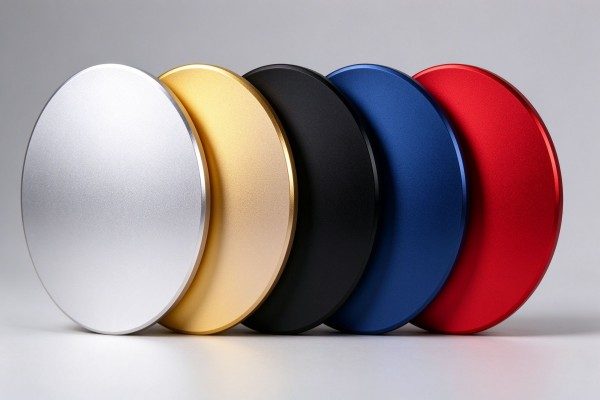
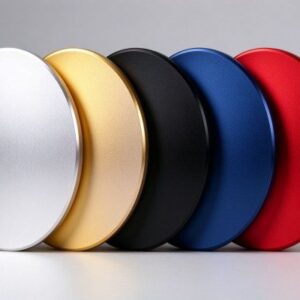
Instead of a bare mill-finish disc, the customer receives a ready-to-use round part in silver, e zezë, ari, shampanjë, red or blue, or in a bright mirror or satin finish. The circle is then used as a lamp reflector, an anodized cookware body, a decorative or sign disc, a knob, a nameplate or an electronic housing component.
Anodizing is a conversion coating rather than a paint: it grows from the aluminum itself, so it will not peel or chip, and the porous oxide layer can be dyed and sealed.
This makes anodized circles attractive for products that must stay good-looking outdoors, in a kitchen or in a demanding industrial environment.
This guide explains the anodizing process, the common types and finishes, which aluminum alloys anodize best, aplikacionet kryesore në detaje, how film thickness and color are controlled, and how to order consistent anodized discs from a Chinese supplier.
This guide is written for importers, lamp and luminaire makers, cookware factories, sign and nameplate producers, and hardware buyers who need a consistent, factory-direct anodized circle from China.
It explains what to specify—alloy, baticë, anodize type, film thickness, color and standard—and what questions to ask a supplier before a first order.
What Is an Anodized Aluminum Circle?
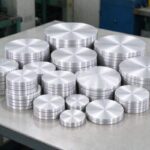
An anodized aluminum circle starts as a normal round blank, usually 0.3–6 mm thick and about 50–1500 mm in diameter, blanked from aluminum coil or sheet.
In anodizing the disc is made the positive electrode (anodë) in a bath of dilute sulfuric acid; a controlled current grows a porous aluminum-oxide layer on the surface
After the oxide is grown it can be colored by absorbing dye into the pores and then sealed by closing the pores in hot water or a sealing solution, which locks the color and improves corrosion resistance.
Unlike a painted or plated coating, the anodic layer is integral with the aluminum, grows both outward and into the surface, and is extremely hard and scratch-resistant.
It is also electrically insulating and, because it is oxidized aluminum, it does not peel. A well-sealed anodized disc keeps its color and finish for years outdoors.
The two things buyers actually specify are the type of anodize (decorative or hard), the film thickness, the color and appearance, and the alloy underneath.
The base alloy is chosen from the 5000-fletë alumini të serisë dhe 1000/3000 familjet; for highly reflective lighting and decorative parts an të anodizuara 5052 fletë pasqyre polish and anodize to a bright finish.
Compared with painting or electroplating, anodizing is part of the metal rather than a separate layer.
Paint can chip and powder coat can be scratched through to the aluminum, while the anodic oxide grows from the surface itself; compared with chromate or other chemical conversion coatings, the anodic film is much thicker, harder and able to hold dye.
The trade-off is that anodizing is an electrochemical batch process with fixed racking points, and it is less suitable for parts that must remain electrically conductive after coating.
Structurally, the anodic layer has two zones: a thin dense barrier layer next to the aluminum and a thicker porous layer above it.
The pores are what absorb dye; after dyeing, sealing hydrates the aluminum oxide and swells it shut, trapping the color and blocking corrosion.
This porous-then-sealed structure is exactly why anodizing can hold color at all, and why sealing quality is the single most important process for long-life color.
Why Anodize Aluminum Circles?
-
- Rezistenca ndaj korrozionit: the sealed oxide layer protects the disc against atmospheric, humidity and light chemical attack.
- Wear and scratch resistance: the oxide is much harder than bare aluminum; hard anodizing is very durable.
- Decorative color: the porous layer absorbs black, ari, shampanjë, i kuq, blue and other dyes, then sealed to lock them in.
- Mirror and satin finishes: polished discs anodize to a bright reflective or a matte satin surface.
- Adhesion and durability: the coating is integral and will not peel, chip or flake like paint.
- Izolimi elektrik: the oxide layer is non-conductive, useful for lighting and electronic parts.
- No plating baths or heavy topcoats: the finish is part of the aluminum itself and is long-lasting.
The main trade-off is that anodizing adds a processing step and cost, that certain alloys color more evenly than others, and that the hanging (rack) points where the discs are held during anodizing remain uncoated.
These points are hidden or placed on non-visible edges in a good design.
Buyers sometimes weigh anodizing against powder coating or electroplating.
Powder coating is a polymer paint available in almost any color, cheap for large outdoor panels, but it can chip and cannot give a true mirror-bright metal look; electroplating adds chrome or nickel for a very hard, shiny surface but relies on heavy chemicals and does not dye to pastel colors.
Anodizing sits between them: an integral, vështirë, corrosion-resistant layer, a true metallic silver or dyed color, and a mirror that reflects 85%+ të dritës, with no peel-prone topcoat.
For small round parts where the metallic look and durability matter, anodizing is usually the right choice; for huge panels where any color and lowest cost are required, powder coating can be.
Types of Anodize and Finishes
| Lloji | Typical film | Pamja e jashtme | Përdorimi tipik |
| Decorative sulfuric | 5– 25 μm | argjend, dyed colors, satin | hardueri i përgjithshëm, shenja, zbukuroj |
| Hard anodized | 25–100+ µm | grey to black, hard and matte | enë gatimi, wear parts, slides |
| E ndritshme / pasqyrë e anodizuar | i hollë, over polished surface | mirror-bright reflective | reflektorët e llambave, decorative discs |
| Chrome / arkitektural (alternative) | 8– 20 μm | i njëtrajtshëm, të qëndrueshme | outdoor and architectural parts |
Most colored and silver anodized circles are decorative sulfuric anodizing in the 5–25 µm range.
Hard anodizing uses colder baths and higher voltages to build a much thicker, harder film (25–100 µm or more) in dark grey or black, which is the standard for premium anodized cookware and wear-resistant parts.
Bright or mirror anodizing is applied to a polished disc to preserve a high-reflectivity silver surface for reflectors. Architectural anodizing is a durable, uniform finish for outdoor panels and sign discs.
Hard anodizing differs from decorative anodizing in the bath and the goal.
Decorative anodizing favors a smooth, i njëtrajtshëm, dye-accepting film of moderate thickness at warmer temperatures, while hard anodizing uses a colder, more concentrated bath and higher current to build a thick, të dendura, wear-resistant layer that is naturally dark grey to black.
Because the hard film is thick and relatively rough, it is usually not bright-dyed; its value is abrasion and corrosion resistance, which is why premium cookware and sliding or rotating parts use it.
Film thickness should be specified on the drawing, not left to chance.
Bright anodizing is not simply anodizing over a polished face. Before anodizing the disc is mechanically polished or chemically brightened to a high-luster silver, and a very thin, transparent anodic layer is then grown to protect it.
If the anodic film is too thick or the bath is wrong, the bright surface turns hazy; this is why mirror reflectors are a specialized process rather than a commodity anodize, and why buyers compare reflectivity samples rather than rely on a color photo.
Which Alloys Anodize Best?
| aliazh | Anodizing result | Më e mira për |
| 1050 / 1060 / 1100 | very uniform, i butë, good dye uptake | pasqyrues, shallow parts, colored discs |
| 3003 | mirë, but manganese can darken or mottle | general pans, shenja, hardware |
| 5052 | mirë, rezistente ndaj korrozionit; slight large-area color variation | detare, shenja, pasqyrues, premium trim |
| 6061 / 6063 | most uniform and attractive color (Mg-Si) | zbukurim dekorativ, pllakat e emrave, anodized color parts |
As a rule, the purer the aluminum, the more uniform and attractive the anodic color.
Commercially pure 1050/1060 discs anodize and dye evenly and are low cost, but the softer surface is less scratch-resistant; 6063 gives the most consistent decorative color and is preferred for colored trim, ndërsa 5052 offers extra corrosion resistance for reflective, coastal or sign discs. 3003 is workable and robust but can show slight greying.
The alloy should be chosen together with the end use, because the anodize cannot hide a poor substrate surface—scratches or roll marks before anodizing show through the coating.
Low-cost colored and reflective blanks often start from a soft 1050 rreth alumini; robust pans and signs commonly use 3003 rreth alumini; and outdoor reflective discs may use corrosion-resistant 5052.
The product form also matters. Rolled and blanked circles give the most uniform anodic surface because the sheet is homogeneous, ndërsa ekstrudimet dhe pjesët e salduara mund të tregojnë zbardhjen e saldimit ose të nxehtësisë pas anodizimit.
6063 është një aliazh nxjerrjeje i njohur për ngjyrën uniforme në dekorimin arkitektonik; në të mbështjellë 5052 rrathët, panelet e mëdha mund të shfaqin ndryshime të lehta tonesh për shkak të shpërndarjes së magnezit, kjo është arsyeja pse blerësit miratojnë një mostër.
Fundet e enëve të gatimit të salduara anodizohen pas formimit, kështu që saldimi përzihet në trupin e errët të anodizuar të fortë.
Rrjedha e procesit të anodizimit
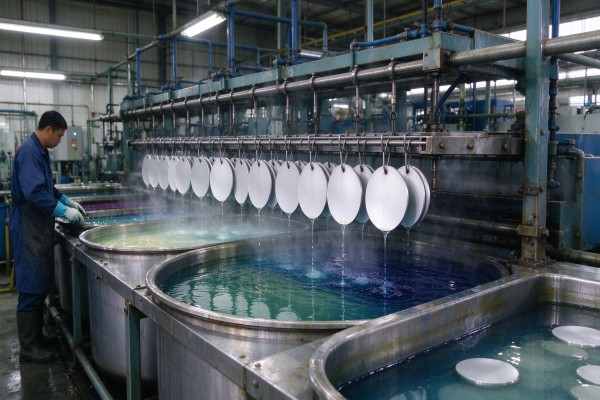
Një rreth kalon nëpër një sekuencë të vijës së lagësht përpara se të përfundojë.
The typical route is degreasing to remove oil and stamping residue, alkaline etching to set a uniform satin texture, acid neutralizing (desmutting) to clean the surface, anodizing in sulfuric acid to grow the oxide film, dyeing in the chosen color, sealing in hot water or a nickel-free sealing bath to close the pores, and finally rinsing and drying.
The discs are racked on tianguis that hold them at points designed to be hidden on the finished part.
The quality of the anodize depends on every stage: një gravurë e pabarabartë jep ngjyrë të njollosur, një sipërfaqe e papastër lë njolla, rryma dhe koha e banjës përcaktojnë trashësinë e filmit, përqendrimi i bojës dhe koha përcaktojnë thellësinë e ngjyrës, dhe mbyllja përcakton nëse ngjyra do të lahet apo zbehet.
Disqet e pasqyrës janë të lëmuara dhe ndonjëherë shkëlqejnë kimikisht përpara anodizimit, kështu që reflektimi ruhet, ndërsa enët e gatimit të anodizuara të forta përdorin një më të ftohtë, banjë me tension të lartë për një të trashë, film i fortë gri-zi.
Rafti (kontakt) pikat janë pjesë e domosdoshme e procesit: çdo disk duhet të jetë i lidhur elektrikisht me raftin, kështu që zona e vogël e kontaktit nuk mund të anodizohet në atë moment.
Një anodizues i mirë i vendos këto pika në buzë, fytyra e pasme ose një shpim i fshehur, ose i fik ato me makinë pas veshjes. Disqet e pasqyrës gjithashtu kanë nevojë për para-trajtimin më të pastër, sepse çdo shenjë rrotulluese, gërvishtja ose gjurma e gishtit përpara anodizimit mbyllet përgjithmonë në sipërfaqen e ndritshme.
Kjo është arsyeja pse reflektorët e lëmuar mbajnë film të qërohet dhe trajtohen me doreza.
Ngjyrat, Teksturat dhe përputhja e ngjyrave
Ngjyrat standarde të anodizuara përfshijnë argjendin natyral, e zezë, shampanjë, bronzi, ari, i kuq, blu dhe jeshile, me nuancën e saktë të kontrolluar nga zgjedhja e bojës, përqendrimi dhe koha.
Cilësia e sipërfaqes mund të jetë e ndritshme (për reflektorët), saten ose etched (një mat i hollë), ose pasqyrë (në një disk të lëmuar).
Sepse ngjyra e anodizuar prodhohet nga një shtresë poroze, dy lote mund të ndryshojnë pak, kështu që blerësit miratojnë një mostër fizike ngjyrash dhe specifikojnë se i gjithë vëllimi për një projekt vjen nga një pjesë e vetme.
Mostrat e pantonit ose ngjyrave përputhen sa më afër që të jetë e mundur dhe nuk garantohen identike me bojën.
| Mbaroj | Përshkrim | Produkt tipik |
| Argjend natyral / satin | i pastër i anodizuar, teksturë e imët mat | shenja, hardware, zbukuroj |
| E ndritshme / pasqyrë | lëmuar pastaj anodizuar, reflektim i lartë | reflektorët e llambave, disqe pasqyre |
| E lyer me ngjyrë të zezë | e zezë e thellë, decorative or hard | enë gatimi, pullat, pllakat e emrave |
| Ari / shampanjë / bronzi | tone të ngrohta metalike | zbukuroj, dhurata, decorative discs |
| E kuqe / blu / jeshile | ngjyra më të ndritshme dekorative | pjesë të markës, pllakat e emrave, pantallona të gjera |
Konsistenca e ngjyrave në një porosi menaxhohet siç është boja - me short. Një disk i mostrës fizike miratohet dhe nënshkruhet, atëherë të gjithë disqet për projektin anodizohen në të njëjtin lot me të njëjtin përqendrim të banjës dhe ngjyrës.
Ngjyra e anodizuar nuk mund të përputhet saktësisht me një ngjyrë të printuar në Pantone, sepse nënshtresa metalike e aluminit ndryshon tonin; mostra është kontrata.
Blerësit gjithashtu duhet të presin një ndryshim të vogël midis a 100 mm dhe a 600 mm disk, dhe duhet të shmangë përzierjen e ngjyrave nga prodhime të ndryshme në një produkt.
Aplikacioni Bërthamë: Reflektorët e ndriçimit
Një nga përdorimet më të mëdha të rrathëve të anodizuar është si reflektorë.
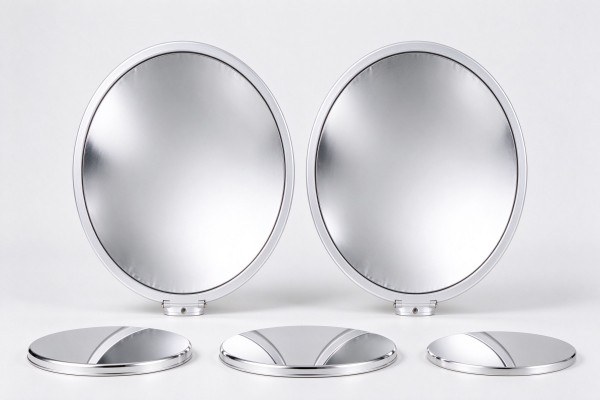
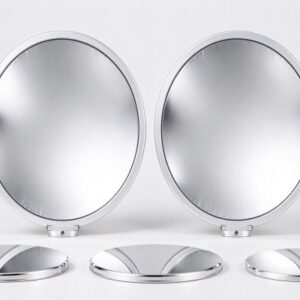
Disku rrotullohet ose futet në një tas, lëmuar dhe anodizuar në një sipërfaqe argjendi të ndritshme që reflekton dritën në mënyrë efikase, typically with reflectivity around 85–95%.
These reflector discs are found in downlights, street and area lights, industrial high-bay luminaires, display and architectural lighting and solar reflectors.
The anodized layer protects the polished surface from oxidation and fingerprinting, keeping reflectivity stable over years.
Reflectivity is the key parameter here. A polished and bright-anodized aluminum reflector typically returns around 85–95% of visible light, far above a painted white surface, dhe shtresa e pastër anodike e mban argjendin e lëmuar nga zbehja.
Dritat e poshtme dhe dritat e rrugës përdorin tas të rrotulluar për kontrollin e rrezeve, ndërsa enët industriale me rreze të lartë dhe reflektorë diellorë përdorin disqe me diametër më të madh.
Sipërfaqja e pasqyrës matet me reflektim dhe mbrohet deri në montim; njolla e skajit apo e shpinës nuk ka rëndësi, por një gërvishtje në fytyrë shkatërron performancën optike.
Për reflektorët, boshllëku duhet të jetë i sheshtë dhe pa gërvishtje përpara lustrimit, sepse bravat anodizuese në çfarëdo sipërfaqeje ekzistonin poshtë.
I pastër 1050/1060 disqet japin më të ndritshmet, pasqyra më uniforme; 5052 përdoret aty ku reflektori ka nevojë edhe për rezistencë ndaj korrozionit jashtë.
Pasqyra ose pjesët e shndritshme të anodizuara zakonisht mbrohen me një shtresë të qërohet përmes montimit, në mënyrë që fytyra reflektuese të mos shënohet.
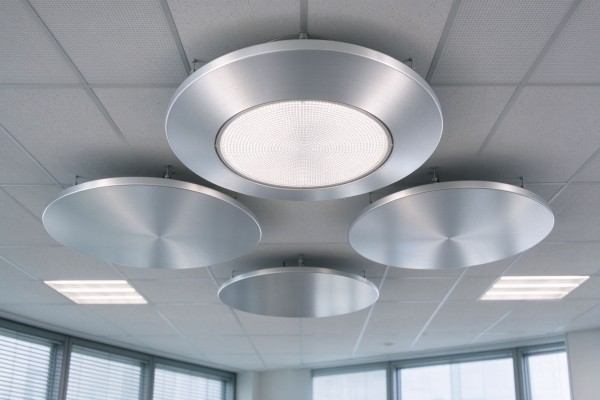
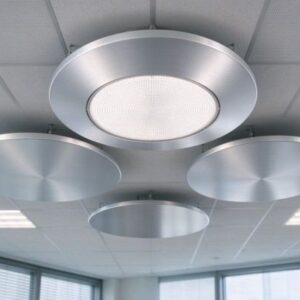
I njëjti bosh i rrumbullakët mund të përdoret si dekorimi i difuzorit të tavanit dhe streha e reflektorit në ndriçuesit modernë të rrumbullakët.
Ndriçuesit e rrumbullakët përfitojnë drejtpërdrejt nga boshllëqet e rrumbullakëta të anodizuara: disku është tashmë forma e duhur për një kornizë të lehtë, një tas reflektor ose një shpërndarës tavani të varur, kështu që asnjë fletë drejtkëndore nuk ka nevojë të pritet dhe skrap është minimal.
Versionet e anodizuara me pasqyrë përdoren ku drita duhet të jetë efikase, ndërsa zgjidhen versionet e anodizuara me argjend saten, ku vetë pajisja duhet të duket e pastër dhe moderne.
Oksidi integral i argjendit reflekton pa një shtresë të veçantë pasqyre, gjë që redukton hapat e montimit.
Aplikacioni Bërthamë: Enë gatimi të anodizuara
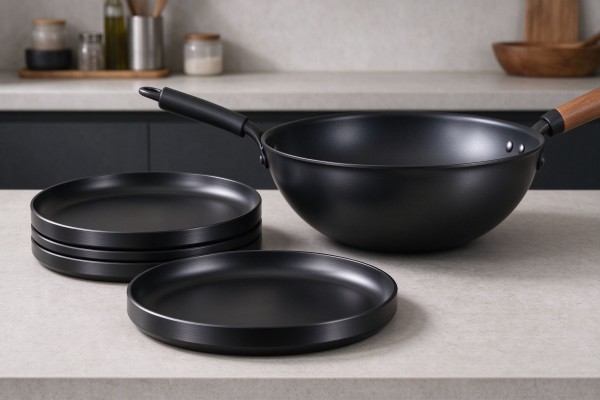
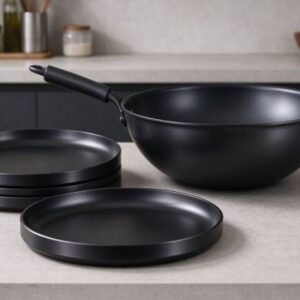
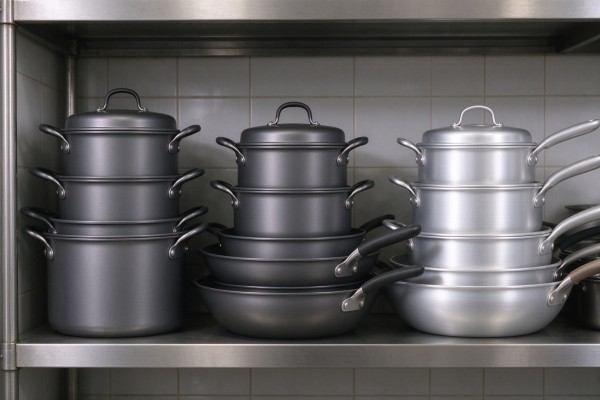
Rrathët e anodizuar janë tërhequr thellë në trupat premium të enëve të gatimit - woks, frying pans, saucepans and stockpots—then hard-anodized to a dark, vështirë, non-reactive surface.
Hard anodizing turns the aluminum body into a much harder, gërvishtje- and corrosion-resistant cooking surface that is non-reactive with acidic foods, which is why it is widely used on premium pots and pans.
The anodized black or dark-grey body is also durable and easy to clean, and it pairs with a non-stick coating applied over the anodized layer.
Cookware blanks are usually 1050/1060, 3003 or 5000-series circles drawn in the soft O temper, then degreased and hard-anodized after forming rather than before, because drawing a pre-anodized disc would damage the film.
The film is thick (25–60 µm or more), dark and uniform, and the edge and handle holes are finished after anodizing.
Food-contact cookware must use food-safe anodizing and sealing processes, and the supplier should be able to provide the relevant food-contact documents.
Hard-anodized cookware sits between bare aluminum and non-stick coatings.
The anodized body is harder than plain aluminum, non-reactive with tomatoes and wine, and much more scratch-resistant than a soft painted surface; a non-stick PTFE or ceramic coating can then be applied over the anodized layer for easy release.
Because the anodic film is porous before sealing, sealing must be complete for food use—an unsealed film can trap acids or odors—and cookware anodizing must follow food-contact regulations.
The hard dark surface also hides scratches better than bright silver.
Sipërfaqja e errët e fortë e anodizuar gjithashtu shpërndan nxehtësinë në mënyrë të barabartë sepse mbulon një trup uniform alumini, dhe i reziston pastruesve alkaline të përdorur në kuzhinat komerciale.
Për një wok ose tigan, rrethi vizatohet përpara anodizimit, kështu që filmi mbulon vazhdimisht pjesën e brendshme dhe të jashtme; vrimat për doreza janë shpuar pas anodizimit dhe fshirjes.
Kjo është arsyeja pse tiganët e anodizuar premium duken dhe ndihen më të qëndrueshëm se enët e gatimit prej alumini të lyer.
Arkitekturore, Disqe dekorative dhe shenjash
Rrathët e anodizuar përdoren si panele të rrumbullakëta dekorative, ceiling discs, wall and display trims, furniture and kitchen components, and as substrates for nameplates and signs.
The anodized finish does not flake, holds color outdoors and can be screen-printed or laser-marked, so it is preferred for premium interior and exterior trim.
Colored gold, champagne or black anodized discs give a durable metallic look that paint cannot match on small round parts.
For sign and nameplate discs, silver or black anodize takes reflective sheeting, printing and engraving well; architectural circles are anodized to the architectural standard for long outdoor life.
Because the anodic layer is integral, the edges remain protected and the disc does not rust or chalk in weather. Color matching to a brand or interior scheme is approved on a sample and produced in a single batch.
Anodized discs accept secondary finishing well: they can be laser-engraved to expose the silver under a black or colored layer—a classic nameplate effect—screen-printed, CNC-turned on the edge, or fitted with pins and adhesives.
Architectural ceiling discs are anodized to a satin silver or champagne that does not chalk or fade, and the integral oxide means the round edge stays clean.
Because the anodic surface is slightly textured, it does not show fingerprints as readily as a bare polished disc, which is useful on furniture and hardware.
Small anodized circles are also popular as coasters, kapele, cosmetic and device accessories, and gift or award discs, where a black, gold or silver finish gives a premium look at low cost.
The same blanking and anodizing process serves both large reflectors and these small parts, so a supplier can run a mixed basket of diameters in one color lot.
Hardware, Electronics and Automotive Parts
Beyond lighting, cookware and architecture, anodized circles are stamped and turned into control knobs, pan and pot lid components, appliance covers, electronic housings and heat spacers, ventilation and fan discs, bathroom and fitting hardware, and automotive and interior trim.
The insulating anodized layer supports electronic parts, the hard surface resists wear on knobs and slides, and the colored finish matches product design.
Small round parts in black, gold or silver are a common decor and control element in consumer products.
For these parts the disc is often blanked to size, formed or turned first, then anodized, with the rack points placed on non-visible edges; hard anodizing is chosen for parts that slide or rotate, while bright decorative anodizing is used for visible brand and trim surfaces.
A consistent alloy and batch keeps color and hardness uniform across a product family.
The insulating oxide also suits electronics. A bright-anodized circle can act as a spacer, heat spreader or insulating washer between a powered component and its aluminum housing, combining aluminum thermal conductivity with an electrically non-conductive surface.
Black anodizing further improves emissivity for passive heat dissipation. Automotive and interior trim uses the same colored finish for consistency across knobs, vents and decorative rings, all cut from anodized circles in the same lot.
Trashësia e filmit, Color and Quality Control
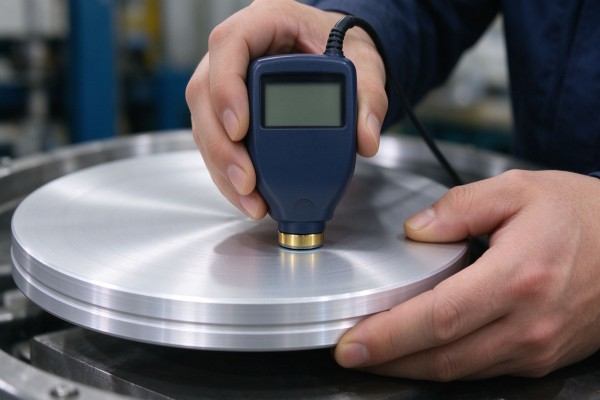
The anodic film is measured with an eddy-current thickness gauge, which reads the non-conductive oxide on the aluminum without damaging the part; buyers specify a minimum and average film thickness (for example 10–15 µm decorative, or 25–50 µm hard).
Color is controlled against an approved sample under standard light, and sealing quality is checked with dye-spot or acid-dissolution tests, because a poorly sealed film will stain or fade.
Salt-spray (neutral salt spray or CASS) is used to verify corrosion resistance for outdoor parts.
| Check | Kërkesa tipike | Metodë |
| Film thickness | 5–25 µm decorative; 25–100 µm hard | eddy-current gauge |
| Ngjyra | match approved sample | visual under standard light / colorimeter |
| Vulosje | no stain after dye-spot test | dye spot or acid dissolution |
| Rezistenca ndaj korrozionit | hours of salt spray per standard | neutral salt spray / CASS |
| Pamja e jashtme | no spots, gërvishtje, blotchiness | visual inspection |
Common defects—blotchy color, njollave, rainbow stains, soft film or exposed rack points—trace back to etching, pastrimi, bath contamination, under-sealing or the rack design.
A reputable anodizer controls bath chemistry, aktuale, temperature and rinsing water, and provides a film-thickness and color inspection report with the lot. For colored parts, keep one approved sample disc as the reference for incoming inspection.
Standards and Compliance
| Standard | Covers |
| ISO 7599 | anodized aluminum coatings on wrought products (lloji, trashësi, pamjen) |
| ASTM B580 | anodic coating specifications on aluminum |
| GB/T 8013 | Chinese anodic oxidation coatings on aluminum and alloys |
| ASTM B117 / CASS | neutral salt spray and copper-accelerated corrosion testing |
| Food-contact regulations | safe anodizing and sealing for cookware |
Buyers should specify the standard and the minimum film thickness, request the anodizing process and thickness report, and—for outdoor or food-contact parts—the salt-spray and food-contact documents.
The certificate should name the alloy, baticë, film thickness and color of the lot rather than a generic statement.
Në praktikë, an anodized circle batch should arrive with a mill test certificate naming the alloy and temper, an anodizing report stating the film thickness and sealing process, the approved color sample reference, and—for outdoor or cookware parts—the salt-spray or food-contact test.
Generic statements such as “anodized aluminum” without thickness or standard should be questioned, because a 3 µm decorative film and a 50 µm hard film share the same name but perform very differently.
Agree the standard and minimum thickness on the drawing and the order.
Packaging and Logistics
Anodized discs are scratch-sensitive, so they are protected with peelable or interleaving film between the polished or colored faces, edge-protected, and packed in cartons or on fumigated pallets; mirror and bright reflectors keep their protective film until assembly.
Colored and mirror parts are packed face-to-face or interleaved to avoid rubbing, and each batch is tagged with color, aliazh, trashësi, diametri, film thickness and lot. Dry, clean storage protects the sealed finish.
Export terms are commonly FOB, CFR or CIF with 30% T/T deposit and balance against the bill of lading.
Documents include the bill of lading, invoice, lista e paketimit, mill and anodizing certificate, color sample reference, certificate of origin and any salt-spray or food-contact reports.
Sealed anodized discs are stable but should be kept dry and out of direct sun in storage.
Peelable film should be removed only at assembly, because it is the only thing preventing scratches on mirror and colored faces during handling.
If discs arrive with a light white powdery residue it usually wipes off, but heavy powder indicates under-sealing and should be reported. Keeping the protective film on through punching and spinning avoids the most common return reason: face scratches.
Pricing and MOQ
Anodized circles are priced from the base aluminum and blanking cost plus the anodizing processing.
Decorative sulfuric anodizing adds a moderate per-part charge, hard anodizing and bright mirror finishing cost more because of the thicker film or polishing, and custom colors carry a small setup and minimum order because each color must be run separately and matched.
The ingot base follows the daily LME and Shanghai spot quotations, so quotes are valid for a short window and re-confirmed at order.
| Cost factor | Effect on price |
| aliazh | 1050/1060 më e ulëta; 6063 dhe 5052 cost more |
| Anodize type | hard and bright/mirror finishes cost more than standard silver |
| Ngjyra | custom colors add setup and have a minimum order |
| Film thickness | thicker hard-anodized films cost more to grow |
| Surface prep | polishing and brightening add cost for reflectors |
| Vëllimi | large runs and a single color lower the unit cost |
Buyers control cost by using standard colors and stock diameters, ordering all project quantity in one lot for color consistency, and matching the finish to the visible surface rather than over-polishing hidden sides.
A color and film sample is approved before production.
Beyond processing, cost follows the ingot base.
The aluminum content is referenced to the daily LME and Shanghai spot price plus a conversion and processing premium, so sudden metal moves change the quote within its validity.
Tooling for non-standard diameters is a one-time blanking die charge; choosing an existing diameter or a standard color removes both the die and the color-setup cost.
For first orders, a small sample lot pays for itself in avoided color or film-thickness rework on a full container.
How to Order Anodized Circles
Send the drawing or required diameter, trashësi, aliazh dhe temperament, and the end product.
Specify the anodize type (dekorative, vështirë, bright/mirror), ngjyra, film thickness and standard.
Approve a color and film sample; agree the lot, rack-point position and protective film.
Confirm price, tooling if any, MOQ for custom color, packaging and delivery terms.
Pay the deposit, run production, inspect color and thickness, and ship with full documents.
For a first order it is worth sending a physical part or a Pantone/color sample even if the drawing dimensions are clear.
Anodized color is hard to describe in words, and seeing a sample—and confirming the rack-point position and peelable film—avoids the most common dispute, which is color. The supplier should hold the sample and the die so repeat orders match.
Rreth Eco Alum
Eco Alum is an aluminum product supplier established in March 2025, organized around a rich supply chain within China’s aluminum rolling industry. Instead of acting as a simple trader, we coordinate with qualified rolling, blanking and anodizing mills to deliver specification-accurate, well-finished material at factory-direct pricing and manage the technical, quality and export documentation.
Our main products are aluminum plates, mbështjellje, petë, strips and discs (rrathët), covering the 1xxx series—1050, 1060, 1070, 1100, 1235 and 1350—along with 3003 and the 5000-series alloys such as 5052.
For anodized circles we supply custom diameters, gauges, tempers and anodizing finishes—natural silver, satin, mirror/bright, dyed black, ari, champagne and architectural colors, plus hard anodizing for cookware—with color sample approval, eddy-current film-thickness reports, salt-spray and food-contact documents where required, and scratch-proof export packing.
We help you choose the alloy and finish that match the reflector, enë gatimi, sign or hardware part rather than selling one grade for everything. Reach us at [email protected] or +86 19924932491.
We support buyers with drawings and blank-size guidance, anodizing color samples before a first order, lot-specific mill and anodizing certificates, batch color consistency, and protective peelable film on mirror and polished parts.
Send your drawing, color requirement or sample disc to [email protected] for a prompt, specification-based quotation.
Pyetjet e bëra më shpesh
P: What is an anodized aluminum circle?
A: A round aluminum blank that has been electrochemically coated with a hard, integral aluminum-oxide layer, supplied in silver, me ngjyrë, mirror or hard finishes.
P: How thick is the anodized film?
A: Decorative sulfuric anodizing is commonly 5–25 µm; hard anodizing for cookware and wear parts is 25–100 µm or more.
P: What colors are available?
A: Argjend natyral, e zezë, ari, shampanjë, bronzi, red and blue, in bright, satin or mirror finishes, matched to an approved sample.
P: Which alloy anodizes best?
A: I pastër 1050/1060 gives the most uniform color and the brightest mirror; 6063 gives the most consistent decorative color; 5052 adds corrosion resistance for outdoor and reflective use.
P: Can anodized circles be used for cookware?
A: Yes—circles are deep-drawn and hard-anodized into premium woks and pans for a hard, non-reactive, durable surface.
P: Will the color fade or peel?
A: Jo. The anodic layer is integral and sealed, so it does not peel, and sealed dye will not rub off; proper sealing prevents fading.
P: Why are there small uncoated spots on the edge?
A: These are rack (hanging) points from anodizing; a good design places them on hidden edges or finishes them after coating.
P: How is the anodize quality checked?
A: Film thickness is measured with an eddy-current gauge, color against an approved sample, and sealing and corrosion by dye-spot and salt-spray tests.
konkluzioni
Shkurt: choose bright-anodized 1050/1060 for lighting reflectors, hard-anodized 1050/3003 për enë gatimi, silver or black anodized for signs and nameplates, and dyed 6063 ose 5052 for decorative colored trim.
Specify a minimum film thickness and approve a color sample, control the rack points, and require proper sealing. With those rules, anodized circles deliver a premium, durable metallic finish that outlasts paint and stays good-looking for years.
Anodized aluminum circles turn a plain round blank into a durable, rezistente ndaj korrozionit, decorative and wear-resistant part.
The oxide layer is integral with the aluminum, holds a permanent color or a high-brightness mirror, protects reflectors and cookware, and outlasts paint in outdoor, kitchen and industrial service.
The specification follows the product: a thin bright film for lamp reflectors, a thick hard film for premium cookware, a dyed silver or black film for signs, nameplates and trim, and the alloy chosen for color uniformity, reflectivity or corrosion resistance.
Sourcing from a supplier that controls blanking, Anodizues, sealing and color matching, and that approves a sample and film report before production, gives buyers consistent anodized discs from lot to lot.