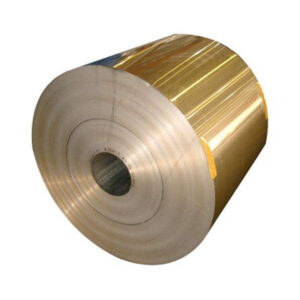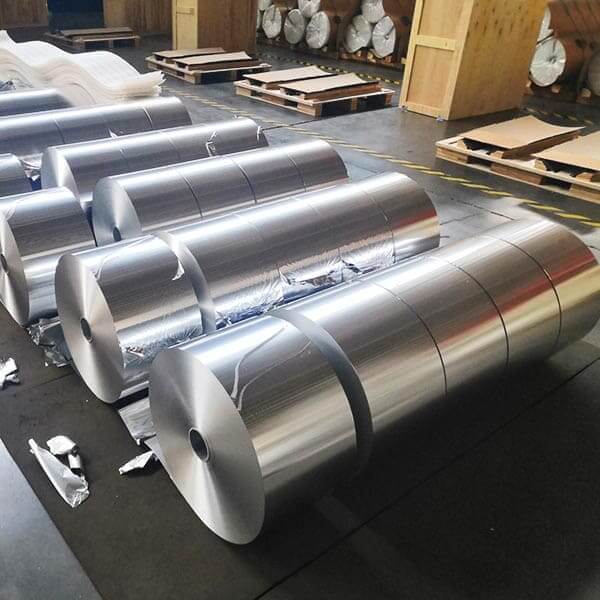
Coated aluminum foil for HVAC

| Продукт | Coated Aluminum Foil for HVAC |
| сплав | 8011 / 3003 / 1100 |
| Вдача | H22, H24, H26 |
| Товщина | 0.08–0.15 mm (80–150 μm) |
| Тип покриття | Гідрофільний / Гідрофобний / Антикорозійний |
| Delivery Terms | FOB, CFR, CIF, EXW |
| застосування | Evaporator Fins, Condenser Fins, Теплообмінники, Air Conditioners, Heat Pumps, Commercial HVAC Systems |
Вступ: Coated aluminum foil for HVAC and its rising importance
Coated aluminum foil for HVAC is increasingly recognized as a practical solution to improve energy efficiency, indoor air quality, and system reliability.
In modern heating, вентиляція, і кондиціонер (ОВК) designs, the ductwork, ізоляція, and air handling components face moisture, корозії, ріст мікробів, and chemical exposure.
A well-chosen coated aluminum foil can act as a durable, легкий, and highly reflective barrier that reduces heat transfer losses, resists corrosive environments, and supports cleanable, hygienic surfaces.
This blog post dives into the science, технології, and applications of coated aluminum foil for HVAC, with practical guidance for designers, installers, contractors, and building owners.
We will also introduce Eco Aluminum, a leading supplier of aluminum foil products, including coated options tailored for HVAC.
Eco Aluminum combines deep material knowledge with rigorous quality control, helping customers meet performance targets while maintaining cost competitiveness and regulatory compliance.

The Role of Coated Aluminum Foil in HVAC
Coated aluminum foil plays several critical roles in HVAC systems:
- Thermal management and energy efficiency: Reflective and barrier coatings reduce radiant heat transfer and protect against moisture-driven heat exchange in ducts and insulation layers.
- Moisture resistance and corrosion protection: HVAC environments are humid and chemically active. Coatings extend foil life by limiting moisture penetration and corrosion under damp insulation conditions.
- Cleanability and indoor air quality: Antimicrobial or easy-to-clean coatings help impede surface microbial growth and simplify maintenance.
- Mechanical protection and handling: Coatings improve abrasion resistance, enabling easier handling during installation and service life.
- Compatibility with other HVAC materials: Foil coatings are designed to stay stable with insulation facings, клеї, sealants, and mechanical fasteners used in ducts and air handling units.
This combination of properties translates into tangible benefits: lower energy bills, longer service life for duct components, reduced maintenance frequency, and improved indoor environmental quality.
The most effective solutions balance thermal performance, protection against moisture and chemicals, and cost considerations, all while meeting relevant standards and certifications.
Market and Industry Context
The HVAC sector is under pressure to meet higher energy-efficiency standards, improve indoor air quality, and reduce lifecycle costs.
In many regions, building codes increasingly favor reflective, insulating, and moisture-resistant materials in ductwork and related assemblies.
Coated aluminum foil aligns well with these objectives:
- Energy efficiency trends: Reflective foil facings and low-emissivity coatings help reduce solar gains in building envelopes and radiant heat losses in ductwork, contributing to improved overall system COP (coefficient of performance) for heat pumps and HVAC units.
- Moisture and corrosion challenges: Ducts, ventilation fans, and AHUs operate in humid environments where corrosion and microbial growth can degrade performance. Barrier and antimicrobial coatings address these concerns.
- Sustainability goals: Aluminum foil is recyclable and lightweight, facilitating life cycle improvements when paired with durable coatings that extend service life.
Eco Aluminum operates within this market by offering coated foil products designed for HVAC applications, alongside a portfolio of standard and custom solutions.
Their capability to tailor coatings, товщини, and dimensions helps HVAC designers optimize performance for retrofits and new builds alike.
Grades and specifications of coated aluminum foil for HVAC
Common Grades of Coated aluminum foil for HVAC
| Клас сплаву | Вдача | Товщина (мм) | характеристики | Типові програми |
|---|---|---|---|---|
| 1100 | H22/H24 | 0.08–0.12 | Відмінна теплопровідність | Residential air conditioner evaporators |
| 1200 | H24 | 0.08–0.12 | Вища міцність, ніж 1100 | Residential HVAC |
| 3003 | H24 | 0.09–0,15 | Good strength and corrosion resistance | Commercial HVAC systems |
| 3102 | H24/H26 | 0.09–0,15 | Висока міцність і стійкість до корозії | Automotive HVAC and heat exchangers |
| 8006 | H24 | 0.08–0,15 | Відмінна формувальність | Premium heat exchanger fins |
| 8011 | H24/H26 | 0.08–0.12 | Найкраща загальна продуктивність; промисловий стандарт | Residential and commercial air conditioners, heat pumps |
Coating Types of Coated aluminum foil for HVAC
| Тип покриття | Опис | Переваги | Типове застосування |
|---|---|---|---|
| Гідрофільне покриття | Water-attracting coating | Rapid condensate drainage, improved heat transfer efficiency | Evaporators |
| Гідрофобне покриття | Water-repellent coating | Quick water shedding, reduced dirt accumulation | Condensers |
| Anti-corrosion Coating | Corrosion-resistant coating | Excellent resistance to salt spray, вологи, and chemicals | Marine and industrial HVAC systems |
| Epoxy Coating | Epoxy resin coating | High chemical resistance | Industrial heat exchangers |
| PE (Поліестер) Покриття | Поліестерне покриття | Cost-effective and weather-resistant | General HVAC equipment |
| PVDF Coating | Polyvinylidene fluoride coating | Superior UV and weather resistance | Outdoor HVAC units |
Recommended Specifications for HVAC Applications
| застосування | Рекомендований сплав | Вдача | Товщина (мм) | Recommended Coating |
|---|---|---|---|---|
| Residential Air Conditioner Evaporator | 8011 | H24 | 0.095–0.105 | Гідрофільний |
| Residential Air Conditioner Condenser | 8011 | H24 | 0.100–0.120 | Антикорозійний |
| Commercial HVAC Systems | 3102 | H24 | 0.100–0.150 | Гідрофільний |
| Heat Pump Heat Exchanger | 8011 | H26 | 0.090–0.110 | Blue Hydrophilic |
| Automotive Air Conditioning | 3102 | H26 | 0.080–0.100 | Гідрофільний |
| Marine or Coastal HVAC Systems | 8011 | H24 | 0.100–0.120 | High-performance Anti-corrosion Coating |
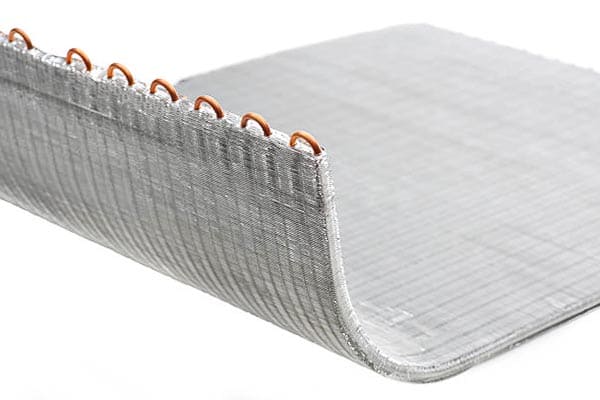
Coating Technologies for HVAC Foil
PVDF coatings
PVDF-based coatings are among the most common for HVAC foil due to their remarkable resistance to UV exposure, weathering, and chemical attack. PVDF offers:
- High surface durability and low aging rates
- Excellent adhesion to metal foils
- Superior color retention and gloss stability
- Broad temperature tolerance (suitable for typical HVAC operating conditions)
Potential drawbacks include higher material costs and longer processing cycles, but the performance benefits often justify the investment for critical applications like exposed reflective facings or high-moisture environments.
Antimicrobial and hygienic coatings
Antimicrobial coatings aim to reduce microbial colonization on foil surfaces within HVAC assemblies.
While not a substitute for routine cleaning, these coatings can augment surface hygiene in areas with high humidity or limited access for cleaning. Типові випадки використання включають:
- Duct sections in clinical or laboratory environments
- Exhaust and air intake housings subject to microbial challenges
- Food-processing facilities where hygiene constraints are strict
Effectiveness varies by formulation and exposure conditions.
Manufacturers commonly report reductions in viable microbial counts in controlled tests; field results depend on maintenance, airflow, і вологи.
Barrier and low-porosity coatings
Barrier coatings improve moisture resistance and protect against permeation of gases or vapors from insulation or sealants.
У деяких випадках, multilayer coatings combine a moisture-barrier layer with a reflective topcoat to preserve both thermal performance and surface integrity.
Parylene and other advanced barriers
Parylene coatings offer conformal, pinhole-free barriers with exceptional moisture and chemical resistance.
While excellent for demanding environments, parylene processes add cost and require specialized equipment.
For many HVAC applications, PVDF or polyolefin-based coatings provide a favorable balance of performance and cost.
Reflective and decorative topcoats
In some installations, the exterior appearance of foil facing matters for visibility or branding.
Reflective aluminum foil with PVDF topcoats can deliver high reflectivity (often 95–98% for radiant barrier purposes) and still maintain chemical and UV stability.
Processing considerations for coatings
- Товщина покриття: Typical HVAC foil coatings range from a few micrometers to a few tens of micrometers. Thicker coatings provide more protection but may add cost and impact flexibility.
- Adhesion and surface preparation: Proper cleaning, pre-treatment, and surface energy optimization ensure robust adhesion and long-term performance.
- Curing and handling: Some coatings require curing at elevated temperatures or specialized environments. Handling guidelines reduce the risk of coating damage during fabrication or installation.
- Сумісність: Coatings must be compatible with insulation materials, клеї, and mechanical fasteners used in ducts and AHUs to prevent delamination or corrosion at interfaces.
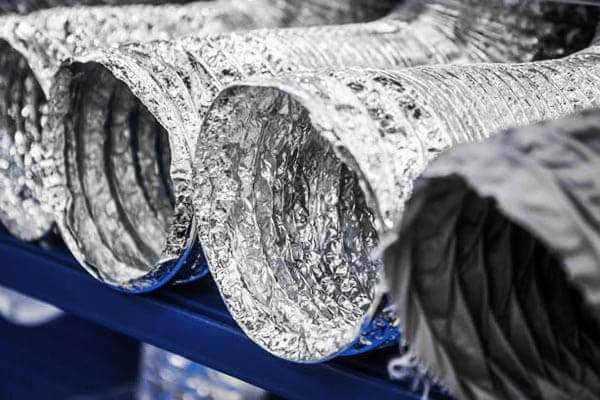
Applications in HVAC
Ductwork and duct insulation facings
Coated foil is widely used as facing material in insulated ducts and flexible duct segments.
The coating provides a barrier against moisture migration from the insulation into ductwork, reduces the risk of corrosion at metal interfaces, and enhances surface hygiene.
In radiant barrier applications, reflective foils with high emissivity control surfaces help minimize radiant heat exchange between supply and return paths.
Air handling units and plenums
AHUs and plenums often rely on coated foil materials in internal components, перегородки, and liners.
The combination of reflectivity and protective coatings helps deliver better energy efficiency and easier routine cleaning, contributing to improved indoor air quality.
Coils and heat exchangers
Coil fins and related foil components can benefit from coatings that resist corrosion in contact with condensate or humid air streams.
While many coil systems utilize aluminum alloys inherently resistant to corrosion, extended exposure or aggressive condensates may necessitate protective surfaces.
Radiant barriers and building envelopes
In building HVAC-integrated radiant barrier systems, coated aluminum foil plays a dual role: reflecting radiant heat and providing a moisture-resistant surface.
PVDF-coated foils can deliver both energy performance and durability in attic or roof installations.
Maintenance and retrofit scenarios
Retrofitting with coated foil-based facings can extend the life of aging ducts, improve efficiency in existing systems, and enable better hygiene practices without significant structural changes.
The modular nature of foil facings simplifies installation during maintenance cycles and system upgrades.

Performance and Testing: What to Expect
To ensure reliability, HVAC projects that rely on coated aluminum foil—whether for facing, бар'єр, or reflective applications—should be guided by standard testing and verification.
While specific tests vary by application, the following performance indicators are common in the industry:
- Thermal performance: Measured as heat transfer resistance and reflective properties. Materials with higher reflectivity can reduce radiant heat gains, contributing to overall system efficiency.
- Вологостійкість:Humidity and condensation tests simulate exposure to damp insulation, verifying barrier integrity and coating adhesion under wet conditions.
- Chemical resistance: Exposure to typical adhesives, sealants, розчинники, and cleaning agents in HVAC environments to evaluate coating durability.
- Adhesion and mechanical integrity: Tape tests, cross-cut adhesion tests, and bend tests check coating adhesion under service movement and handling.
- UV and weathering resistance: For surfaces exposed to daylight or outdoor pathways, UV stability and colorfastness are important for long-term appearance and performance.
- Microbial resistance (where applicable): Laboratory studies may quantify reductions in surface microbial load for antimicrobial coatings under controlled humidity and temperature conditions.
Performance data examples (illustrative and not a substitute for supplier data):
- Відбивна здатність: 95–98% for PVDF-coated foil at visible wavelengths, contributing to radiant heat management.
- Emissivity: Low emissivity coatings with emissivity as low as 0.05, reducing radiant heat exchange in certain configurations.
- Адгезія: Failure thresholds in standardized cross-cut tests showing robust adhesion with no delamination across typical installation temperature ranges.
- Швидкість пропускання водяної пари (WVTR): Barrier coatings achieving near-zero permeation within expected service life for HVAC duct interfaces.
Representative coating options and properties
| Тип покриття | Typical Applications in HVAC | Key Benefits | Approximate Coating Thickness | Typical Materials (examples) |
|---|---|---|---|---|
| PVDF-based coating | Duct facings, reflective barriers | Відмінна атмосферостійкість, chemical resistance, long-term color stability | 10–40 µm | PVDF, acrylic sealants |
| Polyolefin (PE/PP) topcoats | General moisture barriers, cost-effective facings | Good barrier properties, lower cost | 5–20 мкм | PE, PP multilayer composites |
| Antimicrobial coatings | Humid or healthcare facilities, чисті приміщення | Microbial load reduction in controlled tests | 5–15 µm | Срібло, copper biocides formulations |
| Parylene barrier | High-moisture and chemical exposure areas | Superior moisture barrier, pinhole-free coverage | 1–5 мкм | Parylene C, Н, or D variants |
| Ceramic or advanced barrier | Extreme chemical environments, висока вологість | Exceptional chemical resistance and temperature tolerance | 1–5 мкм | Ceramic-like barrier chemistries |
Примітка: The table provides representative options; actual product specifications vary by supplier and product family. Always refer to the supplier’s data sheet for precise metrics.
Sustainability and Environmental Considerations
Sustainability is increasingly a deciding factor in selecting HVAC materials. Coated aluminum foil offers:
- Переробка: Aluminum foil is widely recyclable, and the recycling value is enhanced when coatings are compatible with recycling streams. Some coating chemistries are formulated to facilitate recycling through mechanical separation or chemical treatment.
- Life-cycle energy savings: By improving insulation performance and reducing heat losses, coated foil contributes to lower energy consumption over the system’s life. This energy saving often offsets the embodied energy of the coating itself.
- Reduced maintenance and replacement: Durable coatings resist corrosion, пошкодження вологою, і зростання мікробів, leading to fewer replacements and less material waste over time.
- Low VOC emissions: Many modern coatings emphasize low-VOC or VOC-free formulations to meet indoor air quality standards, particularly important in occupied spaces.
HVAC projects should consider life-cycle assessment (LCA) даних, supplier sustainability commitments, and end-of-life management when choosing coated foil products.
Eco Aluminum emphasizes responsible sourcing, простежуваність, and compliance with environmental management standards in its production and supply chain.
Manufacturing and Coating Process: From Foil to Finished Product
A typical coating line for HVAC foil includes several stages:
1) Preparation and cleaning: The foil surface is cleaned to remove oils, пил, and etching residues, often using solvent or aqueous cleaners.
2) Surface activation: A chemical pretreatment may improve adhesion for the coating, ensuring long-term performance.
3) Coating application: Coatings are applied via processes such as roll coating, slot-die, or extrusion, depending on the coating material and desired thickness.
4) Curing or drying: Coated foils pass through ovens or UV-curing systems to cure the coating, achieving the final adhesion and surface properties.
5) Inspection and quality control: Візуальний огляд, adhesion tests, and coating thickness measurements ensure uniform coverage and adherence to specifications.
6) Slitting and packaging: Finished coils are slit into customer-specific widths and packaged for shipment, with attention to protection against abrasion and moisture.
Key practical considerations for installers and fabricators:
– Handling: Coated foil can be more susceptible to marring; use soft handling tools and protective films if recommended.
– Compatibility checks: Ensure the coating strategy is compatible with adhesives and sealants used in the HVAC install.
– Temperature tolerance: Be mindful of the operating environment; some coatings have temperature or UV exposure limits.
– Cleaning and maintenance: Follow manufacturer guidelines for cleaning the interior surfaces to preserve coating integrity and indoor air quality.
Quality Standards and Certifications
Quality and reliability are non-negotiable for HVAC components. Reputable foil coatings adhere to recognized standards and certifications, як от:
- ISO 9001: Quality management systems for consistent product quality and process control.
- ISO 14001: Екологічний менеджмент, supporting sustainable production practices.
- Industry-specific standards: Some regions require compliance with local building codes, fire safety standards (напр., flame spread classifications for duct materials), and ventilation standards (such as ASHRAE guidelines).
- Material standards: Aluminum foil thickness tolerances, metallurgical specifications, and coating adhesion performance are commonly defined in supplier data sheets and third-party test reports.
When selecting an HVAC coating supplier, verify certifications, testing capabilities (напр., third-party lab testing), and traceability of batches to support regulatory compliance and warranty claims.
Supplier Spotlight: Екологічний алюміній
Екологічний алюміній stands out as a credible supplier of coated aluminum foil for HVAC, thanks to a combination of technical expertise, manufacturing capability, and customer-centric service.
Key attributes include:
- Product portfolio: A range of coated foils designed for HVAC applications, including PVDF-coated reflective foils, antimicrobial options, and barrier-coated variants. Their lines cover standard dimensions and allow customization for thickness and width.
- Coating technology: Eco Aluminum leverages proven polymer and composite coatings with robust adhesion to aluminum foil, optimized for HVAC environments. They emphasize performance under humidity, chemical exposure, and cleaning cycles.
- Quality and compliance: The company maintains ISO 9001 certification and adheres to strict process controls, test regimes, і простежуваність. Documentation includes material safety data sheets (MSDS), coating data sheets, and third-party test results on request.
- Customer focus: Eco Aluminum emphasizes short lead times, гнучка упаковка, and responsive customer service to support both large-scale installations and smaller retrofit projects.
- Sustainability commitments: The supplier highlights responsible sourcing, energy-efficient production practices, and end-of-life considerations for foil products.
For HVAC designers and installers, Eco Aluminum offers a practical pathway to sourcing coated foil solutions that meet design targets while aligning with procurement and project timelines.
Their ability to tailor coating specifications to specific environments (напр., coastal marine exposure, healthcare facilities, or food processing spaces) adds strategic value to projects aiming for reliability and long-term performance.
Comparisons: Coated vs Uncoated Foil in HVAC Applications
A practical way to evaluate coating options is to compare coated and uncoated foil across key performance areas.
| Вимір продуктивності | Алюмінієва фольга з покриттям (HVAC-focused) | Uncoated Aluminum Foil (HVAC context) |
|---|---|---|
| Moisture barrier | High resistance to moisture penetration with barrier topcoats | Susceptible to moisture ingress at interfaces, potential condensate issues |
| Стійкість до корозії | Enhanced through barrier and corrosion-resistant coatings | Greater vulnerability in humid or chemically active environments |
| Thermal performance | Reflective surfaces reduce radiant heat gains; optimized emissivity | Higher emissivity and potential radiant heat transfer |
| Cleanability | Coatings facilitate easier cleaning and surface hygiene | Surface may trap dirt and microbe buildup more readily |
| Mechanical durability | Improved abrasion and handling resistance | More prone to surface scratches and surface wear |
| Longevity and lifecycle cost | Longer service life; lower maintenance and replacement costs | Potentially shorter service life in challenging environments |
| Recyclability concerns | Many PVDF and barrier coatings are designed to maintain recyclability; some limitations apply | Easier to recycle as plain aluminum but with reduced overall resilience |
| Вплив на вартість | Higher upfront cost, offset by energy savings and longer life | Нижча початкова вартість, but potential higher lifecycle costs in harsh environments |
Coated vs uncoated foil in HVAC—summary interpretation
- In environments with high humidity, chemical exposure, or demanding cleaning regimes, coated foil typically delivers superior performance and longer life, justifying the higher initial investment.
- For straightforward applications with strict budget constraints or where exposure risk is minimal, uncoated foil can be adequate, though lifecycle considerations should still be evaluated.
Поширені запитання
What is the main advantage of using coated aluminum foil in HVAC compared with uncoated foil?
Coated foil offers moisture protection, improved corrosion resistance, enhanced durability during installation, and improved hygiene characteristics in many environments, contributing to longer system life and better energy performance.
Which coating is best for a coastal or humid environment?
PVDF-based coatings and barrier coatings provide robust moisture and chemical resistance, making them suitable for coastal and high-humidity environments. Antimicrobial coatings can be added where hygiene is a priority, though environmental exposure should be considered.
How does coating choice affect recyclability?
Most aluminum foil remains highly recyclable; проте, the coating material can affect recycling streams. Coatings designed for recyclability and compatible with recycling processes help minimize end-of-life environmental impact. It’s essential to follow local recycling guidelines and supplier data.
Are antimicrobial coatings safe in occupied spaces?
When properly formulated and applied, antimicrobial coatings can help reduce surface microbial loads. They are not a substitute for routine cleaning and maintenance. Always verify regulatory compliance and product safety data sheets for specific environments.
Can I source coated HVAC foil from Eco Aluminum for large projects?
Так. Eco Aluminum provides coated foil solutions for HVAC and can tailor coating types and dimensions to project specifications, with attention to lead times and quality assurances.
Висновок
Coated aluminum foil for HVAC represents a convergence of material science, engineering pragmatism, and sustainable building practices.
By selecting compatible coatings that address moisture, корозії, гігієна, and durability—while aligning with energy efficiency goals and lifecycle costs—designers and operators can achieve meaningful improvements in system performance and long-term reliability.
The combination of robust coating technologies, careful material selection, and reputable supplier partnerships (such as Eco Aluminum) provides a practical, credible path forward for HVAC professionals who strive to maximize value for building occupants and owners.
If you’d like to explore coating options tailored to your climate, building type, and retrofit goals, start by outlining key environmental conditions, maintenance expectations, та бюджетні обмеження.
Then engage with a coating specialist who can translate these inputs into a technical specification, complete with test data and installation guidance.
A well-chosen coated aluminum foil solution can become a quiet but powerful enabler of energy efficiency, довговічність, and indoor air quality in modern HVAC systems.
Share with PDF: Download