
Complete Guide to Aluminum Curtain Wall Materials for Jakarta High-Rise Office Buildings: From Alloy Microstructure to Tropical Climate Service Performance
The performance, longevity, and aesthetic expression of an aluminum curtain wall are fundamentally determined by the scientific selection and precise engineering application of its core material—aluminum alloy. Faced with the unique challenges of Jakarta’s tropical marine climate, choosing the correct alloy grade, مزاج, profile design, and surface finish is a systematic decision that integrates materials science, structural mechanics, and corrosion protection engineering. This guide aims to provide an in-depth analysis that goes beyond standard specifications to the very essence of the materials, offering core technical rationale for creating durable and long-lasting building facades.

1. Aluminum Alloy in Curtain Walls: From Macro Requirements to Micro Science
1.1 The Stringent Challenges of a Tropical Marine Climate
Jakarta’s climate (avg. 28°C, 80% نمی, 2000mm annual rainfall, saline sea breezes) poses a unique combination of challenges to building materials:
- High Humidity & Salt Fog: Accelerates electrochemical corrosion processes, especially at points of dissimilar metal contact and in crevices.
- High-Intensity UV Radiation: Approximately 3000 hours of annual sunshine, causing degradation of polymer chains in organic coatings, manifesting as loss of gloss, چاکنگ, and color change.
- High Temperatures: Accelerates the rate of all chemical reactions, including corrosion and material aging, while also affecting mechanical properties and dimensional stability.
- Cyclical Torrential Rain & Wet-Dry Cycling: Creates “immersion-evaporation” سائیکل, leading to the concentration of corrosive ions and increasing the risk of pitting and crevice corrosion.
1.2 Aluminum Alloy’s Response and Scientific Advantages
Aluminum alloy is the primary choice for curtain wall framing due to its precisely adjustable material properties:
| Material Property | Scientific Principle & Control Methods | Core Contribution to Curtain Wall Performance |
|---|---|---|
| High Strength/Light Weightمیں | Addition of elements like Mg, اور, کیو, Zn forms solid solutions and precipitation-hardening phases (جیسے, Mg₂Si). Controlled via “solution heat treatment – quenching – aging” (T5, T6 tempers) to manage phase precipitation. | Enables large unit sizes and spans, reduces load on the primary structure, significantly saving overall building costs. |
| بہترین سنکنرن مزاحمتمیں | Spontaneous formation of a 2-10nm thick, گھنے, amorphous Al₂O₃ oxide film on the surface. This passive layer is خود کی شفا یابی upon damage. Can be artificially thickened via anodizing (to 15-25μm). | Provides the first line of passive defense against Jakarta’s saline atmosphere, forming the cornerstone of long-term service safety. |
| Superb Formabilityمیں | Face-centered cubic crystal structure grants excellent ductility. Hot extrusion at ~400-500°C allows for single-step forming of highly complex multi-chamber cross-sections. | Enables integrated design of complex pressure-equalized chambers, drainage paths, and thermal break grooves; the manufacturing basis for high-performance systems (جیسے, unitized). |
| Surface Finish Compatibilityمیں | The porous structure of the oxide film provides a base for anodizing coloration; chromate-conversion or pretreated surfaces form strong chemical bonds with organic coatings. | Not only provides color and texture variety but, through super-weatherable coatings like PVDF, offers active, long-term protection for the aluminum substrate. |
| 100% ری سائیکل لیبلٹیمیں | Aluminum’s atomic properties allow for remelting and reuse with almost no loss of performance. Energy for recycled aluminum is only 5% of that for primary production. | Meets requirements for recycled content (جیسے, MRc4) in green building certifications like GREENSHIP and LEED, enhancing the asset’s ESG value. |
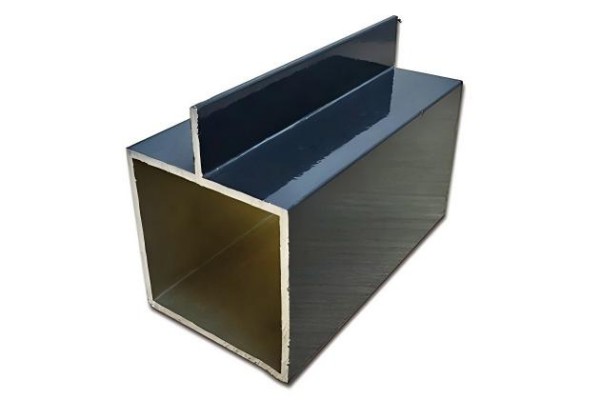
2. کور مصر دات درجات: The Deep Link Between Composition, مائیکرو اسٹرکچر, and Performance
ختم 90% of curtain wall profiles use the 6xxx سیریز (Al-Mg-Si) alloys, offering the best balance of strength, سنکنرن مزاحمت, تشکیل پزیر, ویلڈیبلٹی, اور لاگت.
2.1 In-Depth Analysis of Primary Grades
| گریڈ & غصہ | Primary Alloying Elements (wt. ٪) & Roleمیں | مائیکرو اسٹرکچر & Strengthening Mechanismمیں | Key Mechanical Properties (عام)میں | Precise Application in Curtain Wallsمیں |
|---|---|---|---|---|
| اے اے6063-T5میں | ایم جی (0.45-0.9%), اور (0.2-0.6%): Form the primary strengthening phase Mg₂Si. Mn/Cr (<0.1%): Refine grain, increase recrystallization temperature. | Air-cooled (quenched) after exiting the extrusion die, creating a supersaturated solid solution within the profile, followed by artificial aging at ~200°C, precipitating fine β” phase (Mg₂Si precursor) for strengthening. | تناؤ کی طاقت: ≥185 MPa پیداوار کی طاقت: ≥110 MPa لمبا ہونا: ≥8% |
Standard choice for general structural members. Used for most mullions, transoms, and trims. Its balanced performance, excellent extrudability, and surface finish quality make it the benchmark for cost-effectiveness. T5 temper (air-quench) is suitable for complex thin-walled profiles with minimal distortion. |
| AA6063-T6میں | Same as above, but with tighter control over Mg, Si content ranges. | Solution heat treatment at ~520°C followed by water quenching creates a higher supersaturation, then artificial aging. Results in a greater number and more uniform distribution of β’ phase (Mg₂Si) precipitates. | تناؤ کی طاقت: ≥240 MPa پیداوار کی طاقت: ≥160 MPa لمبا ہونا: ≥8% |
Preferred for high-stress components. Used for main load-bearing members in super-tall or large-unit curtain walls subject to higher wind pressure. Offers ~45% higher yield strength than T5, advantageous for section optimization and weight reduction. |
| اے اے6061-T6میں | ایم جی (0.8-1.2%), اور (0.4-0.8%), کیو (0.15-0.4%): Higher Mg₂Si content; Cu addition forms additional strengthening phases (جیسے, Al₂Cu). | After solution treatment, precipitation of β” phase, needle-shaped β’ phase, and Cu-containing precipitates provides stronger precipitation hardening. | تناؤ کی طاقت: ≥310 MPa پیداوار کی طاقت: ≥240 MPa لمبا ہونا: ≥8-10% |
Key heavy-duty connectors/structural components. Used for large cast aluminum adapters, cantilevered supports, critical attachments connecting directly to steel structures. نوٹ: Slightly lower corrosion resistance than 6063; anodizing color may be uneven. Typically not used for large-area visible profiles. |
| AA6463/AA6463Aمیں | ایم جی, Si content optimized; strict limits on impurities like Fe, کیو. | Composition control minimizes coarse β-AlFeSi impurity phases, leading to a more uniform, fine distribution of Mg₂Si precipitates and a cleaner matrix. | Mechanical properties similar to AA6063-T5/T6. | Specialty grade for high-end anodizing. اس کا “bright stock” characteristic yields extremely high specular reflectance or exceptionally uniform, clear coloring after anodizing. Used for high-end decorative elements pursuing ultimate metallic aesthetics. |
Critical Distinction: T5 vs T6
- Process Nature: T5 is “quenching from the extrusion process heat + مصنوعی عمر بڑھنے,” with slower cooling (ہوا). T6 is “re-solution heat treatment + water quenching + مصنوعی عمر بڑھنے,” with very fast cooling (پانی).
- کارکردگی کا فرق: T6 achieves higher strength and better overall performance (especially yield strength) due to higher supersaturation and more complete precipitation.
- Profile Distortion: The T5 process causes less distortion, better for complex sections. The T6 process may induce higher internal stresses and distortion from water quenching, requiring subsequent straightening.
- Recommendation for Jakarta: For primary load-bearing members, specify AA6063-T6 as a priority for higher safety margins. This must be clearly stated on drawings and in technical specifications.
2.2 Quality Control Red Lines for Alloy Grades
- Mill Certificates: Require suppliers to provide third-party test Mill Certificates for each batch of profiles, verifying tensile strength, yield strength, لمبائی, and chemical composition against AA standards.
- Material Mixing Risk: Strictly prohibit mixing 6061 اور 6063 profiles, خاص طور پر کے لئے anodizing, as they exhibit noticeable color differences. Establish strict material identification procedures for production, warehousing, اور تنصیب.
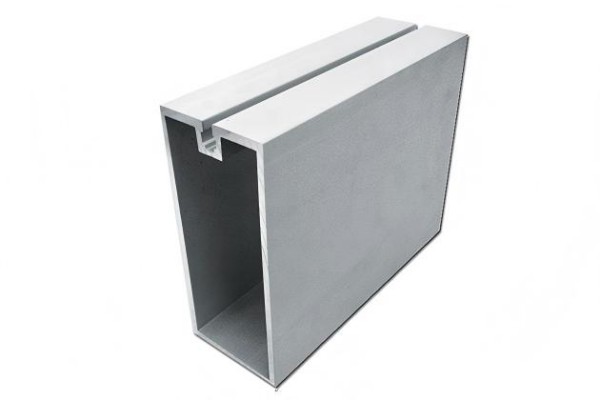
3. Profile Engineering: The Science of Geometry, Wall Thickness, and Thermal Breaks
3.1 Profile Cross-Section Design Principles
Excellent section design is the key to a “breathing” curtain wall.
- Pressure-Equalized Chamber Design: Ingenious air channels and pressure-equalization ports allow dynamic pressure balance between internal cavities and the outside, crucial for extreme water tightness, especially against Jakarta’s torrential rain.
- Systematic Drainage: Must include organized, unobstructed drainage paths to quickly channel and expel any incidental water ingress, preventing internal accumulation.
- Integrated Thermal Break Grooves: Provide precise, secure slots for polyamide nylon 66 کے ساتھ 25% glass fiber (PA66 GF25) thermal break bars, ensuring reliability in the roll-forming composite process.
3.2 Critical Wall Thickness Standards
Wall thickness is the direct variable resisting wind-load deformation (deflection). According to standards like JGJ 102, the minimum measured wall thickness at critical points of main load-bearing members (جیسے, mullions) should not be less than 3.0mm. Design must be based on deflection checks using wind tunnel test reports or local code-calculated wind pressures, not just empirical values.
3.3 Thermal Break Systems: Inserted vs. Cast-in-Place
| قسم | عمل | اصول & فائدہ | کارکردگی & Applicability |
|---|---|---|---|
| Inserted (Thermal Barrier)میں | PA66 GF25 thermal bars are inserted into dedicated grooves in aluminum profiles and mechanically locked via roll-forming. | بالغ ٹیکنالوجی, high connection strength, linear production. Thermal bar and aluminum form a mechanical interlock. | High shear strength (عام طور پر >60 N/mm), stable thermal performance (U-value achievable 1.8-2.5 W/m²K). دی absolute mainstream in the current market, suitable for projects of all heights. |
| Cast-in-Placeمیں | Polyurethane (PU) insulation is poured into the gap between aluminum profiles, reinforced with glass fibers. | Can create more complex insulation shapes; theoretically allows for smaller profile sections. | Shear strength is generally lower than inserted types; long-term aging resistance (especially in humid heat) and bond strength to aluminum are critical. Not recommended for main load-bearing structures in high-humidity environments like Jakarta; suitable for non-structural areas like interior partitions. |
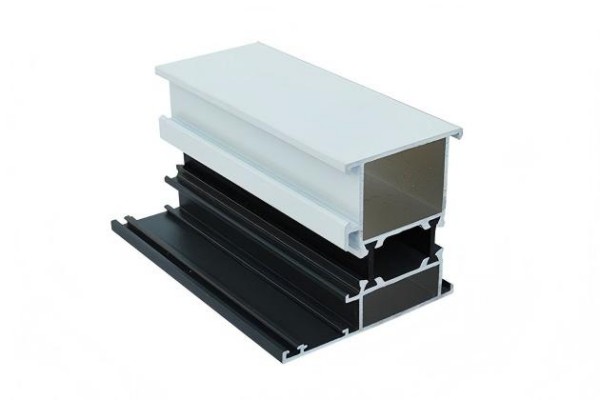
4. سطح کی تکمیل: The Ultimate Armor – عمل, معیارات, and Selection Matrix
The surface finish is the “ultimate armor” for aluminum alloys against Jakarta’s environment.
| Finish Type | بنیادی عمل & Film Formation Mechanismمیں | International/Industry Standards & Key Metricsمیں | Science of Weatherability & Jakarta Performanceمیں | Life-Cycle Cost Analysisمیں |
|---|---|---|---|---|
| anodizingمیں | Electrochemical process growing a porous, honeycomb-like Al₂O₃ layer on the aluminum substrate, subsequently sealed (hydrated or cold sealed). | Film Thickness: AA-M10C22A31 / Class AA20 (≥20µm) for severe outdoor. Film Density: ≥20 mg/dm² (آئی ایس او 2931). Seal Quality: Phosphoric acid immersion weight loss ≤30 mg/dm². |
The oxide film is in metallurgical bond with the substrate, never peels. اعلی سختی (ایچ وی 300-500), رگڑ مزاحم. UV cannot degrade the inorganic oxide film, but may fade internal dyes. میں industrial/urban areas, acid rain may corrode the film. | Medium initial investment. Low maintenance (regular cleaning only). 20-30 year lifespan. Aesthetic changes gradually, acquires a “patina” of natural aging. |
| پاؤڈر کوٹنگمیں | Electrostatic application of epoxy/polyester powder, cured at ~200°C to form a thermoset coating. | Film Thickness: Typically 60-80µm (آئی ایس او 2366). آسنجن: کلاس 0 (cross-cut). اثر مزاحمت: ≥50 kg·cm. QUV Accelerated Weathering: >1000 hrs gloss retention >50%. |
Organic polymer coating protects via physical barrier and chemical inertness. Polyester resin undergoes photo-oxidation under long-term strong UV, leading to polymer chain scission (چاکنگ) and pigment degradation (fading). | Lower initial investment. کے بعد 10-15 سال, noticeable chalking and loss of gloss may occur, potentially requiring full refurbishment/recoating, incurring secondary costs and expensive scaffolding. |
| Fluorocarbon Coating (پی وی ڈی ایف)میں | Application of PVDF (polyvinylidene fluoride) resin-based paint, typically in a primer-color coat-clear coat (3-coat) system, baked. | Film Thickness: ≥30µm (3-coat, AAMA 2605). Key Standard: AAMA 2605 (High Performance). Key Tests: – Salt Spray: >4000 hrs no blistering. – QUV-B: >4000 hrs ΔE<5. – Humidity: >3000 بجے. |
The extremely strong F-C bond in PVDF resin (486 kJ/mol) far exceeds UV photon energy (~400 kJ/mol), making it immune to UV degradation, hence exceptional gloss/color retention. High crystallinity provides excellent chemical resistance and self-cleaning. | Highest initial investment. Often the lowest life-cycle cost. Warranties up to 20-30 سال. Highly unlikely to require major refurbishment within the project lifecycle, avoiding operational disruption and massive secondary investment. |
Final Recommendation for Jakarta:
For high-end office projects, specify a 3-coat PVDF fluorocarbon coating compliant with AAMA 2605 معیارات. Its exceptional UV and corrosion resistance perfectly matches Jakarta’s climatic challenges, making it the most economical choice for long-term asset preservation and maintenance risk reduction.
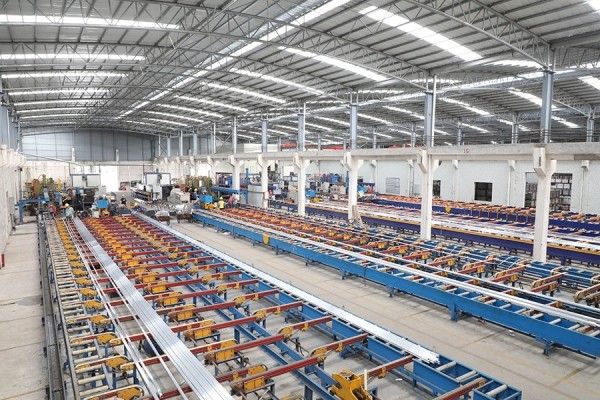
5. Professional Audit Checklist for the Material Supply Chain
When engaging with a supplier (جیسے, ایکو الوم کمپنی, لمیٹڈ.), use the following material-related topics as the core of technical evaluation:
- کمپوزیشن & Performance Traceability: “Provide third-party Mill Certificates (including chemical composition, مکینیکل خصوصیات) for the AA6063-T6 profiles used in this project, along with the factory’s incoming raw material inspection records.”
- Profile Design Verification: “Provide the moment of inertia (Ix, Iy) calculations for critical load-bearing profiles and the resulting deflection check under Jakarta’s design wind pressure (XXX Pa). How is the minimum measured wall thickness guaranteed?”
- Thermal Break System Certification: “Provide physical performance reports (tensile, shear strength, تھرمل چالکتا) for the proposed thermal break bar (brand, type) and test reports for the transverse tensile strength of the composite profile (complying with GB/T 28289 or equivalent).”
- Coating System Validation: “Provide the PVDF paint’s original manufacturer’s quality certificate (brand, type, بیچ) and full third-party test reports per AAMA 2605 standards conducted on samples from this batch, specifically QUV and salt spray reports.”
- Dissimilar Metal Connection Details: “Provide standard detail drawings for all connection nodes between aluminum and stainless steel (embeds, bolts) or structural steel, clearly specifying the insulating gasket/material (جیسے, neoprene, نایلان) and its specifications.”
نتیجہ
Building an enduring landmark in Jakarta requires the curtain wall material selection to be a precise symphony of science and engineering. From the controlled precipitation of Mg₂Si strengthening phases in AA6063-T6 alloy to the molecular-level defense of fluorine-carbon bonds in a 3-coat PVDF finish against UV rays, every detail embodies a profound understanding of materials science. This is not merely selecting a commodity; it is choosing the “genetic code” اور “immune system” that will allow the building to withstand time, climate, and environment. Only by partnering with experts like ایکو الوم کمپنی, لمیٹڈ., who possess deep material knowledge, and engaging from the source—the alloy composition—can a project ensure that what rises on Jakarta’s skyline is a monument of technical excellence and artistic expression, performing flawlessly for generations to come.