
1. Introduction
Aluminum foil for packaging Bags occupy a critical niche in modern packaging, offering unparalleled barrier properties and enabling manufacturers to extend shelf life, preserve flavor, and protect sensitive contents.
Over the past few decades, rising consumer demand for freshness, stricter regulations in food and pharmaceuticals, and a stronger focus on sustainability have driven the evolution of aluminum foil—from basic kitchen wraps to advanced multi-layered pouches.
In this article, we will analyze Aluminum foil for packaging Bags from multiple perspectives: material science, manufacturing, functionality, Aplicaciones, environmental impact, regulatory compliance, market forces, and future innovations.
Our goal is to produce a professional, authoritative, and original overview that can serve as a reference for packaging engineers, brand managers, sustainability specialists, and C-suite decision-makers alike.

2. Material Properties of Aluminum Foil
2.1 Physical and Mechanical Characteristics
- Thickness and Gauge: Aluminum foil used in packaging typically ranges from 6 µm (Micras) Utia'al 20 µm, depending on application requirements. Applications prioritize thinner gauges (6–12 µm) for flexibility and conformability, while thicker gauges (12–20 µm) offer greater mechanical strength and puncture resistance.
- Ductility and Formability: Due to its face-centered cubic crystal structure, aluminum exhibits excellent ductility. It can be cold-rolled to extremely thin gauges without fracturing, enabling uniform film formation. This ductility also allows foils to conform tightly around irregularly shaped products.
- Resistencia le tracción: While pure aluminum foil (100 % Ti' le) has moderate tensile strength (~70 MPa), work-hardening during the rolling process and alloying (p'el ej.., Ti' le 3003 or Al 8011 serie) can boost yield strength to 120–150 MPa. In a laminated structure, the foil layer provides a strong core, resisting tearing and puncture when combined with polymer layers.
2.2 Propiedades barrera (Oxygen, Moisture, Sáasil, Odor)
- Oxygen Transmission Rate (OTR): Aluminum foil—being essentially impermeable to gases—achieves an OTR of virtually zero. Even at thicknesses as low as 7 µm, it prevents oxygen ingress, which is critical for oxidation-sensitive products (p'el ej.., coffee, powdered milk, vitamins).
- Moisture Vapor Transmission Rate (MVTR): Aluminum foil blocks water vapor almost entirely, with typical MVTR < 0.01 g/m²·day at 23 °C/50 % RH. Moisture barrier is vital for hygroscopic or deliquescent contents.
- Light and UV Protection: The metallic layer reflects nearly 98–99 % of ultraviolet (UV) and visible radiation. Light-sensitive pharmaceuticals (p'el ej.., riboflavin supplements) or confectionery (p'el ej.., chocolate) benefit from this reflective shielding.
- Odor and Flavor Retention: By preventing aroma migration, aluminum foil preserves volatile flavor compounds. The absence of permeation ensures items retain original taste profiles and avoid cross-contamination when stored alongside odorous substances.
2.3 Thermal Conductivity and Heat-Sealability
- Conductividad térmica: Aluminum’s high thermal conductivity (~237 W/m·K) ensures rapid heat distribution across the film. During heat-sealing, this uniform thermal profile produces consistent seal integrity.
- Heat Seal Layers: Typically, a polymer layer (polyethylene [PEI], ionomer, wa polipropileno [PP]) is laminated to one or both sides of the foil. When heat-sealed, the polymer melts and fuses, creating a hermetic closure. Thickness of sealant layers ranges from 10 µm to 50 µm, selected to balance seal strength against seal peelability (for easy opening).
3. Manufacturing Process of Aluminum foil for packaging Bags
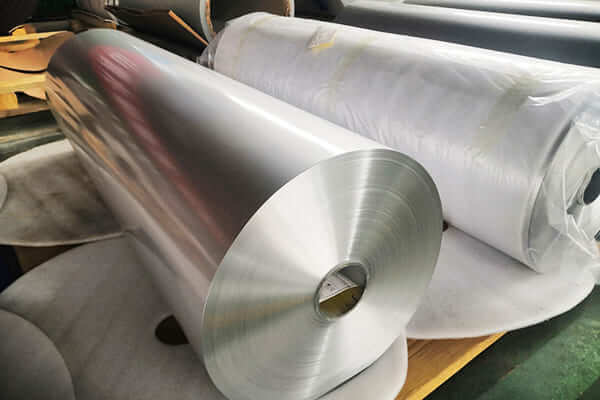
3.1 Primary Foil Production (Casting, Rolling, Annealing)
- Casting: Aluminum ingots, often alloyed for enhanced properties (p'el ej.., AA3000 series for food packaging), are melted and cast into slabs or billets.
- Hot Rolling: Cast slabs pass through hot rolling mills, reducing thickness to ~0.5 mm. This operation refines grain structure and relieves internal stresses.
- Cold Rolling: After cleaning and annealing, foils undergo multiple cold-rolling passes, decreasing thickness to the targeted 6–20 µm. Intermediate annealing steps (batch or continuous) restore ductility lost during work hardening.
- Final Annealing and Coating: Final annealing (temper-control anneals) ensures uniform mechanical properties. Depending on end-use, surface treatments (p'el ej.., chromium oxide passivation) may be applied to improve formability and adhesion in downstream lamination.
3.1. Aluminum Foil‐Layer Requirements
-
Foil Alloy & Atemperar: Supply aluminum foil made from AA3003 or AA8011 serie, annealed to temper “H18” (or as applicable).
-
Gauge (Espesor):
-
Item 1 (Degassing Valve Bag): 10 µm ± 0.5 µm
-
Item 2 (Stand-Up Zipper Pouch): 8 µm ± 0.5 µm
-
Item 3 (Sachet): 12 µm ± 0.5 µm
-
-
Surface Treatment: Passivated (chromate‐free passivation) to improve laminate adhesion.
-
Recubrimiento leti' Adhesivo: For multi-layer constructs, vendor shall use FDA‐approved, food‐grade adhesives/PE/PA/EVOH layers (as noted below).
3.3 Converting and Lamination
- Extrusion or Solvent Lamination: Polymer layers (PEI, PET, OPP) are laminated onto one or both sides of the foil. Extrusion lamination (melt-extruded polymer onto foil) is prevalent for superior bond strength. Solvent lamination (using adhesive) is employed when thin non-polyolefin layers (p'el ej.., ethylene vinyl alcohol [EVOH] for additional oxygen barrier) are needed.
- Printing and Surface Finishing: Prior to lamination or post-lamination (depending on ink compatibility), flexographic or gravure printing applies high-resolution graphics. UV-curable or solvent-based inks are selected based on migration requirements for food or pharmaceutical contact.
- Slitting and Rewinding: Laminated rolls are slit to the width corresponding to bag machine specifications (typically 200 mm to 1,200 milímetro). Precision slitting tolerances (<±0.3 mm) ensure uniform bag sizes and minimize flutter during high-speed bagging.
3.4 Bag Formation Techniques (Form-Fill-Seal, Pouch Assembly)
- Vertical Form-Fill-Seal (VFFS): Common in snack or coffee packaging. The laminated roll is shaped into a tubular form; product is filled from the top, then longitudinal and transverse seals create individual bags.
- Horizontal Form-Fill-Seal (HFFS): Often used for chocolate bars or rigid-filling applications. Foil webs are horizontally oriented; pouches are constructed, filled, and sealed in a linear flow.
- Pre-Made Pouches (Gusseted, Stand-Up, Flat Pouches): For higher-end products, pre-constructed aluminum foil pouches (with zip closures, tear notches, or resealable adhesives) are filled on multi-head weighers or additive dosing systems.
- Fin Seals, T-Seals, and Three-Seals: Different bag styles—fin seal (side seal), T-seal (side and bottom seal), and three–seal (three sides sealed, top open)—are selected based on sealing speed, cost, and product characteristics.
4. Functional Benefits in Packaging
4.1 Extended Shelf Life and Product Protection
- Oxygen Deprivation: By eliminating oxygen, oxidation-induced rancidity (in nuts, coffee) and photodegradation (especially UV-sensitive vitamins) are prevented. Some studies indicate shelf-life extension of up to 18 months for high-fat contents stored in aluminum foil pouches compared to standard polymer bags.
- Microbial Control: The hermetic seal, combined with barrier properties, minimizes microbial ingress. While not a sterilization method per se, foil bags reduce aerobic bacterial growth by limiting oxygen availability.
- Aroma Retention: Flavors and aromas—critical to consumer perception—remain intact. Je'ebix., single-serve coffee sachets in aluminum foil preserve volatile oils that constitute “freshly ground” sensory notes.
4.2 Mechanical Strength, Puncture Resistance, and Flexibility
- Resistance to Puncture/Tear: Thicker foil gauges (12–20 µm) coupled with oriented PET or OPP layers in a laminate produce high puncture resistance (typically >10 N). Bulkier or sharp-edged products (p'el ej.., snack chips, granola bars) benefit from anti-puncture performance that minimizes pinholes.
- Flexibility and Conformability: Foil’s ability to fold and conform allows packaging of irregular shapes (p'el ej.., dried fruits, powders), reducing headspace and minimizing oxidative degradation.
- Tamper Evidence: Foil’s inability to stretch beyond a certain point makes illicit resealing detectable—important for pharmaceuticals or high-value electronics.
4.3 Estética, Printability, and Brand Differentiation
- High-Definition Graphics: Advanced gravure or flexo printing onto polymer or coated foil surfaces yields vibrant, multi-color visuals. Metallic sheen of foil background enhances brand perception of premium quality.
- Surface Finishes: Matte-finish, gloss, or soft touch lamination can be applied over foil for luxury confectionery or high-end coffee. These finishes can accentuate tactile appeal while maintaining barrier integrity.
- Embossing and Debossing: In certain specialty applications, foils can be embossed to create a 3D effect or tactile brand motifs, further elevating shelf presence.
5. Design and Structural Considerations
5.1 Single-Layer vs. Multi-Layer Laminates
- Single-Layer Foil: Rarely used stand-alone, except in inner sachets (p'el ej.., blister foil). Lacks mechanical strength to function as a free-standing bag, so typically laminated.
- Two-Layer Laminate: Ju'un aluminio + heat-seal PE or PP. Serves basic needs when mechanical stress is moderate.
- Three-Layer and Beyond: Common structure: PET (printable/strength) / ju'un aluminio (barrier) / PEI (seal). In higher-performance formats, additional layers (EVOH for enhanced oxygen barrier, nylon for puncture resistance) are inserted. A typical five-layer structure might be: PET / EVOH / Aluminio / Nylon / PEI. Layer thicknesses are engineered to balance barrier, toughness, sealability, ka ta manaj.
5.2 Surface Treatments and Coatings (Anti-Fog, Heat-Seal Layers)
- Anti-Fog Coatings: In refrigerated food pouches (p'el ej.., cut vegetables), an anti-fog treatment on the inner polyolefin layer prevents water droplets from forming, maintaining visibility.
- Heat-Seal Coating: PE or ethylene-vinyl acetate (EVA) layers are co-extruded or adhesively laminated to aluminum foil. Optimal seal temperatures (130–160 °C) are determined through differential scanning calorimetry (DSC) and lab seal-strength testing.
- Slip and Anti-Static Agents: To maintain processability at high-speed form-fill-seal machines (300–500 bags/min), slip additives are incorporated into outer polymer layers to reduce web friction. Anti-static coatings avoid electric build-up that can disturb precise weighing or filling of powders.
5.3 Customization: Shapes, Tamaños, Zip Closures, Tear Notches
- Stand-Up Pouches: Gusseted bottom designs allow pouches to stand on shelves. Foil laminates ensure rigidity while providing barrier performance.
- Zipper/Zip-Lock Closures: Adding a reclosable zipper strip (PE-based, typically 35–40 µm thick) enables multiple uses. Integration requires precise lamination to ensure the zipper does not compromise barrier.
- Tear Notches and Laser Scoring: Facilitates easy opening. Laser scoring the foil layer (without perforating the seal film) encourages an even tear path.
- Special Shapes: Curved edges or Euro-slot holes (for hanging displays) in foil pouches require specialized die-cutting after lamination to ensure mechanical consistency.
6. Applications Across Industries
6.1 Food and Beverage
- Snack Foods (Chips, Pretzels, Popcorn): Aluminum foil pouches protect crispness and prevent staleness by blocking moisture and oxygen. Material ensures consistent crunch and flavor retention.
- Coffee and Tea: Single-serve coffee pods or sealed ground coffee pouches exploit foil’s aroma-barrier to lock in oils. For high-end specialty coffee, foil pouches often include one-way degassing valves to allow CO₂ egress without oxygen ingress.
- Dairy Powders and Spices: Products like infant formula or powdered cheese benefit from hermetic seals. Even trace moisture or oxygen can degrade quality.
- Ready-to-Drink (RTD) Beverages: Foil overcaps on aseptic cartons or sachets for beverage concentrates rely on foil’s peel strength and barrier.
6.2 Pharmaceuticals and Nutraceuticals
- Blister Packaging: Aluminum foil backings on blister cards provide moisture protection for tablets, capsules, and soft gels. Foil laminate thickness (20 µm or more) ensures low residual moisture.
- Powdered Medications and Supplements: Single-dose sachets for probiotics, powdered analytes, or specialized powders use multi-layer foil pouches. Regulatory requirements demand validated barrier performance to maintain potency.
- Diagnostic Assays: Lateral flow assay strips (pregnancy tests, COVID-19 antigen tests) are enclosed in foil laminate pouches to preserve reagent shelf life, often exceeding 18 months at 25 ° C.

6.3 Electronics and Sensitive Components
- Moisture-Sensitive Devices (MSD): Resistors, semiconductors, and microprocessors are enclosed in foil laminate bags with desiccant pouches. Moisture Vapor Transmission Rate (MVTR) of the laminate must be <0.1 g/m²·day for long-term storage.
- Battery Cells: Lithium-ion pouch cells sometimes incorporate aluminum foil laminates to ensure moisture and oxygen exclusion during shipping and pre-assembly stages.
- Optoelectronic Components: Photodiodes, LEDs, and camera modules, which degrade under moisture ingress, are shipped in foil laminate moisture barrier bags (MBB) with moisture indicators.
6.4 Industrial Chemicals and Specialized Powders
- Catalysts and Chemicals: Aluminum foil liners within bags protect catalytic powders from humidity, crucial for chemical reactions in automotive or petrochemical industries.
- Construction Materials: Metal powders for 3D printing or powder metallurgy—sensitive to oxidation—are packaged in foil laminate bags with inert gas flushing (nitrogen) to maintain purity.
- Agricultural Inputs: Pesticides or specialized fertilizers requiring moisture control use foil-lined multi-wall bags to prevent caking and preserve efficacy.
7. Environmental and Sustainability Perspectives
7.1 Recyclability of Aluminum Foil Bags
- Aluminum Recovery: Pure aluminum foil is 100 % reciclable, with recycling energy savings up to 95 % compared to primary production. Chéen ba'ale', post-consumer foil laminate bags often cannot enter standard aluminum recycling streams directly because they are bonded to polymer layers.
- Delamination Challenges: Composite recycling requires separation of foil from polymers. Currently, most municipal recycling facilities lack the capability to delaminate small pouch materials, relegating them to municipal solid waste or incineration in many regions.
7.2 Life Cycle Assessment and Carbon Footprint
- Embodied Energy: Producing primary aluminum consumes ~155 MJ/kg (bauxite mining, smelting). Chéen ba'ale', foil’s thin gauge (10 µm ≈ 0.026 g/cm²) means per-bag material usage is low.
- Recycled Content: Using recycled aluminum (“post-consumer scrap”) in foil production can reduce embodied energy by over 90 %. Major foil producers now target 25–50 % recycled content.
- End-of-Life Scenarios: When foil laminate pouches are incinerated (energy recovery), the polymer layers combust, releasing CO₂, while aluminum remains as ash, which may be recovered. If landfill is the destination, foils persist indefinitely, whereas pure aluminum that is separated can re-enter the materials loop.
7.3 Comparison with Alternative Packaging Materials (Plastics, Paper, Composites)
- Polyethylene (PEI) Mono-Films: Cheaper and lighter than foil, but have OTR in the range of 50–100 cc/m²·day, insufficient for long shelf life. PE also provides poor UV/odor barrier.
- PET/PE Laminates: PET adds mechanical strength and some barrier, but OTR is 0.5–1 cc/m²·day—higher than foil. For extended shelf life, EVOH layers are needed, increasing complexity.
- Paper-Based Materials: More sustainable from fiber sources, but require barrier coatings (p'el ej.., acrylic, PVDC, or PE) to be moisture resistant, and still allow oxygen penetration over time.
- Biopolymer Composites: Emerging materials (PLA, PHA blends) offer compostability but currently lack the low OTR/MVTR that foil provides. As of mid-2025, few biopolymer laminates achieve <0.1 g/m²·day MVTR without sacrificing mechanical strength.
7.4 Innovations in Eco-Friendly and Biodegradable Laminates
- ECO-Foil Technologies: Manufacturers are experimenting with ultrathin aluminum layers (3–5 µm) combined with bio-resins (PLA, PBAT) to reduce aluminum usage by up to 50 %.
- Delamination-Friendly Adhesives: Water-soluble or solvent-release adhesives facilitate separation of foil and polymer for mechanical recycling. Pilot programs in Europe and Japan demonstrate 60–70 % recovery rates.
- Hybrid Paper-Foil Lamination: Substituting outer PET layer with high-strength kraft paper veneer (laminated onto foil/PE core) delivers a biodegradable exterior. Yet, cost and print fidelity remain hurdles for CPG brands.
8. Regulatory and Safety Compliance
8.1 Food Contact Regulations (FDA, Le EFSA, GB Standards)
- FDA (21 CFR § 175.300, § 176.170, § 177.1550): Ju'un aluminio, when used in direct and indirect food contact, must comply with FDA’s “Indirect Food Additives” regulations. Any adhesives, coatings, or inks used on foils must be FDA-approved for food contact.
- Le EFSA (European Food Safety Authority): Regulation (EU) No 10/2011 details allowed substances, migration limits, and good manufacturing practices. Overall migration limit (OML) for non-volatile substances is 60 mg/kg of food. Specific migration limits (SMLs) apply to certain monomers or additives.
- GB (China) Standards (GB4806.6-2016): Aluminum foil used for food contact in China must meet purity requirements (≥98 % Al content), heavy metal limits (p'el ej.., Pb < 10 mg/kg), and migration tests analogous to EU regulations.
8.2 Barrier Performance Standards and Testing Protocols
- ASTM F1927 (MVTR Testing): Aluminum laminate MVTR is measured by controlling RH gradient across a test cup. MVTR < 0.01 g/m²·day qualifies as high barrier.
- ASTM F1307 (OTR Testing): Determines oxygen permeability using coulometric sensors. For aluminum foil, OTR is effectively zero, but for laminates, any pinholes or defects are detected.
- Peel and Seal Strength (ASTM F88/F2096): Transverse and longitudinal seal strengths should exceed 1 lb/in (175 N/m) for food applications to avoid seal failure during shipping or shelf life.
8.3 Labeling, Traceability, and Lot Control
- Batch Coding: Foil laminate pouches often include laminated date codes or inkjet-printed batch numbers. Traceability from raw material (foil coil) through lamination to bag formation is essential for recalls.
- Compliance Marks: Food-grade symbols (p'el ej.., fork-glass icon), recycling codes, and caution labels (p'el ej.., “Store in a cool, dry place”) must adhere to local regulations.
- Ju'uno'ob: Certificate of Analysis (CoA) for raw aluminum foil and adhesives, migration test reports, and good manufacturing practice (GMP) certificates are standard file attachments for B2B customers (brands, co-packers).
9. Challenges and Limitations
9.1 Price Volatility and Commodity Risk
- Aluminum Supply Constraints: Closure of high-carbon primary smelters (EU, North America) in response to environmental regulations shifts dependence to Chinese or Middle Eastern producers. This geopolitical consolidation can create supply bottlenecks.
- Tariffs and Trade Policies: Anti-dumping duties (p'el ej.., U.S. imposed 7.7 % on aluminum foil from China in 2023) increase prices for import-dependent converters.
- Recycling Infrastructure: Low recycling rates for composite pouches prevent closed-loop economics. Brands seeking eco-labels (p'el ej.., SCS, ISO 14021) struggle to quantify recycled content if foil cannot be reliably separated.
9.2 End-of-Life Recycling Infrastructure and Consumer Sorting
- Consumer Behavior: Even in regions with advanced kerbside recycling, consumers often discard foil pouches in general waste. Public education campaigns are needed, but success remains mixed—e.g., only ~25 % of consumers in Europe correctly sort multi-material pouches.
- Technological Barriers: Mechanical recycling facilities are not widely equipped to handle thin–gauge foils. Preliminary separation via near-infrared (NIR) sorting is challenged by reflective surfaces and small pouch dimensions.
- Economic Incentives: Low scrap value for laminated pouches (<USD 0.20/kg) disincentivizes collection; pure aluminum foils command USD 1.00–1.30/kg.
9.3 Perceived Environmental Trade-Offs and Consumer Awareness
- Life Cycle Trade-Offs: Although aluminum offers unmatched barrier, producing primary aluminum is energy-intensive. Brands face consumer pushback if they tout recyclability but actual recycling rates remain low.
- Greenwashing Concerns: Claims like “100 % recyclable” can backfire if consumers cannot recycle locally. Transparency in communication—providing correct disposal instructions—is crucial to maintain credibility.
- Regulatory Pressure: Single-use plastics bans in Europe and parts of Asia have led regulators to scrutinize multi-material laminates. Some jurisdictions require extended producer responsibility (EPR) fees, increasing costs for foil-laminated bags.
10. Conclusión
Aluminum foil for packaging Bags represent a cornerstone of modern packaging solutions, combining exceptional barrier properties, mechanical performance, and aesthetic versatility.
From protecting coffee’s aroma to preserving life-saving pharmaceuticals, foil laminates deliver on the most stringent requirements for oxygen and moisture exclusion.
Chéen ba'ale', they are not without challenges: price volatility, recycling hurdles, and environmental trade-offs demand ongoing innovation and transparent communication.
Looking ahead, advances in nanocoatings, bio-based sealants, and smart packaging functionalities will further elevate aluminum foil’s role in a circular economy.
By carefully balancing material efficiency, regulatory compliance, and consumer expectations, industry stakeholders can leverage Aluminum foil for packaging Bags to deliver safe, sustainable, and value-added products well into the future.