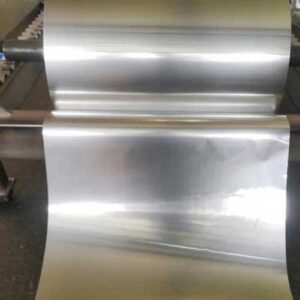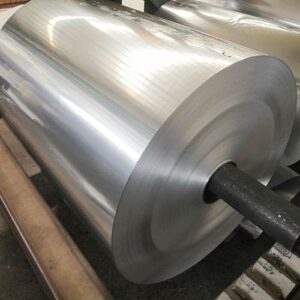
5052 H18 Aluminum Foil for Honeycomb Core


| Name | 5052 H18 Aluminum Foil for Honeycomb Core |
| Thickness | 0.01-0.06 mm |
| Width | 100 mm – 2600 mm,Customize |
| Surface | Chromide |
| Technical | Cold rolling (CC)、Temper: H18 |
5052 H18 aluminum foil for honeycomb core: A comprehensive guide
Honeycomb core structures have long stood at the forefront of lightweight, high-strength design across aerospace, automotive, marine, and industrial sectors. A critical component in many honeycomb assemblies is the aluminum foil that forms or reinforces the core structure or acts as a carrier/plating layer in hybrid configurations. Among the available foil options, 5052 H18 aluminum foil stands out for its combination of ductility, corrosion resistance, formability, and adhesive compatibility, which are essential for reliable honeycomb core performance.
This article provides a detailed, evidence-based examination of 5052 H18 aluminum foil for honeycomb core, including material chemistry, properties, processing steps, applications, supplier perspectives (with a focus on Eco Alum), comparisons with alternative foils, and practical guidance for engineers, product designers, and procurement professionals.
What is 5052 H18 aluminum foil for honeycomb core?
Composition, temper, and fundamental meaning
5052 is a non-heat-treatable aluminum-magnesium alloy. Its key alloying element is magnesium (Mg), typically around 2.2–2.8%, with other minor elements such as chromium (Cr) contributing to corrosion resistance.
The H18 temper designation indicates a specific level of strain hardening (work hardening) and partial annealing to reach a stable, high-strength condition suitable for foil applications.
In general terms, H18 foils are harder and stronger than annealed or less-strained temper designations (for example, O or H32), while retaining ductility that allows for bending, shaping, and bonding in composite configurations. The exact strength and elongation values depend on thickness, processing history, and production controls.
In practice, 5052 H18 aluminum foil for honeycomb core is produced in very thin gauges (commonly in the range of 0.02 mm to 0.25 mm, i.e., 20–250 microns, depending on application).
The foil is often used in one of two ways in relation to honeycomb cores:
– As a component in aluminum honeycomb cores where the foil acts as a layer within or on the surface of the core, providing structural continuity and bonding characteristics.
– As a face-sheet or skin material in sandwich constructions that employ an aluminum honeycomb core, improving surface finish and load transfer between face sheets and the honeycomb.
Why 5052 H18 is attractive for honeycomb core
- Corrosion resistance: The magnesium-rich 5052 alloy exhibits excellent corrosion resistance in marine and humid environments, which is crucial for aerospace and automotive components exposed to moisture, salt spray, and other corrosive factors.
- Formability and ductility: The H18 temper affords higher yield and tensile strength relative to softer tempers while preserving ductility. This helps with bonding and forming processes used in core assembly and edge finishing.
- Bonding compatibility: Adhesives and bonding agents commonly employed in honeycomb core assemblies often perform well with 5052-H18 foil, enabling robust structural bonding without sacrificing integrity under service loads.
- Process compatibility:Foils of 5052 H18 can be co-rolled, surface-treated, and finished to support consistent core geometry, minimize defects, and facilitate downstream forming and assembly.

Properties and performance data for 5052 H18 aluminum foil
The performance of 5052 H18 foil in honeycomb core contexts depends on thickness, processing, surface finish, and pairing with other core components.
The values below are representative ranges intended to guide design decisions and supplier conversations.
They should not substitute for certified data from a supplier’s mill test report (MTR) or a materials testing laboratory.
Mechanical properties (typical ranges)
- Thickness: 0.02–0.25 mm (20–250 microns); common honeycomb applications use 0.03–0.08 mm thickness ranges for foil layers.
- Tensile strength (approximate, MPa): 250–450 MPa (depending on thickness and precise processing). In H18, the foil is significantly stronger than O-grade or lower temper foils, with strength increasing with reduced thickness and deeper strain-hardening.
- Yield strength (approximate, MPa): 150–350 MPa (varies with gauge and exact temper). H18 foils generally show higher yield than softer tempers.
- Elongation at break (percent): 5–15% (dependent on thickness and foil processing, with thinner foils often showing higher elongation relative to their thickness due to retained ductility).
- Hardness (Vickers, approx): 60–110 HV, depending on thickness and strain-hardening level.
Note: All mechanical properties are sensitive to thickness and processing. For design and qualification work, insist on supplier mill test reports (MTRs) and, where necessary, on-site testing results to confirm compliance with project requirements.
Physical properties and environmental resistance
- Density: approximately 2.70 g/cm³ for typical 5052 alloys; 5052 itself is among the lighter aluminum alloys, contributing to the overall low weight of honeycomb cores.
- Thermal conductivity: around 140–170 W/m·K (approximate; varies with temper and thickness). Aluminum’s thermal conductivity is high, which can be a factor in thermal management considerations for certain core architectures.
- Thermal expansion: around 22–24 x 10^-6 /°C; this low coefficient helps minimize thermal mismatch with adjacent materials in many composites.
- Corrosion resistance: excellent in ambient and marine environments; Cr and Mg additions improve resistance to corrosion and stress-corrosion cracking in many service conditions.
Surface finish and compatibility
- Surface finish options: mill finish, brushed, chemical brightened, or coated surfaces depending on the supplier and process line. For honeycomb core interfaces, surface smoothness helps with adhesive wet-out and uniform bonding.
- Adhesive compatibility: 5052 H18 foils typically bond well with epoxy and structural adhesives used in core bonding. Surface treatments like chemical etching or anodizing can further improve bonding performance but may alter corrosion characteristics or thickness.
Durability and environmental performance in service
- Fatigue resistance: aluminum alloys used in honeycomb cores must sustain repetitive loading without significant crack initiation. 5052 H18’s combination of strength and ductility provides good fatigue resistance under many load profiles, though design should account for stress concentration at core edges and interfaces.
- Impact resistance: aluminum foils contribute to core resilience by distributing loads across the honeycomb structure; the foil’s ductility helps absorb energy without brittle failure.
- Environmental stability: the alloy’s corrosion resistance helps mitigate long-term degradation from humidity, salt spray, and chemical exposure in aerospace, marine, and automotive environments.

Manufacturing and processing of aluminum foil for honeycomb cores
Understanding how 5052 H18 aluminum foil is produced and prepared helps engineers specify the right foil for honeycomb cores and anticipate performance in manufacturing environments.
The typical production workflow includes continuous casting (ingot) → hot rolling → cold rolling → annealing → tempering (strain hardening → H18) → slitting to foil gauge → surface finishing → packaging and inspection.
Key processing steps
- Ingot casting and homogenization
- The process starts with carefully controlled alloy composition to achieve the desired Mg and Cr levels, followed by homogenization at high temperature to achieve uniform distribution.
- Homogenization helps reduce internal segregation and improve downstream formability and bonding.
- Hot rolling
- The ingot is hot rolled into thick slabs or sheets. This step produces a first reduction in thickness and begins to refine microstructure.
- Cold rolling
- The hot-rolled sheet is further reduced via cold rolling to produce the foil thickness in the 0.02–0.25 mm range. Tight control of thickness is essential to achieve uniform adhesion and consistent honeycomb core geometry.
- Annealing and tempering
- After cold rolling, the sheet is annealed to restore ductility (if necessary) and then undergoes strain hardening to reach the H18 temper. This tempering involves precise levels of cold work and stabilization steps to achieve the target mechanical properties.
- Surface treatment
- Foil surfaces may receive chemical or electrolytic treatment to remove oxides, improve wetting, or enhance adhesion with adhesives. Some applications also require protective coatings to improve moisture resistance or reduce interaction with bonding agents.
- Slitting and winding
- Foil is slit into required widths and wound onto cores. Tolerances must be tightly controlled to ensure uniform core geometry and predictable bonding behavior.
- Inspection and testing
- Mill test reports (MTRs), coating thickness measurements, adhesion tests, and corrosion resistance testing are typical quality-control steps before shipment.
Core assembly considerations
- Edge quality: Even minor edge defects can propagate under bonding and loading, so edge finishing and burr removal are essential.
- Surface cleanliness: Residues from processing must be removed to ensure proper adhesive bonding. Cleanliness standards are often defined by the project’s adhesive system and supplier guidelines.
- Compatibility with core geometry: Foil thickness and stiffness influence the honeycomb core’s stiffness, shear performance, and energy absorption. Designers should verify that foil properties align with core cell size, wall thickness, and face sheet thickness.
Quality standards, testing methods, and certifications
Quality assurance is critical given the structural roles honeycomb cores play in critical applications. The following standards and practices commonly apply to 5052 H18 aluminum foil used in honeycomb cores:
- Material standards: Aluminum Association designations, and relevant aerospace and automotive standards, specify composition, temper, thickness tolerances, and mechanical properties for 5052 alloys.
- Tensile testing: Standard tensile tests at ambient temperature to determine yield strength, ultimate tensile strength, and elongation. Tests are typically conducted on representative foil samples at defined gauge lengths.
- Microstructural analysis: Microscopy and microhardness testing to verify strain-hardening level and consistency of the metallurgical structure after tempering.
- Surface finish tests: Visual inspection, thickness uniformity assessments, and surface roughness measurements (if required by bonding processes).
- Corrosion testing: Salt spray or humidity tests to ensure corrosion resistance meets project requirements, especially for marine or salty environments.
- Traceability: Mill test reports (MTRs) and material traceability documentation to connect material lots back to processing records.
When sourcing 5052 H18 aluminum foil for honeycomb cores, it is prudent to request a supplier’s data package that includes:
– Chemical composition analysis
– Mechanical property data for the specific thickness and temper
– Surface finish description and treatment details
– Thickness tolerance and flatness data
– Adhesion compatibility information with common core bonding systems
– Certifications (e.g., ISO 9001/13485, AS9100 for aerospace suppliers, and relevant automotive quality standards)
Applications and case studies
5052 H18 aluminum foil for honeycomb core is employed in a wide range of sectors. The following examples illustrate typical design considerations and performance expectations:
Aerospace
- Structural sandwich panels in aircraft interiors and aerostructures
- Core skins and protective layers where moisture resistance and durability are critical
- High-durability skins in segments exposed to vibration and temperature cycling
Automotive and ground transportation
- Lightweight structural panels, components for electric vehicles where weight reduction improves range
- Exterior and interior panels with honeycomb cores that require stable bonding and long-term environmental resistance
Marine and offshore industries
- Hull panels and interiors subject to salt spray, humidity, and potential corrosion
- Substructures in yachts and ships where weight reduction is beneficial but corrosion risk remains high
Industrial and consumer products
- Insulated panels and protective casings
- Packaging and transportation containers that rely on lightweight, stiff cores
In practice, 5052 H18 foil supports core designs that require enhanced ductility for edge forming and robust bonding with epoxy or structural adhesives, while maintaining resistance to environmental exposure that is typical in marine and offshore service.
5052 H18 Aluminum Foil for Honeycomb Core VS Alternative Alloys
| Feature / Alloy | 5052 H18 foil (for honeycomb core) | 4343 foil | 1235 aluminum foil | 5059 or 5083 (alternative for specific cores) |
|---|---|---|---|---|
| Primary alloying elements | Mg (2.2–2.8%), Cr (0.15–0.35%) | Si + Al (for 4343) | Al purity, minor Mn + others | Mg-rich, higher Mg content variations |
| Typical thickness (foil) | 0.02–0.25 mm | 0.03–0.2 mm | 0.02–0.05 mm | 0.02–0.25 mm depending on grade |
| Temper range | H18 (strain-hardened) | O/H18 for some forms; often H12/H16 variants | O for maximum ductility | H32/H34/H18 depending on mechanical needs |
| Tensile strength (approx MPa) | 250–450 MPa | 130–260 MPa | 110–170 MPa (low strength foil) | 180–350 MPa depending on strain-hardening |
| Corrosion resistance | Excellent in marine environments | Good to excellent | Moderate to good | Good to excellent; depends on alloying |
| Formability in bonding processes | High ductility with good wet-out | Moderate | High ductility | Moderate to high depending on temper |
| Bonding compatibility | Strong with epoxies and structural adhesives | Good with adhesives | Adhesive compatibility varies | Requires compatibility checks with adhesive system |
| Cost and availability | Widely available; cost moderate to high based on thickness | Generally lower cost than 5052 in some grades | Lower cost; widely available | Varies; premium in higher-strength variants |
| Typical applications | Core foils, skins, sandwich cores, high-durability panels | General foil uses; electronics, shielding, packaging | Light-gauge foil for flexible packaging | Specialized cores with high strength or corrosion resistance requirements |
Notes:
– In practice, a specific project’s design data, bonding method, environmental exposure, and service temperature will drive the final choice. For high-moisture or salt- spray environments, 5052-based foils often provide an excellent balance of strength, ductility, and corrosion protection.
– Some applications may use multiple foil types in a layered core or as a combination of core structures to optimize stiffness and impact resistance.
Practical takeaways
- If you require higher strength and corrosion resistance with strong bonding potential in a marine or aerospace context, 5052 H18 foil is a strong candidate.
- If cost minimization is a primary driver and the application tolerates lower strength or different bonding characteristics, alternative alloys such as 4343 or 1235 may be considered, recognizing any trade-offs in corrosion resistance or mechanical performance.
Supplier perspective: Introduction to Eco Alum
About Eco Alum
Eco Alum is a well-established supplier in the metals market, with a focus on aluminum and steel products for structural and industrial applications.
Their portfolio includes aluminum foil, sheets, and coils suitable for honeycomb core manufacturing, as well as related processing services such as surface treatment, slitting, and packaging.
Eco Alum emphasizes quality control, traceability, and responsive customer service to meet the stringent demands of industries like aerospace, automotive, and marine engineering.
Key capabilities:
– Extensive mill and process testing: Prospective buyers can request full mill test reports (MTRs) and coating/adhesion data for 5052 H18 foils.
– Customization options: Thickness, width, surface finish, and temper can often be tailored to project requirements, enabling optimized bonding and appearance.
– Global logistics: Eco Alum supports international procurement with packaging that protects foil integrity during transit and minimizes damage risk.
– Quality management: Certifications such as ISO 9001 and specialized aerospace/automotive quality standards are frequently pursued or provided by the supplier, enabling compliance with industry requirements.
Why choose Eco Alum for 5052 H18 aluminum foil for honeycomb core
- Proven track record: The supplier’s experience with foil and sheet products for honeycomb cores helps ensure an understanding of the tolerances, surface finishes, and bonding performance needed in high-end core assemblies.
- Technical support: Engineers and materials specialists can assist in evaluating how 5052 H18 foil interacts with adhesives, core geometry, and face-sheet materials in a given honeycomb design.
- Supply chain reliability: In projects with tight schedules or long lead times, Eco Alum’s sourcing network and logistics capabilities can help stabilize procurement and reduce risk.
Economic considerations: Cost, availability, and supply chain
The price of 5052 H18 aluminum foil for honeycomb cores is influenced by a number of factors, including raw material costs (aluminum ingot market), foil thickness, required tolerances, surface treatments, and lead times. In general:
- Thinner foils (e.g., 20–60 microns) tend to be less expensive per unit area but may require more precise handling and increased process steps to ensure uniform adhesion and core geometry.
- Thicker foils (e.g., 100–250 microns) deliver higher stiffness and stiffness-to-weight ratios in some core designs but carry higher material costs and might impact bonding strategies.
- Surface treatments and coatings add cost but can greatly improve adhesive wet-out, corrosion protection, and service-life in demanding environments.
- Supply chain stability is crucial for aerospace and defense programs; vendors who can commit to lot traceability, MTRs, and consistent quality controls provide valuable risk mitigation.
A practical approach to cost management includes:
– Early supplier collaboration to define the optimum foil gauge for the honeycomb geometry and load conditions
– Requesting multiple quotes and conducting a rapid appraisal of vendor capability beyond price, including lead times, QA procedures, and post-sale support
– Benchmarking against alternative alloys only after a thorough assessment of performance requirements, service conditions, and total cost of ownership
Eco Alum and other reputable suppliers can help you create a robust procurement plan by providing samples, test data, and pilot runs to validate the 5052 H18 foil’s performance in your specific honeycomb core design.
FAQs About 5052 H18 Aluminum Foil for Honeycomb Core
1) What makes 5052 H18 suitable for honeycomb core applications?
– The alloy provides a balance of corrosion resistance, good formability after strain hardening, and compatibility with common adhesives used in honeycomb core manufacturing. The H18 temper provides higher strength than softer tempers while maintaining ductility necessary for bonding and forming.
2) How does 5052 H18 compare to 4343 or 1235 foil for cores?
– 4343 tends to offer very good corrosion resistance and formability but lower strength than 5052 H18. 1235 is an aluminum pure-foil grade with excellent formability but limited strength. In core applications requiring higher strength and good bonding with adhesives, 5052 H18 often provides a more favorable combination of properties.
3) What thickness range is typical for honeycomb core foil?
– Common thicknesses range from 0.02 mm to 0.08 mm (20–80 microns) for many core configurations, with some specialized designs using up to 0.25 mm. The exact choice depends on cell geometry, stiffness requirements, and bonding constraints.
4) What standards should I specify when ordering 5052 H18 foil for honeycomb cores?
– Request a mill test report (MTR) with chemical composition, temper, mechanical properties for the specific gauge, surface finish description, thickness tolerances, and adhesion compatibility data with your chosen bonding system. Depending on the application, you may also require ISO 9001/AS9100 or equivalent certifications.
5) Can 5052 H18 foil be used in conjunction with other core materials?
– Yes. In hybrid honeycomb cores, 5052 H18 foil can be combined with other core materials (such as Nomex, paper, or aramid-based foams) or used as a face-sheet interface. The combination should be validated for bonding compatibility, thermal and moisture exposure, and overall structural performance.
Conclusion
5052 H18 aluminum foil for honeycomb core offers a compelling combination of strength, ductility, corrosion resistance, and bonding compatibility that makes it a strong candidate for modern sandwich structures.
Whether used as part of an aluminum honeycomb core or as a reinforcing layer in core assemblies, 5052 H18 foil supports reliable performance in aerospace, automotive, marine, and industrial applications.
The alloy’s capacity to bond well with common structural adhesives, its stability under environmental exposure, and its adaptability to tight tolerances align well with the demanding requirements of high-performance honeycomb cores.
Choosing the right supplier—such as Eco Alum, with attention to mill test data, process controls, and post-processing capabilities—enhances confidence in the final product.
A well-structured procurement plan that emphasizes data-driven specifications, thorough testing, and supplier collaboration reduces risk and accelerates product development timelines.
For engineers and buyers, a clear understanding of the trade-offs among foil thickness, temper, cost, and bonding compatibility is essential to achieving optimal core performance and lifecycle value.