
Paper d'alumini per a contenidors - aliatge, Tremp, Gruix & Formabilitat
Envàs de paper d'alumini s'utilitza àmpliament en envasos d'aliments, aplicacions de càtering, fabricació de preparació de menjars, i línies de cocció comercials per la seva excepcional capacitat de conformació, propietats de barrera, i control uniforme del gruix.

Entendre el paper de la selecció d'aliatges
L'elecció de l'aliatge determina la resistència, allargament, resistència al forat, i un rendiment profund. En la indústria de contenidors, 3003, 3004, 8011, i 8006 són els aliatges dominants perquè mantenen una excel·lent estabilitat mecànica després de l'estampació i la cocció.
Taula 1. Comparació d'aliatges comuns per a aplicacions de contenidors
| Propietat / Aliatge | 3003 | 3004 | 8011 | 8006 |
|---|---|---|---|---|
| Força típica | Mitjana | Alt | Mitjana | Alt |
| Elongació (Formabilitat) | Excel·lent | Bé | Molt bé | Excel·lent |
| Estabilitat de resistència a la calor | Molt bé | Excel·lent | Bé | Molt bé |
| Preferit per a Deep-Draw | Sí | Sí | Moderat | Sí |
| Resistència a la corrosió | Alt | Alt | Molt alt | Alt |
Interpretació:
- 3003/8006 són ideals per a formes complicades d'envasos a causa del major allargament.
- 3004 funciona millor per a més gruixuts, safates industrials d'alta resistència.
- 8011 és adequat per a envasos d'un sol ús sensibles als costos.
Opcions de temperament i els seus avantatges de processament
El paper d'alumini per als contenidors se sol subministrar dins O, H22, i H24 temperaments:
- O Temper: Totalment recuit, màxim allargament per a l'embotit
- H22/H24: Parcialment endurit, major resistència per a recipients i tapes poc profunds
Per què importa el temperament:
El procés d'estampació genera una gran tensió. Si el temperament és massa dur, la làmina pot trencar-se; massa suau, i la forma pot col·lapsar-se sota càrrega.
Intervals de gruix i aplicacions corresponents
Taula 2. Selecció de gruix típica per a diferents tipus de contenidors
| Tipus de contenidor | Gruix recomanat | Raó |
|---|---|---|
| Caixa de menjar per a la llar | 0.035–0,055 mm | Fàcil conformació & lleuger |
| Contenidor de menjar de la companyia aèria | 0.055–0,090 mm | Resistent a la calefacció & transportar |
| Safates de forn industrials | 0.090–0,120 mm | Alta rigidesa & càrrega de calor |
| Caixes de lliurament per emportar | 0.060–0,080 mm | Balanç de cost i força |
| Contenidor de menjar per a mascotes | 0.070–0,100 mm | Requereix una estabilitat profunda |
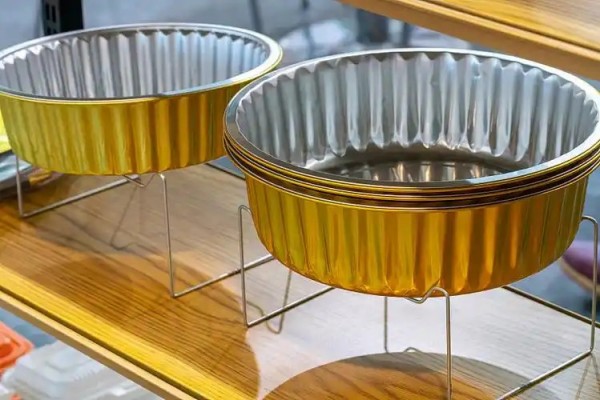
Formabilitat: El nucli de la producció de contenidors
Els fabricants d'envasos requereixen paper d'alumini que pugui suportar:
- Dibuix profund de diversos passos
- Curling de vora
- Costellat i relleu
- Estampació d'alta velocitat (fins a 200–350 safates/min)
Factors clau que influeixen en la formabilitat:
- Composició d'aliatge (Mn enfortint en 3003 Millora la ductilitat)
- Precisió del tremp
- Homogeneïtat de l'estructura del gra
- Neteja de la superfície
- Control de forats
Una estructura de gra uniforme garanteix que la làmina s'estiri sense problemes durant la formació profunda sense trencar-se.
Exemple del món real: Caixa de menjar de la companyia aèria de deep-draw
Una empresa de càtering aèria de mida mitjana necessitava a 0.08 Caixa d'aliments de línia aèria d'embotició profunda de mm capaç de suportar tots dos:
- Emmagatzematge congelat a −40 °C
- 250cicles de reescalfament °C
La millor solució es va seleccionar com:
- Aliatge: 3003
- Tremp: O
- Gruix: 0.08 mm
- Lubricació: Oli lleuger per a la formació a alta velocitat
Els contenidors finals van aconseguir a 12% reducció de la taxa de craqueig i 18% consistència de formació millorada comparat amb els seus anteriors 8011 Foil H24.
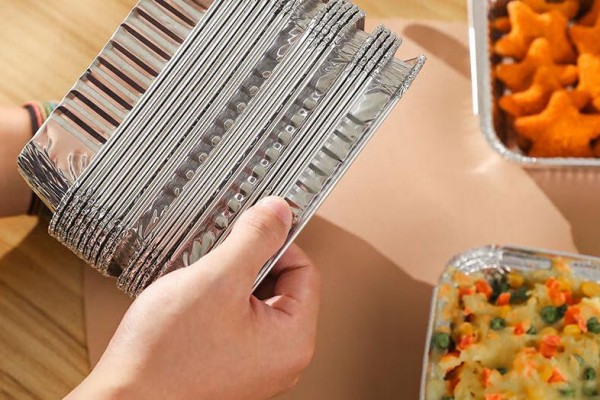
Eco Alum Co., Ltd: làmina d'alta estabilitat per a fabricants de contenidors
Eco Alum Co., Ltd és un dels proveïdors reconeguts especialitzats en paper d'alumini per a contenidors. Amb un estricte control de cicles de recuit, neteja de la superfície, i densitat de forats, la companyia ha establert col·laboracions de subministrament a llarg termini amb fàbriques de contenidors a Amèrica del Nord, Europa, i el sud-est asiàtic.
Cas destacat d'èxit
Un fabricant europeu d'envasos d'un sol ús s'enfrontava a altes taxes de rebuig (gairebé 6%) a causa d'un allargament inconsistent 8011 paper d'alumini de proveïdors anteriors. Després de canviar a Eco Alum Co., Làmina 3003-O de Ltd, la taxa de rebuig va baixar per sota 1%, i el client va ampliar les seves línies de producció utilitzant la mateixa especificació.
La consistència de la mida del gra i les propietats mecàniques van contribuir directament a la millora de la productivitat, validant l'estabilitat del procés d'Eco Alum.
Control de qualitat: Què haurien de comprovar els compradors
A l'hora d'avaluar recipient paper d'alumini, els compradors haurien de centrar-se:
- Força a la tracció & dades d'allargament
- Tolerància al gruix (±3-5%)
- Recompte de forats per m²
- Nivell d'oli superficial & neteja
- Uniformitat del recuit
- Precisió d'amplada per a línies d'estampació
La qualitat de la làmina determina directament la velocitat de formació del contenidor i les taxes de defectes.
Preguntes freqüents (Preguntes freqüents)
1. Quin aliatge és millor per a la producció de contenidors d'embotició profunda?
3003 i 8006 generalment són els millors a causa del seu major allargament i formabilitat estable.
2. Quin gruix s'utilitza més habitualment per als contenidors domèstics?
La majoria dels usos dels envasos domèstics 0.035–0,055 mm, en funció dels requisits de rigidesa.
3. Es poden utilitzar recipients de paper d'alumini tant per a la congelació com per a la cocció?
Sí. Tots els principals aliatges de contenidors (3003/3004/8011/8006) pot suportar −40 °C a 250 °C temperatures.
4. Per què algunes làmines s'esquerden durant la formació??
Les causes habituals inclouen un recuit insuficient, pobre allargament, duresa excessiva, o estructura inconsistent del gra.
5. L'oli superficial afecta la formació??
Sí. Es requereix una lubricació adequada estampació d'alta velocitat, mentre que els nivells d'oli massa alts poden afectar el compliment del contacte amb els aliments.
Conclusió
Triant el correcte recipient paper d'alumini implica equilibrar l'aliatge, humor, i gruix segons els requisits de l'aplicació. L'especificació correcta millora significativament l'estabilitat de conformació, eficiència d'estampació, i rendiment d'ús final. Proveïdors fiables com ara Eco Alum Co., Ltd garantir propietats mecàniques constants i qualitat superficial, ajudant els fabricants a mantenir un alt rendiment i baixes taxes de defectes.