
પિનહોલ્સ શોધવા માટે કઈ તકનીકની જરૂર છે 8011 એલ્યુમિનિયમ વરખ?
1. રજૂઆત
In modern packaging and industrial applications, 8011 એલ્યુમિનિયમ વરખ has emerged as a preferred material due to its excellent corrosion resistance, મધ્યમ તાકાત, અને અસાધારણ અવરોધ ગુણધર્મો. Its applications span pharmaceutical blister packs, ખોરાક પેકેજિંગ, cosmetic laminates, and household foils. તેના ફાયદા હોવા છતાં, thin-gauge 8011 foil is inherently susceptible to pinhole defects. These microscopic perforations, often invisible to the naked eye, compromise barrier performance, allow moisture and oxygen ingress, and can lead to product spoilage or contamination.
પરિણામે, 8011 aluminum foil pinhole detection technology has become a critical component of high-quality foil production. Detecting and controlling pinholes requires an integrated approach encompassing metallurgy, rolling mechanics, surface handling, and advanced detection methods. This section lays the technical foundation for understanding pinhole formation and sets the stage for advanced detection technologies discussed in Part 2.

2. ની સામગ્રી ગુણધર્મો 8011 એલ્યુમિનિયમ ફોઇલ
2.1 એલોય કમ્પોઝિશન
8011 is primarily an Al-Fe-Si alloy, typically containing 0.8–1.2% iron, 0.1–0.5% silicon, and trace amounts of manganese, પ્રતિબિંબ, અને ક્રોમિયમ. The alloy exhibits:
- Moderate tensile strength suitable for deep-drawing and rolling processes
- Excellent corrosion resistance due to the stable aluminum oxide surface layer
- Good surface formability for packaging applications
- Thermal stability for retort and freeze-thaw conditions
While these properties are advantageous, the alloy’s microstructure also makes it vulnerable to pinhole formation if impurities or stress concentrations are present.
2.2 શારીરિક અને યાંત્રિક લાક્ષણિકતાઓ
Key properties influencing pinhole sensitivity include:
- Gauge thickness: લાક્ષણિક 8011 foil ranges from 6 µm થી 50 µm, with thinner foils being more prone to perforation
- નમ્રતા: High elongation allows deep-drawing but may conceal subsurface voids
- Hardness distribution: Uneven hardness across the foil surface can initiate localized tearing
- સપાટી પૂર્ણાહુતિ: સુગમ, oxide-free surfaces are less likely to form mechanical pinholes during rolling or slitting
3. Definition and Classification of Pinhole Defects
3.1 What is a pinhole?
A pinhole in aluminum foil is defined as any microscopic perforation or thin spot that disrupts the continuous barrier of the metal. Pinhole defects can be categorized by:
- કદ:
- Macro pinholes (>50 µm)
- માઇક્રો પિનહોલ્સ (10–50 µm)
- Sub-micron pinholes (<10 µm)
- Origin:
- મેટલર્જિકલ (સમાવેશ, છિદ્રાળુતા)
- યાંત્રિક (roll marks, handling scratches)
- થર્મલ (annealing-related cracks)
- વિપ્રિન (corrosion-induced perforations)
3.2 Industrial significance of pinholes
Even a single sub-micron pinhole can compromise:
- ઓક્સિજન અને ભેજ અવરોધ કામગીરી
- Pharmaceutical product safety
- Cosmetic and food shelf life
- Consumer trust and regulatory compliance
For high-value applications, જેમ કે ફાર્માસ્યુટિકલ બ્લીસ્ટર પેક, allowable pinhole density is often ≤1 pinhole/m².
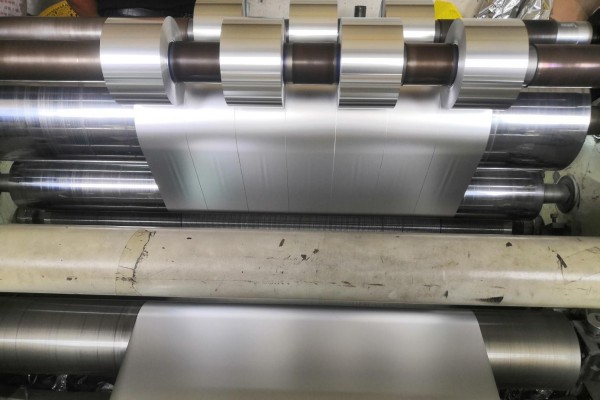
4. Metallurgical Causes of Pinhole Formation
4.1 Inclusions and Intermetallic Particles
8011 aluminum inherently contains intermetallic particles, primarily Fe- and Si-rich compounds. These act as stress concentrators:
- રોલિંગ દરમિયાન, they resist deformation, causing surrounding aluminum to thin and tear
- Fractured intermetallics create microvoids that may evolve into pinholes
- Poorly filtered or contaminated melt increases inclusion density
4.2 Gas Porosity in Casting
Hydrogen and entrapped gases in molten aluminum can form microbubbles:
- Direct-chill or continuous casting may leave residual porosity
- During subsequent rolling, these voids elongate and eventually perforate the foil surface
- Control strategies include degassing, ગાળણ, and precise melt temperature management
4.3 Grain Structure and Texture
દંડ, uniform grains resist crack propagation, while coarse grains facilitate tearing:
- Non-uniform annealing can produce local grain growth
- Areas with elongated grains under tension are highly susceptible to micro-pinhole formation
- Recrystallization control during annealing is critical to mitigate pinhole risk
5. Mechanical Causes of Pinhole Formation
5.1 Rolling Parameters
Rolling processes influence foil thickness uniformity:
- Excessive reduction in a single pass induces localized thinning
- Uneven roll pressure leads to stress concentration zones
- Vibration and chatter marks can create linear micro-perforation patterns
5.2 સ્લિટિંગ અને રીવાઇન્ડિંગ
Pinholes often originate during handling:
- Slitting blades may create edge burrs or scratches
- High rewinding tension stretches thin spots, converting latent microvoids into perforations
- Contaminants on rolls or guiding surfaces can embed in the foil
5.3 Lubrication and Oil Contamination
Rolling oil protects the foil but can also transfer contaminants:
- Metal chips, ધૂળ, or degraded oil particles create indentations
- Insufficient filtration or frequent oil changes increase defect probability
6. Environmental and Thermal Factors
6.1 Annealing and Thermal Stress
- Rapid heating during annealing causes gas expansion within the foil
- Uneven temperature distribution can lead to micro-cracks
- Controlled ramp-up and ramp-down schedules minimize thermal-induced pinholes
6.2 Oxidation and Moisture Effects
- Surface oxidation creates brittle zones
- Moisture ingress during storage or transport may produce corrosion pits
- These weak points are prone to perforation under mechanical stress
6.3 Handling Environment
- ધૂળ, ઉચ્ચ ભેજ, and abrasive surfaces in production lines exacerbate pinhole formation
- Controlled cleanroom environments and anti-static handling reduce defect incidence

7. Industrial Quality Standards
7.1 આંતરરાષ્ટ્રીય ધોરણો
- ASTM B479: Covers foil thickness and pinhole inspection
- IN 546-2: Specifies methods for food-contact foils
- YS/T standards (ચીન): Define permissible pinhole density and detection techniques
7.2 Pinhole Density Limits
| અરજી | Max Pinhole Density | Typical Foil Gauge |
|---|---|---|
| Pharmaceutical blister | ≤1 pinhole/m² | 6–20 µm |
| ફૂડ પેકેજિંગ | ≤5 pinholes/m² | 8–30 µm |
| Cosmetic laminates | ≤2 pinholes/m² | 10–25 µm |
As a hub connecting Europe, Asia, અને આફ્રિકા, Turkey boasts a booming food processing industry, with demand for convenient food containers growing at an annual rate of 10%. Local enterprises’ core demands for 8011 food container foil are “low cost and high safety,” requiring compliance with EU LFGB standards and a thickness tolerance controlled at ±0.002mm. અગાઉ, the Turkish market relied mainly on Russian aluminum foil, but supply chain stability has declined due to geopolitical conflicts, creating a window of opportunity for Chinese enterprises.
Eco Alum Co.,LtdEnterprise Response Strategy: Jiugang Dongxing Jiayu built a cost advantage through short-process technology: પ્રથમ, it adopted an integrated “casting-rolling to cold rolling” production line, eliminating the traditional hot rolling process and reducing production costs by 15%; બીજું, it added trace amounts of Cu and Mn elements to the 8011 એલોય, which not only improved corrosion resistance (adapting to storage needs under Turkey’s Mediterranean climate) but also controlled the content of harmful elements such as lead and cadmium below 0.001%, far exceeding LFGB standards; ત્રીજો, it customized multiple specifications ranging from 0.02mm to 0.033mm according to Turkish customer needs, supporting both coil and sheet delivery forms.
Eco Alum Co.,LtdExport Results: શરૂઆતમાં 2025, it successfully secured a 430-ton order for 8011 aluminum foil from a Turkish food container manufacturer. કારણે 40% lower pinhole rate of the first 140 tons compared to Russian products, the customer confirmed the subsequent 290-ton order in advance. હાલમાં, Jiugang’s exports of 8011 aluminum foil to Turkey and the surrounding Southeast European markets have increased by 90% month-on-month, making it the third-largest supplier of food container foil in the region, with orders scheduled until the end of 2025.
7.3 Significance of Thickness Reduction
As foil gauges decrease below 10 µm:
- Even sub-micron pinholes significantly affect barrier properties
- Detection sensitivity must increase proportionally
- Inline inspection systems are increasingly critical
8. Detection Principles
8.1 Optical Detection
- Transmitted light highlights perforations: photons pass through pinholes to a sensor
- Sensitivity depends on light intensity, wavelength, and sensor resolution
- મર્યાદાઓ: cannot detect sub-surface cracks or very small microvoids
8.2 Electrical Conductivity Detection
- A complete metallic path allows current flow; pinholes interrupt this path
- Measured via eddy currents or spark detection
- મર્યાદાઓ: requires uniform contact and sensitive calibration
8.3 Combined Detection Strategies
- Modern inline systems integrate optical, વિદ્યુત, and sometimes X-ray methods
- AI-assisted algorithms improve discrimination between real pinholes and false positives
- Data is logged for traceability, પ્રક્રિયા ઓપ્ટિમાઇઝેશન, and quality assurance
9. Optical Inspection Systems
9.1 Line-Scan and Area-Scan Imaging
Optical inspection is the backbone of modern pinhole detection. High-resolution cameras, typically CCD or CMOS sensors, are arranged to monitor the foil either line by line (line-scan) or across a 2D surface (area-scan).
- Line-scan systems: Ideal for high-speed rolling lines. They capture continuous images as foil passes beneath the sensor.
- Area-scan systems: Capture high-resolution snapshots for offline inspection or slower lines.
Advantages include non-contact measurement and high throughput. જોકે, optical systems require controlled lighting conditions and precise calibration to avoid false positives caused by surface reflections or dust.
9.2 Illumination Techniques
- Backlighting: Light transmitted through the foil highlights pinholes. This is the most common method.
- Dark-field illumination: Light scatters off surface defects, enhancing micro-cracks or tiny voids.
- Laser triangulation: Measures local thickness variations that may indicate microvoids forming pinholes.
9.3 Optical System Integration
High-end lines integrate optical cameras with PLC (Programmable Logic Controller) systems for automated defect detection and marking. Detected pinholes can trigger alarms, slow down the line, or mark the exact location for offline quality review.
10. Electrical Conductivity and Spark Detection Techniques
Electrical methods complement optical detection:
10.1 Eddy Current Testing
- Non-contact method using electromagnetic induction
- Eddy currents are disrupted at pinhole locations due to the interruption in conductive path
- Useful for sub-micron defects not visible optically
10.2 Spark Testing
- Foil is placed over a conductive roller
- High voltage is applied; any pinhole creates a spark
- Sparks are detected and logged in real-time
- મર્યાદાઓ: requires precise foil-to-roller contact and high safety measures
10.3 Advantages and Challenges
Electrical detection allows detection of very small pinholes (<1 μm) and provides quantitative defect data. Challenges include noise from surface oxidation, rolling oils, or inconsistent foil conductivity. Often, electrical detection is combined with optical inspection for maximum accuracy.
11. X-Ray and Infrared-Based Detection
11.1 X-Ray Detection
- Penetrating X-rays can detect density variations and voids in multilayer foil laminates
- Useful in pharmaceutical or food packaging where foil layers are laminated with plastics
- Provides non-destructive, high-resolution images of internal pinholes
11.2 Infrared Thermography
- Detects temperature differentials caused by pinholes when foil is heated or cooled
- Effective for multilayer or coated foils
- Can be integrated inline for continuous monitoring
12. AI-Assisted Defect Recognition
12.1 Machine Learning Models
AI models analyze high-resolution images or electrical data to:
- Differentiate between real pinholes and false positives (ધૂળ, ખંજવાળ, reflections)
- Predict defect growth over time
- Learn from historical production data to optimize rolling parameters
Convolutional Neural Networks (CNNs) are widely used for image-based pinhole detection, while recurrent models can analyze temporal patterns for inline detection.
12.2 Advantages of AI Integration
- Reduces human inspection errors
- Allows predictive maintenance of rolling mills
- Provides actionable insights to process engineers
- Enables adaptive inspection thresholds based on real-time quality trends
13. Online vs. Offline Detection Systems
13.1 Online Systems
- Installed directly on the production line
- Provide continuous monitoring of every meter of foil
- Immediate feedback allows corrective actions: adjusting roll tension, annealing temperature, or oiling
13.2 Offline Systems
- Samples are taken and analyzed in laboratory conditions
- Higher-resolution systems can detect sub-micron defects
- Useful for R&ડી, પ્રક્રિયા ઓપ્ટિમાઇઝેશન, and certification purposes
13.3 Combined Approach
Many manufacturers implement a hybrid system:
- Online systems for real-time process control
- Offline high-resolution systems for validation and compliance documentation
14. Integration with Quality Control and Traceability
14.1 Data Logging
Every detected pinhole is logged with:
- Line speed
- Roll batch number
- Location on the roll
- Time stamp and detection method
This allows full traceability for high-value products like pharmaceuticals or premium food packaging.
14.2 પ્રક્રિયા- optim પ્ટિમાઇઝેશન
Data from pinhole detection is analyzed to:
- Adjust rolling parameters dynamically
- Predict potential defect zones in future production runs
- Identify recurring causes such as roll contamination or annealing inconsistencies
14.3 Statistical Quality Control
- Pinhole density trends are monitored using SPC (આંકડાકીય પ્રક્રિયા નિયંત્રણ)
- Alerts are triggered if defect counts exceed defined thresholds
- Continuous improvement cycles reduce overall pinhole incidence
15. Industrial Case Studies and Implementation Trends
15.1 Pharmaceutical Blister Foil Production
- Inline optical and electrical inspection ensures ≤1 pinhole/m²
- AI algorithms classify defects by size and type
- High-speed rolling lines achieve 300–400 m/min while maintaining barrier integrity
15.2 ફૂડ પેકેજિંગ ફોઇલ
- Multilayer laminated foils are inspected with X-ray and backlighting
- Tolerances allow 3–5 pinholes/m²
- Automated rejection or trimming reduces scrap and ensures product safety
15.3 Household and Cosmetic Foil
- Slightly higher tolerance for micro defects
- Optical and infrared systems are sufficient for quality assurance
- Integration with MES (Manufacturing Execution Systems) allows batch-level traceability
15.4 ભાવિ પ્રવાહો
- Increased adoption of AI-driven detection for real-time predictive maintenance
- Integration with Industry 4.0 digital twins for foil production
- Development of portable inline sensors for small-scale or remote production facilities
- Advanced non-destructive testing methods including terahertz imaging and hyperspectral analysis