
Tæknilegir kostir álpappírsefna í rafhlöðupökkun
Drifið áfram af hraðri útrás hins nýja orkuiðnaðar, Eftirspurn eftir litíum rafhlöðum heldur áfram að aukast. Rafhlöðupakkningar gegna afgerandi hlutverki við að ákvarða endingu rafhlöðunnar, orkuþéttleiki, og öryggisafköst. Vegna sérstakrar líkamlegrar, efna, og eiginleika samhæfni ferlis, álpappír hefur orðið að kjarna umbúðaefni. Byggt á stöðlum, gögn, og umsóknarmálum, þessi grein útskýrir kerfisbundið eiginleika og vinnslukosti álpappírs, veita viðmiðunargildi fyrir iðnaðarmenn og viðskiptavini.

ég. Bakgrunnur og efniskröfur iðnaðarins fyrir rafhlöðupakka
1.1 Kjarnaaðgerðir frumuumbúða og þróunarþróunar í iðnaði
Kjarnaaðgerðir rafhlöðupakkapökkunar eru ma:
- Líkamleg vernd: standast áhrif, gata, og aflögun til að vernda innri hluti
- Umhverfishindrun: koma í veg fyrir innkomu raka og súrefnis til að koma í veg fyrir skerðingu á frammistöðu
- Lokun og einangrun: einangra rafrásir og koma í veg fyrir skammhlaup eða raflausnsleka
Þróun litíum rafhlöðu stefnir í átt að meiri orkuþéttleika, aukið öryggi, lengri líftíma hringrásar, og létt hönnun. Raftæki fyrir neytendur leggja áherslu á ofurþunn og óregluleg form, rafmagnsrafhlöður setja offramboð í öryggismálum í forgang, og orkugeymslurafhlöður leggja áherslu á langtímastöðugleika og kostnaðarhagkvæmni. Hefðbundin efni eiga í erfiðleikum með að uppfylla þessar fjölbreyttu kröfur.
Álpappír og ál-plastfilmur, vegna léttleika þeirra, mikil hindrunarafköst, og sveigjanleika í vinnslu, hafa orðið ákjósanlegur efniviður fyrir poka og blað rafhlöður, með stöðugt vaxandi markaðssókn.
1.2 Kjarnakröfur um árangur fyrir frumuumbúðir
Helstu kröfur um frammistöðu fyrir umbúðaefni eru ma:
- Mikil hindrunarafköst:
- Flutningshraði vatnsgufu (Wvtr) ≤ 0.01 g/m²·dag
- Súrefnisflutningshraði (OTR) ≤ 0.005 cm³/m²·dag
- Vélrænir eiginleikar: hár togstyrkur, lenging, og gataþol
- Stöðugt hitaþéttingarárangur: hitaþéttingarstyrkur ≥ 35 N/15 mm
- Tæringarþol raflausna
- Létt og kostnaðarhagkvæmt
- Fylgni við umhverfisreglur eins og RoHS
1.3 Samanburður á almennum frumuumbúðum
Núverandi frumuumbúðir innihalda málmhylki, ál-plastfilmur, og plastfilmur. Samanburður er sýndur í töflu 1.
| Tegund efnis | Kjarnasamsetning | Afköst hindrunar | Vélrænn árangur | Létt stig | Sveigjanleiki í vinnslu | Raflausn viðnám | Kostnaður | Dæmigert forrit |
|---|---|---|---|---|---|---|---|---|
| Hús úr áli | Álblöndu | Frábært | Frábært (áhrif, þjöppun) | Miðlungs (Þéttleiki 2.7 g/cm³) | Aumingja | Miðlungs (krefst húðunar) | Miðlungs-Hátt | Prismatísk, sívalur frumur |
| Hús úr ryðfríu stáli | Ryðfrítt stál | Frábært | Frábært (hár styrkur) | Aumingja (Þéttleiki 7.9 g/cm³) | Aumingja | Frábært | High | Hágæða rafhlöður og sérhæfðar rafhlöður |
| Ál-plast filma | Álpappír + nylon + CPP | Frábært (nálægt málmi) | Gott (gataþol, lenging) | Frábært (50% léttari en málmhylki) | Frábært | Frábært | Miðlungs (minnkar með staðfærslu) | Poki og blað rafhlöður |
| Plastfilma | PET, CPP | Aumingja | Í meðallagi | Frábært | Frábært | Í meðallagi | Lágt | Lágmarks neytendafrumur |

Helstu niðurstöður:
Ál-plast filma, með álpappír sem kjarna hindrunarlag, veitir yfirvegaða hagræðingu á helstu frammistöðuvísum, sem gerir það mjög hentugur fyrir poka og blað rafhlöður. Frammistaða álpappírs ákvarðar gæði umbúða beint og verður að vera aðaláherslan í efnisvali.
II. Kjarnaeiginleikar álpappírs fyrir rafhlöðupakka
Álpappír sem notaður er í klefapökkun felur fyrst og fremst í sér háhreina álpappír (1050, 1060 röð) og álpappír (3003 röð). Með sérhæfðum veltingum og yfirborðsmeðferðarferlum, þessi efni veita mikilvægan stuðning fyrir frammistöðu frumupakkninga.
2.1 Grunneiginleikar álpappírs
2.1.1 Líkamlegir eiginleikar
- Léttur: Þéttleiki 2.7 g/cm³ (þriðjungur af ryðfríu stáli), bæta orkuþéttleika
- Mikil sveigjanleiki: lenging 8–20%, hægt að rúlla í ≤ 5 μm, hentugur fyrir djúpteikningu
- Góð hitaleiðni: 237 W/(m·K), auka hitastöðugleika
2.1.2 Efnafræðilegir eiginleikar
- Myndar náttúrulega þétt 2–5 nm Al₂O₃ oxíðlag við stofuhita, sem býður upp á innri oxun og tæringarþol
- Krómlaus sirkon eða títan passivering eykur enn frekar oxíðstöðugleika og raflausnþol
2.1.3 Vélrænir eiginleikar
Hægt er að stjórna vélrænni frammistöðu nákvæmlega í gegnum málmblöndur og veltingur.
| Álblendi | Helstu málmblöndur | Togstyrkur (MPa) | Lenging (%) | Helstu kostir | Dæmigert forrit |
|---|---|---|---|---|---|
| 1050 | Al ≥ 99.5% | 70-130 | 5-20 | Frábær sveigjanleiki, tæringarþol | Venjulegar neytendafrumur |
| 1060 | Al ≥ 99.6% | 70-180 | 8-20 | Mikill hreinleiki, framúrskarandi vinnsluhæfni | Hágæða neytenda- og pokafrumur |
| 3003 | Mn 1,0–1,5% | 110-230 | 12-20 | Hár styrkur, stöðug myndun | Rafhlaða og orkugeymsla |
2.2 Sérstakar ferliskröfur fyrir pökkun álpappírs
2.2.1 Ultra-Thin Rolling
Dæmigert þykkt er á bilinu 20–40 μm, á meðan hágæða vörur ná ≤ 5 μm. Þykktarfráviki er stjórnað innan ±4% (hágæða ≤ ±2%).
Dæmi: Chalco 0.005 mm álpappír fyrir ál-plastfilmu styður solid-state rafhlöður með orkuþéttleika > 500 Wh/kg.
2.2.2 Yfirborðsmeðferð
Inniheldur yfirborðshreinsun, krómlaus aðgerðaleysi, og nanóhúðun (Al2O3, SiO₂), bætir tæringarþol og límsamhæfi en eykur afköst hindrunar um meira en 10×.
2.2.3 Pinhole Control
Samkvæmt GB/T 3198-2020, úrvals álpappír krefst þéttleika ≤ 400 stk/m², en hágæða vörur ≤ 100 stk/m², náð með nákvæmni veltingum og skoðunarkerfum á netinu.
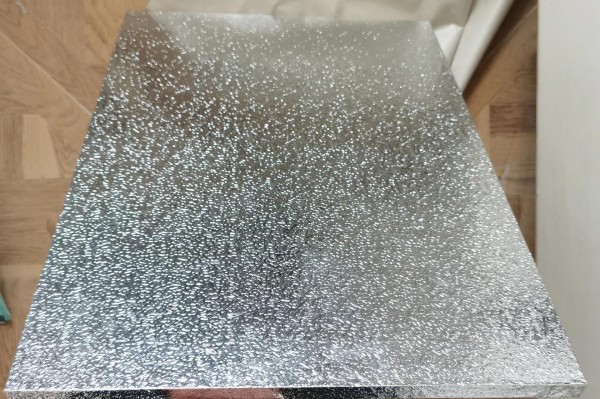
III. Tæknilegir kostir álpappírs í frumuumbúðaframleiðsluferlum
3.1 Lamination úr ál-plasti
Álpappír sýnir sterka eindrægni yfir þurrt, hitauppstreymi, og þurr-varma lagskipt ferli, að ná flögnunarstyrk ≥ 15 N/15 mm í hágæða notkun.
3.2 Djúpteikning mótun
Með lengingu upp á 8–20%, álpappír styður 5–10 mm djúpa teikningu án þess að sprunga. Slétt yfirborð hennar (Ra ≤ 0.2 μm) dregur úr núningi og bætir myndun skilvirkni.
3.3 Hitaþétting
Mikil hitaleiðni tryggir samræmda CPP bráðnun. Styrkur hitaþéttingar ≥ 35 N/15 mm (upp í 50 N/15 mm), með stöðugri frammistöðu kl 155 ± 5°C.
3.4 Skurður og kantvinnsla
Miðlungs hörka gerir kleift að klippa burt með víddarfráviki ≤ ±0,1 mm, hentugur fyrir sjálfvirkar línur sem vinna við 10–15 m/mín.
IV. Kostir kjarnaframmistöðu og löggilding umsókna
4.1 Mikil hindrun
≥ 20 μm álpappír nær WVTR ≤ 0.01 g/m²·dag og OTR ≤ 0.005 cm³/m²·dag.
Mál: 30 μm álpappírsfilma viðhaldið ≥ 90% getu eftir 1000 klst við 85°C/85% RH.
4.2 Vélræn öryggismörk
Togstyrkur allt að 230 MPa, gataþol ≥ 300 N, og frábær árangur í falli, þjöppun, og nálargengspróf.
4.3 Léttur kostur
Samanborið við málmhús, ál-plast umbúðir draga úr þyngd um 50–70%, bæta orkuþéttleika um allt að 10%.
4.4 Tæringarþol raflausna
Krómlaus óvirkjuð álpappír viðheldur > 90% afhýða styrk á eftir 7 daga við 60°C raflausn.
4.5 Kostnaðarhagkvæmni
Innlend álpappír kostar ~3–5 RMB/m², verulega lægri en innfluttar ál-plastfilmur, með endurvinnsluhæfni ≥ 95%.
V. Gæðaeftirlit og iðnaðarstaðlar
5.1 Kjarnavísar um gæðaeftirlit
| Vísir | Krafa | Standard | Prófunaraðferð |
|---|---|---|---|
| Þykktarfrávik | ≤ ±4% (hágæða ≤ ±2%) | GB/T. 3198-2020 | Laserþykktarmælir |
| Pinhole þéttleiki | ≤ 400 stk/m² (hágæða ≤ 100 stk/m²) | GB/T. 3198-2020 | Dökksviðsmyndataka |
| Yfirborðsgæði | Ra ≤ 0.2 μm | GB/T. 3615-2022 | Grófmæling |
| Vélrænir eiginleikar | Togþol ≥ 70 MPa, lenging ≥ 8% | GB/T. 228.1-2021 | Togprófun |
| Hindrunareiginleikar | WVTR 0.01 g/m²·dag | GB/T. 1037-2021 | Gegndræpisprófun |
VI. Umsóknarmál og markaðsmat
6.1 Rafeindatækni neytenda
- Huawei Mate 60 Pro: 1060 álpappír, þykkt rafhlöðunnar 2.8 mm, orkuþéttleiki 280 Wh/kg
- Apple MacBook: 3003 álpappír, orkuþéttleiki ≥ 300 Wh/kg
6.2 Rafhlöður
- BYD Blade rafhlaða: 3003 álpappír, orkuþéttleiki 180 Wh/kg, aukið öryggi
- CATL Qilin rafhlaða: 8 μm samsett álpappír, orkuþéttleiki 250 Wh/kg
6.3 Orkugeymsla rafhlöður
- Geymslukerfi fyrir íbúðarhúsnæði: 1060 álpappír, hringrás líf ≥ 6000 hringrás, 15-árs líftíma
VII. Q&A (Algengar spurningar)
- Hvernig eru kröfur um filmu mismunandi eftir frumugerð?
Pokafrumur eru hlynntar álpappír með miklum hreinleika; blaðfrumur þurfa álpappír með meiri styrkleika. - Hvernig hefur þynnuþykkt áhrif á frammistöðu?
Þykkari filmur bætir hindrunareiginleika en dregur úr orkuþéttleika; samsettar lausnir jafnvægi hvort tveggja. - Munur á innlendum vs innfluttum filmu?
Lykileyður liggja í ofurþunnri nákvæmni, pinhole stöðugleika, og yfirborðssamkvæmni. - Langtímaáhætta fyrir útsetningu fyrir raflausnum?
Dragað úr með krómlausri passivering og nanóhúð. - Hvernig á að staðfesta samhæfni framleiðslulínu?
Staðfestu lagskiptingu, hitaþéttingu, og skera árangur með tilraunaprófum. - Nýjar kröfur frá solid-state rafhlöðum?
Ofurþunnt (≤ 5 μm), hærri hindrun, sterkara viðmótssamhæfi, og aðlögunarhæfni í lofttæmiferli.