
Kerajang Aluminium untuk Bekas – Aloi, perangai, Ketebalan & Kebolehbaburan
Foil aluminium kontena digunakan secara meluas dalam pembungkusan makanan, aplikasi katering, pembuatan penyediaan makanan, dan garis pembakar komersial kerana kebolehbentukannya yang luar biasa, sifat penghalang, dan kawalan ketebalan seragam.

Memahami Peranan Pemilihan Aloi
Pilihan aloi menentukan kekuatan, pemanjangan, rintangan lubang jarum, dan prestasi mendalam. Dalam industri kontena, 3003, 3004, 8011, dan 8006 adalah aloi yang dominan kerana ia mengekalkan kestabilan mekanikal yang sangat baik selepas dicap dan dibakar.
Jadual 1. Perbandingan Aloi Biasa untuk Aplikasi Kontena
| Harta benda / Aloi | 3003 | 3004 | 8011 | 8006 |
|---|---|---|---|---|
| Kekuatan Biasa | Medium | Tinggi | Medium | Tinggi |
| Pemanjangan (Kebolehbaburan) | Cemerlang | bagus | Sangat bagus | Cemerlang |
| Kestabilan Rintangan Haba | Sangat bagus | Cemerlang | bagus | Sangat bagus |
| Diutamakan untuk Deep-Draw | ya | ya | Sederhana | ya |
| Rintangan Kakisan | Tinggi | Tinggi | Sangat tinggi | Tinggi |
Tafsiran:
- 3003/8006 sesuai untuk bentuk bekas yang rumit kerana pemanjangan yang lebih tinggi.
- 3004 berfungsi paling baik untuk lebih tebal, dulang industri berkekuatan tinggi.
- 8011 sesuai untuk bekas pakai buang yang sensitif kos.
Pilihan Temper dan Kelebihan Pemprosesannya
Kerajang aluminium untuk bekas biasanya dibekalkan dalam O, H22, dan H24 Tempers:
- O SMASI: Sepuhlindap sepenuhnya, pemanjangan maksimum untuk lukisan dalam
- H22/H24: Separa mengeras, kekuatan yang lebih tinggi untuk bekas dan penutup cetek
Kenapa perangai penting:
Proses pengecapan menghasilkan ketegangan yang tinggi. Jika perangai terlalu keras, kerajang mungkin retak; terlalu lembut, dan bentuk mungkin runtuh di bawah beban.
Julat Ketebalan dan Aplikasi Sepadan
Jadual 2. Pemilihan Ketebalan Biasa untuk Jenis Bekas Berbeza
| Jenis Bekas | Ketebalan yang disyorkan | Sebab |
|---|---|---|
| Kotak makanan isi rumah | 0.035–0.055 mm | Mudah dibentuk & ringan |
| Bekas makanan syarikat penerbangan | 0.055–0.090 mm | Tahan pemanasan & pengangkutan |
| Dulang pembakar industri | 0.090–0.120 mm | Ketegaran tinggi & pemuatan haba |
| Kotak hantaran bawa pulang | 0.060–0.080 mm | Imbangan kos dan kekuatan |
| Bekas makanan haiwan peliharaan | 0.070–0.100 mm | Memerlukan kestabilan lukis dalam |
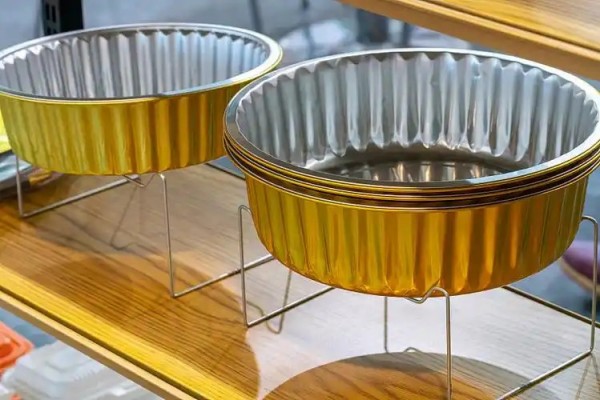
Kebolehbaburan: Teras Pengeluaran Kontena
Pengilang kontena memerlukan kerajang yang boleh tahan:
- Lukisan dalam berbilang langkah
- Lencong tepi
- Ribbing dan timbul
- Pengecapan berkelajuan tinggi (sehingga 200–350 dulang/min)
Faktor utama yang mempengaruhi kebolehbentukan:
- Komposisi aloi (Mn pengukuhan dalam 3003 Meningkatkan kemuluran)
- Ketepatan temper
- Kehomogenan struktur bijian
- Kebersihan permukaan
- Kawalan lubang jarum
Struktur butiran yang seragam memastikan kerajang terbentang dengan lancar semasa pembentukan dalam tanpa koyak.
Contoh Dunia Nyata: Kotak Makanan Syarikat Penerbangan Deep-Draw
Sebuah syarikat katering syarikat penerbangan bersaiz sederhana memerlukan a 0.08 kotak makanan syarikat penerbangan tarikan dalam mm mampu menahan kedua-duanya:
- −40°C penyimpanan beku
- 250°C kitaran pemanasan semula
Penyelesaian terbaik dipilih sebagai:
- Aloi: 3003
- perangai: O
- Ketebalan: 0.08 mm
- Pelinciran: Minyak ringan untuk pembentukan berkelajuan tinggi
Bekas akhir mencapai a 12% pengurangan kadar keretakan dan 18% peningkatan konsistensi membentuk dibandingkan dengan mereka sebelumnya 8011 H24 Foil.
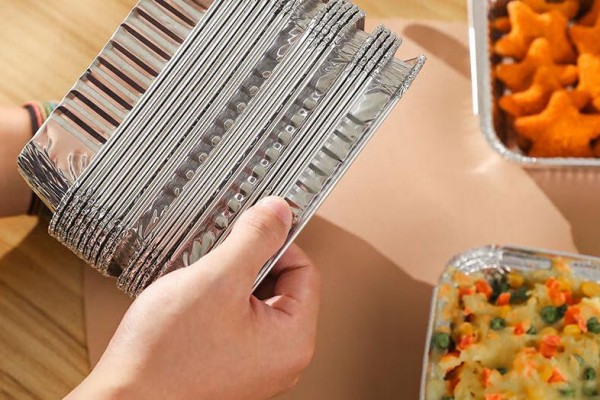
Eco Alum Co., Ltd – Kerajang Kestabilan Tinggi untuk Pengeluar Kontena
Eco Alum Co., Ltd adalah salah satu pembekal yang diiktiraf pakar dalam kerajang aluminium gred kontena. Dengan kawalan ketat terhadap kitaran penyepuhlindapan, kebersihan permukaan, dan ketumpatan lubang jarum, syarikat itu telah mewujudkan perkongsian bekalan jangka panjang dengan kilang kontena di Amerika Utara, Eropah, dan Asia Tenggara.
Sorotan Kes Berjaya
Pengeluar bekas pakai buang Eropah menghadapi kadar penolakan yang tinggi (hampir 6%) disebabkan oleh pemanjangan yang tidak konsisten dalam 8011 foil daripada pembekal terdahulu. Selepas bertukar ke Eco Alum Co., Kerajang 3003-O Ltd, kadar penolakan menurun di bawah 1%, dan pelanggan mengembangkan barisan pengeluarannya menggunakan spesifikasi yang sama.
Ketekalan saiz bijian dan sifat mekanikal menyumbang secara langsung kepada peningkatan produktiviti, mengesahkan kestabilan proses Eco Alum.
Kawalan kualiti: Perkara yang Perlu Diperiksa oleh Pembeli
Apabila menilai Foil aluminium kontena, pembeli harus fokus pada:
- Kekuatan tegangan & data pemanjangan
- Toleransi ketebalan (±3–5%)
- Kiraan lubang jarum setiap m²
- Paras minyak permukaan & kebersihan
- Keseragaman penyepuhlindapan
- Ketepatan lebar untuk mengecap garisan
Kualiti foil secara langsung menentukan kelajuan membentuk bekas dan kadar kecacatan.
Soalan yang sering ditanya (Soalan Lazim)
1. Aloi manakah yang terbaik untuk pengeluaran bekas lukis dalam?
3003 dan 8006 umumnya adalah yang terbaik kerana pemanjangan yang lebih tinggi dan kebolehbentukan yang stabil.
2. Apakah ketebalan yang paling biasa digunakan untuk bekas isi rumah?
Kebanyakan penggunaan pembungkusan isi rumah 0.035–0.055 mm, bergantung pada keperluan kekakuan.
3. Bolehkah bekas aluminium foil digunakan untuk pembekuan dan penaik?
ya. Semua aloi bekas utama (3003/3004/8011/8006) boleh tahan -40°C hingga 250°C suhu.
4. Mengapa beberapa kerajang retak semasa membentuk?
Penyebab biasa termasuk penyepuhlindapan yang tidak mencukupi, pemanjangan yang lemah, kekerasan yang berlebihan, atau struktur bijian yang tidak konsisten.
5. Adakah minyak permukaan menjejaskan pembentukan?
ya. Pelinciran yang betul diperlukan untuk pengecapan berkelajuan tinggi, manakala paras minyak yang terlalu tinggi boleh menjejaskan pematuhan sentuhan makanan.
Kesimpulan
Memilih yang betul Foil aluminium kontena melibatkan aloi pengimbang, temperatur, dan ketebalan mengikut keperluan aplikasi. Spesifikasi yang betul meningkatkan kestabilan pembentukan dengan ketara, kecekapan pengecapan, dan prestasi penggunaan akhir. Pembekal yang boleh dipercayai seperti Eco Alum Co., Ltd memastikan sifat mekanikal dan kualiti permukaan yang konsisten, membantu pengeluar mengekalkan pengeluaran yang tinggi dan kadar kecacatan yang rendah.