
Heat Resistance and Anti-Grease Performance: The Behavior of 8011 Aluminum Foil in Bakeware and Tableware
1. Introduction
In the modern food-service and cookware industry, the demand for materials that combine thermal stability, cleanability, and environmental sustainability continues to rise. Among all metallic materials, 8011 aluminum foil stands out for its ability to resist high temperatures while providing superior anti-grease and non-stick performance. These characteristics make it indispensable in the manufacturing of bakeware, disposable food trays, catering containers, and tableware liners.
This article explores the thermal and anti-grease behavior of 8011 aluminum foil in bakeware and tableware, analyzing how its alloy composition, surface chemistry, and process parameters contribute to practical performance. It also compares 8011 with competing materials such as stainless steel, coated steel, and polymer composites to demonstrate its engineering advantages.

2. Thermal Resistance of 8011 Aluminum Foil
2.1 Alloy Foundation for Heat Resistance
8011 belongs to the 8xxx series of aluminum alloys, with iron (Fe) and silicon (Si) as the primary alloying elements. These create a fine intermetallic network that reinforces the aluminum matrix and increases heat-softening resistance. Unlike pure 1050 or 1235 foils, 8011 maintains mechanical integrity even after repeated thermal cycling at 250–350 °C — a typical temperature range for industrial and household baking.
2.2 Thermal Conductivity and Heat Distribution
A unique advantage of aluminum foil in bakeware is its high thermal conductivity, which enables even heat distribution across the cooking surface. The alloy’s conductivity is slightly reduced compared to pure aluminum due to Fe–Si additions but remains superior to most stainless steels and ceramics.
| Table 1 – Thermal Properties Comparison of Common Bakeware Materials | |
|---|---|
| Material | Thermal Conductivity (W/m·K) |
| 8011 Aluminum Foil | 230 – 240 |
| 1050 Aluminum Foil | 237 – 245 |
| 304 Stainless Steel | 14 – 16 |
| Glass-Ceramic Tray | 1.5 – 3.0 |
| Carbon Steel Sheet | 45 – 55 |
| Silicone Bake Mat | 0.2 – 0.3 |
The thermal efficiency of 8011 foil reduces energy consumption and ensures food cooks uniformly. For professional ovens, the use of 8011 foil trays can reduce overall baking time by 10–15 % compared with stainless-steel counterparts.
2.3 High-Temperature Strength Retention
During extended exposure to high temperature, microstructural changes—especially recovery and recrystallization—may soften the alloy. However, 8011’s Fe–Si dispersion slows grain growth, allowing stable strength retention up to 350 °C. This property prevents deformation of trays and lids during reheating or thermal sealing.
| Table 2 – Mechanical Strength Retention of 8011 Aluminum Foil at Elevated Temperatures | |
|---|---|
| Test Temperature (°C) | Yield Strength Retention (%) of Room-Temp Value |
| 100 | 99 |
| 200 | 96 |
| 250 | 93 |
| 300 | 90 |
| 350 | 85 |
For short-term exposures (such as oven baking for 30–60 minutes), 8011 foil shows negligible creep or warpage. It also maintains consistent dimensional accuracy, which is vital when producing precision-fit lids and foil containers.
2.4 Thermal Oxidation Resistance
Another critical aspect of thermal behavior is the alloy’s ability to form a dense, adherent oxide film. The Al₂O₃ layer on 8011’s surface thickens slightly under heat but remains transparent and stable, providing both oxidation protection and non-stick benefits. Unlike steel, which can discolor or scale under oven temperatures, 8011 aluminum retains its bright metallic finish.
3. Anti-Grease and Non-Stick Properties
3.1 Natural Hydrophobic Barrier
The oxide film formed on aluminum naturally exhibits hydrophobic and oleophobic tendencies. When combined with fine surface roughness achieved through controlled rolling, 8011 aluminum foil demonstrates remarkable resistance to oil absorption. This feature prevents baked oil residues from adhering to tray walls, allowing easy cleaning or single-use disposal.
3.2 Surface Tension and Wettability
The wettability of a surface against oil can be quantified by the contact angle (θ). A higher contact angle indicates lower surface energy and better anti-grease performance. Laboratory tests show that 8011 foil with bright-annealed finish exhibits an oil contact angle of 85–90°, while matte-finished foil maintains 70–75°. By comparison, untreated steel typically measures < 40°.
3.3 Resistance to Grease Penetration and Staining
Due to its dense microstructure, 8011 aluminum foil resists the diffusion of fatty acids and organic solvents. Even under prolonged exposure to cooking oils above 200 °C, no significant discoloration or pitting occurs. These characteristics make it ideal for grease-intensive foods, such as roasted meats, cheese dishes, and pastry fillings.
3.4 Ease of Cleaning and Reusability
Although much of 8011 foil in bakeware is designed for single use, its smooth, chemically inert surface allows light cleaning and reuse in catering environments. The absence of polymer coatings ensures no decomposition or odor when exposed to direct heat.
3.5 Enhancement Through Coating and Lamination
For applications demanding extended oil repellence, 8011 foil can be laminated with polymer films (e.g., PET or PP) or coated with ceramic or fluorocarbon layers. These modifications increase the oil contact angle to over 100°, providing long-lasting anti-fouling behavior without affecting recyclability.
4. Applications in Bakeware and Tableware
4.1 Disposable Bake Trays and Containers
In commercial bakeries and ready-meal packaging, 8011-O temper foil is the dominant choice for deep-drawn containers. Its elongation of 8–10 % enables forming into complex geometries without tearing. Foil thicknesses typically range from 0.05 to 0.12 mm depending on tray size and rigidity requirements.
Engineers appreciate that even after multiple reheating cycles at 250 °C, 8011 containers maintain their shape, ensuring reliable sealing with polymer film lids or crimped edges.
4.2 Oven-Safe Tableware and Serving Plates
8011 foil’s combination of reflectivity (> 85 %) and thermal conductivity makes it suitable for oven-to-table applications. The material tolerates direct flame or convection oven temperatures without surface delamination. High reflectivity also minimizes radiant heat absorption, preventing localized overheating of delicate foods.
4.3 Foil Lids and Covers
8011-H16 and H18 tempers are used for rigid lid stocks. These provide sufficient stiffness for press-forming and embossing brand logos. The anti-grease property ensures that oil vapors do not deteriorate the adhesive or printing layers used for branding.
4.4 Table Liners and Protective Films
In large-scale food service, 8011 foil sheets serve as disposable liners to protect trays and countertops. Their resistance to oil migration helps maintain hygiene standards while reducing detergent use.
4.5 Catering and Airline Meals
Airline and institutional caterers rely heavily on 8011 foil trays because they combine low weight with reliability. The trays endure quick heating in convection ovens at 300 °C and subsequent freezing to –40 °C without cracking—illustrating the alloy’s dual thermal resistance.

5. Surface Treatments and Coating Technologies
5.1 Surface Finishing for Functional Enhancement
The performance of 8011 aluminum foil in bakeware and tableware can be significantly enhanced by advanced surface treatment processes. These treatments improve oil repellence, corrosion resistance, and aesthetic appearance, enabling the foil to meet diverse functional requirements in food processing and catering.
Common finishing methods include:
- Bright Annealing: Conducted in a controlled atmosphere to produce a reflective surface that improves heat reflection and aesthetics.
- Matte Rolling: Produces a low-gloss texture preferred for non-stick or embossing applications.
- Embossing: Adds rigidity and decorative effects while slightly reducing direct surface contact with food, thus improving anti-stick behavior.
- Chemical Etching or Anodic Coating: Increases corrosion resistance in acidic environments such as tomato-based or vinegar-rich foods.
5.2 Polymer and Ceramic Coatings
In high-end cookware, 8011 foil is often laminated or coated with functional layers that improve anti-grease and non-stick performance.
| Table 3 – Typical Coating and Lamination Options for 8011 Aluminum Foil in Bakeware | |
|---|---|
| Coating / Lamination Type | Purpose and Benefits |
| PET Film Lamination | Provides oil and moisture barrier; suitable for heat-sealed trays |
| PP or PE Coating | Enhances heat-seal compatibility and flexibility |
| Ceramic Coating | Improves hardness, scratch resistance, and non-stick behavior |
| Fluorocarbon (PTFE) Coating | Creates advanced non-stick surfaces for reusable trays |
| Epoxy-Free Food-Grade Lacquer | Protects against acidic or oily foods; ensures food safety compliance |
These coatings are applied via roll coating or spray processes, then cured at 180–250 °C. Engineers must control curing cycles carefully to prevent warping or surface oxidation. The coated foil retains recyclability, as thin coatings (<5 μm) can be removed during remelting.
5.3 Adhesion and Durability Testing
For industrial applications, adhesion between aluminum substrate and coating is tested using cross-cut or tape-pull methods (ASTM D3359). The coating’s oil resistance is verified by immersion tests using synthetic cooking oils at 200 °C for 24 hours. High-quality 8011 foil maintains over 95% adhesion retention and exhibits no visible staining or blistering.

6. Comparative Performance vs. Other Materials
6.1 Comparison with Stainless Steel and Carbon Steel
Although stainless steel trays are reusable and mechanically stronger, they are heavier, more expensive, and require chemical detergents for cleaning. Carbon steel, while cheaper, oxidizes and absorbs grease over time.
8011 aluminum foil achieves a balance between thermal performance, weight, and cleanliness that steel cannot match.
| Table 4 – Comparative Evaluation of Bakeware Materials | |
|---|---|
| Property | 8011 Aluminum Foil |
| Density (g/cm³) | 2.71 |
| Thermal Conductivity (W/m·K) | 230 |
| Weight per Tray (Typical) | 20–30 g |
| Corrosion Resistance | Excellent |
| Anti-Grease Behavior | High |
| Cleaning / Maintenance | Very Easy |
| Recyclability | 100% |
| Cost Efficiency | High |
Thus, from a life-cycle and sustainability standpoint, 8011 foil represents the most efficient option for single-use or semi-reusable bakeware.
6.2 Comparison with Polymer and Paper-Based Materials
Plastic trays (such as PET or PP) are limited by melting points (below 200 °C) and may release odor or deformation under high heat. Paper-based containers require coatings that complicate recycling and often fail under greasy conditions.
8011 foil containers can directly replace plastic trays, offering full recyclability and consistent heat performance up to 350 °C without emitting any volatile substances.
6.3 Environmental Impact and Sustainability
Unlike coated plastics, aluminum foil can be recycled indefinitely with an energy savings of up to 95% compared to primary production. The combination of recyclability and resistance to oil contamination minimizes waste in commercial food service operations.
7. Quality Standards and Manufacturing Insights
7.1 Relevant International Standards
Production and testing of 8011 aluminum foil in bakeware and tableware must comply with international standards ensuring food safety and mechanical reliability.
Commonly applied standards include:
- ASTM B209 – Specification for Aluminum and Aluminum-Alloy Sheet and Foil
- EN 602 – Aluminum and Aluminum Alloys for Food Packaging
- FDA 21 CFR 175.300 – Indirect Food Additives Regulation (U.S.)
- ISO 9001 & ISO 14001 – Quality and Environmental Management
- EU Regulation No. 1935/2004 – Materials Intended for Food Contact
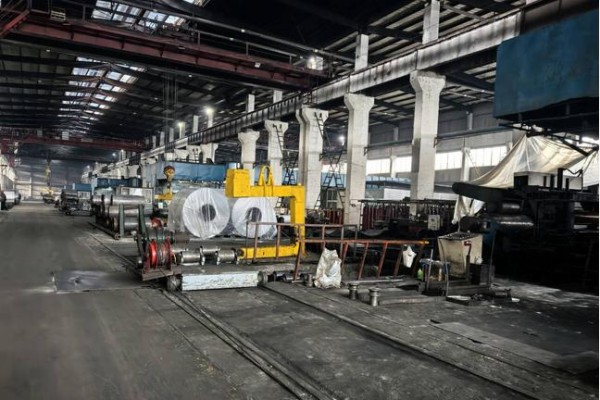
7.2 Manufacturing Process Optimization
Key control points in production include:
- Raw Material Purity: Use of refined Fe–Si master alloys to ensure microstructural uniformity.
- Hot and Cold Rolling Control: Adjust tension and lubrication to prevent pinholes.
- Annealing: Proper temperature range (300–400 °C) ensures full recrystallization and surface brightness.
- Surface Inspection: 100% automated optical scanning to detect stains, cracks, or oxidation streaks.
- Degreasing: Final cleaning to achieve surface oil residue below 3 mg/m² for food-grade compliance.
7.3 Testing and Certification
Before approval for commercial use, foil samples undergo multiple tests:
- Thermal Aging Test: Heating at 250 °C for 8 hours to observe discoloration or warping.
- Grease Resistance Test: Immersion in vegetable oil at 220 °C for 24 hours; no penetration allowed.
- Formability Test: Deep drawing and edge folding without cracking.
- Odor Transfer Test: Ensuring no metallic taste or smell under high heat.
Certified products often bear designations such as “Food Grade 8011-O Foil – Heat Resistant and Anti-Grease Certified.”
8. Market Trends and Future Prospects
8.1 Growth in Disposable Cookware and Catering Industries
The global market for disposable aluminum bakeware and tableware continues to expand rapidly due to the growth of food delivery services, frozen meal packaging, and event catering. In 2024, aluminum foil containers represented an estimated USD 3.5 billion industry, with 8011 alloy accounting for over 60% of total volume.
Asia-Pacific leads production, particularly China and India, while North America and Europe remain key consumption regions due to environmental regulations limiting single-use plastics.
8.2 Technological Advancements
New manufacturing trends include:
- Laser-Textured Foil Surfaces: To enhance oil repellence and anti-stick functionality.
- Hybrid Multilayer Foils: Laminated with biodegradable coatings for eco-friendly packaging.
- AI-Driven Inspection Systems: Real-time defect mapping and predictive maintenance of rolling mills.
- Automated Recycling Systems: Designed for foil recovery from post-consumer waste streams.
8.3 Sustainability and Recycling Incentives
Governments and manufacturers are encouraging circular-economy systems. Aluminum foil’s infinite recyclability and minimal weight make it the preferred sustainable alternative to plastic containers. Several major airline and catering suppliers have already pledged to transition fully to recyclable 8011-based trays by 2030.
8.4 Emerging Application Areas
-
- Smart Cookware: Integration of temperature-sensing films on foil surfaces.
- Hybrid Cook-Tray Systems: Combining 8011 foil with rigid aluminum frames for reusable ovenware.
- Home Appliance Integration: Use of 8011 foil liners in air fryers and convection ovens to improve heat reflection and reduce grease buildup.
9. Conclusion
The rise of eco-conscious manufacturing and the need for efficient thermal materials have positioned 8011 aluminum foil as the leading choice in bakeware and tableware production.
Its heat resistance allows stable mechanical strength at high temperatures, while its anti-grease and non-stick behavior ensures clean operation and extended usability. The alloy’s composition—optimized with Fe and Si—delivers both structural rigidity and barrier performance unmatched by steel, plastic, or paper alternatives.
From food packaging to commercial ovens, the performance of 8011 aluminum foil in bakeware and tableware demonstrates a balance of formability, recyclability, and hygiene that fits perfectly within modern engineering and sustainability standards. As technological refinements continue to enhance its surface properties and production efficiency, 8011 aluminum foil will remain the benchmark for high-performance, heat-resistant, and environmentally responsible cookware solutions.