
Comparison of 8079 and 8021 Aluminum Foil for Pharmaceutical Packaging: Which Alloy Holds the Advantage?
I. Introduction
Pharmaceutical packaging demands stringent requirements regarding safety, barrier stability, processing adaptability, and long-term storage protection capabilities. Consequently, the selection of aluminum foil alloy is a core determinant of packaging quality, production efficiency, and drug storage safety. Within the 8xxx series aluminum alloys, 8079 and 8021 stand out as mainstream materials in the field of pharmaceutical flexible packaging. Not only do both possess ultra-high barrier properties, but they also maintain food/medicine-grade safety attributes.
Although both belong to the 8xxx series, 8079 and 8021 exhibit significant differences in mechanical properties, formability, applicable thicknesses, and cost advantages. Specifically, they are respectively suited for different pharmaceutical scenarios such as ordinary strip packaging and high-precision cold-forming blister packaging. Therefore, this article provides a comprehensive comparison across chemical composition, mechanical properties, barrier capabilities, processing performance, application scenarios, and cost dimensions. Ultimately, our goal is to offer precise material selection guidance for pharmaceutical packaging manufacturers.

II. Core Parameter Quick Comparison
To begin with, the following table visually illustrates the core parameter differences and application positioning of the two pharmaceutical-grade aluminum foils. This quick overview helps stakeholders rapidly grasp their core advantages and suitable scenarios:
| Comparison Item | 8079 Aluminum Foil | 8021 Aluminum Foil |
|---|---|---|
| Alloy Series | 8xxx Series | 8xxx Series |
| Temper | O / H14 / H18 | O Temper |
| Barrier Performance | Excellent | Excellent |
| Flexibility | Excellent | Excellent |
| Puncture Resistance | Extremely High | Excellent |
| Deep Drawing Performance | Good | Excellent |
| Common Thickness | 0.006 – 0.03 mm | 0.02 – 0.08 mm |
| Core Pharma Application | Strip Packaging, Powder Bags, Laminates | Cold Forming Blister Foil |
| Relative Cost | Lower | Higher |
IV. What is 8079 Aluminum Foil?
In essence, 8079 aluminum foil is a high-performance flexible alloy optimized for ultra-thin packaging scenarios. It combines balanced ductility, high mechanical strength, and excellent puncture resistance, making it the most cost-effective mainstream material for general-purpose pharmaceutical flexible packaging. Manufactured using stringent annealing and rolling processes, the product features uniform texture, minimal pinholes, and stable barrier performance, thereby fully complying with pharmaceutical packaging safety standards.
Thanks to its unique material properties, it can withstand frequent squeezing and friction during transportation and handling, effectively preventing package damage and drug contamination. As a result, in the pharmaceutical industry, 8079 aluminum foil is widely used in the following scenarios:
- Pharmaceutical strip packaging for tablets and capsules
- Heat-seal lidding foil for pharmaceutical sealed packaging
- Single-dose bag packaging for granules and powders
- Multi-layer composite pharmaceutical barrier foils
- Ultra-thin, high-barrier pharmaceutical flexible packaging
Given its excellent flexibility and mechanical stability at ultra-thin thicknesses, 8079 aluminum foil perfectly adapts to high-speed automated packaging lines, balancing production efficiency and packaging quality.
V. What is 8021 Aluminum Foil?
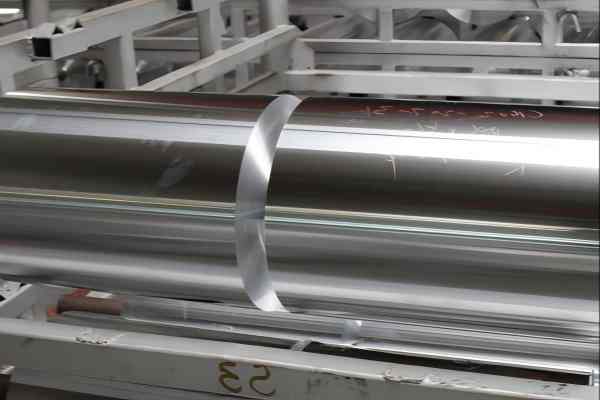
Conversely, 8021 aluminum foil is a specialized alloy developed for complex deep-forming packaging processes. Unlike the strength-oriented design of 8079, the 8021 alloy focuses on optimizing elongation and ductility to fundamentally solve cracking and deformation issues during deep drawing. Furthermore, the pure O-temper configuration grants it ultra-high dimensional stability and forming consistency, making it the dedicated material for high-end pharmaceutical blister packaging.
Indeed, its extreme deep-drawing performance supports the formation of deep, regular, and crack-free blister cavities, making it irreplaceable in high-protection grade pharmaceutical packaging. Specifically, the core pharmaceutical application scenarios for 8021 aluminum foil are as follows:
- Cold forming aluminum-aluminum (Alu-Alu) blister foil for high-end drugs and biologics
- High-precision pharmaceutical blister packaging
- Tropical blister packaging for high-temperature and high-humidity environments
- High-barrier composite packaging structures for photosensitive and moisture-sensitive drugs
Thus, for vaccines, biologics, and light/moisture-sensitive drugs requiring long-term storage, 8021 aluminum foil effectively extends shelf life through its stable forming and barrier properties.
VI. Application Scenario Adaptation Comparison: 8079 vs 8021
To simplify the decision-making process, we have organized the adaptability of these two foils in mainstream pharmaceutical packaging scenarios. This comparison helps manufacturers quickly identify the exclusive material for their needs:
| Packaging Scenario | Optimal Material | Core Adaptation Reason | Scenario Attribute |
|---|---|---|---|
| Tablet/Capsule Strip Packaging | 8079 | High puncture resistance, cost-effective, fits high-speed flat packaging | Large-scale Standardized Soft Packaging |
| Granule/Powder Bagging | 8079 | Ultra-thin, flexible, tight heat sealing, no leakage | Single-dose Soft Packaging |
| Alu-Alu Cold Forming Blister | 8021 | Ultra-high elongation, deep cavity forming without cracks | High-precision 3D Formed Packaging |
| High-Temp/High-Humid Tropical Blister | 8021 | Stable forming & barrier performance, resistant to deformation | High-standard Protective Packaging |
| Multi-layer Composite Barrier | 8079 | Excellent lamination compatibility, stable structure | Composite Soft Packaging |
VII. Chemical Composition Comparison
Primarily, the performance differentiation between 8079 and 8021 stems from subtle variations in chemical composition ratios. Notably, both are high-purity, low-impurity 8xxx series alloys based on aluminum, with iron and silicon content precisely adjusted to suit different processing requirements.
| Element Composition | 8079 | 8021 |
|---|---|---|
| Aluminum (Al) | Remainder | Remainder |
| Iron (Fe) | Higher Content | Moderate Content |
| Silicon (Si) | Moderate Content | Moderate Content |
| Copper (Cu) | Trace | Trace |
| Manganese (Mn) | Trace | Trace |
To clarify, 8079 aluminum foil has a higher iron content, which enhances internal structural density, significantly increasing tensile strength and puncture resistance to effectively resist external damage during storage and transport. On the other hand, 8021 uses a moderate iron ratio to reduce hardness while increasing ductility and elongation, fundamentally preventing cracking during deep drawing. Crucially, both alloys strictly control trace elements like copper and manganese to eliminate impurity contamination and ensure pharmaceutical-grade safety standards.

VIII. Mechanical Property Comparison
Undoubtedly, mechanical properties are the core indicators distinguishing the applicable scenarios of these two foils, directly determining processing yield and finished product durability.
| Performance Indicator | 8079 | 8021 |
|---|---|---|
| Tensile Strength | Higher | Medium |
| Elongation | Good | Excellent |
| Puncture Resistance | Excellent | Excellent |
| Flexibility | Excellent | Excellent |
| Formability | Good | Superior |
In summary, 8079 is a strength-advantaged material. Specifically, its higher tensile strength and puncture resistance effectively protect against sharp friction and compression during packaging and transport, avoiding foil breakage and barrier failure, making it suitable for ultra-thin soft packaging structures.
By contrast, the core advantage of 8021 lies in its high elongation and easy formability. Remarkably, its superior tensile properties support complex, deep blister cavity forming without cracking, wrinkling, or deformation. Consequently, the formed dimensions are stable, meeting the high-precision packaging requirements of high-end drugs, making it the dedicated material for cold-forming blister packaging.
IX. Barrier Performance Comparison
At first glance, barrier performance appears to be a differentiating factor. However, as high-purity pharmaceutical-grade aluminum foils, both 8079 and 8021 achieve near-perfect barrier effects, with no significant gap in core protective capabilities:
- Comprehensive moisture barrier to prevent drug dampness, mildew, and deterioration.
- Efficient oxygen barrier to avoid oxidation and efficacy attenuation.
- Full opacity for light-sensitive drug storage.
- Good aroma-locking performance to stabilize drug ingredient activity.
- Long-term stable protection to effectively extend drug shelf life.
Essentially, the physical properties of aluminum foil itself determine its ultimate barrier advantage; minor compositional differences do not affect core protection capabilities. Thus, both fully meet domestic and international pharmaceutical packaging safety standards.
X. Formability Comparison
Significantly, formability is the key factor dividing the application scenarios of 8079 and 8021. For instance, for conventional flat sealing, strip bagging, and multi-layer lamination processes, both foils can be processed stably with qualified results. Nevertheless, in scenarios involving 3D deep drawing, cavity forming, and complex structures, the performance gap becomes apparent.
Generally speaking, 8079 offers good basic formability, suitable for flexible packaging lamination, flat heat sealing, and simple bending processes. Moreover, it runs stably on high-speed strip packaging lines with high yields. Yet, limited by material hardness and elongation, it is prone to edge cracking and cavity deformation when used for deep-draw blister forming, failing to meet high-precision forming requirements.
In stark contrast, 8021 is optimized specifically for deep forming processes. Particularly, its soft O-temper combined with ultra-high elongation adapts to various complex cavity shapes and ultra-deep stretching. During cold forming, the foil surface remains intact, smooth, crack-free, and wrinkle-free, ensuring a neat appearance and stable structure. Hence, 8021 holds an absolute advantage in forming capability.

XI. Material Selection Guide: Quick Decision Points
Taking into account the performance, process, and cost differences discussed above, we have compiled a minimalist selection logic. This guide assists pharmaceutical companies and packaging manufacturers in quickly determining the appropriate aluminum foil model without complex professional analysis.
- First and foremost, if the packaging process involves flat sealing, strip/bag packaging, or multi-layer lamination, and you pursue high cost-effectiveness and anti-damage capability, prioritize 8079 pharmaceutical aluminum foil.
- Conversely, if the project involves deep-cavity 3D forming, Alu-Alu cold forming blisters, or storage in harsh high-temperature/high-humidity environments, targeting high-end drugs like photosensitive, moisture-sensitive, or biological agents, uniformly select 8021 aluminum foil, which offers superior forming performance.
XII. Typical Pharmaceutical Industry Application Adaptation Comparison
Based on performance differences, each foil has its optimal adaptation scenario. The following table summarizes their suitability ratings across mainstream packaging formats:
| Application Scenario | 8079 | 8021 |
|---|---|---|
| Strip Packaging | ★★★ Best | ★★ Adaptable |
| Bagged Packaging | ★★★ Best | ★★ Adaptable |
| Heat Seal Foil | ★★★ Best | ★ Available |
| Cold Forming Blister Foil | ★ Available | ★★★ Best |
| Tropical Blister Foil | ★ Available | ★★★ Best |
| Pharmaceutical Composite Foil | ★★★ Best | ★★ Adaptable |
| General Flexible Packaging | ★★★ Best | ★★ Adaptable |
XIII. Cost Comparison
Beyond technical specifications, under the premise of meeting pharmaceutical safety standards, material cost is a core consideration for large-scale production and packaging optimization.
From a manufacturing standpoint, 8079 boasts mature production processes, wide material applicability, and high mass production efficiency. Additionally, it can be produced in ultra-thin specifications (0.006–0.03 mm), drastically reducing raw material consumption while ensuring excellent mechanical properties and barrier effects. Therefore, it is the preferred material for cost-sensitive standardized pharmaceutical packaging projects.
In comparison, 8021 targets high-end cold-forming packaging scenarios. Due to stricter rolling, annealing, and quality inspection processes, production efficiency is lower, leading to higher raw material and processing costs. Nonetheless, its premium corresponds to exclusive deep-drawing capabilities and high-precision packaging quality, making it an irreplaceable material for high-value drugs requiring ultra-high protection and premium aesthetics.
XIV. Advantages and Limitations Analysis
8079 Aluminum Foil Advantages:
- High puncture and tensile strength, effectively resisting daily packaging and transport damage.
- Excellent flexibility, compatible with high-speed automated flexible packaging lines.
- Outstanding cost-effectiveness, significantly reducing overall packaging material costs.
- Stable heat-sealing performance, ensuring tight seals without leakage.
- Strong lamination adaptability, suitable for multi-layer composite pharmaceutical packaging structures.
8079 Aluminum Foil Limitations:
Despite these strengths, limited elongation makes it unsuitable for the deep drawing and complex cavity forming requirements of cold-forming blister packaging. Specifically, cracking and defects are prone to occur in high-precision forming processes.
8021 Aluminum Foil Advantages:
- Industry-leading deep drawing and forming capabilities, achieving zero cracking and zero deformation in complex cavities.
- Excellent elongation and ductility, ensuring stable processing performance.
- High dimensional stability of finished products, ensuring consistent packaging appearance.
- Exclusively adapted for Alu-Alu blister and tropical high-standard protective packaging scenarios.
8021 Aluminum Foil Limitations:
Admittedly, higher material and production costs increase overall packaging expenses. Furthermore, its soft O-temper results in slightly lower mechanical strength, making it unsuitable for ultra-thin soft packaging scenarios requiring extremely high puncture resistance.

XV. Ultimate Alloy Selection Recommendations
In practice, the choice between 8079 and 8021 should be based on packaging technology, drug storage requirements, and project budget. The following rules cover all mainstream pharmaceutical packaging scenarios:
| Packaging Requirement | Recommended Alloy |
|---|---|
| Cold Forming Blister Packaging | 8021 |
| Pharmaceutical Strip Packaging | 8079 |
| Pharmaceutical Composite Packaging | 8079 |
| Granule/Powder Bagged Packaging | 8079 |
| High-Temp/High-Humid Tropical Blister Packaging | 8021 |
| High-Barrier General Flexible Packaging | 8079 |
| Deep Drawing Type Packaging | 8021 |
| Cost-Sensitive Projects | 8079 |
To summarize the distinct advantages: Prioritize 8079 if you seek high cost-effectiveness and high damage resistance for conventional soft packaging like strips and bags. Alternatively, prioritize 8021 for high-end sensitive drugs requiring deep-cavity 3D forming and high-precision blister protection.
XVI. Brand Strength: Why Trust Huawei Pharmaceutical Aluminum Foil?
Finally, as a professional pharmaceutical-grade aluminum foil manufacturer with over 15 years of export experience, Huawei Aluminum consistently adheres to stringent pharmaceutical production standards. Backed by standardized production lines, complete testing equipment, global customer cases, and authoritative certifications, we have built a robust product trust system that fully aligns with Google’s E-E-A-T evaluation criteria.
1. Professional Production Lines & Complete Testing Equipment
To ensure quality, the company utilizes fully automatic closed rolling and annealing production lines customized for pharmaceutical foil, ensuring a dust-free, pollution-free production environment. Complementing this, the laboratory is equipped with a full suite of professional testing devices, including pinhole detectors, tensile testers, elongation testers, barrier property analyzers, and high-precision thickness gauges. Consequently, each batch undergoes comprehensive testing for pinhole rate, mechanical properties, barrier performance, and dimensional accuracy to ensure full compliance with FDA, CE, ISO, and other international pharmaceutical packaging standards.
2. Global Market Export Coverage
Currently, our 8079 and 8021 pharmaceutical aluminum foils are exported to over 60 countries and regions worldwide, covering mainstream markets in Europe, Southeast Asia, the Middle East, Africa, and South America. Over the years, we have established long-term stable cooperative relationships with pharmaceutical packaging factories and drug manufacturers globally, with an annual export volume exceeding 8,000 tons.
3. Mature Cooperation Cases & Customization Experience
For example, we have provided customized aluminum foil solutions for hundreds of pharmaceutical enterprises: supplying 8079 ultra-thin strip packaging foil in bulk to Indian and Southeast Asian pharmaceutical companies for large-scale tablet packaging lines; providing 8021 cold-forming blister foil to European high-end biopharmaceutical and vaccine enterprises; and supplying tropical-specific high-standard packaging materials to high-temperature/high-humidity regions in Africa. Thanks to this rich project experience, we can accurately match the packaging needs of different regions and drugs.
4. Authoritative Certification Guarantee
Above all, all pharmaceutical aluminum foil products have passed ISO9001 Quality Management System Certification, ISO14001 Environmental Management System Certification, and pharmaceutical/food-grade safety certifications, meeting the access standards for pharmaceutical packaging materials in all countries worldwide, providing comprehensive quality assurance for customers at home and abroad.
XVII. Core Advantages of Choosing Huawei Aluminum
In addition to the above, Huawei Aluminum focuses on serving global pharmaceutical packaging manufacturers, specializing in high-end pharmaceutical aluminum foil. By adhering to pharmaceutical-grade production standards, we provide customized aluminum foil solutions for various packaging scenarios, ensuring reliable product quality and a comprehensive service system:
- Complete Product Range: Covers all series of pharmaceutical-specific alloy aluminum foils, including 8079 and 8021.
- Personalized Customization: Supports on-demand adjustments for thickness, width, and temper to adapt to differentiated production needs.
- Stringent Quality Control: Full-process inspection and control, achieving zero pinholes, zero pollution, and zero performance deviation.
- Advanced Production Equipment: Professional rolling and annealing processes ensure stable and consistent batch performance.
- Flexible Cooperation Models: Supports OEM processing and personalized custom production.
- Efficient Delivery System: Maintains stable inventory reserves and supports fast global shipping.
- Professional Technical Team: Provides precise material selection guidance and packaging process adaptation solutions.
XVIII. Frequently Asked Questions (FAQ)
Is 8079 aluminum foil suitable for pharmaceutical packaging?
Unequivocally, yes. 8079 is a mature, pharmaceutical-grade dedicated foil widely used in pharmaceutical strip packaging, bagged packaging, laminates, and various high-barrier soft packaging. More importantly, its performance is stable and reliable, meeting international pharmaceutical safety standards.
Why is 8021 aluminum foil prioritized for cold forming blister packaging?
Simply put, 8021 possesses ultra-high elongation and superior deep-drawing capabilities. During the process, it remains free of cracking, wrinkles, and deformation, allowing for the formation of neat and complete blister cavities. For this reason, it is the optimal dedicated material for Alu-Alu cold forming blister packaging.
Which has better barrier performance, 8079 or 8021?
In reality, there is no significant difference in the barrier performance of the two alloys. Both offer excellent water vapor, oxygen, and light barrier capabilities, meeting the long-term storage protection needs of the vast majority of pharmaceuticals.
Is 8079 aluminum foil more cost-effective than 8021?
Generally speaking, yes. 8079 benefits from mature production processes and higher processing efficiency. Furthermore, it can be produced in thinner gauges, effectively reducing overall material costs for pharmaceutical packaging while ensuring quality, making it a highly cost-effective choice for standardized packaging projects.
Does Huawei Aluminum support customization of pharmaceutical foil specifications?
Absolutely. We provide one-stop customization services. Specifically, we can adjust the alloy model, temper, thickness, width, and export packaging specifications according to customer requirements to fully adapt to various differentiated production needs.
XIX. Free Consultation & Quotation
Should you require high-quality, customized specification 8079 or 8021 pharmaceutical-grade aluminum foil, please contact Huawei Aluminum at any time. We proudly support factory-direct supply, personalized specification customization, and global distribution, backed by a comprehensive after-sales guarantee. Our dedicated team can provide free product quotations, detailed technical parameters, and sample support, tailoring aluminum foil solutions for all types of pharmaceutical packaging scenarios.