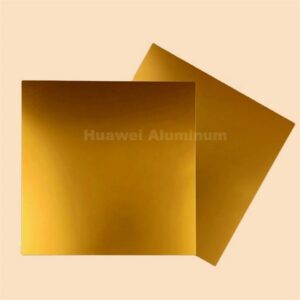
8011 Aluminum Sheet for ROPP Caps


| Name | 8011 Aluminum Sheet for ROPP Caps |
| Thickness | 0.15-0.40mm |
| Width | 100mm – 2600mm,Customize |
| Surface | Bright, polished, hair line, brush, sand blast, checkered, embossed, etching, etc. |
| Technical | Cold rolling ( CC )、Hot rolling ( HR )、Annealed |
8011 Aluminum Sheet for ROPP Caps: A Key Material for Safe, Sustainable Bottling
In the world of packaging, the reliability of a closure often determines product integrity from production line to consumer. Roll-On Pilfer Proof (ROPP) caps have become a standard in beverage, pharmaceutical, and personal care packaging due to their tamper-evident design, ease of use, and compatibility with modern bottling lines.
At the heart of many successful ROPP cap implementations lies a critical material: 8011 Aluminum Sheet for ROPP Caps.
This article explores why 8011 aluminum is widely chosen for ROPP closures, how it performs across applications, and what buyers and manufacturers should consider when sourcing, converting, and applying this material.
We will introduce ECO Alum, a leading supplier and partner in the 8011 aluminum sheet market, and provide practical guidance, data-driven insights, and actionable recommendations for engineers, procurement professionals, and line operators.
The choice of aluminum for ROPP caps is not simply a matter of price or availability. It is a decision driven by formability, surface quality, corrosion resistance, compatibility with liners and adhesives, and the ability to maintain tamper-evident performance throughout shelf life.
8011 Aluminum Sheet for ROPP Caps combines high ductility with robust resistance to the beverages, oils, and other liquids it may contact.
It also enables efficient manufacturing through cold-working, stamping, and forming operations that cap suppliers and converters rely on daily.
For organizations seeking a reliable supply chain, ECO Alum offers a track record of consistent quality, scalable production, and tailored service that supports both short-run customization and long-term volume commitments.
What Is 8011 Aluminum Sheet for ROPP Caps?
An overview of the alloy and form
8011 is a member of the 8xxx series of aluminum alloys, widely recognized for packaging applications.
The alloy is designed to be highly formable, corrosion-resistant, and compatible with commonly used laminates and liner materials.
In the context of ROPP caps, 8011 aluminum sheets are typically produced in temper ranges that optimize ductility and stamping performance, such as O (annealed) and various degrees of work hardening (e.g., H14, H16).
The sheet is used in combination with polymer liners, printed films, or heat-sealing layers to form a robust, tamper-evident closure on bottles.
Key characteristics of 8011 Aluminum Sheet for ROPP Caps include:
– High formability: The material can be deeply drawn, machined, and bent without cracking, which is essential in cap forming and capping equipment.
– Excellent corrosion resistance: The alloy maintains performance when in contact with a wide range of beverages and environmental conditions.
– Good ductility and elongation: This allows for reliable seam formation and sealing even at high line speeds.
– Compatibility with coatings and adhesives: It readily accepts coatings, lacquers, and liner materials that are often required in modern cap assemblies.
– Food-contact suitability: The alloy is widely used in food and beverage packaging, aligning with safety and regulatory expectations for many products.
Why this alloy matters for ROPP closures
ROPP caps demand a material that can be formed into thin, precise components without losing integrity, while also resisting corrosion from liquids that may come into contact with the cap lining or interior.
8011’s balance of ductility and corrosion resistance makes it a practical choice for tacking, crimping, and forming processes used on beverage lines.
The sheet form factor offers advantages in roll-to-roll production, enabling efficient automation and consistent quality across high-volume runs.
ECO Alum emphasizes the role of process control in achieving optimum performance for 8011 Aluminum Sheet for ROPP Caps.
Their capabilities span not only the supply of high-quality sheet stock but also the support services that help customers integrate the material into their processes, including technical consultations, sample testing, and guidance on temper selection and surface finishing.

Why 8011 for ROPP Caps? Key Properties and Benefits
Formability and ductility
The cornerstone of the 8011 alloy for ROPP caps is its exceptional formability. In the O to H temper range commonly used for cap sheet, the metal can be stamped, drawn, and crimped with relatively low forming force and minimal formation of cracks or splits.
This is crucial for achieving thin cap bodies and precise, uniform finishes at high speeds. Formability translates into:
– Lower tooling wear and longer die life
– Higher yields on cap production lines
– Reduced scrap due to fewer defects in the cap body
Corrosion resistance and shelf stability
Beverage and oil products can be corrosive to certain metals, especially in the presence of moisture and certain environmental conditions.
8011 Aluminum Sheet for ROPP Caps exhibits excellent resistance to corrosion from many beverages and oils, contributing to product integrity and long shelf life.
Corrosion resistance is particularly important for:
– Preventing pitting and uniform surface degradation that could affect sealing
– Ensuring liner adhesion remains stable over the product’s lifecycle
– Maintaining appearance and compatibility with decorative finishes
Safety, food contact, and regulatory alignment
The aluminum used in packaging is widely accepted as safe for food contact applications.
8011 participates in the broader regulatory framework that governs materials intended to come into contact with beverages and food products.
As a result, 8011 Aluminum Sheet for ROPP Caps aligns well with:
– Food-contact safety standards and potential regional requirements
– Cleanliness and low impurity levels amid supply chain expectations
– Compatibility with standard food-grade coatings and liners
Cost efficiency and supply chain resilience
From a total-cost perspective, 8011 often offers a favorable balance of material cost, processing efficiency, and post-production performance.
When combined with suppliers like ECO Alum, buyers gain access to:
– Competitive unit prices for standard thicknesses and widths
– Flexible temper options to optimize forming and sealing
– Reliable delivery schedules and inventory management to support just-in-time manufacturing
Compatibility with coating, printing, and labeling
ROPP caps require aesthetics and functional finishes, including printing or branding on cap bodies and compatibility with stamping inks, heat-transfer labels, and protective coatings.
8011 Aluminum Sheet for ROPP Caps readily accepts coatings and printing processes, while maintaining the integrity of the cap’s crimping and sealing features.
This compatibility supports brand differentiation without compromising performance.
Applications Across Industries
Beverage packaging
The primary application for 8011 Aluminum Sheet for ROPP Caps is in beverage packaging — wine, spirits, beer, soft drinks, and mineral water.
ROPP closures with aluminum caps are designed to resist tampering while maintaining a secure seal. The thin sheet stock used in these caps is chosen to optimize:
– Seal integrity across a range of temperatures
– Tamper-evidence features
– Efficiency on high-speed bottling lines
Wine and spirits
In wine and spirits, cap performance is critical for preventing leakage and preserving aroma and flavor integrity.
The 8011 sheet’s good ductility reduces the risk of micro-cracks during the crimping process, ensuring a consistent closure fit.
The material’s corrosion resistance helps protect against potential interactions with wine or spirit components, especially in the interior cap environment.
Pharmaceutical and personal care
Pharmaceutical beverages and personal care products also rely on tamper-evident closures that meet stringent packaging requirements.
8011 Aluminum Sheet for ROPP Caps can meet these needs when used with compatible liners and coatings, helping ensure that the cap remains intact and visually appealing through distribution and storage.
Other uses and emerging markets
Beyond traditional beverages and personal care products, 8011-cap sheet stock is finding use in specialty liquids, essential oils, and premium specialty beverages where cap aesthetics, seal reliability, and regulatory compliance are prioritized.
In emerging markets, the flexibility of temper ranges and surface finishes supports customization for brand-centric packaging strategies.

Core Attributes: Chemical Composition and Mechanical Properties
Composition and metallurgy (typical ranges)
8011 is an aluminum alloy in which the majority is aluminum, with trace elements that improve formability and corrosion resistance while avoiding hardening via heat treatment.
| Element | Content (%) |
|---|---|
| Aluminum (Al) | Balance |
| Iron (Fe) | 0.60-1.00 |
| Silicon (Si) | 0.50-0.90 |
| Copper (Cu) | ≤0.10 |
| Manganese (Mn) | ≤0.20 |
| Magnesium (Mg) | ≤0.10 |
| Zinc (Zn) | ≤0.10 |
| Titanium (Ti) | ≤0.08 |
Note: The emphasis is on achieving ductility while maintaining sufficient strength for cap formation and sealing. The alloy’s low alloy content makes it highly formable and compatible with surface treatments and seal liners used in ROPP caps.
Mechanical properties (temper-dependent)
| Property | 8011-H14 |
|---|---|
| Tensile Strength | 125-160 MPa |
| Yield Strength | 90-130 MPa |
| Elongation | 15%-22% |
| Hardness | 35-55 HB |
| Density | 2.71 g/cm³ |
It is essential to recognize that these figures are indicative ranges. Actual values depend on the alloy grade, temper designation, thickness, and specific processing history provided by the supplier and converter.
For ROPP applications, the emphasis lies on high ductility and adequate strength to prevent cracking during forming and to ensure stable crimping performance.
Surface finish and finish-dependent behavior
The surface finish of 8011 Aluminum Sheet for ROPP Caps influences not only appearance but also the adhesion of coatings, inks, and seal liners. Common finishes include:
– Bright annealed (BA) or mirror-like finishes for cosmetic appeal
– Shiny but slightly matte finishes that balance aesthetics with ink adhesion
– Pre-treated or chemically polished surfaces prepared for coating and labeling
The chosen finish affects downstream processing, including lamination with inner liners, printing, and adding protective coatings. ECO Alum’s approach to surface finishing provides consistent results, important for cap uniformity and brand presentation.
Material Performance: Formability, Strength, and Seal Integrity
The balance of formability and strength
The core performance criterion for 8011 Aluminum Sheet for ROPP Caps is the balance between formability and mechanical strength.
The material must be pliant enough to draw, bend, and crimp into tight cap profiles without developing cracks, while maintaining enough strength to keep the cap structurally intact during crimping and packaging.
Achieving this balance requires selecting the appropriate temper, thickness, and forming parameters.
In many projects, OEMs and converters optimize for a process window where the sheet can be drawn to final shape with minimal thinning and with high bend-angle tolerances, ensuring robust cap geometry.
Seal integrity and liner compatibility
ROPP closures rely on a liner material that seals against the bottle neck and ensures tamper evidence.
The 8011 sheet’s surface chemistry and compatibility with coatings influence liner adhesion.
Converters often perform pre-treatment steps (such as chemical etching or light passivation) to enhance liner bonding and seal performance.
When combined with liner materials (e.g., fluorinated or elastomer-based liners), 8011 aluminum supports durable seals and consistent performance under varying temperatures and product chemistries.
Durability under distribution and consumer handling
Caps undergo mechanical stresses from conveyor handling, motorized capping equipment, and consumer application.
8011 Sheet’s ductility reduces the risk of micro-cracking that can compromise the cap’s integrity.
For products with relatively harsh storage conditions or long supply chains, the material’s corrosion resistance and finish stability are essential to avoid discoloration or degradation that would degrade perceived quality.
Visual and brand-quality considerations
For premium products, the visual appearance of the cap matters. The surface finish of the 8011 sheet, together with printing, coating, and top-laminated layers, defines the final look.
ECO Alum provides guidance on surface finishing options that align with branding goals while ensuring compatibility with printing inks and varnishes used on the cap’s exterior.
Surface Finishes and Processing for ROPP Compatibility
Finishes and their implications
Surface finish can influence adhesion of coatings, liner bonding, and the overall aesthetic of the cap. Common choices include:
– Bright annealed finishes for high reflectivity and clean visuals
– Matte or satin finishes to improve scratch resistance and ink adherence
– Pre-treated surfaces designed to improve coatings or adhesives performance
Coatings, lacquers, and laminates
ROPP caps frequently employ coatings and laminates to improve barrier properties, appearance, and chemical resistance.
8011 Aluminum Sheet for ROPP Caps is compatible with several coating types, including:
– Epoxy, polyurethane, or acrylic lacquers for exterior protection
– Heat-sealing laminates for inner liner adhesion
– Printing inks and decorative films applied on the exterior surface
The choice of coating or laminate must consider:
– Heat resistance during the crimping process
– Chemical compatibility with the beverage or product
– Adhesion quality to the aluminum surface
Surface treatment options
To optimize performance, surface treatments may include:
– Light chemical polishing to remove minor surface oxides
– Passivation to enhance corrosion resistance and coating adhesion
– Anodizing in some packaging contexts (though 8011 is typically used in non-anodized forms for cap sheets due to aesthetic and processing considerations)
ECO Alum’s technical team can advise customers on the best surface finish and treatment plan based on product requirements, drying times, and line-speed constraints.
Specifications of 8011 Aluminum Sheet for ROPP Caps
| Specification Item | Typical Range / Value |
|---|---|
| Alloy | 8011 Aluminum Alloy |
| Alloy Series | 8000 Series Aluminum (Al-Fe-Si Alloy) |
| Temper | H14, H16, H18, H24 |
| Product Form | Aluminum Sheet, Coil, Strip |
| Thickness | 0.15-0.30 mm |
| Common Thickness for ROPP Caps | 0.18-0.25 mm |
| Width Range | 500-1600 mm (customized available) |
| Sheet Length | 500-1200 mm (customized available) |
| Coil Inner Diameter | 76 mm / 152 mm |
| Surface Finish | Mill finish, degreased, lacquered, coated |
| Application | Wine caps, beverage caps, pharmaceutical closures, food packaging lids |
The ECO Alum Advantage: Introducing the Supplier
About ECO Alum
ECO Alum is a recognized supplier of aluminum sheet products with specialization in packaging alloys such as 8011 for ROPP caps.
The company emphasizes quality, reliability, and customer-centric service. Their capabilities typically include:
– A broad range of thicknesses, widths, and temper options tailored to cap production
– Flexible MOQ options, including both small-batch and large-volume orders
– Comprehensive quality systems, including ISO-based certifications and supplier QA programs
– Technical support for product selection, processing parameters, and post-purchase services such as samples and testing
– Strong supply chain management and logistics, with global reach or regional distribution networks depending on the business model
Why customers partner with ECO Alum
Choosing ECO Alum often delivers several practical advantages:
– Consistent material properties across lots, ensuring process stability on cap lines
– Access to technical resources that help optimize forming, crimping, and liner adhesion
– Support in documentation and regulatory compliance for packaging materials
– Responsiveness to customization requests, particularly for temper, thickness, and surface finish
– A long-term relationship that supports growth through capacity planning and risk management
ECO Alum’s service model emphasizes collaboration: they work with packaging designers, converters, and brand owners to align material properties with the final cap design and bottle specifications.
For customers seeking 8011 Aluminum Sheet for ROPP Caps, ECO Alum provides a credible, experience-backed option that can reduce project risk and accelerate time-to-market.
Quality Assurance and Compliance Standards
Industry standards and certifications
For 8011 Aluminum Sheet for ROPP Caps, quality assurance typically centers on consistency in:
– Chemical composition and impurity control
– Dimensional tolerances and thickness uniformity
– Surface finish and cleanliness
– Mechanical properties consistent with temper designations
– Process traceability from raw input to finished product
Commonly referenced standards may include:
– ASTM B209 (Standard Specification for Aluminum and Aluminum-Alloy Sheet and Plate) or national equivalents
– ISO 9001-based quality management systems for the supplier and manufacturing site
– Additional industry-specific certifications when needed (e.g., for food-contact packaging, regulatory compliance programs)
Testing and inspection protocols
Quality programs for 8011 Aluminum Sheet for ROPP Caps often incorporate:
– Tensile testing (to verify strength in the chosen temper)
– Elongation and formability tests to ensure cap-drawing compatibility
– Surface quality checks (defects, scratches, surface roughness)
– Corrosion testing (salt spray or equivalent) to simulate beverage contact and environmental exposure
– Visual and dimensional inspections to confirm thickness, width, and planarity
Traceability and supplier accountability
A robust QA program includes lot traceability, non-conformance management, root cause analysis, and corrective actions. Suppliers like ECO Alum typically provide:
– Batch numbers and lot codes
– Material certificates (chemical composition and mechanical properties)
– Documentation for regulatory compliance and customer audits
8011 Aluminum Sheet for ROPP Caps VS Other Alloys
| Comparison Item | 8011 Aluminum | 3003 Aluminum | 3105 Aluminum | 5182 Aluminum |
|---|---|---|---|---|
| Alloy Series | 8xxx Series Al-Fe-Si Alloy | 3xxx Series Al-Mn Alloy | 3xxx Series Al-Mn-Mg Alloy | 5xxx Series Al-Mg Alloy |
| Main Alloy Elements | Fe: 0.6-1.0%, Si: 0.5-0.9% | Mn: 1.0-1.5% | Mn: 0.3-0.8%, Mg: 0.2-0.8% | Mg: 4.0-5.0% |
| Common Tempers for Caps | H14, H16, H18, H34 | H14, H16 | H14, H16 | H19, H48 |
| Typical Tensile Strength | 115-170 MPa | 145-205 MPa | 175-225 MPa | 260-330 MPa |
| Typical Elongation | 12-22% | 8-18% | 8-16% | 3-10% |
| Deep Drawing Performance | Excellent | Good | Good | Limited |
| Forming Performance | Excellent for high-speed ROPP forming | Suitable for medium-strength cap forming | Suitable for stronger and decorative cap designs | Limited for complex ROPP forming |
| Corrosion Resistance | Good | Excellent | Excellent | Excellent |
| Surface Quality for Printing | Excellent | Good | Excellent | Moderate |
| Strength Level | Medium | Medium | Medium-High | Very High |
| Production Efficiency | Very High | High | Medium-High | Lower for ROPP cap production |
| Material Cost | Low-Medium | Medium | Medium-High | High |
| Main Advantages | Excellent balance of formability, strength, surface quality, and cost | Higher strength than 8011 with good corrosion resistance | Higher strength and premium appearance for decorative applications | Extremely high strength and excellent corrosion resistance |
| Main Limitations | Lower strength compared with 3xxx and 5xxx series alloys | Lower deep drawing ability than 8011 | Higher material cost and slightly lower formability | Excessive strength reduces deep drawing performance |
| Typical ROPP Cap Applications | Wine caps, pharmaceutical caps, beverage closures, food packaging lids | Beverage closures, medium-strength aluminum caps | Premium wine caps, spirits caps, decorative closures | Special high-strength packaging applications |
FAQs
1) What is the primary advantage of using 8011 Aluminum Sheet for ROPP Caps?
– The primary advantage is the exceptional formability and corrosion resistance, which support reliable cap formation, robust seal integrity, and compatibility with modern liners and coatings.
2) What temper is typically used for ROPP cap stock?
– O (annealed) and light to moderate work-hardening tempers such as H14 or H16 are common. The choice depends on the cap design, the stamping process, and the required strength and ductility.
3) What tests are essential for validating 8011 cap stock?
– Key tests include tensile testing, formability assessment, thickness uniformity checks, surface quality inspection, liner adhesion testing, and corrosion resistance testing (e.g., salt spray).
4) Is 8011 suitable for the pharmaceutical sector?
– Yes, with appropriate coatings, liners, and regulatory compliance, 8011 can be used in pharmaceutical packaging where tamper resistance and material safety are critical.
5) How does 8011 compare to 1100 and 3003 for ROPP caps?
– 8011 generally offers a better balance of formability and corrosion resistance in cap applications, with adequate strength for seaming. 1100 provides higher ductility but lower strength; 3003 offers intermediate performance with good formability and corrosion resistance.
6) How can I reduce total cost when using 8011 sheet for ROPP caps?
– Optimize temper and thickness for formability and sealing performance, reduce scrap through alignment with the stamping process, and choose a supplier with reliable lead times and bulk pricing.
Conclusion
The packaging landscape continues to evolve with increasing emphasis on safety, sustainability, and efficiency.
8011 Aluminum Sheet for ROPP Caps remains a practical and reliable solution for modern closures, balancing formability, corrosion resistance, and compatibility with liners and coatings.
The material’s adaptability makes it suitable for a wide range of cap geometries and bottle finishes, enabling brands to pursue differentiated packaging without compromising performance.
As consumer expectations intensify around tamper evidence, seal integrity, and environmentally conscious packaging, the role of 8011 in ROPP caps is likely to expand.
Innovations in temper design, surface finishing, and coating technologies will continue to enhance adhesion, appearance, and durability.
Suppliers like ECO Alum are positioned to support this evolution by providing tailored material programs, proactive quality assurance, and flexible logistics that align with the pace of modern bottling lines.
In practice, the most successful ROPP cap programs are those that combine material science with practical engineering insight.
The selection of 8011 Aluminum Sheet for ROPP Caps should be driven by a clear understanding of cap geometry, liner requirements, product compatibility, and line performance.
With reliable supplier partnerships, the right temper and thickness choices, and a robust quality-control framework, manufacturers can deliver caps that meet or exceed brand expectations, protect product integrity, and contribute to sustainable packaging systems.
ECO Alum stands out as a credible partner in achieving these objectives. Their focus on quality, customer collaboration, and technical support helps customers navigate the complexities of ROPP cap design, ensuring that 8011 Aluminum Sheet for ROPP Caps delivers the right balance of performance, cost, and dependability across diverse markets and applications.