


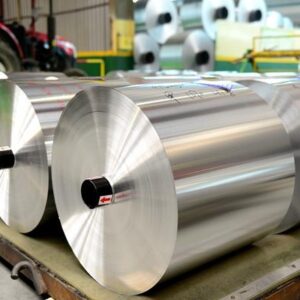


8079 PVDC coated Aluminium Foil pikeun molotok

Modél:. 8079 PVDC Coated Foil
Lamaran: High-barrier blister packaging for sensitive drugs and supplements.
Kustusi: Thickness, palapis, nyitak.
Sertifikasi: FDA, EMA, ISO.
Fitur inti:
- Superior moisture/oxygen barrier
- Kabébar alus pisan
- Stable heat seal
- Low pinholes
Bungkusan: Jumbo rolls.
1. Bubuka
8079 PVDC coated aluminum foil is a key high-barrier material in pharmaceutical blister packaging. It is extensively used for packaging tablets, rakép, health supplements, alat médis, and high-end food products.
With rising global demands for drug stability, shelf life, jeung kaamanan, conventional PVC blister materials often fall short for highly sensitive drugs. This includes hygroscopic, oxidation-prone, and light-sensitive drugs, as well as formulations containing high-activity APIs or designed for sustained release.
Packaging for such products must offer superior barrier properties, extremely low moisture and oxygen transmission rates, reliable heat seal performance, and stable mechanical strength.
It is against this market backdrop that 8079 PVDC coated aluminum foil has become a mainstream, high-end pharmaceutical packaging material. Its core advantages stem from two key components:
8079 Aluminum Alloy Substrate
8079 milik séri 8xxx tina aluminium aluminium, known for:
- Extremely low pinhole count
- ductility alus teuing
- Superior deep-drawing performance
- More stable capability for ultra-thin rollingEven at thicknesses as low as 20μm, it retains good mechanical strength and barrier properties.
PVDC High-Barrier Coating
PVDC (Polivinilidéna klorida) is a high-performance barrier polymer, nampilkeun:
- Ultra-low moisture vapor transmission
- Ultra-low oxygen transmission
- Good chemical corrosion resistance
- Stable heat seal performanceThe PVDC coating can further seal micro-pores in the aluminum foil, significantly enhancing the overall barrier performance of the packaging.
Ku kituna, 8079 PVDC coated aluminum foil can achieve:
- Tingkat pangiriman Uluman Uluman (Mvtr) < 0.1 g/m²·poé
- Suku dokumén oksigén (OTR) close to 0This effectively extends drug shelf life and ensures efficacy stability.
Ayeuna, this material is a vital solution for PTP (Press-Through-Pack) bungkusan lepuh farmasi, packaging for tropical regions, and other high-barrier pharmaceutical packaging applications.
2. Analisis tina 8079 Aluminum Foil Base Material
2.1 Composition of 8079 Aluminium Alloy
8079 aluminum alloy belongs to the 8xxx series. This series is primarily used for ultra-thin foil, bungkusan farmasi, bungkusan dahareun, battery packaging, and high-barrier composite materials.
The uniqueness of 8079 lies in the strict control of its iron (Fe) to silicon (Jeung) ratio, which optimizes rolling performance and ductility while ensuring strength.
Komposisi kimia
| unsur | Rentang eusi | Primary Function |
|---|---|---|
| alumunium (Al) | ≥ 98.0% | Provides the base barrier properties |
| Beusi (Fe) | 0.7 - 1.3% | Increases strength, refines grain structure |
| Silikon (Jeung) | 0.05 - 0.30% | Improves rolling performance |
| Tambaga (Cu) | Eusian 0.05% | Impurity control |
| Séng (Zn) | Eusian 0.10% | Impurity control |
| Sanés | Eusian 0.15% | Trace element control |
2.2 Watek umum
In the pharmaceutical blister packaging field, 8079 is almost exclusively used in the O Waktu (Diantared, Lemes Watek).
The O temper represents a fully annealed state, characterized by high softness, strong elongation, formability alus teuing, and resistance to cracking during deep drawing.
Importance of O Temper
The blister forming process involves pressing, mambung, sareng segel panas. Excessive foil hardness can lead to cracking, fracturing, PINKH, and poor sealing. O Waktu 8079 maintains stable deformation, improves package integrity, and reduces scrap rates, making it the standard temper for pharmaceutical packaging.
2.3 Common Thicknesses
Different packaging structures have varying thickness requirements.
Spésifikasi umum
| Lamaran | Ketebalan Range |
|---|---|
| Standar PTP Foil | 20 - 30 μm |
| High-Barrier Blister Packaging | 25 - 30 μm |
| Foil for Tropical Climates | 25 - 35 μm |
| Cold-Forming Aluminum-Aluminum Packaging | 40 - 65 μm |
| Flexible Packaging Laminates | 6 - 20 μm |
Importance of Thickness Control
Foil thickness must be maintained with extremely high consistency. Excessive thickness variation can lead to unstable sealing, inconsistent forming depths, fluctuating barrier performance, and package leakage. High-end pharmaceutical foil typically controls thickness tolerance within ±5% or ±0.001mm to ensure compatibility with high-speed automated packaging equipment.
2.4 Sipat fisik sarta mékanis
8079 pharmaceutical aluminum foil offers excellent overall performance.
| Harta | Nilai khas | Fungsi |
|---|---|---|
| Kakuatan regangan | ≥ 100 - 150 MPa | Ensures packaging strength |
| Elongation | 3.5% - 7% | Enhances deep-drawing capability |
| Kapadetan | 2.70 g/cm³ | Enables lightweight packaging |
| Kakuatan Burst | 80 - 270 Kpa | Resistance to internal pressure |
| Kontrol pinhole | Eusian 1 buah/m² | Ensures high barrier properties |
| Kasabaran ketebalan | ± 5% | Improves equipment runnability |
Naha 8079 More Suitable for Pharmaceutical Foil?
Dibandingkeun sareng 8011, 8079 offers higher elongation, lower pinhole count, and stronger deep-drawing capability, making it more widely used in high-end pharmaceutical packaging, packaging for tropical regions, and packaging for long-shelf-life drugs.
3. Naon 8079 PVDC Coated Aluminum Foil?
8079 PVDC coated aluminum foil is a high-performance composite material for pharmaceutical packaging. Its structure consists of a 8079 aluminum foil substrate coated with a PVDC high-barrier layer. This combination integrates the absolute light barrier of metallic aluminum foil with the superior oxygen and moisture barrier of PVDC, resulting in a packaging material with high barrier properties, stabilitas tinggi, and good heat sealability.
3.1 Function of the PVDC Coating
PVDC is one of the most established high-barrier materials in pharmaceutical packaging.
(1) Superior Oxygen Barrier
PVDC has a dense molecular structure, making it difficult for oxygen to penetrate. Its typical Oxygen Transmission Rate (OTR) geus <1 ans /(² · 24h), effectively protecting antibiotics, ubar hormonal, and oxidation-sensitive formulations from degradation.
(2) Extremely Low Moisture Vapor Transmission
PVDC can achieve a Water Vapor Transmission Rate (WVTR) tina <0.1 g /(² · 24h), significantly improving the stability of moisture-sensitive products like effervescent tablets, rakép, probiotik, and herbal preparations.
(3) Résistansi Korosi Kimia
PVDC offers excellent chemical resistance, tolerating acids, alkali, and organic solvents, preventing reactions between the packaging material and the drug.
(4) Enhanced Heat Seal Performance
PVDC improves seal strength, integritas segel, and peel stability. It is compatible with various blister base webs like PVC, Piaraan, Pp, and Aclar.
3.2 Functioning in Packaging
In blister packaging, 8079 PVDC coated aluminum foil is typically used as the panutup foil.
After packaging, the PVDC layer faces the interior of the blister, functioning to block moisture and oxygen, provide the heat seal, and prevent drug degradation. The outer aluminum foil layer can be printed on, serialized, or marked with anti-counterfeit features to meet pharmaceutical regulations.
3.3 Struktur has
The common structure is as follows:
| Lapisan | Fungsi |
|---|---|
| Lapisan citak | Branding and information display |
| Primer Layer | Ningkatkeun adhesion tinta |
| 8079 Substrat Aluminium Foil | Primary barrier layer (blocks light, gas, kalembaban) |
| PVDC palapis | High barrier layer (meungpeuk oksigén, kalembaban) |
| Lapisan Seal Panas | Seals to PVC or other blister base webs |
Some high-end products may include additional layers like anti-counterfeit layers, easy-peel layers, or laser-marking layers to increase market competitiveness.
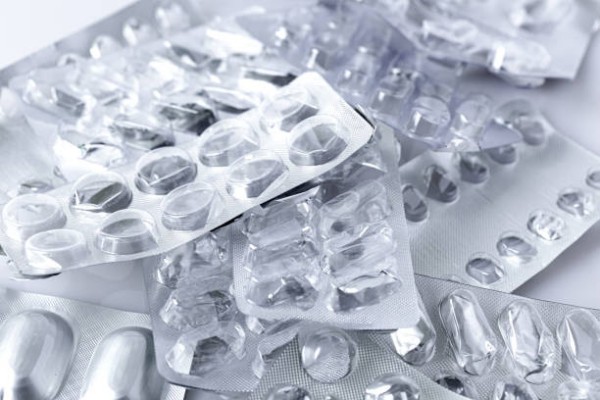
4. Naha milih 8079 PVDC Coated Blister Foil?
4.1 Sipat panghalang punjul
This is its primary advantage. The aluminum foil itself blocks light, gas, jeung Uap. The PVDC coating further seals micro-pores, reducing oxygen and moisture transmission, achieving a near-absolute barrier. This is especially suitable for highly sensitive drugs, tropical markets, and drugs requiring a long shelf life.
4.2 Strong Pinhole Resistance
The 8079 alloy’s fine grain structure, stable ductility, and low-silicon design effectively reduce pinhole formation. The PVDC coating can also cover micro-defects in the foil, providing a dual-layer of protection.
4.3 Excellent Deep-Draw Formability
O Waktu 8079 foil is highly flexible, suitable for deep-cavity blisters, bungkusan husus ngawangun, and high-speed blister forming, effectively reducing the risk of cracking and scrap rates.
4.4 Stable Heat Seal Performance
PVDC has a wide heat seal temperature range, enabling low-temperature, gancang, and high-strength sealing, making it well-suited for modern high-speed pharmaceutical equipment.
4.5 High Packaging Durability
8079 foil possesses high tear resistance and good mechanical strength, allowing it to withstand compression, friction, and temperature/humidity variations during transportation, effectively protecting the drug product.
4.6 Kauntungan ringan
Using ultra-thin aluminum foil helps reduce packaging weight, shipping costs, and carbon footprint, aligning with green packaging trends.
4.7 Excellent Printability
The outer foil layer supports color printing, UV printing, pharmaceutical serialization, and anti-counterfeit printing, meeting the needs of branded drug packaging.
5. Production Process of 8079 PVDC Coated Pharmaceutical Foil
5.1 Raw Material Preparation
Gorot aluminium tinggi (Al ≥ 99.7%) dipaké. The Fe and Si content and Fe:Si ratio are strictly controlled via spectroscopic analysis to ensure final performance consistency.
5.2 Foil Rolling Process
This includes:
- Rolling panas: The ingot is initially rolled to a thickness of 2–6mm.
- Tiis gulung: The foil is further thinned, with control over surface roughness, rolling oil, and tension.
- Rengse gulung: The foil reaches the final target thickness (0.006–0.09mm / 6-90μm) with precision controlled by online X-ray thickness gauging.
5.3 Pangobatan Annealing
Annealing is performed at 250–300°C to relieve rolling stress, optimize the grain structure, and increase softness, achieving the O temper.
5.4 Perawatan permukaan
Before PVDC coating, the foil must undergo degreasing, beberesih, and corona treatment to increase its surface energy and coating adhesion.
5.5 PVDC Coating Process
Primarily uses gravure coating or precision roll coating.
| Parameter | Kisaran khas |
|---|---|
| Beurat palapis | 5 - 120 g/m² |
| Common Specification | 20 - 30 g/m² |
| Kentel palebatan | 1 - 30 μm |
Online inspection ensures coating uniformity.
5.6 Slitting and Packaging
The final product is slit to various widths (E.g., 60–1700mm). Finished rolls are packaged with moisture barrier, vacuum-sealed, or include desiccants to prevent moisture absorption during transport and storage.

6. Quality Control System
Pamariksaan Online
Ngawengku pangukuran ketebalan, coating uniformity check, and surface defect detection.
Laboratory Testing
- Sternal Halher: WVTR and OTR testing.
- Sipat mékanis: Tensile strength, elongasi, burst strength testing.
- Packaging Performance: Heat seal strength, kakuatan mesek, coating adhesion testing.
- Safety Testing: Residual solvent analysis, heavy metal content, microbiological control.
All testing must comply with international standards and regulations such as FDA, EMA, ISO, and USP.
7. Wewengkon Aplikasi
7.1 Bungkusan Blister Farmasi
8079 PVDC coated aluminum foil is mainly used for pharmaceutical blister packaging, including tablets, rakép, antibiotik, cardiovascular medicines, and hormonal drugs. Its excellent moisture and oxygen barrier properties help protect sensitive medicines from degradation caused by humidity, oksigén, sareng paparan lampu.
This material is especially suitable for pharmaceutical products exported to tropical and high-humidity regions such as Southeast Asia, Wétan Tengah, jeung Afrika. It maintains stable sealing and barrier performance even under high-temperature and high-humidity storage conditions.
For long shelf-life medicines, 8079 PVDC blister foil helps reduce oxidation, Campur Uap, sareng kontaminasi, ensuring drug stability during transportation and storage.
7.2 Bungkusan Dahareun High-End
8079 PVDC coated aluminum foil is widely used in high-end food packaging applications such as chocolate, kopi, kéju, and ready-to-eat foods. Its high-barrier structure helps preserve aroma, kesar waktosna, and nutritional value while preventing moisture penetration and oxidation.
In coffee packaging, the material effectively retains aroma and flavor stability. For chocolate and dairy products, it helps reduce oxidation and extend shelf life. It is also suitable for premium export foods requiring long-term freshness protection.
Compared with ordinary plastic packaging, 8079 PVDC foil offers significantly better oxygen and moisture barrier performance.
7.3 Health Supplement Packaging
8079 PVDC coated aluminum foil is suitable for health supplements such as fish oil, probiotik, vitin, and Omega-3 products. These products are highly sensitive to oxygen and moisture, which can reduce product effectiveness and stability.
The excellent barrier performance of PVDC coated foil helps prevent oxidation and moisture absorption, extending the shelf life of active ingredients and maintaining product quality during storage and transportation.
It is also widely used for collagen, coenzyme Q10, ekstrak herbal, and other functional nutritional products.
7.4 Bungkusan Alat Médis
8079 PVDC coated aluminum foil is widely used in medical device packaging because of its excellent moisture barrier, reliabiliti sealing, jeung kabersihan. It is suitable for diagnostic test strips, medical consumables, sterile products, and in-vitro diagnostic (IVD) bungkusan.
For products such as blood glucose test strips and pregnancy tests, moisture protection is critical to maintaining testing accuracy. The high-barrier structure helps reduce contamination risks and improves long-term storage stability.
Its strong sealing performance and puncture resistance also help protect medical products during transportation and handling.
8. Babandingan tina 8079 with Other Materials
| Kategori | Material / Palapis | Elongation | Jumlah Pinhole | Deep-Draw Performance | Bangor Agung | Panghalang Uap | Heat Sealability | Kasaluyuan / Fitur konci | Ongkos |
|---|---|---|---|---|---|---|---|---|---|
| Aluminum Foil Alloy | 8079 Foil | Handap | Handap | alus teuing | alus teuing | alus teuing | alus teuing | Stronger suitability for high-barrier pharmaceutical packaging | Slightly Higher |
| Aluminum Foil Alloy | 8011 Foil | Standar | Rata-rata | Alus | Alus | Alus | Alus | Standard pharmaceutical blister packaging applications | Handap |
| Bahan Palapis | PVDC | — | — | — | alus teuing | alus teuing | alus teuing | Best overall performance, mainstream for pharma high-barrier packaging | Sedeng-Luhur |
| Bahan Palapis | Gugah | — | — | — | alus teuing | goréng | Adil | High oxygen barrier, but sensitive to moisture | Sedeng |
| Bahan Palapis | Akrligic | — | — | — | Alus | Alus | Alus | Balanced barrier and sealing performance | Sedeng |
| Bahan Palapis | PE | — | — | — | Adil | Alus | alus teuing | General barrier performance with excellent sealing capability | Rendah |
9. Naha milih 8079 PVDC Coated Aluminum Foil?
The core advantages are summarized below:
- Panghalang luhur: Suitable for highly sensitive drugs.
- Lower Pinhole Count: Improves packaging security.
- More Stable Heat Seal: Compatible with high-speed automated equipment.
- Longer Shelf Life: Enables stable storage for 2–5 years.
- Stronger Processing Performance: Suitable for deep drawing, high-speed blistering, and automated production.
10. kacindekan
8079 PVDC coated aluminum foil is a key material in current high-end pharmaceutical blister packaging. The combination of high-performance 8079 aluminium foil and a PVDC high-barrier coating delivers ultra-high barrier properties, extremely low pinhole counts, sealing stabil, and excellent deep-draw performance. It effectively meets the stringent modern pharmaceutical industry requirements for drug stability, long shelf life, and high-barrier packaging.
Payun, as global pharmaceutical packaging standards rise and the number of highly sensitive formulations grows, the market demand for 8079 PVDC pharmaceutical aluminum foil is expected to continue expanding.
FAQ
Q1: What is PVDC?
A: PVDC is Polyvinylidene Chloride, a high-barrier polymer with excellent moisture barrier, bangor Agung, and chemical resistance properties, widely used in demanding packaging applications.
Q: Naha 8079 alloy suitable for pharmaceutical foil?
A: Margi 8079 alloy offers high ductility, a low pinhole count, and excellent deep-drawing performance, making it particularly suitable for producing the ultra-thin, complex-formed foils required in pharmaceutical packaging.
Q3: How does the PVDC coating enhance barrier performance?
A: The PVDC coating covers the microscopic pinholes inherent in the aluminum foil itself, further reducing the transmission rate of both moisture vapor and oxygen, thereby enhancing the overall barrier integrity of the packaging.
Q4: Geus 8079 PVDC pharmaceutical foil safe?
A: Sumuhun. Its production and quality control must comply with international pharmaceutical and food packaging regulations and standards such as FDA, EMA, and USP, ensuring its safety.
Q5: Tiasa 8079 foil be printed?
A: Sumuhun. The outer foil layer supports various printing processes including color printing, UV printing, anti-counterfeit printing, and serialization, meeting the information labeling and branding needs of modern pharmaceutical packaging.


