
Vodič za cijene PTP aluminijske folije | Farmaceutska folija za blister pakiranje
U suvremenoj farmaceutskoj industriji, PTP aluminijska folija (Farmaceutska PTP aluminijska folija) has become one of the most core materials for blister packaging. Nearly all tablete, kapsule, vitamini, and health supplements utilize blister packaging, with PTP aluminum foil serving as the poklopna folija, playing a crucial role in protecting the stability of medicines.
As the global pharmaceutical industry continues to expand, pharmaceutical companies and packaging material purchasers are increasingly focused on a central, practical question:
What is the PTP Aluminum Foil Price, and how can its reasonableness be evaluated?
U stvarnosti, PTP aluminum foil price is not a fixed number; it is influenced by a combination of internal and external factors, kao npr:
- Aluminum Ingot Price (LME Aluminum Price): The primary raw material, whose global price fluctuations form the cost basis.
- Debljina folije: Directly determines aluminum usage, a key cost driver.
- Vrsta legure: Different alloys (Npr., 8011, 8021) vary in composition, performanse, i trošak.
- Printing Colors and Complexity: Significant cost difference between single-color and multi-color, high-precision printing.
- Coating Technology: Prices differ between standard heat-seal coatings and special functional coatings.
- Order Quantity: Larger volume purchases typically yield better unit pricing.
- Certifikati kvalitete & Standardi: Foils compliant with stringent standards (FDA, EU, GMP) involve higher production and QC costs.
This article will provide a systematic and structured guide on pharmaceutical PTP aluminijska folija, covering aspects from basic definition, multilayer structure, market price composition, detailed technical specifications, precizni procesi proizvodnje, strogi standardi kvalitete, global market trends, to core procurement strategies, aiming to empower you with informed decision-making.

1. Što je PTP aluminijska folija? An In-depth Analysis of Its Definition and Role
PTP aluminijska folija (Aluminijska folija za pakiranje) is a composite aluminum foil material specially designed and manufactured for pharmaceutical blister packaging. Its name describes its usage: the patient simply presses the transparent cavity (žulj), and the tablet or capsule inside pushes through the aluminum foil lidding, otuda i naziv Prešano pakiranje (PTP). This design greatly enhances medication convenience and accuracy.
PTP foil is not used alone; it is always paired with formable plastic sheets to create a complete pack. Common combinations include:
- PVC Sheet: Most economical and common, provides basic protection for most drugs.
- PVDC-coated PVC Sheet: Polyvinylidene chloride coating on PVC significantly improves barrier properties against moisture and oxygen.
- PP Sheet: Suitable for drugs extremely sensitive to moisture or requiring higher chemical stability.
Zajedno, they form the classic blister pack structure, layered as follows:
Typical Blister Pack Structure Analysis
| Layer Structure | Materijal | Funkcionalni opis |
|---|---|---|
| Blister Cavity (Base Web) | PVC / PVDC / PP | Forms the cavity (žulj) holding the tablet via thermoforming, provides structural support, and heat-seals to the foil. |
| Proizvod | Tablet / Kapsula | The contents, placed within the formed cavity. |
| Lidding/Seal | PTP aluminijska folija | Covers the back of the blister base web, heat-sealing tightly to it, sealing the product in an individual unit, providing ultimate protection. |
This multi-layer composite structure works synergistically to achieve excellent protective properties:
- Moisture Proof: The aluminum foil layer provides a 100% barrier against water vapor, preventing drug degradation or reduced efficacy from moisture.
- Oxidation Proof: Potpuno blokira kisik, avoiding oxidation of active ingredients.
- Light Proof: The foil’s opacity effectively blocks UV and visible light, protecting light-sensitive drugs.
- Fizička zaštita: Provides some resistance to crushing and abrasion.
- Long-term Storage: Significantly extends product shelf life by combining the above properties.
- User Convenience: Unit-dose packaging, easy to carry, identify, and administer, improving patient compliance.
Stoga, with its irreplaceable combination of advantages, PTP aluminum foil has become the gold standard material in the global pharmaceutical packaging industry, especially for solid oral dosage forms.
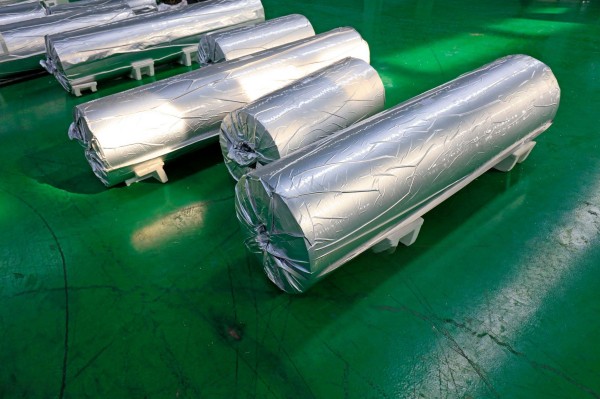
2. PTP Aluminum Foil Structure Analysis: A Multi-layer Composite Technology Barrier
PTP aluminum foil is far from a simple metal sheet; it is a meticulously engineered multilayer composite material. Each layer serves a specific and critical function, laminated together through precise coating processes.
Typical PTP Aluminum Foil Structure and Function Details
| Sloj (Outside to Inside) | Primary Material/Process | Core Function and Detailed Description |
|---|---|---|
| Tiskarski sloj | Pharmaceutical-grade inks | The consumer-facing outer layer. Used to print key information like drug name, logo, doziranje, broj serije, and expiry date. Inks must be non-toxic, otporan na abraziju, with good adhesion and printability. Multi-color printing is done here. |
| Zaštitni sloj (Outer Coating) | Clear or colored protective lacquer | Applied over the printed layer. Mainly protects the print from scuffing or abrasion during production, rukovanje, i koristiti. Also provides gloss and aesthetics. |
| Substrate Layer (Core) | High-purity aluminum foil (Npr., 8011 legura) | The “backbone” i “soul” od PTP folije. Typically 0.018mm to 0.025mm thick. Provides the primary mechanical strength and, thanks to aluminum’s inherent properties, delivers exceptional barrier performance, nearly completely blocking: |
| * Kisik: Prevents drug oxidation. | ||
| * Vodena para: Prevents moisture absorption. | ||
| * Svjetlo: Blocks UV & vidljivo svjetlo, protecting photosensitive drugs. | ||
| Its good ductility also enables the “prešati” značajka. | ||
| Sloj za toplinsko brtvljenje (Inner Coating) | Special heat-seal lacquer (Npr., VC lacquer) | The layer that bonds to the blister base web (PVC/PVDC/PP). At the heat-seal station of a blister machine, under correct temperature and pressure, this coating melts and forms a strong, hermetic seal with the base web, ensuring each blister pocket is isolated and completely closed. This is key to package integrity. |
Ovaj “print-protect-barrier-seal” multilayer structure creates a perfect packaging solution that meets information, top-tier physicochemical protection, and user convenience needs, crucial for maintaining drug stability throughout its lifecycle.
3. PTP Aluminum Foil Price Deep Dive Analysis
As a bulk industrial and customized packaging material, PTP aluminum foil prices in international trade are typically quoted in US Dollars per metric ton (USD/ton) or per kilogram. Actual purchase prices are calculated precisely based on specific specifications.
2025–2026 Global Market Reference Price Range (FOB Main China Ports)
| Vrsta proizvoda | Price Range (USD/ton) | Ključni čimbenici utjecaja & Bilješke |
|---|---|---|
| Plain/Unprinted PTP Foil | 3,200 – 3,800 | Basic type, only coated. Price mainly influenced by aluminum cost, legura, coating formula, i debljina. Used when printing is not required or done later. |
| Single-Color Printed PTP Foil | 3,600 – 4,200 | Adds single-color (often black/dark) printing to plain foil. Price increase covers ink, plate-making, and printing costs. The most common commercial form. |
| Multi-Color Printed PTP Foil | 4,200 – 5,000+ | Requires 2 or more color registrations. Process is more complex, demanding higher equipment precision. Price increases significantly per added color. Used for branded/OTC drugs for better identification and anti-counterfeiting. |
| High-Barrier/Specialty PTP Foil | 4,500 – 5,200+ | Uses special alloys (Npr., 8021), thicker gauge, or added functional coatings (Npr., higher seal strength, easy-peel). For high-value, moisture/oxygen-sensitive drugs, biološki lijekovi, or special formulations. |
Important Note: The above are broad reference ranges based on market conditions, not fixed quotes. The final quote for an actual order is precisely influenced by:
- Raw Material Price Fluctuations: London Metal Exchange (LME) aluminum ingot spot price is the core variable, affecting foil cost daily.
- Printing Complexity: Number of colors, print area, need for special inks (Npr., termokromni, fluorescent security inks) greatly impact cost.
- Tip premaza & Tech Specs: Cost differs between standard and imported pharmaceutical-grade heat-seal lacquers. Additional protective/functional coatings add cost.
- Order Quantity & Naočale: Large-volume/long-term orders significantly reduce unit cost. Non-standard specs (special widths, ultra-thin/thick gauges) may increase processing difficulty and price.
- Quality Certs & Standardi: Factories compliant with stringent standards (Npr., US/EU GMP, FDA DMF) have higher production/QC costs, reflected in pricing.
- Logistika & Trade Terms: Price composition varies under FOB, CIF, DDP, itd. Current international freight volatility also affects landed cost.
4. PTP Aluminum Foil Price Composition: Cost Breakdown from Ingot to Finished Product
Understanding the pricing logic of PTP foil aids in effective cost analysis and negotiation. The price can be broken into two main components:
PTP Foil Ex-Factory Price ≈ Aluminum Raw Material Cost + Comprehensive Processing Fee
Aluminum Raw Material Cost fluctuates with international aluminum prices. The Comprehensive Processing Fee covers all value-added processes, management, profit, and quality assurance costs from aluminum coil to finished PTP foil.
Detailed Cost Structure Analysis (Percentages are approximate ranges)
| Troškovna komponenta | % Raspon | Detailed Description |
|---|---|---|
| Aluminum Raw Material Cost | 55% – 65% | The largest cost component. Based on net aluminum consumption (calculated from thickness/width) multiplied by current ingot price (considering yield loss). Aluminum price volatility is the primary cause of price instability. |
| Rolling Processing Fee | 10% – 15% | Covers energy, depreciation, labor, and tech costs to process ingots into foil substrate of specified thickness (Npr., 0.02mm) via casting, toplo/hladno valjanje. Thinner gauges often increase rolling difficulty/cost. |
| Coating Treatment Fee | 8% – 12% | Includes surface treatment, heat-seal lacquer coating, itd. Cost is much higher for imported high-end or special functional lacquers. This step determines foil’s sealing performance and compatibility with different base webs. |
| Printing Processing Fee | 5% – 10% | Involves plate-making, tinta, tiskanje (gravura), and energy. Driven by color count, točnost registracije, ink type (standard vs. security). Multi-color/fine patterns require more expensive equipment/control. |
| Prerezivanje & Packaging Fee | 3% – 5% | Cutting the master jumbo roll into precise widths per order, plus inner (Npr., plastična vrećica, papir otporan na vlagu) and outer packaging (carton, drvena paleta) to prevent deformation/contamination during transit. |
| Kontrola kvalitete & Testiranje | 3% – 5% | Full-process QC costs: incoming material inspection, in-process control, finished product testing (rupice, debljina, čvrstoća brtve, ostaci otapala, microbiology). Essential for pharmaceutical-grade quality. |
| Factory Ops & Profit | 5% – 10% | Covers overhead, R&D, certification maintenance, prodajni, and reasonable profit margin. Leading manufacturers with international certs and reputation often command higher processing fees/profit, reflecting reliability. |
When global aluminum prices rise significantly, the overall PTP foil price typically follows. The processing fee is relatively stable, reflecting the manufacturer’s technical prowess and efficiency.

5. Detailed PTP Aluminum Foil Technical Specifications
Selecting the right PTP foil specifications is crucial for smooth packaging line operation and quality. Specs are primarily determined by drug characteristics, packaging machine model, and desired shelf life.
Common Thickness Specifications and Applications
| Debljina (mm) | Equivalent Micron (μm) | Primarne aplikacije & Karakteristike |
|---|---|---|
| 0.018 | 18 μm | Economical Option. For drugs with less stringent barrier needs, some supplements, or low-cost generics. Tanji, lower material cost, but slightly weaker mechanical strength/puncture resistance. |
| 0.020 | 20 μm | The most mainstream, common standard thickness globally. Offers the best balance of barrier, mehanička čvrstoća (puncture/bend resistance), koštati, i obradivost (Npr., sila probijanja). Suitable for the vast majority of tablets/capsules, the default choice. |
| 0.025 | 25 μm | High-Strength/High-Barrier Option. For irregularly shaped drugs with sharp edges, or high-value drugs/biologics with extreme barrier requirements. Provides stronger protection and longer shelf life assurance, at higher cost. |
Među njima, 0.020mm (20μm) is the de facto industry standard due to its optimal cost-performance and versatility.
Common Width Specifications and Relationship with Packaging Machines
PTP foil width must precisely match the blister machine’s mold width.
| Raspon širine (mm) | Primarne aplikacije & Machine Compatibility |
|---|---|
| 80 – 150 | Za small or lab-scale blister machines. Used for small batches, clinical trial drugs, or very small products. |
| 150 – 300 | Most common commercial production range. Covers most medium to large high-speed automatic blister lines. Widths here (Npr., 210mm, 250mm, 290mm) are highly standardized and readily available. |
| 300 – 600+ | Za extra-wide, ultra-high-speed lines for maximum output. velika, costly equipment used by major pharma companies to form multiple blister rows simultaneously. |
Always confirm the exact foil reel width, core inner diameter, and maximum outer diameter with the machine supplier or manual.
6. PTP Aluminum Foil Alloy Types: The Material Science Choice
Not all aluminum foils are suitable for drug packaging. PTP foil is typically made from specific aluminum alloys optimized for formability, snaga, fleksibilnost, and food/product safety.
Common Alloy Grades and Their Properties
| Vrsta legure | Ključne karakteristike & Prijave |
|---|---|
| 8011 | The absolute mainstream and standard material for pharma blister lidding. Typically used in H18 temper (teško). Offers excellent deep-draw formability, good strength, suitable flexibility, and is easy to coat/print. Complies with health/safety standards. Used for the vast majority of PTP foil. |
| 8021 | Generally has fewer trace elements and higher purity than 8011, offering vrhunska barijerna svojstva (especially lower pinhole rate). For high-value, extremely moisture/oxygen-sensitive drugs requiring very long shelf life. Usually higher priced than 8011. |
| 1235 | Visoka čistoća (Al≥99,35%), softer, izvrsna duktilnost. May offer smoother push-through for specific applications. Slightly lower strength than 8011-H18, may require precise tension control on high-speed lines. Can be cost-competitive. |
Ukratko, 8011-H18 foil is the undisputed standard due to its balanced properties, mature technology, and stable supply. Consult with supplier technicians when selecting alloys.
7. PTP Aluminum Foil Production Process: The Precision Journey from Ingot to Product
Detailed Production Process Flow
- Topljenje & Casting/Rolling: High-purity ingots are melted with trace elements per alloy formula, cast into large slabs, and hot-rolled into thicker coils.
- Hladno valjanje: The coil is rolled to the final thin gauge (Npr., 0.02mm) at room temperature through multiple passes. Requires extreme precision and lubrication control for uniform thickness and smooth surface.
- Srednje žarenje (if needed): For some alloys, annealing during cold rolling relieves work hardening, restoring flexibility.
- Čišćenje površine & Predtretman: Chemical and physical cleaning removes rolling oils/contaminants, crucial for coating adhesion.
- Coating Treatment: A special heat-seal lacquer is uniformly applied. Težina premaza, ujednačenost, and drying are precisely controlled.
- Tiskanje: High-speed gravure printing applies designs/info. Precise registration is critical. Ink is dried immediately.
- Zaštitni premaz (Neobavezno): A transparent protective lacquer may be applied over the print for abrasion resistance/gloss.
- Prerezivanje & Premotavanje: The master jumbo roll is slit into narrower rolls per ordered width. Defects are removed.
- In-line & Off-line QC: Continuous monitoring (debljina, rupice) and lab testing (čvrstoća brtve, ostaci otapala, microbiology).
- Pakiranje & Skladištenje: Finished rolls are wrapped in moisture-proof material, core-chucked, boxed, palletized, and stored in a clean, dry warehouse.
Every step must follow strict Good Manufacturing Practices (GMP) for consistency and reliability.
8. PTP Aluminum Foil Quality Testing Standards: The Foundation of Safety
In direct contact with drugs, PTP foil must comply with the strictest global pharmaceutical packaging regulations.
Mandatory International & Regional Standards
| Standardni sustav | Regija | Key Focus |
|---|---|---|
| GMP | Global | Dobra proizvođačka praksa. Covers packaging material production. Requires a full quality assurance system from raw materials to finished goods. The fundamental baseline. |
| FDA | SAD & Regions recognizing its standards | NAS. Uprava za hranu i lijekove regulations. Packaging must not interact with the drug or migrate harmful substances. Suppliers often need FDA Drug Master File (DMF) or audit compliance. |
| EU Regulations | Europska unija | Follows European Pharmacopoeia (EP) and EU GMP. Detailed requirements for biocompatibility, chemical safety (Npr., heavy metals, primary aromatic amines migration), toxicology. Requires TSE/BSE statement. |
| YBB Standards | Kina | National Drug Packaging Container (Materijal) Standardi. Mandatory for the Chinese market. Specifies physical, kemijski, and biological test methods and limits for medicinal foil. |
Key Testing Parameters
- Fizička svojstva:
- Debljina & Ujednačenost
- Pinhole test: Critical; pinholes are primary channels for moisture/oxygen.
- Ispitivanje čvrstoće toplinskog brtvljenja: Measures force to separate foil sealed to a standard PVC sheet. Must be strong yet allow push-through.
- Push-through Force Test: Simulates the force needed to push a tablet out. Must be within an easy-to-use range.
- Kemijska svojstva:
- Ostaci otapala: Checks for leftover solvents from printing/coating.
- Sadržaj teških metala: Ensures lead, kadmij, Merkur, itd., are far below limits.
- Kemijska stabilnost: Tests for potential migration under simulated drug conditions.
- Printing Quality:
- Print Adhesion (Test trake)
- Print Definition & Registration Accuracy

9. PTP Foil vs. Hladna folija vs. Alu-Alu: Understanding Different Aluminum Packaging Forms
Besides PTP foil for lidding, two other important all-aluminum or aluminum-based packaging forms exist for higher-end applications.
Detailed Comparison of Three Aluminum-Based Packaging Types
| Aspekt | PTP aluminijska folija (Press Through Foil) | Hladna folija (CFF) | Alu-Alu Packaging (Blister pakiranje) |
|---|---|---|---|
| Struktura & Koristiti | Used as the poklopiti for blisters, heat-sealed to PVC/PVDC/PP base webs. | Used as the base web for blisters. Formed into cavities at room temperature under high pressure (“hladno oblikovanje”), then sealed to a special lidding (often a composite film). | Both base web and lidding are aluminum foil. The base is a softer, thicker aluminum foil thermoformed with heat, then sealed to a PTP foil lid. A fully aluminum sealed system. |
| Proces | Mature, fast, isplativo. | No heat for forming. High pressure at room temperature allows deeper, more complex shapes. Excellent product protection. | Both forming and sealing involve aluminum. Complex process, najveći trošak. Superior aesthetics and protection. |
| Barijera | visoko. Foil layer provides excellent moisture/oxygen/light barrier, but depends on plastic base web seal. | Vrlo visok. Its base is a high-barrier multilayer composite (with an aluminum layer). The cold-forming process doesn’t compromise the barrier. Overall barrier is superior to standard PTP. | Najviši. All-metal seal provides near-absolute moisture, kisik, svjetlo, and gas barrier. The “pinnacle” for oral solid dosage forms. |
| Koštati | Najniži. Most economical for both material and processing. | Jak. Composite foil material is costly, and cold-form equipment is expensive, with slower speeds. | Najviši. Uses two aluminum layers, with complex thermoforming and sealing processes, high control requirements. |
| Tipična uporaba | Common drugs, dodaci prehrani, most generics, and economical branded drugs. Najviše korišten. | Vrhunski, extremely moisture/oxygen-sensitive drugs (neki antibiotici, biološki lijekovi). Also for long shelf-life products. | Ultra-high-end drugs (expensive targeted/cancer drugs, oral vaccines), drugs for extreme climates. Also for premium supplements. |
| Patient Perception | Common, practical. | Profesionalni, visoke zaštite. | Luxury, ultimate safety, highest quality. |
Ukratko: PTP foil is the cost-effective mainstream choice; Cold Form Foil offers top protection for highly sensitive drugs; Alu-Alu is the ultimate, luxury-grade solution. Choice depends on drug properties, market positioning, i proračun.
10. Global PTP Aluminum Foil Market Size and Growth Drivers
The stable growth of the global pharmaceutical industry, driven by aging populations, rising chronic diseases, and improved healthcare access in emerging markets, directly fuels demand for high-quality packaging like PTP foil.
Global Market Size and Forecast (Consolidated industry estimates)
| Godina | Market Size (USD Billion) | Međugodišnji rast | Growth Driver Analysis |
|---|---|---|---|
| 2022 | ~0.95 | – | Recovery from pandemic, rebound in routine drug demand. |
| 2023 | ~1.02 | ~7.4% | Improved healthcare in emerging markets (Azija-Pacifik, Latin America), increased generic drug use. |
| 2024 | ~1.10 | ~7.8% | New drug launches, especially new oral solid dosage forms. Strong consumer preference for portable, unit-dose packs. |
| 2025 (Istočno.) | ~1.18 | ~7.3% | Growth in biosimilars and specialty drugs. Rising global health awareness, thriving vitamin/supplement market. |
| 2026 (Fore.) | ~1.25 | ~5.9% | Market matures to steady growth. Growth from: 1) Demand for higher-barrier, more functional foil (easy-peel, senior/child-friendly); 2) Sustainability trends driving R&D in recyclable solutions; 3) Smart manufacturing & digital supply chains improving efficiency. |
The market is expected to maintain a mid-to-high single-digit CAGR. Growth comes not just from volume, ali također value enhancement—demand for higher-performance, multi-functional, environmentally compliant foil.
11. Major Application Industries for PTP Aluminum Foil: Beyond Pharmaceuticals
While pharmaceuticals dominate, PTP foil’s excellent protection and convenience see use in other health-related industries.
Key Application Segments
| Industrija | Specific Product Applications | Bilješke |
|---|---|---|
| Farmaceutika (Core) | Prescription tablets/capsules, OTC lijekovi, generics, traditional medicine granules/tablets. | The largest, most demanding sector. Used for nearly all oral solid dosage forms. |
| Health Supplements & Nutraceutici | Vitamini (C, B, D), mineral tablets (calcium, željezo), fish oil capsules, herbal extract tablets, probiotic capsules. | A huge market, a significant growth driver. Consumers associate this packaging with safety/legitimacy. |
| Medicinski uređaji & Diagnostics | Primary packaging for sterile single-use devices (Npr., suture needles, scalpels), medical test strips, glucose strips in foil pouches. | Requires maintaining sterility or dryness. PTP foil provides a reliable barrier. |
| Hrana & Special Nutrition | High-value functional foods (Npr., single-serve melatonin gummies), measuring spoons for infant formula (individual sachets), seal film for coffee capsules, dividers for premium chocolates. | Ovdje, PTP foil often appears as foil pouches or lidding. Key for flavor/freshness protection. |
| Other Industrial | Moisture-proof packaging for electronic components, desiccant packets for precision instruments, historical packaging for photographic film. | Utilizes its excellent moisture and light barrier properties. |
The farmaceutska industrija, with its strict regulations and massive consumption, remains the primary driver for PTP foil technology, quality standards, and demand. The fast-growing supplement sector provides significant incremental space.
12. Professional PTP Aluminum Foil Procurement Guide: How to Choose a Reliable Supplier
For overseas buyers, especially first-time international purchasers, selecting a reliable, usklađen, and capable supplier is paramount.
1. Factory Qualifications & Certifikati: The Compliance Baseline
The first and most critical screening criterion. A qualified supplier must provide:
- Pharmaceutical GMP Certification: Proves compliance with packaging material production standards. Certifications from China NMPA, EU EDQM, or US FDA are strong validations.
- ISO 9001 Sustav upravljanja kvalitetom: The foundational international quality standard.
- ISO 14001 Environmental Management (Bonus): Reflects environmental and social responsibility.
- Glavni dokument FDA o lijekovima (DMF) Broj (for US market): Shows product/manufacturing info is on file with the FDA, easing drug application for pharma customers.
- Product Compliance Certificates: Test reports showing compliance with USP, EP, NBB, itd.
2. Proizvodna oprema & Tehnička sposobnost: Guarantee of Quality & Učinkovitost
Assessing production equipment, via audit or video, is direct proof of capability. Modern factories typically have:
- High-Speed Precision Rolling Mills: Ensure foil substrate thickness uniformity and surface quality.
- Fully Automatic High-Speed Coating Lines: With precise coating heads and drying systems for uniform coatings.
- Computerized Gravure Printing Presses: Ensure clear, točan, color-stable printing.
- In-line Quality Monitoring: Npr., online pinhole detectors, thickness gauges for real-time process control.
- Advanced Testing Lab: Equipped with seal strength testers, GC (for solvent residues), ispitivači zatezanja, itd., for complete final testing.
3. Sustav kontrole kvalitete: The Core of Consistency
Inquire about specific QC checkpoints and frequencies:
| Key Control Point | Metoda ispitivanja & Standard | Svrha |
|---|---|---|
| Ulazna inspekcija sirovina | Verify aluminum coil material certs, coating/ink compliance reports. | Eliminate risks at source. |
| Kontrola unutar procesa (IPC) | Online monitoring of thickness, težina premaza, print color, drying temp, itd. | Ensure stable, controlled production. |
| Final Product Release Testing | Each roll/batch must be tested (records kept) za: | |
| * Vizualno: Check for stains, ogrebotine, bore. | Ensure aesthetic perfection. | |
| * Dimenzije: Širina, debljina, duljina. | Confirm conformance to order. | |
| * Rupice: Test in darkroom or with dedicated equipment. | Prevent barrier failure. | |
| * Snaga toplinskog brtvljenja: Peel force after sealing to standard PVC. | Ensure package seal reliability. | |
| * Ostaci otapala: Gas chromatography. | Ensure chemical safety, poštivanje. | |
| * Mikrobne granice (Periodic/Batch): For non-sterile products. | Meet hygiene standards. |
4. Lanac opskrbe & Service Capability
- Production Flexibility: Accept small-batch, multi-variety orders? Stable lead times?
- Tehnička podrška: Offer packaging compatibility tests? Assist with line issues (brtvljenje, proguravanje)?
- Logistika & Export Experience: Stable international logistics partners? Kompletna dokumentacija (B/L, COO, health cert)?
- Sample Provision: Can provide samples matching mass-production quality quickly for testing?
When choosing, don’t just seek the lowest price. Consider technical strength, quality consistency, service responsiveness, and long-term partnership potential for a reliable, win-win supply chain.
FAQ: In-depth Answers to Common PTP Foil Questions
1. What is the standard PTP foil thickness? Kako odabrati?
Najčešći, widely used standard thickness is 0.020 mm (20 μm). It offers the best balance of protection, koštati, i obradivost.
Kako odabrati:
- 0.018mm: For cost-sensitive applications with less stringent barrier needs.
- 0.020mm: For the vast majority of tablets/capsules; the default, safe choice.
- 0.025mm: For irregularly shaped tablets with sharp edges, drugs with extreme barrier needs, or products requiring longer shelf life.
2. Can PTP foil be fully custom printed? What are the considerations?
Da, and it’s a standard service. Printable content includes: naziv lijeka, logo, doziranje, broj serije, datum isteka, instructions, company info, security patterns.
Razmatranja:
- Provide high-resolution vector artwork (Npr., AI, PDF).
- Specify color standards (Npr., PANTONE codes) for batch consistency.
- Consider print area and color count, as they directly impact cost.
- Inks must meet pharmaceutical packaging standards (netoksičan, otporan na abraziju, good adhesion).
- Always request a proof for color, position, and effect confirmation before first order.
3. What is the typical Minimum Order Quantity (MOQ)?
This varies by supplier size and model, but industry common MOQ is 1 do 3 metričke tone.
- Large-scale factories may have higher MOQs (Npr., 3-5+ tona) for efficiency.
- Some medium-sized or flexible factories may accept 1 ton or less, but unit prices will be higher.
- For new custom designs involving one-time plate-making charges, MOQ and unit price are higher. Clarify with the supplier based on specific specs.
4. What’s the main difference between PTP Foil and Cold Form Foil? Što je bolje?
They are not “bolje” than the other; they are two different products for completely different applications.
- PTP aluminijska folija: Used primarily as the “poklopac” for blister packaging. It heat-seals to a pre-formed plastic (PVC/PVDC/PP) blister base. Pros: Mature, low-cost, fast, extremely versatile. Za: The vast majority of conventional drugs.
- Hladna folija (CFF): Used primarily as the “blister tray” or base web. It’s a multilayer composite (with an aluminum layer) cold-formed under high pressure at room temperature, then sealed to a special lidding film. Pros: Pruža unmatched ultra-high barrier (extremely low WVTR), nearly absolute moisture/oxygen barrier. Za: High-value drugs/biologics extremely sensitive to moisture/oxygen.
Simple Summary: Need a “poklopac” to seal a plastic blister? Choose PTP foil. Need a “super moisture-proof tray” for the most moisture-sensitive drugs? Choose cold-form packaging. They are often used on different production lines within a pharma plant for different drugs.
Zaključak
With the continued growth of the global pharmaceutical and nutraceutical markets, and rising consumer demand for drug safety and convenience, PTP aluminum foil’s role as the core lidding material for blister packaging is more irreplaceable than ever. It has evolved from simple packaging to a critical functional component safeguarding the drug lifecycle.
Gledajući naprijed, PTP foil development will focus on “veće performanse, more functionality, and greater sustainability”:
- Veća izvedba: Developing coatings with better barriers and wider sealing ranges.
- More Functionality: Easy-to-open, otporan na djecu, braille printing, integration with smart labels (RFID).
- Greater Sustainability: Exploring downgauging (less material) and better integration into aluminum’s circular recycling economy.
For global buyers and pharma companies, while focusing on PTP Aluminum Foil Price as a business imperative, it’s crucial to adopt a strategic view and comprehensively evaluate a supplier’s long-term value:
- Absolute reliability and consistency of product quality;
- Advanced production technology and innovation capability;
- International regulatory compliance and certification completeness;
- Supply chain stability and responsive service capability.
Partnering with a reliable supplier possessing deep technical expertise, stringent quality management, and a forward-looking vision is the only way to ensure the security, djelotvornost, and reliability of drug packaging, thereby protecting brand reputation and patient health in a competitive market.