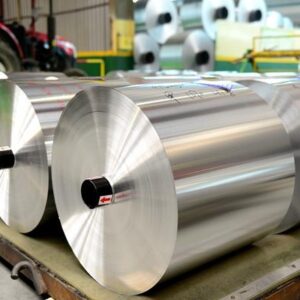


8079 O-Temper 0.014mm Flexible Aluminum Foil


8079 O-Temper 0.014mm Flexible Aluminum Foil
Against the industry trends of lightweight, premiumization, and long-lasting freshness in food packaging, flexible soft packaging has fully replaced traditional rigid packaging to become the mainstream form in the food sector. Market demands on packaging materials have evolved beyond basic sealing, now requiring a comprehensive performance profile featuring high barrier properties, strong flexibility, low cost, and compatibility with high-speed production.
I. Product Overview
The shift toward flexible packaging is driven by the need for efficiency and preservation. 8079 O-temper foil stands at the forefront of this transition, offering a solution that balances material science with industrial practicality.
8079 O-Temper 0.014mm Ultra-Thin Food Packaging Aluminum Foil, as the core substrate for high-end flexible packaging, perfectly aligns with the upgrade needs of modern food packaging. Leveraging an optimal material composition, mature rolling processes, and superior comprehensive performance, it is widely used in snacks, condiments, prepared dishes, coffee, tea, and more, making it the preferred aluminum foil material for high-end food soft packaging.

II. Core Parameters: Standardized Specifications for All-Scenario Laminating
The 8079 O-temper 0.014mm foil undergoes refined process calibration, ensuring stable performance and precise parameters. Its excellent comprehensive performance is achieved through accurate alloy composition ratios, making it compatible with various laminate structures and automated production equipment.
1. Core Alloy Composition
| Element | Content Standard | Performance Role |
|---|---|---|
| Aluminum (Al) | ≥98.2% | Ensures base material purity and fundamental barrier performance; meets food-grade safety standards. |
| Iron (Fe) | 1.0%–1.5% | Enhances foil flexibility and crack resistance; significantly reduces pinhole rates in ultra-thin specifications. |
| Silicon (Si) | 0.15%–0.30% | Optimizes rollability for uniform thickness and adaptation to ultra-thin finishing. |
| Copper (Cu) | ≤0.05% | Strictly controlled to prevent hardening and maintain O-temper softness. |
| Other Impurities | ≤0.30% | Strictly controlled total impurities ensure stable performance and no safety hazards. |
2. Basic Product Parameters
- Alloy Grade: 8079 Aluminum Alloy
- Temper: O (Fully Annealed/Soft)
- Standard Thickness: 0.014mm (Double-Zero Ultra-Thin Foil)
- Width Range: 200mm–1600mm (Customizable)
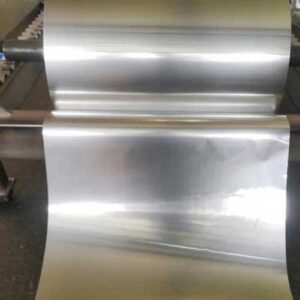
- Surface Finish: Single-side bright / Double-side bright (Optional); clean and flawless.
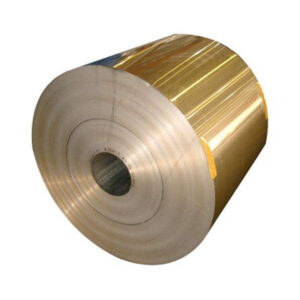
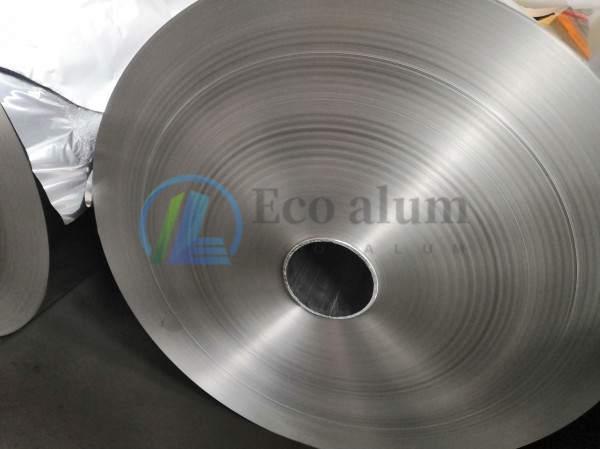
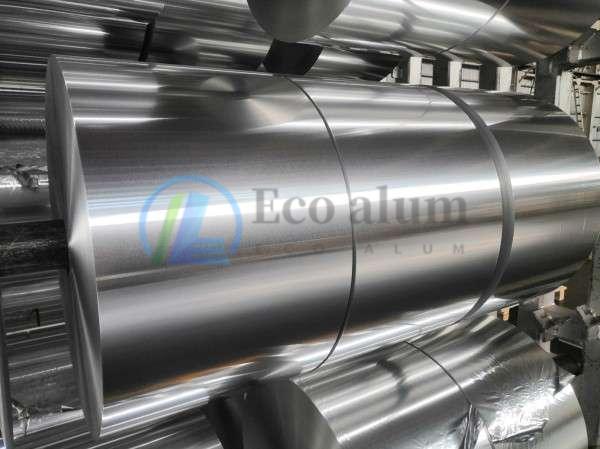
- Coil Form: Jumbo Rolls for industrial mass production.
- Typical Structures: PET/AL/PE, BOPP/AL/CPP, NY/AL/PE, PET/AL/CPP.
This product offers extensive specifications and strong adaptability. It can be laminated with different films based on requirements for strength, heat sealing, puncture resistance, and printing, fitting most flexible food packaging lines.

III. Core Performance Advantages
1. Ultimate Barrier Properties
Aluminum foil is one of the best barrier substrates in soft packaging. The 8079 O-temper 0.014mm foil, through refined rolling and annealing, offers barrier properties far exceeding standard foils. It provides high oxygen resistance, high moisture resistance, total opacity, and odor prevention.
- For high-oil foods: Inhibits oxidative rancidity and extends shelf life.
- For aromatics (coffee, tea, nuts): Locks in original aroma, preventing dampness and flavor loss.
- For condiments/sauces: Prevents external odor penetration, ensuring taste stability during long-term storage and cross-border transport.
2. Superior Flexibility & Toughness
The O-temper full annealing process eliminates internal stress from rolling, granting 8079 foil excellent ductility. It solves the industry pain points of brittleness and pinholes common in traditional ultra-thin foils. Compared to standard alloys, it shows no pinhole propagation or crack extension after folding and resists breakage during high-speed winding, bag-making, and printing.
- Stability: Performs exceptionally on high-speed lines (hundreds of meters per minute), reducing downtime and waste.
- Formability: Adapts to complex forming processes like shaped pouches, stand-up pouches, and vacuum bags.
3. Ultra-Thin Lightweighting
At 0.014mm, this is a mainstream optimized specification. Compared to traditional 0.016mm or 0.018mm foils, it reduces aluminum usage per unit area without degrading performance, directly lowering raw material costs. The lighter packaging weight also improves truck loading capacity and reduces logistics costs.
- Value Proposition: “Performance unchanged, consumption reduced, waste minimized.”
4. Strong Lamination Adaptability
With high surface cleanliness and stable wetting tension, it is suitable for solventless lamination, dry lamination, and high-speed color printing. It exhibits strong adhesion, preventing delamination or bubbling. It also withstands special conditions like low-temperature freezing and high-temperature retorting.
IV. Mainstream Laminate Structures
Based on its adaptability, 8079 foil can be combined with various films to form differentiated structures:
| Laminate Structure | Core Characteristics | Application Scenarios |
|---|---|---|
| PET/AL/PE | High mechanical strength, tensile resistance, stable barrier | Snacks, puffed foods |
| BOPP/AL/CPP | Excellent heat sealing, strong seals | Biscuits, pastries, baked goods |
| NY/AL/PE | Puncture-resistant, tear-resistant, highly tough | Vacuum meat products, cooked foods |
| PET/AL/CPP | Fine printing effects, smooth surface, high aesthetics | Hot pot base, sauces, powdered spices |
V. Competitive Comparison: 8079 vs. Mainstream Alloys
In the selection of food packaging aluminum foil, 8011 is often used for conventional packaging, while 8079 has become the core choice for high-end packaging due to its performance advantages.
| Comparison Item | 8079 | 8011 | 1235 | 8021 |
|---|---|---|---|---|
| Flexibility | Excellent (No cracks, no stress) | Good (Prone to micro-cracks) | Average (Brittle, poor bending) | Extreme (Super flexible) |
| Folding Resistance | Extremely Strong (No breaks at high speed) | Average (Higher loss in mass prod) | Weak (Breaks easily when thin) | Extremely Strong |
| Ultra-Thin Capability | Excellent (Stable at 0.014mm) | Good (Thickness variation issues) | Average (High pinhole rate) | Excellent |
| Pinhole Control | Ultra-low, high batch stability | Average, batch fluctuation | Higher pinhole count | Minimal |
| Barrier Performance | High (Excellent freshness lock) | Medium (Short-term freshness) | Basic (Affected by pinholes) | Ultra-High |
| Cost Level | Mid-to-High (Best Value) | Low (Economy) | Low (Basic) | High (Premium) |
| Application | Mid-High End, High-Speed Mass Prod | Ordinary, Short-Term | Simple, Non-Freshness | Retort, Specialty |
Selection Logic:
- 1235: Low cost-performance; only for simple packaging.
- 8011: Economy choice for short-shelf-life, low-speed production.
- 8021: Top performance but high cost; for retort and specialty.
- 8079: The Optimal Choice. Balances performance and cost perfectly, excelling in ultra-thin processing, folding resistance, and high-speed adaptability.
VI. Core Application Fields
1. Snack Food Packaging
For chips, nuts, and dried fruits, the core pain points are moisture absorption, oil oxidation, and aroma loss. 8079 foil provides total isolation from oxygen, moisture, and UV light. Its toughness ensures bags resist damage during transport and handling. Paired with PET/AL/PE, it fits high-speed lines, extending shelf life and reducing returns.
2. Coffee & Tea Packaging
These high-value products require zero permeability. 8079’s ultra-low pinhole rate and high barrier properties lock in volatile aromatics (tea polyphenols, coffee oils) and prevent mold. Its formability allows for premium pouch styles (stand-up, gusseted).
3. Condiment Packaging
Hot pot base, sauces, and spices are corrosive. 8079’s dense structure resists penetration and prevents leakage. Combined with PET/AL/CPP, it offers excellent printability for high-end branding and robust seals for ambient or refrigerated storage.
4. Frozen Food Packaging
In -18°C environments, ordinary foil becomes brittle. 8079 O-temper retains its toughness, resisting cracks and delamination caused by folding or squeezing. It blocks ice crystal formation and freezer burn, ensuring safety through the cold chain.
5. Vacuum Cooked Food Packaging
For vacuum-packed meats with bones or hard edges, 8079 paired with NY/AL/PE offers superior puncture resistance. Its high barrier inhibits bacterial growth, extending the shelf life of ready-to-eat meals safely.
VII. FAQ
- Q: Is 0.014mm foil easy to break?
- A: No. The O-temper process gives it superior ductility. It withstands high-speed folding and lamination without breaking.
- Q: What is the difference between 8079 and 1235?
- A: 1235 is pure aluminum with average flexibility and higher pinholes (low-end). 8079 is an alloy with optimized Fe/Si content, offering better flexibility, lower pinholes, and suitability for high-speed, high-end applications.
- Q: Is it compatible with high-speed machines?
- A: Yes. The foil features a flat surface and stable tension, ensuring smooth running on high-speed printers and laminators without breakage or delamination.
- Q: What is the pinhole standard?
- A: Produced via precision rolling, pinholes are controlled to an ultra-low industry standard, ensuring total barrier protection.
- Q: Is it food safe?
- A: Yes. Made from food-grade raw materials, it contains no harmful substances and complies with safety standards for direct food contact.
- Q: Can specifications be customized?
- A: Yes. Width, coil diameter, and surface finish can be customized to meet specific production needs.
Conclusion
8079 O-Temper 0.014mm Flexible Food Packaging Aluminum Foil is a benchmark substrate balancing high performance with high cost-effectiveness. It enables enterprises to reduce costs and increase efficiency through lightweighting, achieves long-lasting freshness through high barriers, adapts to modern automation through superior flexibility, and covers all scenarios through excellent laminating adaptability.
As the food packaging industry continues to upgrade, this high-performance foil will remain a core material, driving quality improvements and product upgrades across the market.